Dress and adornmentSoutheast AsiaBuddhist
Khrui
In its own language: ครุย
A sheer ceremonial robe worn by Thai royalty and now as academic dress at universities.

The khrui is a light outer garment worn in ceremonial settings in Thailand. It began as royal attire in the seventeenth century before becoming the standard academic gown for graduates of Chulalongkorn University and other institutions.
When is Khrui kept?
Khrui is kept during graduation ceremonies and rare royal processions.
The khrui is a traditional Thai ceremonial robe that has evolved from exclusive royal wear to a symbol of academic achievement. Originally reserved for the monarchy and nobility, this sheer garment now marks the graduation of university students across Thailand. It represents a living link between the nation's courtly past and its modern educational institutions.
Origins and history
The exact origins of the khrui are unknown, though scholars suggest it may have been imported from Persia or India. Early records show Siamese kings and ambassadors wearing similar garments during diplomatic visits to France in the late seventeenth century. The practice continued through the Rattanakosin period, with laws eventually restricting its use to high-ranking officials. In nineteen twelve, King Vajiravudh codified the rules for wearing the robe, defining specific ranks and types for royals and government officers. By nineteen thirty, Chulalongkorn University adopted it as academic dress, a tradition that spread to other universities later.
Appearance and design
This tailored robe typically reaches the knee or calf and features long sleeves with an open front. It is crafted from sheer white mesh or fabric, creating a translucent look. Thicker bands of satin or felt line the edges and sleeves, often displaying patterns that indicate the wearer's institution or degree when used academically. Royal versions may include gold embroidery and colored cloth to denote status. The garment is worn without a cap, layered over formal uniforms or suits depending on the occasion and the level of the degree being conferred.
Ceremonial use today
While once strictly limited to men of royal or noble birth, the khrui is now most commonly seen at university graduations. Students wear it over their regular dress uniforms during these ceremonies. Historically, it was also worn by Buddhist novices preparing for ordination, regardless of social rank. Today, you might still spot senior officials or royalty wearing these robes during rare events like the annual Royal Ploughing Ceremony. The term has broadened to describe any style of academic or court dress in Thailand, reflecting its enduring cultural significance.
How Khrui is kept
Men wear the khrui over formal attire during specific events. Graduates don it at university ceremonies to mark their academic success. Royalty and high-ranking officials wear distinct embroidered versions during state functions. Novices wear it during Buddhist ordination preparations. The garment serves as a visual marker of status, education, and religious observance within Thai society.
When and where
It is kept during graduation ceremonies and occasional royal processions. These events occur throughout the year but are tied to specific academic calendars and state schedules rather than fixed seasonal dates.
The tradition is strongest in Thailand, particularly at major universities like Chulalongkorn. It originated in the royal courts of Siam and remains a key part of national ceremonial life.
What Khrui means
The khrui symbolizes authority, education, and spiritual preparation. For students, it represents the culmination of years of study. For royalty, it denotes sovereign power and noble lineage. Its use by novices highlights its role in spiritual transition, bridging the secular and sacred realms in Thai culture.


Questions people ask about Khrui
When is Khrui kept?
Khrui is kept during graduation ceremonies and rare royal processions.
What is the khrui?
The khrui is a traditional Thai ceremonial robe made of sheer fabric. It is worn by academics at graduations and historically by royalty and officials during state ceremonies.
Where is the khrui worn?
It is worn primarily in Thailand. You will see it at university graduations, royal processions, and occasionally at the Royal Ploughing Ceremony.
Who wears the khrui?
Originally worn only by men of royal or noble birth, it is now worn by male and female graduates. It is also used by Buddhist novices during ordination rites.
See also
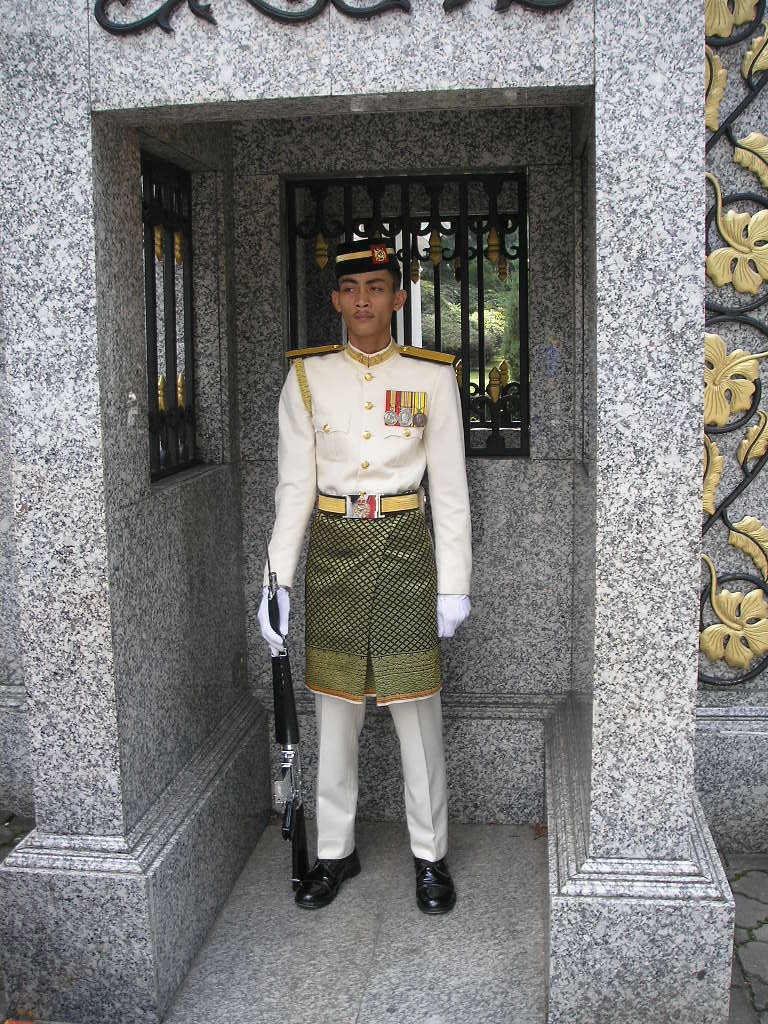 SampingA traditional Malay waist cloth worn over festive attire in Southeast Asia
 SampotA length of cloth wrapped at the waist, the everyday and ceremonial dress of Cambodia
 KebayaA front-opening blouse and wrapped cloth, worn by women across Southeast Asia
 LongyiA tube of cloth worn from waist to feet in Myanmar, folded shut with no knot
Good reading and sources
- Khrui on WikipediaEncyclopedia
- More photos on Wikimedia CommonsPhotos and video
- Wikidata recordOpen data
The facts on this page come from the Wikipedia article "Khrui", written by its contributors and used under the CC BY-SA 4.0 licence, and from its Wikidata record (CC0). EveryParampara rewrote the text in its own words, with AI assistance, and compares every page with the article to make sure no passage is copied. It may be reused under the same CC BY-SA 4.0 licence with a link back.
It may contain mistakes. Traditions differ from one family, village and community to the next, and the people who keep them know them best. If something is wrong, tell us. Last refreshed 2026-10-07.
More from Thailand
All the traditions of Thailand
🇰🇭 Cambodia and 2 moreSampotសំពត់
A length of cloth wrapped at the waist, the everyday and ceremonial dress of CambodiaDress
🇲🇲 Myanmar and 1 moreLongyiလုံချည်
A tube of cloth worn from waist to feet in Myanmar, folded shut with no knotDress
🇮🇩 Yogyakarta, Indonesia and 4 moreKebayaꦏꦼꦧꦪ
A front-opening blouse and wrapped cloth, worn by women across Southeast AsiaDress
 🇲🇾 Malacca, Malaysia and 5 moreBaju Melayuباجو ملايو
The long-sleeved Malay man's shirt and trousers, formal national dress in Malaysia and BruneiDress
🇲🇾 Malacca, Malaysia and 5 moreBaju Melayuباجو ملايو
The long-sleeved Malay man's shirt and trousers, formal national dress in Malaysia and BruneiDress
The same idea elsewhere
Royalty and coronation compared 🇮🇱 IsraelRosh Hashanahרֹאשׁ הַשָּׁנָה
The Jewish New Year marked by shofar horn blasts, prayer and sweet foodsSpiritual
🇮🇱 IsraelRosh Hashanahרֹאשׁ הַשָּׁנָה
The Jewish New Year marked by shofar horn blasts, prayer and sweet foodsSpiritual
 🇸🇪 Mora, SwedenVasaloppet
A 90 km cross-country ski race from Sälen to Mora, run every March since 1922Game
🇸🇪 Mora, SwedenVasaloppet
A 90 km cross-country ski race from Sälen to Mora, run every March since 1922Game
 🇵🇪 Cusco, Peru and 4 moreIntiinti (Quechua)
The Inca sun deity, honoured with temples, offerings and the June festival Inti RaymiSpiritual
🇵🇪 Cusco, Peru and 4 moreIntiinti (Quechua)
The Inca sun deity, honoured with temples, offerings and the June festival Inti RaymiSpiritual
 🇺🇸 United StatesTalking stick
A carved staff that shows who may speak at a Northwest Coast gatheringCeremony
🇺🇸 United StatesTalking stick
A carved staff that shows who may speak at a Northwest Coast gatheringCeremony