Dress and adornmentSoutheast Asia
Longyi
In its own language: လုံချည်
A tube of cloth worn from waist to feet in Myanmar, folded shut with no knot

The longyi is a length of cloth about two metres long, sewn into a tube and worn from the waist to the feet in Myanmar. Men call their version a paso and women a htamein, and the folds, patterns and fabrics show occasion, home town and fashion.
When is Longyi kept?
Longyi is kept on worn every day in Myanmar; silk versions for weddings and ceremonies.
In Myanmar, most people dress in a longyi: a tube of cloth, roughly two metres long, wrapped at the waist and folded shut without a knot. Men's versions are called paso, women's htamein, and the two differ in cut, folds and patterns. Cotton serves every day, while silk, and the intricate wave patterns called acheik, are kept for weddings and ceremonies.
What it is
A longyi is a sheet of cloth, about two metres long and eighty centimetres wide, which is usually stitched into a tube. It sits at the waist and falls to the feet, staying up because the fabric is folded over itself rather than knotted. In Myanmar it is everyday dress rather than costume. Men wear what they call a paso; women wear a htamein, topped by a fitted blouse that reaches the waistband. The two are not interchangeable: their folds, their patterns and their trimmings all differ.
Origins and history
The single cylindrical longyi is a fairly recent arrival in Burma. It became common under British colonial rule, taking the place of the paso and the htamein that people had worn before. Older men's pasos were long, unsewn lengths of cloth: one kind, the taungshay paso, ran to thirty feet. Women's htameins were shorter, open at the front, with dark cloth or velvet banded along the top and a strip of red or white trailing below. In the nineteenth century the amount of cloth a man wore signalled his standing. Henry Yule, who visited Amarapura, counted these garments the most important thing the region produced. Silk came in from China. The word longyi first meant the sarong worn by Malay men.
Cloth and patterns
Cotton is the basic material, but almost any fabric can go into a longyi, imported or locally made. Men's pasos are mostly plain, striped or checked, and can be worn inside out or upside down with no one noticing. Women's htameins carry a black band, the htet sint, at the waist, and favour floral and multi-coloured designs. Indonesian batik has been popular for a long time, and matching batik tops and bottoms were a fashion in the 1980s. The finest ceremonial silks are acheik, woven by Amarapura weavers in wave and houndstooth patterns; brides and grooms usually wear them in matching colours. Royal pasos and htameins of the past were embroidered with gold, silver, pearls and stones, and copies appear on stage at zat pwès.
Wearing it day to day
A man ties his paso below the navel, taking a fold on each side at the front and joining them. A woman wraps hers with one broad fold and tucks the end in at the hip, or folds it back and tucks it into the opposite side of the waist. Because the cloth is not fastened, people retie it in public, women more discreetly than men. Changing means stepping into the new longyi and letting the old one drop, or pulling the new one down over the head. Women can change without undressing fully. Wading into a river, a woman may lift her htamein little by little to keep it dry.
Work and sport
Hitched up between the legs and tucked at the back, the longyi becomes something like shorts. Fighters in lethwei used this fold, called paso hkadaung kyaik, so their legs were free to kick. The same trick is still used for chinlone and for climbing. Soldiers in ancient times wore their pasos this way, with or without trousers underneath. In the countryside a folded paso goes over the shoulder, ready for a bath or as a pad under a carrying pole. Rolled into a coil, it becomes a cushion for a pot or basket carried on the head. Silk keeps the wearer warm in winter as well as cool in summer.
How Longyi is kept
Men wear a paso, folding each side at the front and tying the ends below the navel. Women wear a htamein, wrapped with one broad fold and tucked at the hip or into the opposite side of the waist, usually with a fitted blouse. Because nothing is knotted, a longyi is retied in public when it loosens or the wearer changes, and women do this more discreetly than men. For sport or climbing, men bunch the cloth at the front, pass it between the legs and tuck it at the back. Off the body, a folded paso rests on the shoulder, or is rolled into a cushion for carrying loads.
When and where
No fixed date. The longyi is worn year round in Myanmar, changing with the weather and the occasion. Silk and acheik versions come out for weddings and ceremonies, and copies of old royal dress appear at zat pwès, the theatrical shows.
Myanmar is its home, and the cloth is worn across the country. Regional and ethnic types are named after their places and peoples, among them Rakhine, Mon, Kachin, Inle, Dawei, Yaw, Seikkhun and Zin Mè longyis, the last named for Chiang Mai. Paso was common among men in nineteenth century Thailand, and there are Bangauk (Bangkok) pasos. Batik came from Indonesia and silk from China.
What Longyi means
A longyi can mark who someone is. Long ago the amount of cloth a man wore showed his rank, and royal garments were heavy with embroidery. Today the weave and pattern may point to an ethnic group or a home town, and acheik silk signals a wedding, where the bride and groom often dress in matching colours. The cloth is also practical: it lets air move in the heat, and silk answers both summer and winter. Wearing one is a quiet, daily statement of belonging.


Questions people ask about Longyi
When is Longyi kept?
Longyi is kept on worn every day in Myanmar; silk versions for weddings and ceremonies.
What exactly is a longyi?
A longyi is a piece of cloth, roughly two metres long and eighty centimetres wide, usually sewn into a tube. It is worn in Myanmar around the waist and down to the feet. Instead of a knot or belt, the fabric is folded over to hold it up.
Where is it worn?
It belongs to Myanmar, where it is everyday dress. Other places have their own versions and names, such as the paso worn by men in nineteenth century Thailand, the Bangauk paso of Bangkok and the Zin Mè longyi linked with Chiang Mai.
Do men and women wear it the same way?
No. A man's garment is a paso, tied with a fold on each side just below the navel. A woman's is a htamein, wrapped in one broad fold and tucked at the hip, usually with a fitted blouse. Their patterns and trims differ too.
How do people change a longyi in public?
They step into the new one and pull it up while the old one loosens and drops, or pull it down over the head. Women manage this without taking off all their clothes. Tying it again in the street is ordinary, and women do it more discreetly than men.
See also
 KebayaA front-opening blouse and wrapped cloth, worn by women across Southeast Asia
 BaciA Lao rite that calls the soul home and ties a thread on the wrist for good luckThai solar calendarThe official solar calendar of Thailand, numbered in the Buddhist Era
 IkatA resist-dyeing craft from Southeast Asia, where yarns are tied and dyed before weaving
Good reading and sources
- Longyi on WikipediaEncyclopedia
- More photos on Wikimedia CommonsPhotos and video
- Wikidata recordOpen data
The facts on this page come from the Wikipedia article "Longyi", written by its contributors and used under the CC BY-SA 4.0 licence, and from its Wikidata record (CC0). EveryParampara rewrote the text in its own words, with AI assistance, and compares every page with the article to make sure no passage is copied. It may be reused under the same CC BY-SA 4.0 licence with a link back.
It may contain mistakes. Traditions differ from one family, village and community to the next, and the people who keep them know them best. If something is wrong, tell us. Last refreshed 2026-10-05.
More from Myanmar
All the traditions of Myanmar 🇲🇲 Bagan, MyanmarNat worshipနတ်
Veneration of guardian spirits and nature deities alongside Buddhism in MyanmarSpiritual
🇲🇲 Bagan, MyanmarNat worshipနတ်
Veneration of guardian spirits and nature deities alongside Buddhism in MyanmarSpiritual
 🇲🇲 MyanmarYoke théရုပ်သေး
A classical Burmese string puppet theatre performed with complex marionettes and music.Performance
🇲🇲 MyanmarYoke théရုပ်သေး
A classical Burmese string puppet theatre performed with complex marionettes and music.Performance
 🇹🇭 Thailand and 5 moreKathina
A Buddhist season of offering new robes and gifts to monks after the rains retreatSpiritual
🇹🇭 Thailand and 5 moreKathina
A Buddhist season of offering new robes and gifts to monks after the rains retreatSpiritual
 🇳🇵 Kathmandu, Nepal and 4 moreDashainबडादशैँ
A fifteen-day festival of family gatherings, blessings, and feasts across NepalFestival
🇳🇵 Kathmandu, Nepal and 4 moreDashainबडादशैँ
A fifteen-day festival of family gatherings, blessings, and feasts across NepalFestival
The same idea elsewhere
Weddings compared 🇮🇷 Isfahan, Iran and 3 morePersian gardenباغ ایرانی
An ancient tradition of creating walled, geometric sanctuaries of shade and flowing waterCraft
🇮🇷 Isfahan, Iran and 3 morePersian gardenباغ ایرانی
An ancient tradition of creating walled, geometric sanctuaries of shade and flowing waterCraft
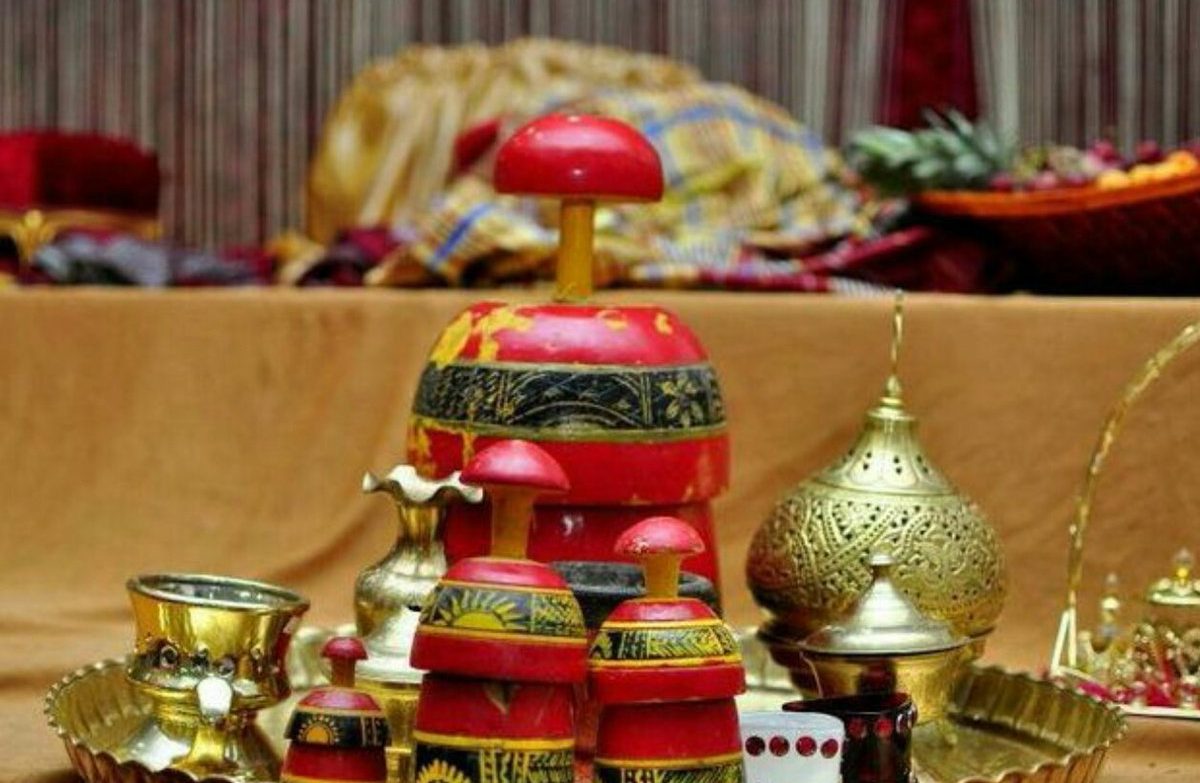 🇸🇩 SudanJirtigالجَرْتِقْ
A Sudanese wedding ritual of regal adornment, protection, and blessings of fertilityRite of passage
🇸🇩 SudanJirtigالجَرْتِقْ
A Sudanese wedding ritual of regal adornment, protection, and blessings of fertilityRite of passage
 🇮🇳 Lucknow, India and 3 moreSherwani
A long buttoned coat for men, worn at weddings and state occasions in South AsiaDress
🇮🇳 Lucknow, India and 3 moreSherwani
A long buttoned coat for men, worn at weddings and state occasions in South AsiaDress
 🇹🇴 Tonga and 1 moreTaʻovala
A waist mat worn in Tonga for weddings, funerals and formal daysDress
🇹🇴 Tonga and 1 moreTaʻovala
A waist mat worn in Tonga for weddings, funerals and formal daysDress