Dress and adornmentSoutheast AsiaMuslim
Baju Melayu
In its own language: باجو ملايو
The long-sleeved Malay man's shirt and trousers, formal national dress in Malaysia and Brunei

Baju Melayu is the traditional Malay dress for men, a long-sleeved shirt worn with trousers, a waist wrap and a head covering. It comes from the court of the Malacca Sultanate and is kept today in Malaysia, Brunei, Singapore, parts of Indonesia, the southern Philippines and southern Thailand, where it serves as formal and national dress.
When is Baju Melayu kept?
Baju Melayu is kept on no fixed date: worn at official events, ceremonies and cultural functions, and as national dress in Malaysia and Brunei.
A long-sleeved shirt and trousers worn by Malay men, baju Melayu began at the court of the Malacca Sultanate and is still put on for official occasions. In its formal cut it is the national dress of Malaysia and Brunei. The shirt comes in two main neck styles, and a waist wrap, head covering and sometimes a kris complete the look.
What it is
Two pieces form the base: a long-sleeved shirt, the baju, and loose trousers, the seluar or celana. Both are cut from the same cloth, usually cotton or a cotton and polyester mix. Over the trousers a man may add a samping, a wrap of songket or tenun, or a sarong of cotton. A black or dark songkok goes on the head. On ceremonial occasions a tengkolok takes its place. A short-sleeved jacket called tekua sometimes stands in for the shirt, and a coat known as baju sikap or baju layang may be worn with a pending, an ornamental belt buckle. A kris can be slipped into the folded waist wrap.
Origins and history
In tropical Southeast Asia, early Malay dress was simple: one length of cloth served everyone, as the Chinese Muslim writer Fei Xin noted of pre-Islamic Pahang. The Malacca Sultanate changed that in the 15th century. As a busy port it drew traders of many peoples, and Islamic values reshaped local dress. The Malay Annals link court protocol and dress rules to Sultan Muhammad Shah, who ruled from 1424 to 1444 and required Malay dress to differ from that of lands above and below the wind. A shirt, cloth and headdress took shape then. Later reigns brought a five-part ceremonial set.
Main styles
Necklines separate the common styles. Teluk Belanga, named after Telok Blangah in Singapore, the old Johor capital, has a round opening with a short front slit, stiff stitching called tulang belut around it, and a single button. Its hem is short, reaching the level of the back, and it carries three pockets. Cekak Musang, meaning fox's leash, has a raised collar and a front placket closed with three to five studs, which may be gold, silver or set with stones. A third, Kolar Tunku, was made for Tunku Abdul Rahman and takes a rounded Mandarin collar with three placket buttons.
Today and change
Baju Melayu is the formal national dress of Malaysia and Brunei and appears at official functions. It also shapes uniforms: the Malaysian Armed Forces full dress, dating from the Royal Malay Regiment's founding in 1932, takes a white tunic and trousers with a dark green songkok and a green and gold samping. Royal Malaysian Police officers wear a similar ceremonial dress with blue and black brocade. The Royal Brunei Armed Forces has its own version in other colours. Silat schools often train in black baggy trousers and a black baju Melayu. Older shirts were shaped with extra panels and small inserts to help them hang well; many newer designs leave these out.
How Baju Melayu is kept
Malay men put on baju Melayu for official events, ceremonies and cultural functions, and in Malaysia and Brunei it stands as national dress. The shirt goes on over the trousers, both cut from one cloth. A samping or sarong is then wrapped at the waist. Which way it sits depends on the style: Cekak Musang men usually wear the wrap over the shirt, while Teluk Belanga men may wear it either below or over. A songkok, or a tengkolok for ceremonial use, finishes the outfit. A kris may be slipped into the folded wrap.
When and where
Baju Melayu has no single date in the year. Men wear it at official events and functions, at cultural and ceremonial gatherings, and wherever Malaysia and Brunei mark national occasions. Styles are matched to the setting rather than the season: Cekak Musang is the usual choice for formal wear, while Teluk Belanga is tied to Johor.
It belongs to Malay communities in Malaysia, Brunei and Singapore, and to parts of Indonesia, above all Sumatra and Kalimantan, as well as the southern Philippines and southern Thailand. Its strongest home is the Malay peninsula and Brunei, where it is national dress; the Teluk Belanga style remains particular to the state of Johor.
What Baju Melayu means
The dress carries a claim to a distinct Malay identity. Court rules under Sultan Muhammad Shah are said to have required Malay clothing to look unlike the fashions of foreign traders, and Islamic values shaped how much of the body it covers. The name baju kurung, meaning enclosed, points to that. Rank once showed in the wrapping: only royalty and aristocrats were allowed to wear the samping above the shirt, a style called dagang luar, rather than below it.


Questions people ask about Baju Melayu
When is Baju Melayu kept?
Baju Melayu is kept on no fixed date: worn at official events, ceremonies and cultural functions, and as national dress in Malaysia and Brunei.
What is baju Melayu?
It is the traditional Malay dress for men: a long-sleeved shirt worn with trousers, often a waist wrap and a head covering. It began at the court of the Malacca Sultanate. In its formal form it is the national dress of Malaysia and Brunei, worn at official events.
Where is it worn?
Malay men wear it in Malaysia, Brunei and Singapore, in parts of Indonesia such as Sumatra and Kalimantan, in the southern Philippines and in southern Thailand. Malaysia and Brunei treat the formal version as national dress, so it appears at state and official functions.
What are the two main styles?
Teluk Belanga has a round neck opening with a short front slit, stiff stitching around it and a single button. Cekak Musang has a raised collar and a placket closed with three to five studs. Both were introduced during the reign of Sultan Abu Bakar of Johor.
See also
 LongyiA tube of cloth worn from waist to feet in Myanmar, folded shut with no knot
 SampotA length of cloth wrapped at the waist, the everyday and ceremonial dress of Cambodia
 KebayaA front-opening blouse and wrapped cloth, worn by women across Southeast AsiaThai solar calendarThe official solar calendar of Thailand, numbered in the Buddhist Era
Good reading and sources
- Baju Melayu on WikipediaEncyclopedia
- More photos on Wikimedia CommonsPhotos and video
- Wikidata recordOpen data
The facts on this page come from the Wikipedia article "Baju Melayu", written by its contributors and used under the CC BY-SA 4.0 licence, and from its Wikidata record (CC0). EveryParampara rewrote the text in its own words, with AI assistance, and compares every page with the article to make sure no passage is copied. It may be reused under the same CC BY-SA 4.0 licence with a link back.
It may contain mistakes. Traditions differ from one family, village and community to the next, and the people who keep them know them best. If something is wrong, tell us. Last refreshed 2026-10-05.
More from Malaysia
All the traditions of Malaysia
🇮🇩 Yogyakarta, Indonesia and 4 moreKebayaꦏꦼꦧꦪ
A front-opening blouse and wrapped cloth, worn by women across Southeast AsiaDress
 🇮🇩 Palembang, Indonesia and 3 moreSongketᬲᭀᬂᬓᬾᬢ᭄
A hand-woven cloth threaded with gold or silver, worn at weddings and royal courtsDress
🇮🇩 Palembang, Indonesia and 3 moreSongketᬲᭀᬂᬓᬾᬢ᭄
A hand-woven cloth threaded with gold or silver, worn at weddings and royal courtsDress
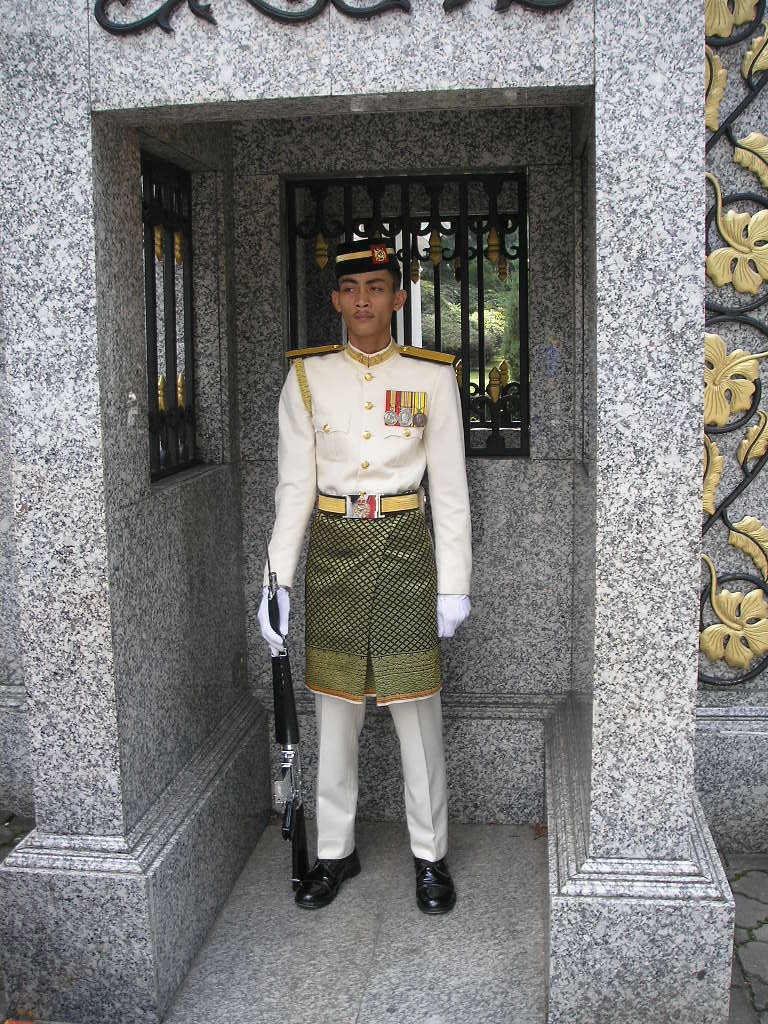 🇲🇾 Malacca, Malaysia and 4 moreSampingسمڤيڠ
A traditional Malay waist cloth worn over festive attire in Southeast AsiaDress
🇲🇾 Malacca, Malaysia and 4 moreSampingسمڤيڠ
A traditional Malay waist cloth worn over festive attire in Southeast AsiaDress
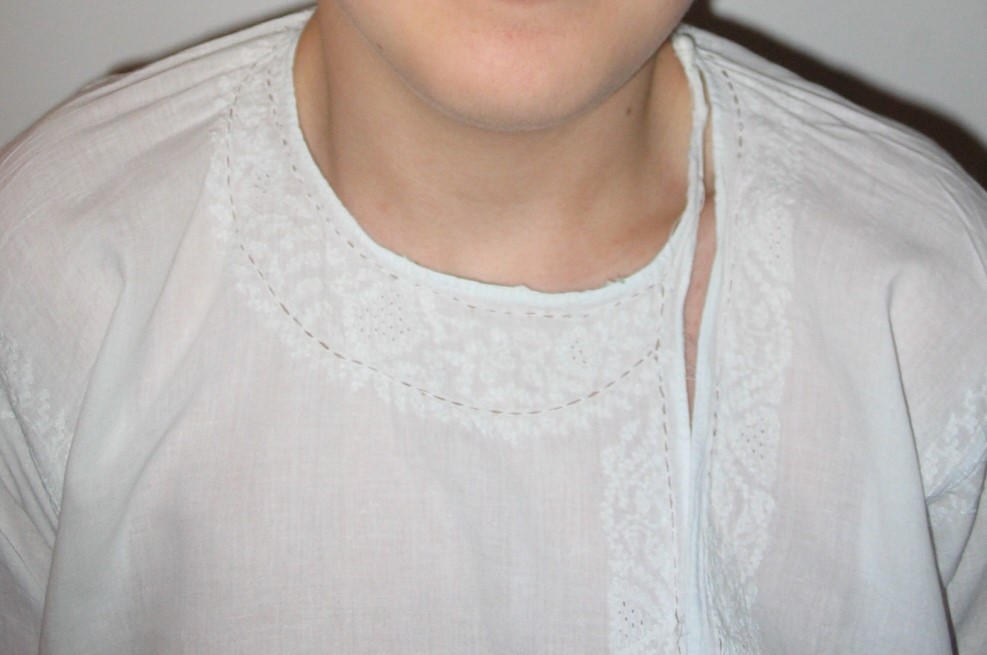 🇮🇳 Lucknow, India and 5 moreKurtaکرته (Persian), कुरता (Hindi)
A loose collarless tunic from South Asia, worn plain or embroidered over pyjamas or jeansDress
🇮🇳 Lucknow, India and 5 moreKurtaکرته (Persian), कुरता (Hindi)
A loose collarless tunic from South Asia, worn plain or embroidered over pyjamas or jeansDress
The same idea elsewhere
Royalty and coronation compared 🇮🇱 IsraelRosh Hashanahרֹאשׁ הַשָּׁנָה
The Jewish New Year marked by shofar horn blasts, prayer and sweet foodsSpiritual
🇮🇱 IsraelRosh Hashanahרֹאשׁ הַשָּׁנָה
The Jewish New Year marked by shofar horn blasts, prayer and sweet foodsSpiritual
 🇸🇪 Mora, SwedenVasaloppet
A 90 km cross-country ski race from Sälen to Mora, run every March since 1922Game
🇸🇪 Mora, SwedenVasaloppet
A 90 km cross-country ski race from Sälen to Mora, run every March since 1922Game
 🇵🇪 Cusco, Peru and 4 moreIntiinti (Quechua)
The Inca sun deity, honoured with temples, offerings and the June festival Inti RaymiSpiritual
🇵🇪 Cusco, Peru and 4 moreIntiinti (Quechua)
The Inca sun deity, honoured with temples, offerings and the June festival Inti RaymiSpiritual
 🇺🇸 United StatesTalking stick
A carved staff that shows who may speak at a Northwest Coast gatheringCeremony
🇺🇸 United StatesTalking stick
A carved staff that shows who may speak at a Northwest Coast gatheringCeremony