Music, dance and storytellingEurope
Krakowiak
A lively Polish folk dance from Kraków that became a popular ballroom style across Europe.

The Krakowiak is a fast-paced partner dance originating in the Kraków region of Poland. It features syncopated rhythms and duple time steps. The dance spread to Vienna and Paris as a fashionable ballroom attraction during the Romantic era.
When is Krakowiak kept?
Krakowiak is kept on historically performed at social gatherings and concerts.
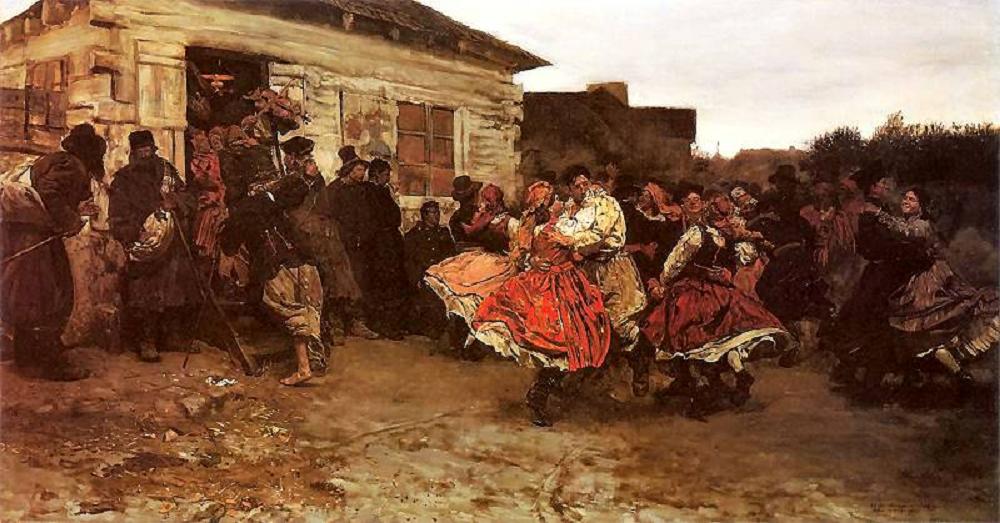
The Krakowiak is a spirited Polish folk dance known for its quick tempo and syncopated beats. Originating near Kraków, it evolved into a celebrated ballroom trend in major European cities. Dancers wear traditional attire, including distinctive hats adorned with feathers. The choreography involves couples moving in circles while singing improvised verses led by the male dancer.
Origins and history
This dance emerged from the Lesser Poland region around Kraków. It gained international fame in the early nineteenth century. In Vienna and Paris, it was called the Krakauer or Cracovienne. It joined the polonaise and mazurka as symbols of Romantic interest in Polish culture. The first printed music appeared in Warsaw in 1816. A famous piano piece followed in 1828, helping to cement its place in classical music.
Choreography and music
Several couples perform together in a circle formation. The leading man directs the steps and sings melodies. He improvises words addressed to his partner while tapping his heels. The band plays along with his song. Couples move in file during instrumental sections. They return to the band after each verse. This call-and-response structure defines the performance rhythm.
Costume and dress
Dancers wear specific folk outfits associated with the region. These garments have become recognized as national costumes of Poland. A key element is the rogatywka hat. This peaked headwear often features peacock feathers. The visual style complements the energetic movements of the dance.
How Krakowiak is kept
Groups of couples gather to perform the dance. The lead male dancer initiates the sequence by singing and demonstrating steps. Other pairs follow his lead, forming a rotating circle. The music alternates between sung verses and instrumental breaks. Participants maintain the syncopated rhythm throughout the performance.
When and where
It originated in the late eighteenth and early nineteenth centuries. It remains a part of Polish cultural heritage today.
The dance comes from the Kraków area in Poland. It was widely practiced in ballrooms in Vienna and Paris during the Romantic period.
What Krakowiak means
The dance expressed sympathy for Poland during times of political difficulty. It represented a connection to a distant and picturesque nation. The music and movement served as a cultural marker for Polish identity abroad.


Questions people ask about Krakowiak
When is Krakowiak kept?
Krakowiak is kept on historically performed at social gatherings and concerts.
What is the Krakowiak?
It is a fast, syncopated Polish folk dance from the Kraków region. It is performed in duple time by multiple couples.
Where did this dance originate?
The Krakowiak began in the Lesser Poland area, specifically around the city of Kraków.
How is the dance performed?
Couples form a circle. The lead man sings and sets the pace while others follow. The band plays between sung verses.
See also
 PolonaiseA traditional Polish partner dance in triple metre, kept as a national custom and UNESCO heritage.
 Christmas carolFestive songs and hymns sung during the Christmas season and door to door
 OberekA rapid Polish spinning dance in triple metre with athletic lifts and jumps
 KlezmerAn Ashkenazi Jewish instrumental tradition of lively dance tunes and ritual melodies
Good reading and sources
- Krakowiak on WikipediaEncyclopedia
- More photos on Wikimedia CommonsPhotos and video
- Wikidata recordOpen data
The facts on this page come from the Wikipedia article "Krakowiak", written by its contributors and used under the CC BY-SA 4.0 licence, and from its Wikidata record (CC0). EveryParampara rewrote the text in its own words, with AI assistance, and compares every page with the article to make sure no passage is copied. It may be reused under the same CC BY-SA 4.0 licence with a link back.
It may contain mistakes. Traditions differ from one family, village and community to the next, and the people who keep them know them best. If something is wrong, tell us. Last refreshed 2026-10-04.
More from Poland
All the traditions of Poland
🇵🇱 Poland and 2 morePolonaisePolonez
A traditional Polish partner dance in triple metre, kept as a national custom and UNESCO heritage.Performance
🇬🇧 United Kingdom and 5 moreChristmas carol
Festive songs and hymns sung during the Christmas season and door to doorPerformance
🇵🇱 Poland and 1 moreOberek
A rapid Polish spinning dance in triple metre with athletic lifts and jumpsPerformance
 🇭🇺 Hungary and 5 moreCsárdás
A Hungarian folk dance that moves from a slow start to a fast finish, kept in Hungary and neighboring regions.Performance
🇭🇺 Hungary and 5 moreCsárdás
A Hungarian folk dance that moves from a slow start to a fast finish, kept in Hungary and neighboring regions.Performance
The same idea elsewhere
All of this kind 🇹🇷 Kayseri, Turkey and 4 moreHalay
A traditional line and circle folk dance kept across Turkey, Azerbaijan, Armenia, Iran, and Syria.Performance
🇹🇷 Kayseri, Turkey and 4 moreHalay
A traditional line and circle folk dance kept across Turkey, Azerbaijan, Armenia, Iran, and Syria.Performance
 🇳🇿 Auckland, New ZealandPoi
A Māori performing art of swinging tethered weights in rhythmical patterns.Performance
🇳🇿 Auckland, New ZealandPoi
A Māori performing art of swinging tethered weights in rhythmical patterns.Performance
 🇵🇭 Philippines and 1 morePangalay
A traditional fingernail dance of the Tausūg and Bajau peoples in the Sulu Archipelago and Sabah.Performance
🇵🇭 Philippines and 1 morePangalay
A traditional fingernail dance of the Tausūg and Bajau peoples in the Sulu Archipelago and Sabah.Performance