Dress and adornmentEuropeChristian
Dirndl
A fitted dress with apron from the German-speaking Alps, worn for festivals and weddings.

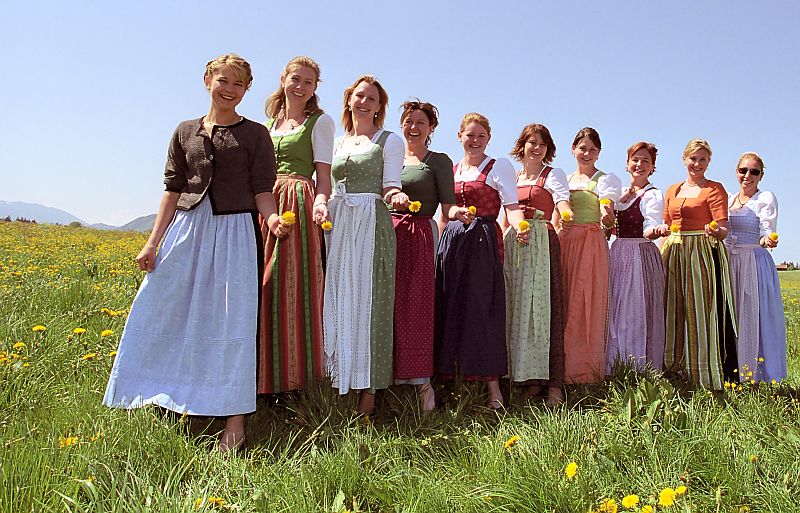
The dirndl is a dress from the German-speaking Alps, worn by women and girls in Austria, Germany, Switzerland, Italy and Liechtenstein. It began as rural clothing, became a folk costume and later a fashion style. Today it is worn for festivals, weddings and formal events, with regional variations and an apron knot that can show marital status.
A dirndl is a dress with a fitted bodice, a blouse, a full skirt and an apron. It comes from the German-speaking Alps. Women and girls wear it as a folk costume, called Tracht, for festivals, weddings and formal events. Each region has its own designs, and the way the apron is tied can show whether the wearer is single, married or widowed.
What it is
A dirndl has four main parts. The bodice is tight and has a low neckline, often laced or buttoned at the front. Under it, a cropped blouse is worn, usually white. The skirt is full and gathered at the waist, with a pocket hidden under the apron. The apron itself is narrow and covers only the front. Traditional bodices were made of dark heavy cotton, but modern ones use cotton, linen, velvet or silk. The neckline can be round, rectangular, high, V-shaped or heart-shaped, and embroidery is common for public events.
Origins and history
The dirndl began as rural clothing in the Alps. Folk costumes showed a person's social class, occupation, religion or ethnic group, and designs varied by region. In the late 19th century, upper and middle classes adopted it as fashion, and it spread beyond its home. The 20th century brought changes: the Nazis appropriated it, and after the Second World War its popularity fell. From 1990, it saw a resurgence. Today it is both a recognised folk costume and a fashion style, with many adaptations.
Regional and personal meaning
Traditional dirndls differ from region to region, even between villages. The details can tell you where a wearer comes from and her social status. Most regions have two forms: one for everyday wear and one for festivals or formal occasions. Formal dirndls use special materials, colours and embroidery. Some designs include a piece that drapes over the breast and a high collar, hiding the décolletage in keeping with traditional Catholic ideas of modesty. Wedding dirndls are the finest festive version, often in silk, velvet or fine cotton.
Accessories and headwear
Jewellery for the dirndl includes necklaces, earrings, chokers and brooches of silver or deer antler. A balconette bra, called a dirndl-BH, is often worn. In spring, a corsage of fresh flowers decorates the bodice. A small floral wreath called the jungfernkranz is worn by unmarried women. In some places, married women wear a goldhaube, a bonnet with silk and gold threads that developed in the 17th century. Shoes are usually pumps or flat ballerina types, with knee-length socks or tights.
Etiquette and change
The dirndl is meant to fit tightly and be worn with a blouse. Because it should look rustic, some people dislike plastic versions. A modern custom concerns the apron knot: left means single, right means married or engaged, front centre means underage or not disclosing, and back centre means widow, waitress or child. Designers now create their own interpretations, and a properly made dirndl can be expensive. A recent fusion is the African dirndl, using African printed fabric, premiered at Oktoberfest in 2019.
How Dirndl is kept
A woman or girl puts on a blouse, then a fitted bodice and a full skirt with an apron. The apron is tied with a knot, and its position can signal her marital status. For formal events, she adds jewellery, a floral wreath or a bonnet. Wedding dirndls are made from finer materials like silk or velvet. The dress is worn at festivals, church events and weddings, especially in Austria and Bavaria.
When and where
The dirndl is strongest in the German-speaking Alps, especially Austria and Bavaria. It is also worn in South Tyrol, Liechtenstein and Switzerland, and by German diaspora communities in other countries. Particular designs are linked to regions and villages, such as the Wachau in Austria, which has its own blue polka-dotted dress.
What Dirndl means
For those who wear it, the dirndl signals belonging. It can show which region or village a person comes from, and sometimes their social or marital status through the apron knot. It is a marker of cultural identity, worn with pride at festivals and weddings. Some see it as a living folk costume, while others treat it as a fashion choice. The name comes from a word for a young woman.


Questions people ask about Dirndl
What is a dirndl?
A dirndl is a dress from the German-speaking Alps, made of a bodice, blouse, full skirt and apron. It is worn by women and girls as a folk costume, called Tracht, for festivals, weddings and formal events. Designs vary by region.
When is a dirndl worn?
It is not tied to one day. People wear it for festivals, church events, weddings and other formal occasions, especially in Austria and Bavaria. It can also be worn as everyday dress in some regions.
Where does the dirndl come from?
It originated in rural areas of the German-speaking Alps. Today it is worn in Austria, Germany, Switzerland, Italy and Liechtenstein, and by German diaspora communities elsewhere.
What does the apron knot mean?
In a modern tradition, the position of the knot on the apron can show whether a woman is single (left), married or engaged (right), underage or not disclosing (front centre), or widowed, a waitress or a child (back centre).
Can anyone wear a dirndl?
There is no rule against it, but the dirndl is a folk costume with regional meanings. Some people feel it should be worn with respect for its origins. Modern designs are widely available and worn at events like Oktoberfest.
See also
 Saint Stephen's DayA Christian feast day celebrating the first martyr with feasts, rides and folk customs.
 KlezmerAn Ashkenazi Jewish instrumental tradition of lively dance tunes and ritual melodies
 ʻIe tōgaPrecious woven mats exchanged in Samoan ceremonies to honor family ties and chiefly status.
 Vyshyvanka DayAn annual day for wearing traditional Ukrainian embroidered shirts across the world
Good reading and sources
- Lederhosen and dirndl dresses make a comebackBBC, Article
- Lederhosen in the Amazon: an Austro-German enclave in Peru keeps traditions aliveThe Guardian, Article
- Lederhosen and dirndl dresses make a comebackBBC, Article
- Lederhosen in the Amazon: an Austro-German enclave in Peru keeps traditions aliveThe Guardian, Article
- Dirndl on WikipediaEncyclopedia
- More photos on Wikimedia CommonsPhotos and video
- Wikidata recordOpen data
The facts on this page come from the Wikipedia article "Dirndl", written by its contributors and used under the CC BY-SA 4.0 licence, and from its Wikidata record (CC0). EveryParampara rewrote the text in its own words, with AI assistance, and compares every page with the article to make sure no passage is copied. It may be reused under the same CC BY-SA 4.0 licence with a link back.
It may contain mistakes. Traditions differ from one family, village and community to the next, and the people who keep them know them best. If something is wrong, tell us. Last refreshed 2026-10-05.
More from Austria
All the traditions of Austria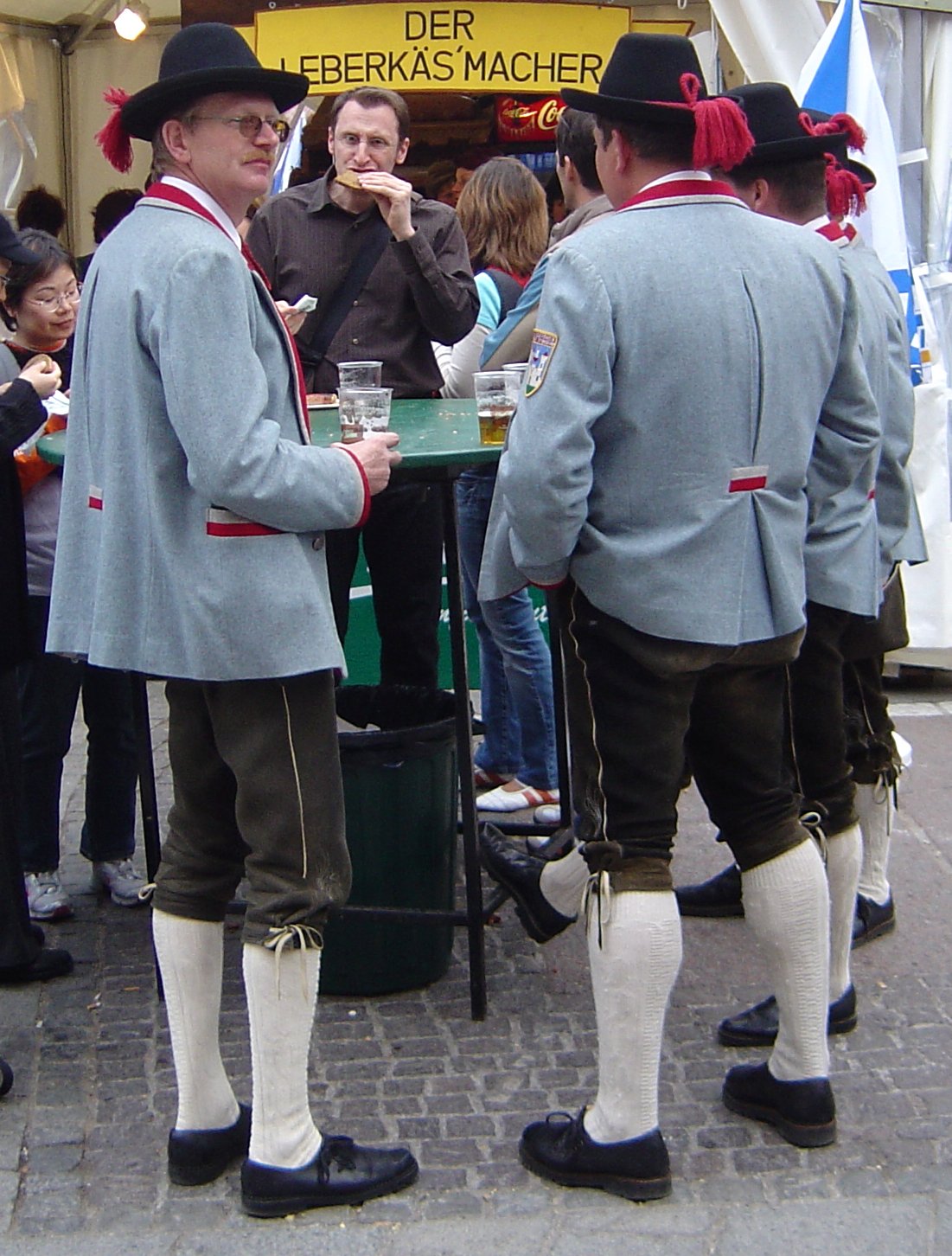 🇩🇪 Germany and 1 moreTracht
Traditional dress of the German-speaking regions, from lederhosen to the dirndlDress
🇩🇪 Germany and 1 moreTracht
Traditional dress of the German-speaking regions, from lederhosen to the dirndlDress
 🇩🇪 Germany and 2 moreLederhosen
Leather breeches that began as work wear and now belong to Alpine festivalsDress
🇮🇪 Ireland and 5 moreSaint Stephen's Day
A Christian feast day celebrating the first martyr with feasts, rides and folk customs.Spiritual · Feasts and festival meals
🇩🇪 Germany and 2 moreLederhosen
Leather breeches that began as work wear and now belong to Alpine festivalsDress
🇮🇪 Ireland and 5 moreSaint Stephen's Day
A Christian feast day celebrating the first martyr with feasts, rides and folk customs.Spiritual · Feasts and festival meals
 🇩🇪 Germany and 5 morePolterabend
Guests smash porcelain the night before a wedding to wish the couple luckRite of passage
🇩🇪 Germany and 5 morePolterabend
Guests smash porcelain the night before a wedding to wish the couple luckRite of passage
The same idea elsewhere
Weddings compared
🇼🇸 Samoa and 1 moreʻIe tōga
Precious woven mats exchanged in Samoan ceremonies to honor family ties and chiefly status.Dress
 🇹🇱 Timor-LesteUma Lulik
Sacred ancestral clan houses and ritual shrines in East TimorSpiritual
🇹🇱 Timor-LesteUma Lulik
Sacred ancestral clan houses and ritual shrines in East TimorSpiritual
 🇮🇩 Indonesia and 2 moreKenduri
A communal prayer meal and gathering shared across Indonesia, Malaysia and BruneiSpiritual · Feasts and festival meals
🇺🇬 UgandaKwanjula
A formal marriage introduction ritual of the Baganda people in Uganda, where families meet to exchange gifts and seek blRite of passage
🇮🇩 Indonesia and 2 moreKenduri
A communal prayer meal and gathering shared across Indonesia, Malaysia and BruneiSpiritual · Feasts and festival meals
🇺🇬 UgandaKwanjula
A formal marriage introduction ritual of the Baganda people in Uganda, where families meet to exchange gifts and seek blRite of passage