Folklore and beliefEast AsiaShinto, Taoist and folk Chinese
Zangfu
In its own language: 臟腑 (simplified 脏腑; zàngfǔ)
A Chinese medicine view of organs as networks of qi, blood and five phases

The zangfu are a set of organ concepts in traditional Chinese medicine. They come from a Chinese view of the body shaped by Taoism, Confucianism and folk religion, in which organs are networks and patterns rather than the physical organs of modern medicine, and each pair is tied to one of the five phases.
The zangfu are the organ concepts of traditional Chinese medicine. Each one is described as a working pattern rather than a fixed piece of flesh, and each is linked to a partner organ, an element and an emotion. People who study and practise this medicine use the zangfu to read the body's balance of qi, blood and fluids, and to understand where health has gone astray.
What it is
The zangfu are a set of organ concepts. The zang are the yin organs: the Heart, Spleen, Liver, Lung and Kidney. The fu are their yang partners: the Small Intestine, Stomach, Gallbladder, Large Intestine and Bladder. The zang are described as making and storing qi, blood and bodily fluids; the fu pass on and digest what comes to them. A further group, the extraordinary fu, is said to mix features of both. The tradition takes its earliest framework from the Suwen, or Basic Questions, a classical text of Chinese medicine. There the organs are treated as more than flesh, since each is also said to carry an energetic side.
Pairs and phases
Every zang is paired with a fu, and each pair is placed in one of the five phases or elements: wood, fire, earth, metal and water. Wood holds the Liver and Gallbladder. Fire holds the Heart and Small Intestine, and also, secondarily, the Pericardium and the Sanjiao, the Triple Burner. Earth holds the Spleen and Stomach; metal the Lung and Large Intestine; water the Kidney and Bladder. Because the phases move in cycles, the tradition says the pairs affect one another in the same rhythm: each zang spreads to one fu and strengthens or calms another.
The organ officials
The tradition gives each zang a set of duties and an opening, the sense organ it is said to connect with. The Heart stores the shen, roughly mind or consciousness, governs blood and vessels, opens into the tongue and shows in the face. The Spleen draws food essence and water from what we take in, holds blood in the vessels, opens into the mouth and lips and houses the yi, or thinking. The Liver keeps qi and blood moving freely, stores blood, opens into the eyes, governs the tendons and houses the hun. The Lung, highest of the organs and called the canopy, pairs with the large intestine.
History and change
Chinese history holds a few rare periods when people dissected bodies, and these added some detail to the older picture, though the tradition kept its main assumptions. When Western anatomy arrived, practitioners faced a difficulty: the zangfu did not match the organs being cut open. In the 1920s the physician Yun Tieqiao answered this with a theory called Zangxiang, which separated the zangfu from anatomy altogether. Since then the system has been taught as a set of patterns and relationships, not as a map of the body, and today its assumptions have not been verified by modern evidence-based medicine.
How patterns are read
Because the zangfu are patterns, not parts, a practitioner reads a person rather than a single organ. The five phases give each pair a colour, a sound, an odour and an emotion to watch for. Each zang is said to open into a sense organ, so eye trouble is read through the Liver and the tongue through the Heart. The tradition also gives each zang a two-hour peak on a body clock, the Liver between 1am and 3am, the Spleen between 9am and 11am. When the flow of qi is blocked, the tradition says, pain and illness follow.
How Zangfu is kept
In this tradition, the zangfu are learned as working patterns rather than as physical organs. A practitioner works through the five phases, the paired organs, and the emotions, colours, sounds and odours that the tradition assigns to each one. Each zang is also given a two-hour peak on the body clock. The aim is to describe a person's balance of qi, blood and fluids, and the free movement of qi through the body.
When and where
The zangfu are not tied to one date. They belong to the daily work of the tradition, and each zang is given a two-hour window on a body clock: the Spleen from 9am to 11am, the Heart from 11am to 1pm and the Liver from 1am to 3am. The theory itself is taught and used all year.
The zangfu come from China, where traditional Chinese medicine took shape and where its classical texts, including the Suwen, were written. The system is taught and used by practitioners of that medicine, and it is the framework behind how they understand the body. China remains its home and its strongest base.
What Zangfu means
To those who study it, the zangfu describe a body of connections rather than a set of separate parts. The organs carry duties and titles: the Heart is the emperor, the Liver is a general of an army, the Spleen is the root of the postnatal. Each is tied to an element, a colour, a sound and an emotion; the Liver and Gallbladder, in the wood phase, are also tied to spring. Health, in this view, is a matter of flow and balance among them.

Questions people ask about Zangfu
What are the zangfu?
They are a system of organ concepts in traditional Chinese medicine. The five zang are yin, the five fu are yang, and each zang is paired with a fu. The zang are said to make and store qi, blood and fluids; the fu to pass on and digest.
Are they the same as the organs of modern medicine?
No. In the Suwen they were linked to physical organs, but the tradition treats them mainly as patterns and relationships. Since the 1920s, after Yun Tieqiao's Zangxiang theory, they have been separated from anatomy. Their assumptions have not been established or verified by modern evidence-based medicine.
Where does it come from, and where is it kept?
The system belongs to traditional Chinese medicine, which took shape in China and whose classical texts include the Suwen. It is taught and used by practitioners of that medicine, and China is its home and its strongest base.
What are the five phases?
They are wood, fire, earth, metal and water. Every zang and fu pair is placed in one of them. Wood holds the Liver and Gallbladder, fire the Heart and Small Intestine, earth the Spleen and Stomach, metal the Lung and Large Intestine, and water the Kidney and Bladder.
See also
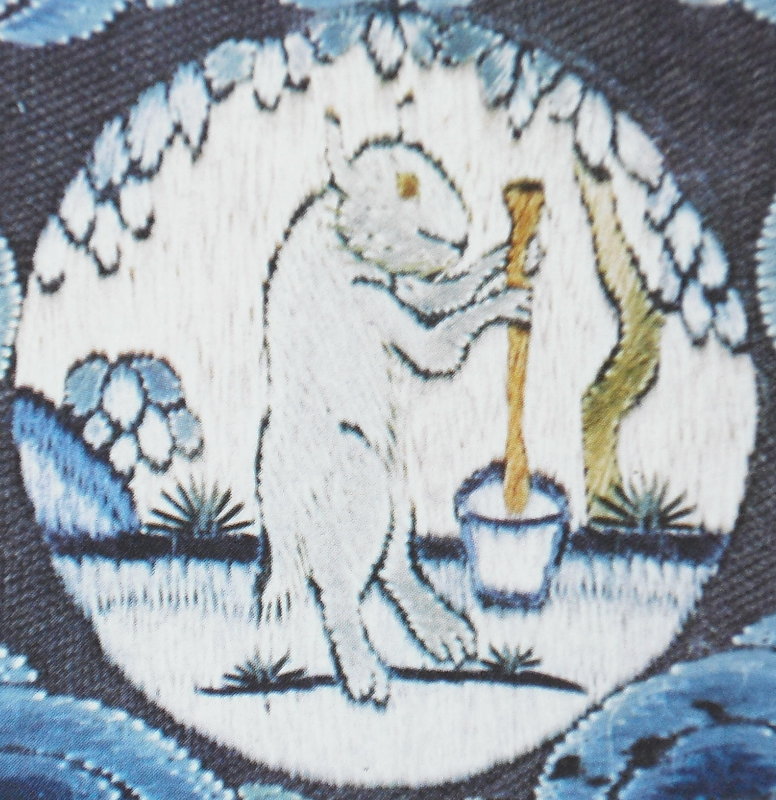 Moon rabbitA hare seen in the Moon's dark patches, pounding rice cakes or the elixir of life
 Maneki-nekoA lucky cat figurine, paw raised, kept by shop doors and in homes across JapanSymbolic starsHelpful and harmful influences read from the Chinese calendar's stems and branchesTui naA traditional Chinese hands-on therapy using pushing, grasping, and acupressure points
Good reading and sources
The facts on this page come from the Wikipedia article "Zangfu", written by its contributors and used under the CC BY-SA 4.0 licence, and from its Wikidata record (CC0). EveryParampara rewrote the text in its own words, with AI assistance, and compares every page with the article to make sure no passage is copied. It may be reused under the same CC BY-SA 4.0 licence with a link back.
It may contain mistakes. Traditions differ from one family, village and community to the next, and the people who keep them know them best. If something is wrong, tell us. Last refreshed 2026-10-09.
More from China
All the traditions of China
🇯🇵 Tokyo, Japan and 2 moreManeki-neko招き猫
A lucky cat figurine, paw raised, kept by shop doors and in homes across JapanFolklore
🇨🇳 China and 5 moreMoon rabbit月兔
A hare seen in the Moon's dark patches, pounding rice cakes or the elixir of lifeFolklore
🇨🇳 ChinaSymbolic stars神煞
Helpful and harmful influences read from the Chinese calendar's stems and branchesFolklore
 🇨🇳 Luoyang, China and 1 moreYin and yang陰陽
Two opposite but complementary forces that Chinese thought sees in all thingsFolklore
🇨🇳 Luoyang, China and 1 moreYin and yang陰陽
Two opposite but complementary forces that Chinese thought sees in all thingsFolklore
The same idea elsewhere
Healing, luck and protection compared 🇮🇹 Rome, Italy and 4 moreValentine's Day
A Christian feast day and cultural celebration of love kept on February 14 in many countries.Festival
🇮🇹 Rome, Italy and 4 moreValentine's Day
A Christian feast day and cultural celebration of love kept on February 14 in many countries.Festival
 🇩🇪 Germany and 5 moreChristmas tree
A decorated evergreen or artificial tree placed indoors to mark the Christmas season.Festival
🇩🇪 Germany and 5 moreChristmas tree
A decorated evergreen or artificial tree placed indoors to mark the Christmas season.Festival
 🇫🇷 France and 5 moreCandlemas
A Christian feast of candle blessings marking the end of the Christmas seasonSpiritual
🇫🇷 France and 5 moreCandlemas
A Christian feast of candle blessings marking the end of the Christmas seasonSpiritual
 🇮🇪 Ireland and 2 moreJack-o'-lantern
A carved pumpkin lantern lit with a candle to brighten and protect Halloween nightsFolklore
🇮🇪 Ireland and 2 moreJack-o'-lantern
A carved pumpkin lantern lit with a candle to brighten and protect Halloween nightsFolklore