Loden cape
In its own language: Lodenmantel
A rain-shedding wool overcoat from Tyrol, part of the region's Tracht

A rain-shedding overcoat of Tyrolean origin, sewn from loden, a felted wool cloth first made by peasants in Austria. Its wool comes from mountain sheep and is coarse and oily, the cloth keeps a traditional earthy green, and in Tyrol the cape forms part of Tracht, the region's traditional dress.
A loden cape is a heavy overcoat that comes from Tyrol. It is cut from loden cloth, a dense wool fabric that sheds rain and holds warmth. Mountain sheep with coarse, oily fleeces supply the wool, and the cloth keeps its familiar earthy green. In Tyrol the cape counts as part of Tracht, the traditional dress of the region, and it began with peasant cloth-making in Austria.
What it is
A loden cape is an overcoat, the outermost layer of a set of clothes. The German name for it is Lodenmantel. What sets it apart from an ordinary wool coat is its cloth: loden is felted, so it looks dense and slightly fuzzy rather than smooth and woven. The word itself comes down from older German forms, Middle High German lode or Old High German lodo, both meaning coarse cloth. The colour the sources describe is a traditional earthy green. Underneath all of it sits one plain purpose: keeping wind and wet away from the body.
Making the cloth
Loden begins with the fleece of mountain sheep, which is coarse and carries natural oil. Strong yarn is spun from it and woven loosely, leaving space between the threads. A long shrinking process follows, and during it the fibres lock together until the cloth resembles felt and becomes dense and heavy. Next the surface is roughened and the loose fibres are cut back to an even length. This finishing step is carried out over and over. Each round leaves the cloth more supple, better at stopping wind and longer lasting, while keeping warmth for its weight. Loden belongs to the group of heavy wools known as melton.
Wearing it in Tyrol
In Tyrol, loden counts as part of Tracht. That is the word for the traditional dress of the region, the clothes people there treat as their own. To wear a loden cape is therefore to wear something local rather than something imported. The cloth answers the weather of the mountains: it turns rain, holds off wind, and gives warmth without being heavy. Its green is the green of the landscape. Loden was first produced by peasants in Austria, so the fabric keeps a link to rural work and to the mountain sheep whose wool it uses.
Related wool coats
The broad group of dense woollen cloths includes melton, and loden is classed within it. Belgium tells a comparable story. Cloth of this kind was also manufactured in the village of Duffel, and the place name passed into the Duffel coat of the British Royal Navy, which was in all likelihood made in part from melton wool. So a mountain fabric and a naval garment sit in the same family, and a cloth and a coat can end up carrying one shared name.
When and where
The cape belongs to Tyrol, in Austria. There, loden cloth is part of Tracht, the traditional dress, and a cape in that cloth is worn as an outer layer. Peasants in Austria first made the fabric, from the fleece of mountain sheep. Austria is the only country the sources tie to this tradition; no other place is named as a home for the cape.
What Loden cape means
The sources do not record a symbolic meaning for the cape. What the cloth carries is more practical: it answers mountain weather, and its earthy green belongs to the landscape where it was made. Wearing loden as part of Tracht links a person to Tyrol and to the peasant cloth-makers who first produced the fabric in Austria. The name itself remembers old German words, lode or lodo, for coarse cloth.
Questions people ask about Loden cape
What is a loden cape?
It is an overcoat of Tyrolean origin. It is made from loden, a thick woollen cloth that resists water and has a short, dense surface. The cloth is felted, so it keeps warmth for its weight, turns wind and lasts a long time. In Tyrol the cape is part of Tracht, the traditional dress.
Where does it come from?
Tyrol, and Austria more widely. The article says loden cloth was first produced by peasants in Austria, using wool from mountain sheep, which is coarse and oily. The cape is a piece of Tracht worn in Tyrol. The name comes from Middle High German lode or Old High German lodo, both meaning coarse cloth.
What colour is it?
The sources give one traditional colour for loden: an earthy green, which they describe as the fabric's customary shade. No other standard colour is named for the cape.
When is it worn?
The sources do not tie the cape to a season, a month or a fixed day. They call it a cloth of Tracht worn in Tyrol, which places it in the dress of that region rather than in the calendar. Its warmth and water resistance suit mountain conditions.
How is the cloth made?
Strong yarn is woven loosely, then shrunk over a long process until the fibres mat into something close to felt. The surface is roughened and the loose fibres are trimmed back, a step repeated several times. What results is supple, windproof, durable and warm for its weight. Loden sits inside the group of wools called melton.
See also
 DirndlA fitted dress with apron from the German-speaking Alps, worn for festivals and weddings.
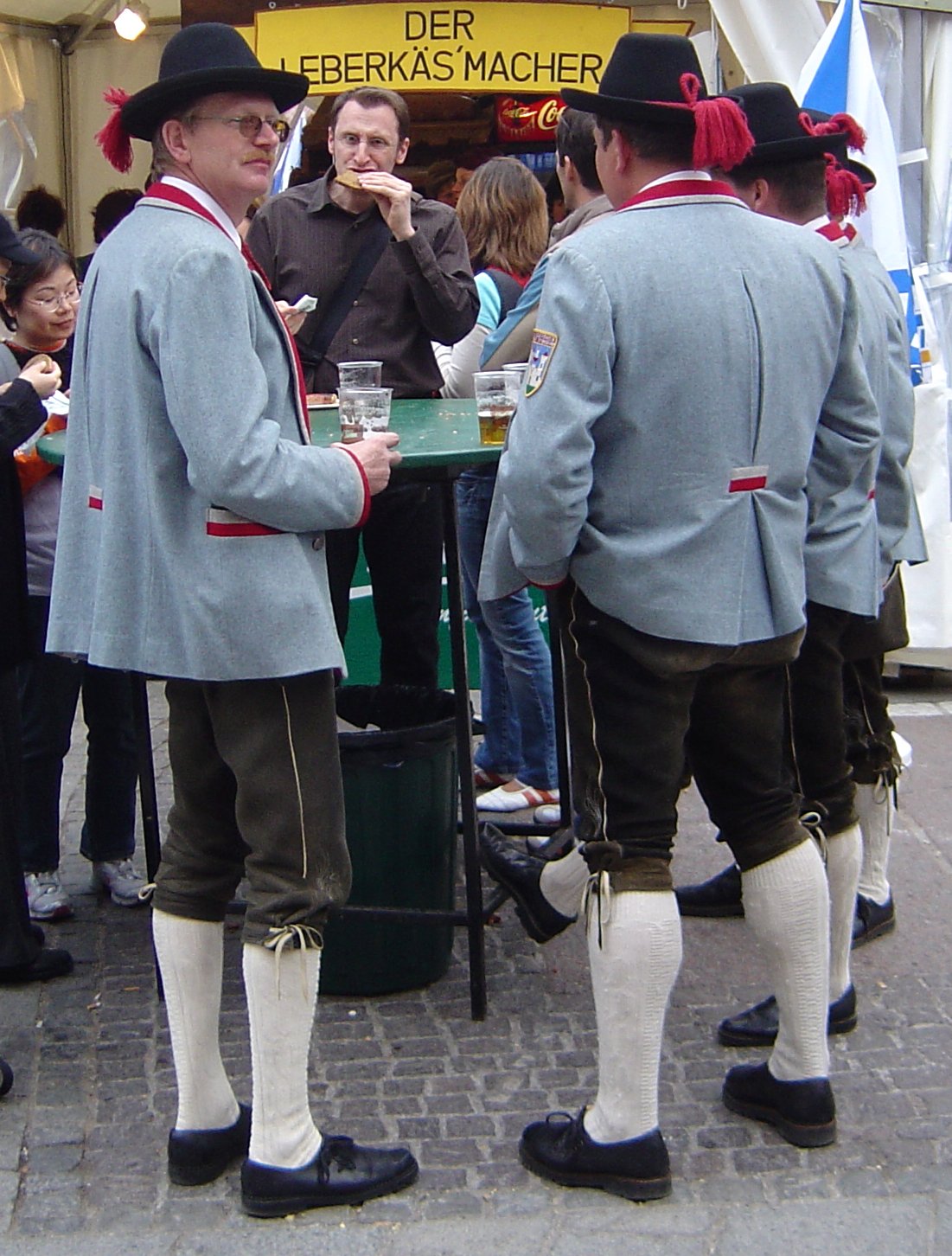 TrachtTraditional dress of the German-speaking regions, from lederhosen to the dirndl
 LederhosenLeather breeches that began as work wear and now belong to Alpine festivals
 Feast of Corpus ChristiA Christian feast celebrating the presence of Christ in the bread and wine of the Eucharist
Good reading and sources
The facts on this page come from the Wikipedia article "Loden cape", written by its contributors and used under the CC BY-SA 4.0 licence, and from its Wikidata record (CC0). EveryParampara rewrote the text in its own words, with AI assistance, and compares every page with the article to make sure no passage is copied. It may be reused under the same CC BY-SA 4.0 licence with a link back.
It may contain mistakes. Traditions differ from one family, village and community to the next, and the people who keep them know them best. If something is wrong, tell us. Last refreshed 2026-10-10.
More from Austria
All the traditions of Austria
🇦🇹 Austria and 4 moreDirndl
A fitted dress with apron from the German-speaking Alps, worn for festivals and weddings.Dress
🇩🇪 Germany and 2 moreLederhosen
Leather breeches that began as work wear and now belong to Alpine festivalsDress
🇩🇪 Germany and 1 moreTracht
Traditional dress of the German-speaking regions, from lederhosen to the dirndlDress
🇪🇸 Valencia, Spain and 5 moreFeast of Corpus ChristiCorpus Domini
A Christian feast celebrating the presence of Christ in the bread and wine of the EucharistSpiritual
The same idea elsewhere
All of this kind 🇮🇳 Paithan, IndiaPaithani
A handwoven silk sari from Maharashtra, with a squared border and a peacock palluDress
🇮🇳 Paithan, IndiaPaithani
A handwoven silk sari from Maharashtra, with a squared border and a peacock palluDress
 🇮🇱 Israel and 1 moreTzitzitצִיצִית
Knotted ritual fringes worn on a four-cornered garment, a reminder of the commandmentsDress
🇮🇱 Israel and 1 moreTzitzitצִיצִית
Knotted ritual fringes worn on a four-cornered garment, a reminder of the commandmentsDress
 🇼🇸 Samoa and 1 moreʻIe tōga
Precious woven mats exchanged in Samoan ceremonies to honor family ties and chiefly status.Dress
🇼🇸 Samoa and 1 moreʻIe tōga
Precious woven mats exchanged in Samoan ceremonies to honor family ties and chiefly status.Dress
 🇪🇬 Egypt and 5 moreTraditional tattooing
The ancient custom of marking the skin for protection, healing, status and sacred ritesDress
🇪🇬 Egypt and 5 moreTraditional tattooing
The ancient custom of marking the skin for protection, healing, status and sacred ritesDress