Tracht
Traditional dress of the German-speaking regions, from lederhosen to the dirndl
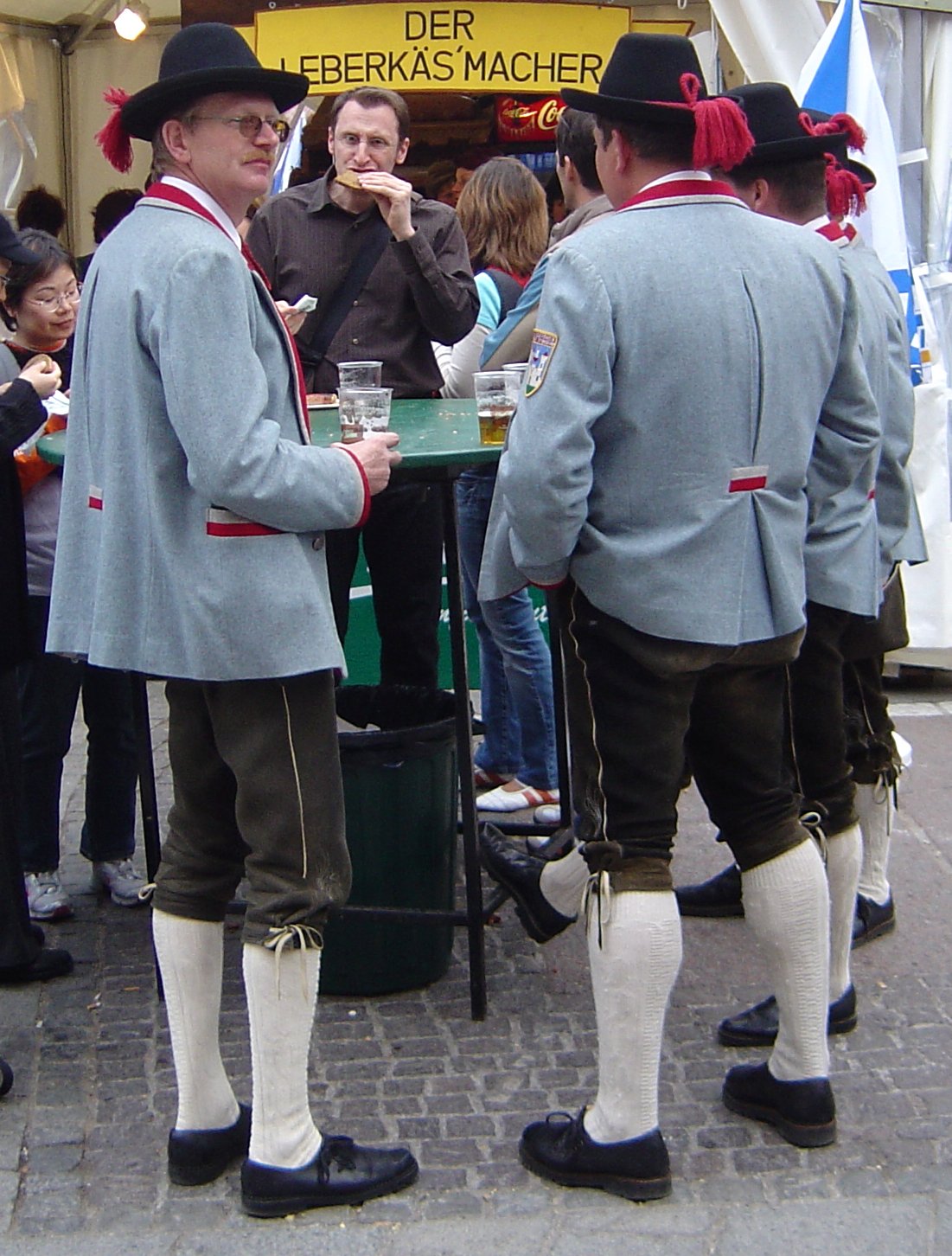
Tracht is the traditional dress of the German-speaking countries and regions. It is best known as the lederhosen and dirndl of Bavaria, Austria and the Alpine areas, but many other German-speaking communities have costumes of their own, kept in use by local tracht associations and museums.
When is Tracht kept?
Tracht is kept on festive days and family occasions, at weddings, parades and tracht association gatherings, not on one fixed date.
Tracht is the traditional dress of the German-speaking countries and regions. The word covers many costumes, from the lederhosen and dirndl of the Alps to the beaded dress of northern Germany and the pompom hats of the Black Forest. People wear it to show where they come from, and today it appears mostly at festivals, weddings and gatherings of local tracht associations.
The word and its uses
The German word Tracht comes from tragen, to carry or to wear, so it means what is worn. In everyday use it points to dress: the costume of a particular people (Volkstracht), of a social class, or of a trade (Arbeitstracht). The same word can describe the way hair or a beard is cut, as in Haartracht and Barttracht, and it appears in the idiom eine Tracht Prügel, a good beating. In English it usually means the traditional garments of the German-speaking countries and regions, above all the lederhosen and dirndls linked with Bavaria, Austria, South Tyrol and Trentino.
Origins and history
Folk costume began in the countryside. It showed which social class, trade, religious group or people the wearer belonged to, and each district developed its own. Urban fashions, the dress of neighbouring areas, the materials to hand, and the styles of royal courts and armies all shaped it. The oldest known examples appear at the end of the 15th century. Every costume had a plain everyday form and a festive one, and the festive form was held up as the ideal. Interest deepened in the 19th century, when German-speaking peoples turned to their own heritage after the invasions of the Napoleonic Wars, and the trachten movement took shape.
Costumes by region
In northern Germany the Friesische Tracht is covered in beads and embroidery, and the quality of the work showed the wealth and standing of the wives who wore it. A bride brought it into the marriage as part of her dowry, and it still comes out at some weddings. On an island in the Elbe, the Finkenwerder Tracht is worn by a folklore group, the Finkwarder Speeldeel. In Baden, tracht is strongest in and around the Black Forest, where the Bollenhut, a wide hat with red pompoms, belongs to unmarried women of Kirnbach, Gutach and Reichenbach. Bavaria's Alpine costume, lederhosen for the Buam, or man, and the dirndl for the Madl, or woman, is the best known of all.
What it means
A tracht tells others where the wearer comes from, and in older times it also told them which class, trade or religious group the person belonged to. The richest versions, heavy with beads and embroidery, showed the standing of a family, and a bridal costume could be part of a dowry. For German-speaking peoples who lost their homes, such as the Sudetendeutsche, putting on tracht at a gathering was a way of standing together. The word also covers dress worn for work and for religion: the habits of religious orders, the dress of deaconesses, and the old garments of some occupations, among them nursing.
Tracht today
Tracht associations (Trachtenvereine) keep regional dress in use. The first was founded at Miesbach in Bavaria in 1859, and an umbrella organisation followed in 1890. Local groups encourage members to wear their costume at festivals and parades, sometimes with an eye on tourism, and some costumes in use now were made recently for that purpose. The Alpine dress spread beyond the Alps through these associations and through people moving for work, until lederhosen and the dirndl came to be understood as the German folk costume. Not all tracht has gone: carpenter journeymen can still be seen in their traditional clothing as they travel across Europe.
How Tracht is kept
People wear tracht mostly on festive occasions rather than every day. Members of local tracht associations put on the costume of their home region for parades, festivals and anniversaries, and some families wear it for weddings. A folklore group on the Elbe, the Finkwarder Speeldeel, keeps the Finkenwerder costume in use. In a few trades the old working dress survives: carpenter journeymen still wear theirs while travelling. Museums hold costumes that are no longer worn, and parades bring many groups together. Which costume a person wears usually marks a region, and once marked a class, a trade or a religious group too.
When and where
Tracht is not tied to one date. It is brought out on festive days and family occasions: weddings, anniversaries, parades and local festivals. A costume may be worn for a whole celebration or only for the parade. Each region keeps its own round of events, and each tracht association sets its own.
Tracht belongs to the German-speaking parts of Europe: Bavaria and Austria above all, along with South Tyrol and Trentino, Baden and the Black Forest in south-western Germany, and northern Germany. Communities of Danube Swabian and Sudeten German background, displaced from Central Europe, also put on tracht to mark who they are. Associations and museums keep it visible in villages and small towns.
What Tracht means
A tracht says where a person comes from and, in older times, which class, trade or religious group they belonged to. The finest versions, decorated with beads and embroidery, showed the wealth and standing of the wearer's family, and a bride might bring her costume into the marriage as part of her dowry. For displaced German-speaking peoples, wearing tracht at gatherings was a way of showing that they belonged together. Later, kings and reformers treated it as a sign of national feeling.


Questions people ask about Tracht
When is Tracht kept?
Tracht is kept on festive days and family occasions, at weddings, parades and tracht association gatherings, not on one fixed date.
What is a tracht?
Tracht is the German word for traditional dress in the German-speaking countries and regions. It can mean the costume of a whole people, such as the lederhosen and dirndl of the Alps, or the dress of a single district, trade or social group.
Where does it come from?
The oldest folk costumes date from the end of the 15th century in rural areas. The organised movement to promote tracht belongs to the 19th century, and the first association for that purpose was founded at Miesbach in Bavaria in 1859.
Is every tracht the same?
No, each region has its own. Bavaria recognises six subtypes of the Alpine tracht today, and other costumes, such as the Bollenhut of the Black Forest, belong to a few villages only. Some of the tracht worn now was created recently, partly for visitors.
Do people still wear lederhosen and dirndls?
Lederhosen for men and the dirndl for women are the best-known Alpine forms. Tracht associations and migration for work carried them beyond the Alps, until they came to be seen as the German folk costume, even though many other regional costumes still exist.
See also
 DirndlA fitted dress with apron from the German-speaking Alps, worn for festivals and weddings.
 Saint Stephen's DayA Christian feast day celebrating the first martyr with feasts, rides and folk customs.
 KlezmerAn Ashkenazi Jewish instrumental tradition of lively dance tunes and ritual melodies
 Bachelor partyA send-off for a groom-to-be, kept in the days and weeks before a wedding
Good reading and sources
- Tracht on WikipediaEncyclopedia
- More photos on Wikimedia CommonsPhotos and video
- Wikidata recordOpen data
The facts on this page come from the Wikipedia article "Tracht", written by its contributors and used under the CC BY-SA 4.0 licence, and from its Wikidata record (CC0). EveryParampara rewrote the text in its own words, with AI assistance, and compares every page with the article to make sure no passage is copied. It may be reused under the same CC BY-SA 4.0 licence with a link back.
It may contain mistakes. Traditions differ from one family, village and community to the next, and the people who keep them know them best. If something is wrong, tell us. Last refreshed 2026-10-05.
More from Germany
All the traditions of Germany
🇦🇹 Austria and 4 moreDirndl
A fitted dress with apron from the German-speaking Alps, worn for festivals and weddings.Dress
 🇺🇦 Chernivtsi, Ukraine and 5 moreVyshyvanka DayДень вишиванки
An annual day for wearing traditional Ukrainian embroidered shirts across the worldDress
🇺🇦 Chernivtsi, Ukraine and 5 moreVyshyvanka DayДень вишиванки
An annual day for wearing traditional Ukrainian embroidered shirts across the worldDress
 🇩🇪 Germany and 2 moreLederhosen
Leather breeches that began as work wear and now belong to Alpine festivalsDress
🇮🇪 Ireland and 5 moreSaint Stephen's Day
A Christian feast day celebrating the first martyr with feasts, rides and folk customs.Spiritual · Feasts and festival meals
🇩🇪 Germany and 2 moreLederhosen
Leather breeches that began as work wear and now belong to Alpine festivalsDress
🇮🇪 Ireland and 5 moreSaint Stephen's Day
A Christian feast day celebrating the first martyr with feasts, rides and folk customs.Spiritual · Feasts and festival meals
The same idea elsewhere
Weddings compared 🇼🇸 Samoa and 1 moreʻIe tōga
Precious woven mats exchanged in Samoan ceremonies to honor family ties and chiefly status.Dress
🇼🇸 Samoa and 1 moreʻIe tōga
Precious woven mats exchanged in Samoan ceremonies to honor family ties and chiefly status.Dress
 🇹🇱 Timor-LesteUma Lulik
Sacred ancestral clan houses and ritual shrines in East TimorSpiritual
🇹🇱 Timor-LesteUma Lulik
Sacred ancestral clan houses and ritual shrines in East TimorSpiritual
 🇮🇩 Indonesia and 2 moreKenduri
A communal prayer meal and gathering shared across Indonesia, Malaysia and BruneiSpiritual · Feasts and festival meals
🇺🇬 UgandaKwanjula
A formal marriage introduction ritual of the Baganda people in Uganda, where families meet to exchange gifts and seek blRite of passage
🇮🇩 Indonesia and 2 moreKenduri
A communal prayer meal and gathering shared across Indonesia, Malaysia and BruneiSpiritual · Feasts and festival meals
🇺🇬 UgandaKwanjula
A formal marriage introduction ritual of the Baganda people in Uganda, where families meet to exchange gifts and seek blRite of passage