Dress and adornmentMiddle East
Luri clothing
Felt hats and woven wool wrappers worn by Luri men in Iran

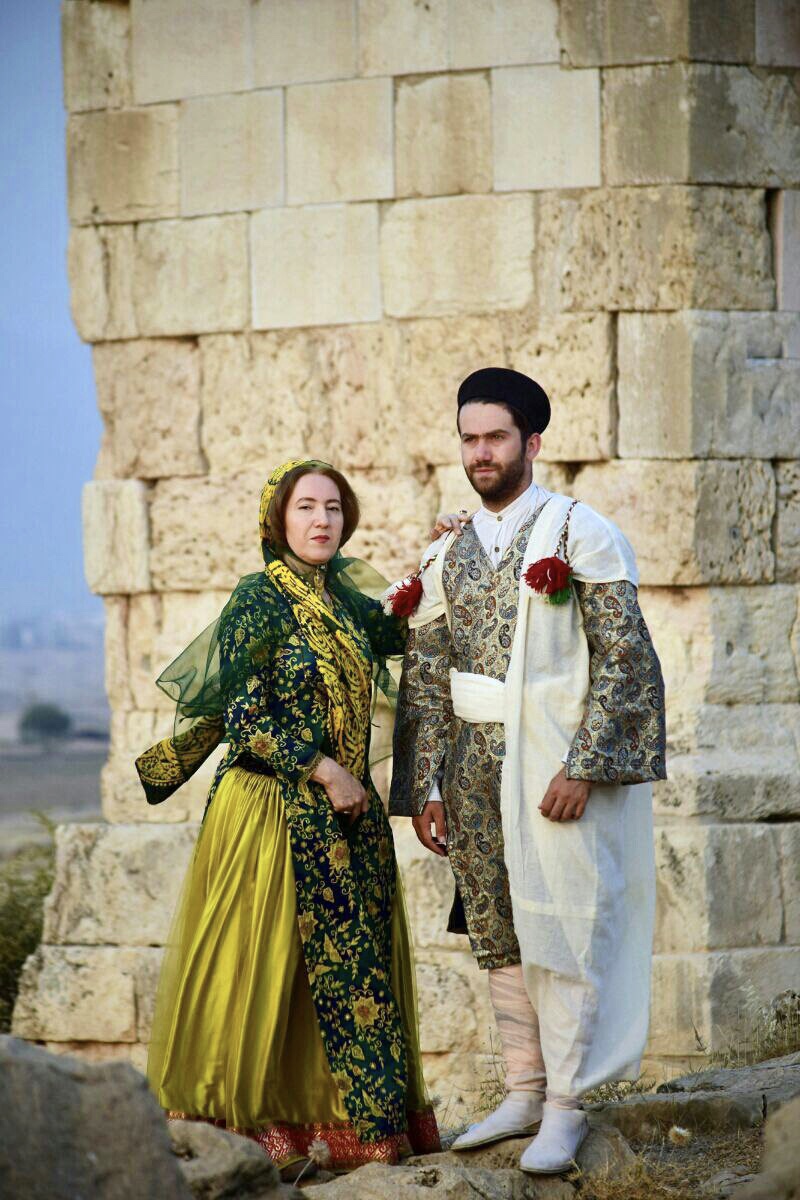
Luri clothing is the dress of the Luri people of the Iranian plateau, known in the sources mainly through men's wear. Two named pieces stand out: a round felt hat with no edges, sometimes surrounded by Golvani, and the chugha, a wool wrapper used prominently by Bakhtiari Lurs.
Luri clothing is the dress described for the Luri people of the Iranian plateau. The sources set out men's wear in particular. Two pieces are named: a round felt hat with no edges, sometimes ringed by Golvani, and the chugha, a wool wrapper. Lurs keep these as part of a culture the sources describe as shaped by long coexistence with the natural world around them.
Lurs of the plateau
The Lurs are a people of the Iranian plateau. The source places their clothing inside a culture that it says grew over a long history, one shaped by the Lurs living alongside the natural elements around them. Geography, culture and religion are all named as forces that left their mark. So the dress is treated as part of a wider inheritance rather than as a set of garments on its own. What survives in the account is brief and mostly about men: a felt hat and a wool wrapper. The article sets these under a heading for men's clothing.
The felt hat
One item is a felt hat. The source gives its Persian name in script, کلأ نِمِدی. It is round, and the description says it has no edges. Sometimes it is surrounded by Golvani; the account does not explain what Golvani is beyond naming it. Felt is matted wool, worked and pressed until it holds a shape, and that is what this hat is made of. The account places the hat among men's wear, and says nothing about who makes it or on what occasions it is worn.
The chugha
Chugha, چوغا, is a masculine wrapper, and the source says it is used prominently by Bakhtiari Lurs. A wrapper here means an outer garment worn over other clothes. It is made from sheep wool, and it is usually woven by Bakhtiari nomads, a people who move rather than settle in one place. That detail links the piece to those herders rather than to a workshop or a town. The account does not describe its cut, its colours, how it is fastened or when it is worn. It appears as a named item of Luri men's dress and little more.
The written record
The account of Luri clothing is short. It opens with a line about Luri culture, then turns to men's clothing and names two things: the felt hat and the chugha. Both are given in Persian script alongside a Latin rendering, but no other garment is described, and the women's side of Luri dress is not covered at all. There are no dates, no named makers, no photographs described and no regions beyond the plateau and the Bakhtiari. Anyone wanting a fuller picture will not find it here. What can be said is that these two pieces are recorded as part of Luri men's dress in Iran.
How Luri clothing is kept
The sources describe these as men's garments worn by Lurs. A felt hat is round with no edges, and sometimes a ring the source calls Golvani surrounds it. The chugha is a wrapper, used prominently by Bakhtiari Lurs, and Bakhtiari nomads usually weave it from sheep wool. Beyond that, the account gives no order of dressing and no ceremony or occasion.
When and where
Iran is the only country the sources tie to this dress. Luri culture is described as having grown across the Iranian plateau, alongside the Lurs' long coexistence with the natural elements around them. Within that, the chugha is named as particularly the wear of Bakhtiari Lurs, and Bakhtiari nomads are named as the people who usually weave it.


Questions people ask about Luri clothing
What is Luri clothing?
It is the dress described for the Luri people of the Iranian plateau. The account in the sources is brief and covers men's wear: a round felt hat, sometimes ringed by Golvani, and the chugha, a wool wrapper used by Bakhtiari Lurs.
Where is it worn?
In Iran. The sources tie Luri culture to the Iranian plateau and name Bakhtiari Lurs in particular for the chugha. They do not list towns, provinces or other countries where the dress is kept.
What is the felt hat like?
It is round and, as the source puts it, has no edges. Sometimes Golvani surrounds it, though the account does not say what Golvani is. Its Persian name is given as کلأ نِمِدی. It belongs to men's clothing.
Who makes the chugha?
The source says Bakhtiari nomads usually weave it, and that it is made from sheep wool. It is described as a masculine wrapper, worn prominently by Bakhtiari Lurs. No individual maker, workshop or town is named.
Does the source describe women's dress?
No. The account sets out a section for men's clothing and stops there. It names only the felt hat and the chugha, both men's pieces. Nothing is said about women's clothing, children's dress, jewellery or shoes.
See also
 PashminaUltra-fine wool of Himalayan goats, hand-woven in Kashmir into shawls of rank
 ChadorA full-length open cloak that is pulled over the head and held shut by handKyrbasiaThe headgear of Achaemenid satraps, later worn by dynasties that followed themArkhaligA traditional fitted jacket worn by men and women in the Caucasus and Iran
Good reading and sources
- Luri clothing on WikipediaEncyclopedia
- More photos on Wikimedia CommonsPhotos and video
- Wikidata recordOpen data
The facts on this page come from the Wikipedia article "Luri clothing", written by its contributors and used under the CC BY-SA 4.0 licence, and from its Wikidata record (CC0). EveryParampara rewrote the text in its own words, with AI assistance, and compares every page with the article to make sure no passage is copied. It may be reused under the same CC BY-SA 4.0 licence with a link back.
It may contain mistakes. Traditions differ from one family, village and community to the next, and the people who keep them know them best. If something is wrong, tell us. Last refreshed 2026-10-12.
More from Iran
All the traditions of Iran
🇮🇳 Srinagar, India and 3 morePashmina
Ultra-fine wool of Himalayan goats, hand-woven in Kashmir into shawls of rankDress
 🇬🇪 Georgia and 5 moreChokha
A high-collared wool coat of the Caucasus, worn by men for battle and ceremonyDress
🇬🇪 Georgia and 5 moreChokha
A high-collared wool coat of the Caucasus, worn by men for battle and ceremonyDress
 🇸🇦 Saudi Arabia and 2 moreHijabحجاب
A Muslim practice of modesty and dress, worn by women as a headscarf or more coveringDress
🇮🇷 Tehran, Iran and 5 moreChadorchādar
A full-length open cloak that is pulled over the head and held shut by handDress
🇸🇦 Saudi Arabia and 2 moreHijabحجاب
A Muslim practice of modesty and dress, worn by women as a headscarf or more coveringDress
🇮🇷 Tehran, Iran and 5 moreChadorchādar
A full-length open cloak that is pulled over the head and held shut by handDress
The same idea elsewhere
All of this kind 🇺🇦 Chernivtsi, Ukraine and 5 moreVyshyvanka DayДень вишиванки
An annual day for wearing traditional Ukrainian embroidered shirts across the worldDress
🇺🇦 Chernivtsi, Ukraine and 5 moreVyshyvanka DayДень вишиванки
An annual day for wearing traditional Ukrainian embroidered shirts across the worldDress
 🇪🇬 Egypt and 5 moreTraditional tattooing
The ancient custom of marking the skin for protection, healing, status and sacred ritesDress
🇪🇬 Egypt and 5 moreTraditional tattooing
The ancient custom of marking the skin for protection, healing, status and sacred ritesDress
 🇼🇸 Samoa and 1 moreʻIe tōga
Precious woven mats exchanged in Samoan ceremonies to honor family ties and chiefly status.Dress
🇼🇸 Samoa and 1 moreʻIe tōga
Precious woven mats exchanged in Samoan ceremonies to honor family ties and chiefly status.Dress
 🇱🇸 LesothoMokorotlo
A conical straw hat that serves as the national symbol of Lesotho and a key element of Basotho traditional dress.Dress
🇱🇸 LesothoMokorotlo
A conical straw hat that serves as the national symbol of Lesotho and a key element of Basotho traditional dress.Dress