Dress and adornmentMiddle EastMuslimZoroastrian
Chador
In its own language: chādar
A full-length open cloak that is pulled over the head and held shut by hand

The chador is an open, full-length cloak that women wear over their clothes outdoors in Iran and other countries shaped by Persian culture, and in Shia communities in some Arab states and in India. It goes over ordinary clothes and has been required, discouraged and argued over in Iran for close to a century.
When is Chador kept?
Chador is kept every day, when going outdoors or into public; in Iran most wearers now keep a black one for outside and lighter ones indoors or for prayer.
The chador is a cloth cloak that reaches the ground and stays open at the front. A woman pulls it over her head and keeps it shut herself, by hand or under her arm, since it has no buttons, clasps or hand openings. Women wear it outdoors in Iran and other Persian-influenced lands, and in Shia communities further afield. Its history is long, and in modern Iran it has been required at some times and discouraged at others.
What it is
A chador is cut as a semicircle of cloth, long enough to fall the whole length of the body, and left open at the front. Nothing fastens it. The wearer lifts it over her head, then keeps the two sides together with a hand or by tucking them under her arms. This is the everyday meaning in Iranian Persian. The word itself is older and broader: in Classical Persian it could describe almost any cloth, a headscarf, or even a tent. That wider sense lives on in the eastern Persian of Tajikistan and Afghanistan, where the same word is used for cloths and scarves of many kinds, including scarves worn loosely, which in Iran would not be called a chador.
Early history
Fadwa El Guindi places the start of veiling in ancient Mesopotamia, where the wives and daughters of noblemen had to cover themselves. Their covering showed rank, and sumptuary laws, rules that limit what people may wear, governed it. Shapes close to the chador appear in the Ergili sculptures and on the Satrap sarcophagus from Persian Anatolia. Bruhn and Tilke's Pictorial History of Costume (1941) prints a drawing said to come from a fifth-century BC Achaemenid relief: a figure with the lower face hidden by cloth wound round the head. It is a Mede soldier, though some have mistaken it for a woman. Women in Achaemenid art are nearly always shown bare-headed. Pahlavi texts from the sixth century describe a head covering for Zoroastrian women, and veiling seems to have continued through Seleucid, Parthian and Sasanian times. Persian kings also veiled.
Modern Iran
Reza Shah banned the chador and every other form of veiling in 1936 under the Kashf-e hijab, judging it at odds with his plans to modernise the country. Police stopped veiled women and took their covering away. Twelver Shia clerics and many ordinary people were angry; Mir-Hosseini, quoted by El Guindi, records that going out uncovered felt to them like going out naked. Westernised and upper-class Iranians mostly approved, reading the ban as a first step toward women's rights. After Reza Shah gave up the throne in 1941 the compulsory part ended, but the policy's spirit lasted. Between 1941 and 1979, Mir-Hosseini writes, veiling was no longer an offence, yet it blocked advancement, and fashionable hotels and restaurants sometimes refused women in a chador.
Cloth and colour
Chadors are not made to one pattern: function, shape, stitching, size and colour have all differed. Before the 1978 to 1979 revolution, black belonged to funerals and mourning, and printed or brightly coloured cloth was what most women wore day to day. Now most Iranian wearers keep a black chador for the street and lighter ones for indoors or for prayer; light-coloured chadors outdoors are mostly worn by older rural women. Cloth and trim once showed money and standing. Elite women in Fes, in Morocco, edged their chadors with white silk or other colours and pinned them with large gold or silver rings; in Qajar Iran wealthy women wore silk, while poorer women used Dabit cloth, and embroidery and borders in gold, silver, red, blue, brown and white marked the finest garments.
South Asia and beyond
The Persian word travelled. In Hindustani it became cādar, written चादर and spelled chaddar, chuddar or chudder in English. There it often means something nearer a dupatta, and in languages such as Hindi and Bengali it is the everyday term for the uttariya, a draped upper cloth. It can also mean a sheet for a bed. Covering the grave of a Sufi saint with a chadar is a devotional act among Muslims in the region, and some non-Muslim politicians in India join in as a way of reaching out to Muslims. Small Haredi Jewish groups exist, such as Lev Tahor, whose women wear black cloaks covering them from head to toe, much like a chador.
How Chador is kept
A woman puts the chador on over her clothes. She draws it over her head, gathers the front, and holds it with one hand, or tucks the edge under an arm so both hands stay free. In Iran today most who wear it outdoors take the black one; lighter cloth is kept for the home and for praying. Traditional dress sets a light or printed chador over a blouse (pirahan), a headscarf (rousari) and a long skirt (daaman), or over a blouse and skirt, or a dress with trousers (shalvar). Rural and older Iranian women still wear these combinations.
When and where
The chador follows no calendar. It is put on to go outside, to pray, or to work through the day, and many Iranian women now keep one colour for the street and another for the house. There is no fixed date, fast or feast attached to wearing it.
Iran is its main home, and it is worn as well in Afghanistan, Azerbaijan and Pakistan, and less widely in Tajikistan. It also appears among Shia women in Iraq, Bahrain, Lebanon, India, and in the eastern Saudi town of Qatif. Within Iran it is strongest among Persian Iranians and among rural and older women.
What Chador means
The chador has never meant only one thing. During the Islamic era in Iran it kept some sense of adornment, then came to stand for Islamic dress and the hijab. It has also never been uniform: its shape, stitching, size, colour and purpose have all varied. For some wearers it is a matter of faith and modesty; for others it has marked class or family tradition. Because of this, disputes over veiling in Iran have been arguments about much more than cloth.


Questions people ask about Chador
When is Chador kept?
Chador is kept every day, when going outdoors or into public; in Iran most wearers now keep a black one for outside and lighter ones indoors or for prayer.
What exactly is a chador?
An open cloak that reaches the ground, cut as a semicircle of cloth with no buttons, clasps or openings for the hands. A woman lifts it over her head and keeps the front closed herself, by hand or under her arm, wearing it over her ordinary clothes rather than instead of them.
Where is it worn, and by whom?
Its main home is Iran. It is worn too in Afghanistan, Azerbaijan and Pakistan, and less widely in Tajikistan, and among Shia women in Iraq, Bahrain, Lebanon, India and the eastern Saudi town of Qatif. Iranian wearers are not all of one branch of Islam; the garment is thought of as traditional to Persian Iranians.
Is it always black?
No. Before the 1978 to 1979 revolution black was for funerals and mourning, while everyday wear was colourful and patterned. Most wearers in Iran now take black outdoors and lighter colours at home, and prayer chadors are usually light, often white. Colourful chadors are still seen in the countryside.
Has the chador always been required in Iran?
Far from it. Reza Shah banned veiling in 1936 and police removed coverings from women. After his abdication in 1941 veiling was legal again but could hold a person back at work. Following the 1979 revolution hijab became compulsory, and women protested in Tehran that year.
How does a chador differ from an abaya or a dupatta?
A chador is open at the front and has to be held shut by the wearer. Arab Iranian women in the west and south of Iran wear an overhead abaya instead, similar to those worn in Iraq, Kuwait and Bahrain. In India and Pakistan the related word cādar often describes something closer to a dupatta, a long scarf.
See also
 TurbanCloth wound around the head, worn for faith, rank, shade and identity
 ChokhaA high-collared wool coat of the Caucasus, worn by men for battle and ceremony
 SherwaniA long buttoned coat for men, worn at weddings and state occasions in South Asia
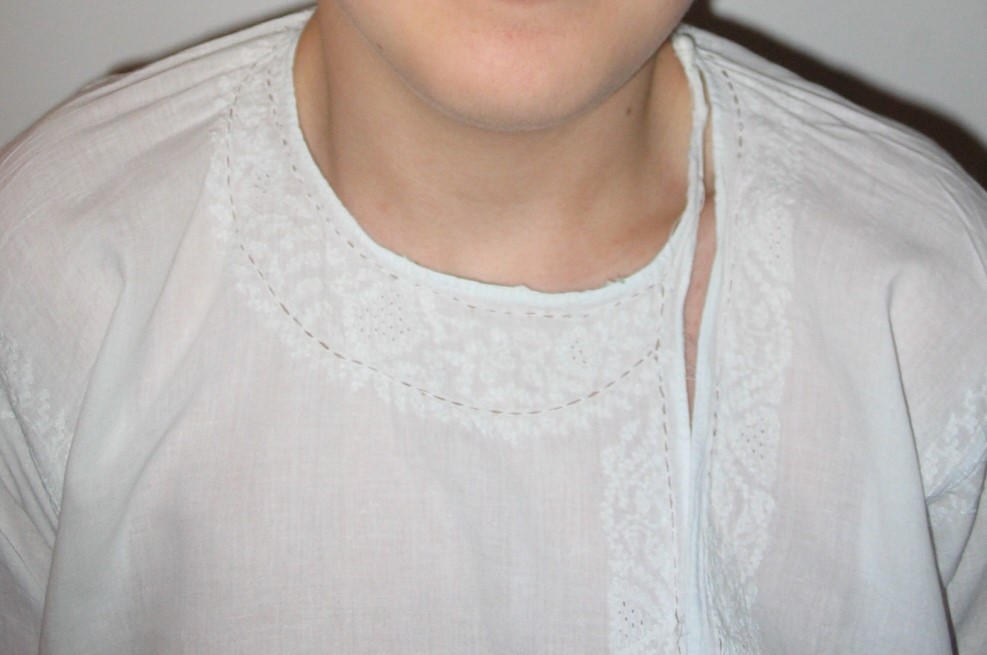 KurtaA loose collarless tunic from South Asia, worn plain or embroidered over pyjamas or jeans
Good reading and sources
- Chador on WikipediaEncyclopedia
- More photos on Wikimedia CommonsPhotos and video
- Wikidata recordOpen data
The facts on this page come from the Wikipedia article "Chador", written by its contributors and used under the CC BY-SA 4.0 licence, and from its Wikidata record (CC0). EveryParampara rewrote the text in its own words, with AI assistance, and compares every page with the article to make sure no passage is copied. It may be reused under the same CC BY-SA 4.0 licence with a link back.
It may contain mistakes. Traditions differ from one family, village and community to the next, and the people who keep them know them best. If something is wrong, tell us. Last refreshed 2026-10-10.
More from Iran
All the traditions of Iran 🇮🇳 Srinagar, India and 3 morePashmina
Ultra-fine wool of Himalayan goats, hand-woven in Kashmir into shawls of rankDress
🇬🇪 Georgia and 5 moreChokha
A high-collared wool coat of the Caucasus, worn by men for battle and ceremonyDress
🇮🇳 Srinagar, India and 3 morePashmina
Ultra-fine wool of Himalayan goats, hand-woven in Kashmir into shawls of rankDress
🇬🇪 Georgia and 5 moreChokha
A high-collared wool coat of the Caucasus, worn by men for battle and ceremonyDress
 🇸🇦 Saudi Arabia and 2 moreHijabحجاب
A Muslim practice of modesty and dress, worn by women as a headscarf or more coveringDress
🇸🇦 Saudi Arabia and 2 moreHijabحجاب
A Muslim practice of modesty and dress, worn by women as a headscarf or more coveringDress
 🇮🇱 Israel and 1 morePurim costume
The Jewish custom of wearing masks and disguises during the festival of PurimDress
🇮🇱 Israel and 1 morePurim costume
The Jewish custom of wearing masks and disguises during the festival of PurimDress
The same idea elsewhere
All of this kind 🇮🇳 Paithan, IndiaPaithani
A handwoven silk sari from Maharashtra, with a squared border and a peacock palluDress
🇮🇳 Paithan, IndiaPaithani
A handwoven silk sari from Maharashtra, with a squared border and a peacock palluDress
 🇳🇴 Norway and 3 moreGákti
A traditional coat worn by the Sámi people across northern Scandinavia and Russia, signaling origin and status through cDress
🇳🇴 Norway and 3 moreGákti
A traditional coat worn by the Sámi people across northern Scandinavia and Russia, signaling origin and status through cDress
 🇼🇸 Samoa and 1 moreʻIe tōga
Precious woven mats exchanged in Samoan ceremonies to honor family ties and chiefly status.Dress
🇼🇸 Samoa and 1 moreʻIe tōga
Precious woven mats exchanged in Samoan ceremonies to honor family ties and chiefly status.Dress
 🇪🇬 Egypt and 5 moreTraditional tattooing
The ancient custom of marking the skin for protection, healing, status and sacred ritesDress
🇪🇬 Egypt and 5 moreTraditional tattooing
The ancient custom of marking the skin for protection, healing, status and sacred ritesDress