Dress and adornmentSouth AsiaHindu
Madisar
In its own language: மடிசார் (Tamil)
A nine-yard sari drape kept by Tamil Brahmin women for weddings, puja and mourning
The madisar is a way of tying the sari that Tamil Brahmin women keep, and Vishvakarma (Asari) women wear it too. It takes nine yards of cloth rather than the modern six, and it is tied for weddings, a ceremony held in a first pregnancy, puja and death rites, not for everyday use.
When is Madisar kept?
Madisar is kept on after marriage, and at weddings, the seemantham, puja and death ceremonies.
The madisar is a sari drape that takes nine yards of cloth, tied by Tamil Brahmin women and also by Vishvakarma, or Asari, women. It is not everyday dress. Women take it up after marriage and wear it at weddings, at the seemantham held in a first pregnancy, at puja and at funerals, so it marks both a married life and the serious moments of family religion.
What it is
The madisar is one way of tying a sari, the long cloth worn by women in India. Unlike the familiar six-yard sari, this drape calls for nine yards. It keeps something of two older garments: the veshti, or dhoti, that men wear, and the koshavam, a generous drape that was once common among Tamil women. From that older koshavam many regional styles grew, and the madisar is the Tamil Brahmin branch of that family. Vishvakarma women, also called Asari, tie it too, though it is linked most of all with Tamil Brahmins.
Two ways to tie
Where the pallu goes is what separates the two Tamil Brahmin groups. Among Iyers the length that crosses the shoulder rests on the right side; among Iyengars it goes over the left. Each group has its own name for the tie: Iyer kattu and Iyengar kattu. The word madisar itself is used above all for these Tamil Brahmin ties, even though other communities tie nine-yard saris of their own. Those other drapes, the nauvari worn in Maharashtra, the Kannada drape and the Telugu Brahmin style, all grew out of the older koshavam way of wrapping.
When it is worn
Everyday use has almost gone. A Tamil Brahmin woman is expected to take up this drape once she marries, and from then on it belongs to the ceremonial side of life rather than to work or the street. Weddings are the clearest setting. It is also tied for the seemantham, a ceremony held during a first pregnancy, for puja, for religious occasions of other kinds, and at death ceremonies, when a household is in mourning. Both Iyer and Iyengar families follow this. Younger women often keep the drape for these occasions alone.
Cloth and colour
Nine yards is the requirement, three more than the modern sari, and that extra cloth is what allows the wrapping and the knotting at the waist. Madisars are made in silk, in cotton, in cotton and silk mixed, and in blends of polyester and cotton. Colour once followed custom. Maroon or red was the shade expected at the start, and many families still hold to it, though women now choose freely. A six-yard version has appeared as well. It is simpler and lighter to manage, but those who keep the older way do not count it as traditional.
Today and change
The drape has moved out of daily life. Most women who keep it wear an ordinary sari for work and bring out the madisar for a wedding, a pregnancy ceremony, worship or a funeral. The choice of colour has widened, so a madisar may now be any shade the wearer likes rather than one settled by custom. A six-yard tie has also come in, made for ease, and some women use it when a nine-yard drape would be awkward. Older women in both Iyer and Iyengar households still tie the full nine yards as a matter of course.
How Madisar is kept
The nine-yard cloth is wrapped and knotted at the waist, more like a dhoti than a modern sari, and the pallu is then carried over one shoulder. Iyer women put it on the right, Iyengar women on the left. A married Tamil Brahmin woman is expected to dress this way, and both Iyer and Iyengar families bring out the madisar for ceremonies: a wedding, the seemantham held in a first pregnancy, puja, other religious occasions, and death rites. Vishvakarma women keep the drape as well. Colour is chosen by the wearer these days.
When and where
The madisar follows no calendar date. It belongs to points in a woman's life and to the ritual occasions of a household. A woman begins to wear it after her marriage, and it returns at weddings, at the seemantham conducted for a first pregnancy, at puja, and at death ceremonies.
The drape belongs to India, and it is strongest among Tamil Brahmin families, both Iyer and Iyengar. Vishvakarma, or Asari, women wear it too, though the name madisar is tied above all to Tamil Brahmins. Since it has left daily life, it is now seen at family ceremonies and religious occasions rather than in ordinary settings.
What Madisar means
For the women who keep it, the madisar is bound up with marriage and with taking part in family ritual. It shows that a woman is married and that she stands within the religious life of her household. The two ties carry identity as well: an Iyer and an Iyengar can be told apart by the shoulder the pallu crosses. Tying it links a woman to an older way of draping cloth that once reached across many communities.
Questions people ask about Madisar
When is Madisar kept?
Madisar is kept on after marriage, and at weddings, the seemantham, puja and death ceremonies.
What is a madisar?
It is a way of draping a sari that needs nine yards of cloth instead of the six used today. It keeps features of the men's veshti, or dhoti, and of the older Tamil koshavam drape. Tamil Brahmin women tie it, and Vishvakarma (Asari) women also wear it.
Who wears the madisar?
Tamil Brahmin women, Iyer and Iyengar alike, are expected to wear it after marriage and at ceremonies. Vishvakarma women, also called Asari, tie it as well. Today most wear it only for weddings, pregnancy ceremonies, puja and funerals rather than every day.
How do Iyer and Iyengar madisars differ?
The difference is the shoulder the pallu crosses. Iyers take it over the right shoulder, Iyengars over the left. Each tie has its own name, Iyer kattu and Iyengar kattu. Otherwise both are nine-yard drapes worn at the same kinds of ceremony.
Why nine yards?
The older koshavam drape that the madisar comes from used more cloth than the modern sari. Nine yards allows the wrapping and knotting that give the style its shape, while today's usual six-yard sari is simpler. A six-yard madisar is now tied by some, but it is not considered traditional.
See also
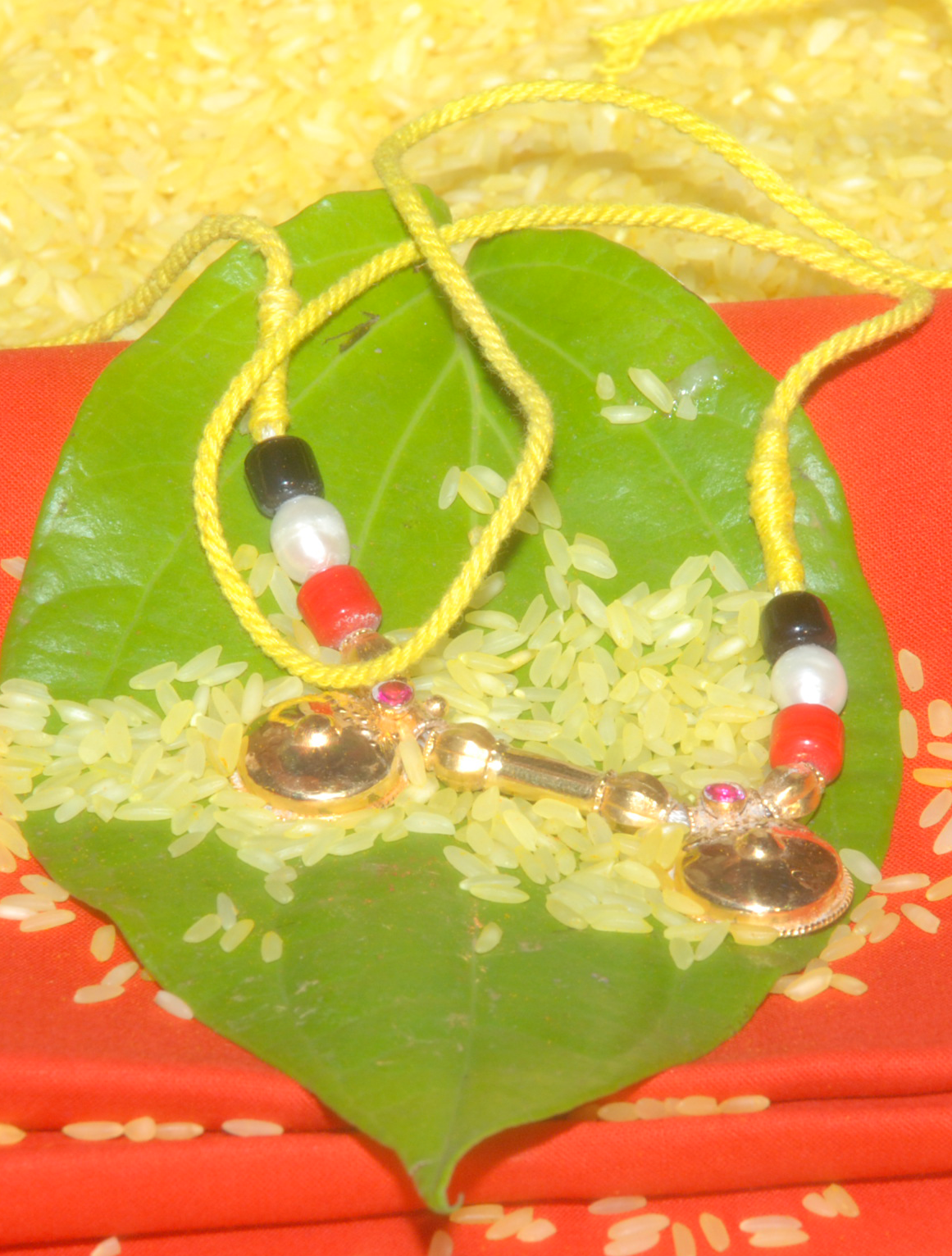 MangalasutraA necklace tied by the groom at a wedding, worn through married life
 SherwaniA long buttoned coat for men, worn at weddings and state occasions in South Asia
 TurbanCloth wound around the head, worn for faith, rank, shade and identity
Good reading and sources
The facts on this page come from the Wikipedia article "Madisar", written by its contributors and used under the CC BY-SA 4.0 licence, and from its Wikidata record (CC0). EveryParampara rewrote the text in its own words, with AI assistance, and compares every page with the article to make sure no passage is copied. It may be reused under the same CC BY-SA 4.0 licence with a link back.
It may contain mistakes. Traditions differ from one family, village and community to the next, and the people who keep them know them best. If something is wrong, tell us. Last refreshed 2026-10-10.
More from India
All the traditions of India
🇮🇳 Pune, India and 5 moreTurbanدولبند (dolband)
Cloth wound around the head, worn for faith, rank, shade and identityDress
🇮🇳 India and 2 moreMangalasutraमङ्गलसूत्रम् (maṅgalasūtram)
A necklace tied by the groom at a wedding, worn through married lifeDress
🇮🇳 Lucknow, India and 3 moreSherwani
A long buttoned coat for men, worn at weddings and state occasions in South AsiaDress
 🇮🇳 Mumbai, India and 1 moreDhoti
A long unstitched cloth men wrap like trousers, for worship and formal daysDress
🇮🇳 Mumbai, India and 1 moreDhoti
A long unstitched cloth men wrap like trousers, for worship and formal daysDress
The same idea elsewhere
Weddings compared 🇼🇸 Samoa and 1 moreʻIe tōga
Precious woven mats exchanged in Samoan ceremonies to honor family ties and chiefly status.Dress
🇼🇸 Samoa and 1 moreʻIe tōga
Precious woven mats exchanged in Samoan ceremonies to honor family ties and chiefly status.Dress
 🇹🇱 Timor-LesteUma Lulik
Sacred ancestral clan houses and ritual shrines in East TimorSpiritual
🇹🇱 Timor-LesteUma Lulik
Sacred ancestral clan houses and ritual shrines in East TimorSpiritual
 🇮🇩 Indonesia and 2 moreKenduri
A communal prayer meal and gathering shared across Indonesia, Malaysia and BruneiSpiritual · Feasts and festival meals
🇮🇩 Indonesia and 2 moreKenduri
A communal prayer meal and gathering shared across Indonesia, Malaysia and BruneiSpiritual · Feasts and festival meals
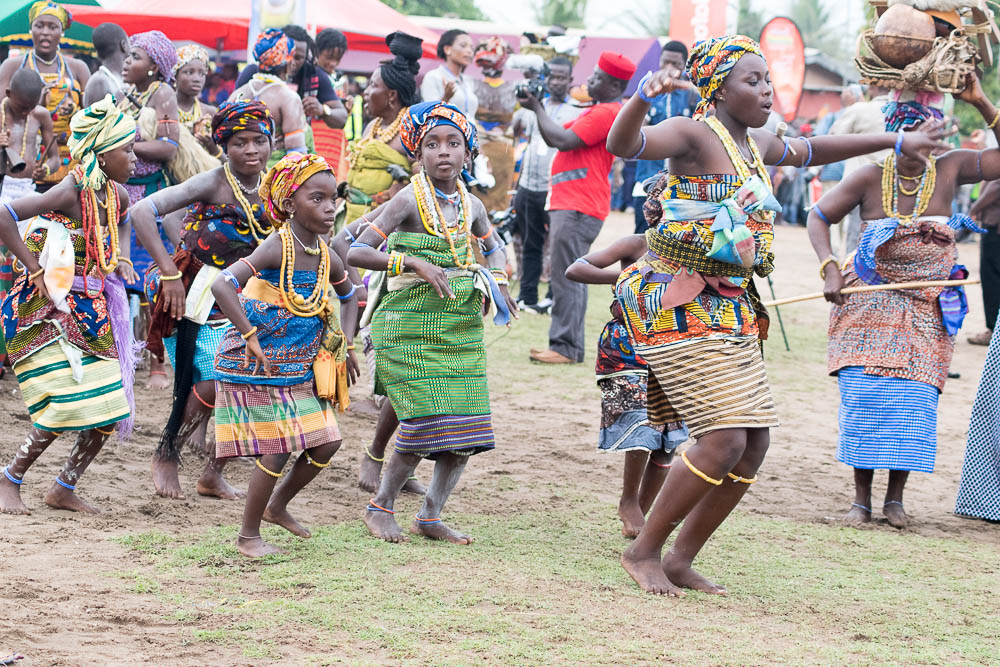 🇬🇭 Ghana and 2 moreAgbadza
An Ewe music and dance, born of war songs and kept for funerals, weddings and festivalsPerformance
🇬🇭 Ghana and 2 moreAgbadza
An Ewe music and dance, born of war songs and kept for funerals, weddings and festivalsPerformance