Spiritual and religiousSoutheast AsiaMuslim
Malam Tujuh Likur
In its own language: مالم توجوه ليكور
The Malay custom of lighting oil lamps during the closing nights of Ramadan.
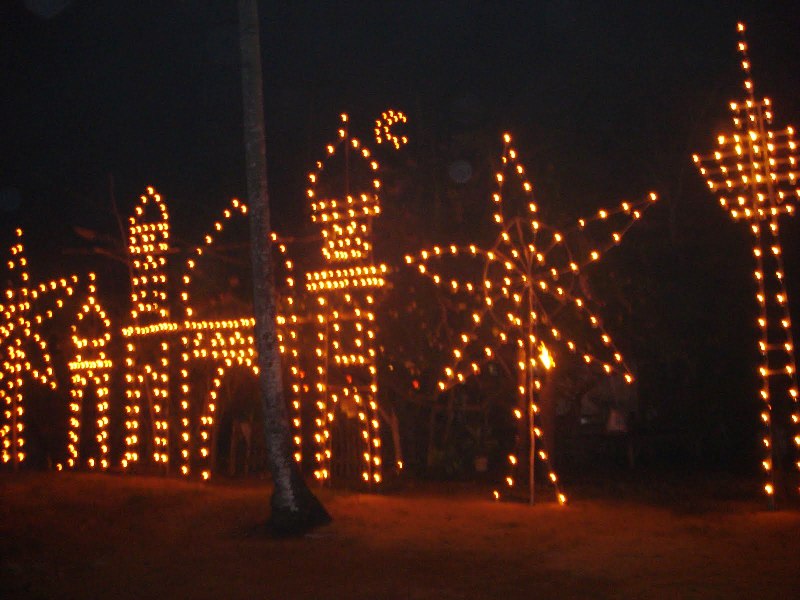
Malam Tujuh Likur is a Malay custom observed across Malaysia and Indonesia during the closing phase of Ramadan. People set out oil lamps, build illuminated bamboo frames, cook communal meals and pray together through the night to welcome Lailatul Qadar.
When is Malam Tujuh Likur marked?
Malam Tujuh Likur is kept as part of Ramadan, which runs from 8 February to 9 March 2027.
Malam Tujuh Likur is a Malay tradition of setting out oil lamps during the closing stage of Ramadan. Beginning on the twenty-first night of the fasting month, families place burning wicks along roads, gates and pathways. The display grows larger until reaching its height on the twenty-seventh night. Communities gather to recite the Quran, perform additional night prayers, share communal evening meals and seek the blessings of Lailatul Qadar.
Lighting paths and village gates
Originally, oil lamps called pelita buluh lit unpaved rural tracks between homes and local mosques so worshippers could walk safely for late-night prayers. People set up hollow bamboo stakes with kerosene wicks along fences and pathways. Over time, these simple lights evolved into intricate public displays. In places like Ipoh and Kuala Kangsar, communities craft large wooden and bamboo scaffolds called pelita panjut. Wicks are set in linear rows to spell words or create silhouettes of famous mosques, such as the Malacca Straits Mosque or Ubudiah Mosque. In Sarawak, the bertuntung custom sees entire houses and decorative arches outlined with lights.
Shared meals and community work
Preparation for the night often brings neighbourhoods together through gotong-royong, a tradition of mutual help. In Kota, Negeri Sembilan, residents spend daylight hours cooking large batches of traditional foods such as dodol, lemang, rendang and bubur lambuk. Once the fast breaks at sunset, people sit cross-legged on the floor in communal spaces for a shared feast known as makan bersila, distributing leftover portions to neighbours. In Karimun Regency in Indonesia, households host festive gatherings called kenduri, serving traditional sweet cakes such as wajik, bangkit and bahulu while keeping their doors and windows open to visitors.
Spiritual focus and celebration
The timing corresponds with the search for Lailatul Qadar, the Night of Power, which Islamic scholarship associates with the odd-numbered nights late in the month. Beyond lighting pathways, worshippers dedicate their evenings to reciting the Quran, making personal supplications and performing Tahajjud night prayers. The illuminated streets also mark the approaching end of the fasting month, prompting believers to deepen their devotional efforts. In parts of Indonesia, such as Daik in Lingga Regency, young people construct decorative archways and play bamboo cannons on open fields to accompany the religious observances.
How Malam Tujuh Likur is kept
Villagers build bamboo structures and set out oil lamps along roadsides, porches and front gates starting on the twenty-first night of Ramadan. Each evening, more lamps are lit, reaching a peak on the twenty-seventh night. During the day, neighbours cooperate to cook festive foods in large pots for community distribution. At nightfall, families break fast together, attend the mosque, chant Quranic verses, recite Tahajjud prayers and keep their homes open and warmly illuminated.
When and where
The observance starts on the 21st night of Ramadan on the Islamic lunar calendar. Lamp displays expand night after night until the 27th night, known as Malam Tujuh Likur, when the illumination and communal gatherings reach their highest intensity.
The tradition is widely observed in rural and urban areas of Malaysia, including Perak, Negeri Sembilan and Sarawak, as well as Indonesian regions such as the Riau Islands, Riau and the Bangka Belitung Islands.
What Malam Tujuh Likur means
Lighting lamps represents guiding night travellers to the mosque while encouraging devotion in search of Lailatul Qadar. The glow signals that Ramadan is drawing to a close, serving as a reminder to pray, reflect and strengthen ties with neighbours through hospitality and shared work.


Days Malam Tujuh Likur is marked
Questions people ask about Malam Tujuh Likur
When is Malam Tujuh Likur marked?
Malam Tujuh Likur is kept as part of Ramadan, which runs from 8 February to 9 March 2027.
What is Malam Tujuh Likur?
Malam Tujuh Likur is a Malay cultural and religious custom where people set out rows of oil lamps, prepare communal food, and hold night prayers during the closing stretch of Ramadan.
Where is the tradition observed?
It is widely observed across Malaysia and parts of Indonesia, particularly in Perak, Negeri Sembilan, Sarawak, the Riau Islands, and Bangka Belitung.
What are pelita panjut?
Pelita panjut are oil lamps mounted on large bamboo frameworks. Builders arrange them into glowing shapes, words, or mosque silhouettes visible across the neighbourhood.
See also
 Isra and Mi'rajAn Islamic observance marking the prophet Muhammad’s night journey and ascent through the heavens.
 ThaipusamA Tamil Hindu festival honoring Murugan through devotional burdens and pilgrimage
 Mid-Sha'banAn Islamic night of prayer, remembrance, and seeking divine forgiveness.
 NyepiA Balinese Hindu day of silence, fasting and stillness marking the Saka new year
Good reading and sources
The facts on this page come from the Wikipedia article "Malam Tujuh Likur", written by its contributors and used under the CC BY-SA 4.0 licence, and from its Wikidata record (CC0). EveryParampara rewrote the text in its own words, with AI assistance, and compares every page with the article to make sure no passage is copied. It may be reused under the same CC BY-SA 4.0 licence with a link back.
It may contain mistakes. Traditions differ from one family, village and community to the next, and the people who keep them know them best. If something is wrong, tell us. Last refreshed 2026-10-06.
More from Malaysia
All the traditions of Malaysia
🇮🇳 India and 5 moreThaipusam
A Tamil Hindu festival honoring Murugan through devotional burdens and pilgrimageSpiritual
 🇮🇳 Palani, India and 5 moreKavadi Aattamகாவடி ஆட்டம்
Tamil devotees of Murugan carry burdens as a vow during ThaipusamSpiritual
🇮🇳 Palani, India and 5 moreKavadi Aattamகாவடி ஆட்டம்
Tamil devotees of Murugan carry burdens as a vow during ThaipusamSpiritual
 🇹🇭 Thailand and 7 moreSpirit house
A small roofed shrine on a pillar, kept in homes and villages across Southeast Asia to honour protective spirits.Spiritual
🇹🇭 Thailand and 7 moreSpirit house
A small roofed shrine on a pillar, kept in homes and villages across Southeast Asia to honour protective spirits.Spiritual
 🇮🇩 Indonesia and 2 moreKenduri
A communal prayer meal and gathering shared across Indonesia, Malaysia and BruneiSpiritual · Feasts and festival meals
🇮🇩 Indonesia and 2 moreKenduri
A communal prayer meal and gathering shared across Indonesia, Malaysia and BruneiSpiritual · Feasts and festival meals
The same idea elsewhere
Fasting and feasting compared 🇮🇪 Ireland and 5 moreHalloween
An annual observance on 31 October marking the eve of All Saints' Day, rooted in Christian tradition and Celtic heritageFestival · Sweets given and shared
🇮🇪 Ireland and 5 moreHalloween
An annual observance on 31 October marking the eve of All Saints' Day, rooted in Christian tradition and Celtic heritageFestival · Sweets given and shared
 🇹🇷 Turkey and 5 moreEid al-Fitrعيد الفطر
The feast that ends Ramadan, opened with morning prayers, sweets and visits homeFestival · Feasts and festival meals
🇹🇷 Turkey and 5 moreEid al-Fitrعيد الفطر
The feast that ends Ramadan, opened with morning prayers, sweets and visits homeFestival · Feasts and festival meals
 🇦🇺 Australia and 5 moreGood Friday
A solemn Christian holy day commemorating the crucifixion and death of Jesus Christ.Spiritual · Fasting and breaking the fast
🇦🇺 Australia and 5 moreGood Friday
A solemn Christian holy day commemorating the crucifixion and death of Jesus Christ.Spiritual · Fasting and breaking the fast
 🇮🇳 Ayodhya, India and 7 moreDiwaliदीपावली (Dīpāvalī)
A five-day festival of lights celebrated across India and its diaspora to mark the victory of light over darkness.Festival · Feasts and festival meals
🇮🇳 Ayodhya, India and 7 moreDiwaliदीपावली (Dīpāvalī)
A five-day festival of lights celebrated across India and its diaspora to mark the victory of light over darkness.Festival · Feasts and festival meals