Customs of food and drinkEast Asia
Manchu-Han Imperial Feast
In its own language: 滿漢全席
A grand multi-day banquet uniting Manchu and Han culinary traditions in China

Developed during the Qing dynasty, the Manchu-Han Imperial Feast is a grand Chinese banquet tradition that brought together distinct culinary customs from across the empire. It traditionally spanned three days and six separate dining sessions, serving hundreds of rare dishes to unite imperial and regional cooking styles.
When is Manchu-Han Imperial Feast kept?
Manchu-Han Imperial Feast is kept on over three days during imperial celebrations.
The Manchu-Han Imperial Feast is an elaborate Chinese banquet tradition developed during the Qing dynasty. Created to bridge culinary divides between Manchu and Han peoples, the celebration brought together flavours from the royal court, Shandong, and southern regions. Over three days, guests partook in a sequence of opulent banquets featuring hundreds of rare delicacies, turning a formal meal into a grand display of imperial harmony and culinary craftsmanship.
Origins and court legends
Accounts differ on how the banquet began. When the Qing dynasty assumed power in the seventeenth century, Manchu chefs replaced the Shandong cooks previously employed by Ming emperors. Later, the Qianlong Emperor brought celebrated chefs from southern China into court kitchens, merging northern, southern, and Manchu flavours. Another story attributes the feast to the Kangxi Emperor, who supposedly hosted a gathering on his sixty-sixth birthday to foster goodwill between Manchu and Han officials. A contrasting viewpoint suggests the feast originated not in court life, but as a comic xiangsheng routine reciting elaborate food menus.
The banquet structure
A complete feast unfolded across three days and comprised six distinct meals. Historical records indicate the gathering presented between 108 and 320 dishes, splitting into roughly two hundred main courses and over one hundred snack platters. The festivities were partitioned between inner and outer palace banquets. The imperial family and high-ranking officials, including senior Han dignitaries, gathered in the inner palace. Diners sampled Manchu dishes before moving on to Han recipes, eating from ornate bronze and porcelain dishes shaped like animals, designed with built-in features to keep food hot.
Rare delicacies and dishes
The banquet became renowned for the Thirty-Two Delicacies, a collection of prized ingredients categorised across mountain, land, and sea. Preparations highlighted unusual offerings such as camel hump, deer tendon, bear paw, and monkey brain, alongside sea cucumber, edible bird's nest, and shark fin. Alongside these rare items, the feast presented regional specialities including Peking duck, Dezhou braised chicken, Wensi tofu, and delicate egg tarts. Cooks drew upon diverse techniques from every corner of China, presenting an immense variety of roasted, simmered, and braised recipes.
Legacy and modern memory
By the nineteenth century, the feast had expanded beyond imperial circles into cities such as Canton and Tianjin. Modern dining culture continues to reference the tradition, with restaurants and media staging recreated banquets spanning dozens of courses. In contemporary everyday speech, the name has become a common idiom describing any lavish or oversized spread of food. It also features frequently in television dramas, films, cooking contests, and branded food products, maintaining a prominent place in Chinese popular culture.
How Manchu-Han Imperial Feast is kept
The celebration took place over three days, dividing diners into inner and outer palace gatherings. High-ranking dignitaries and the imperial family attended the inner banquets. Guests enjoyed six sequential meals featuring hundreds of distinct dishes, always beginning with Manchu recipes before tasting Han courses. Elaborate bronze and porcelain tableware, crafted in animal shapes, kept every dish warm during the prolonged dining sessions.
When and where
The feast was held during major occasions, such as the Qianlong Emperor's court events or the sixty-sixth birthday celebration associated with the Kangxi Emperor. Modern recreations are organised for special cultural events, culinary contests, and historic reenactments.
Originating in the Qing imperial palace in China, the banquet style later spread to major commercial centres including Canton and Tianjin. Today, the tradition is remembered across China and referenced in wider East Asian media.
What Manchu-Han Imperial Feast means
The feast was created to ease cultural tensions between Manchu and Han communities following the Qing conquest. By serving both culinary traditions at a shared table and inviting officials from both groups, the banquet symbolised imperial unity, harmony, and the culinary wealth of the entire empire.
Questions people ask about Manchu-Han Imperial Feast
When is Manchu-Han Imperial Feast kept?
Manchu-Han Imperial Feast is kept on over three days during imperial celebrations.
What is the Manchu-Han Imperial Feast?
It is a grand banquet style from the Qing dynasty in China that merged Manchu and Han culinary traditions. Spanning three days and six meals, it featured over one hundred dishes presented in elaborate heated tableware.
Where and when did this banquet tradition originate?
The banquet originated in China during the Qing dynasty between the seventeenth and eighteenth centuries, initially prepared in imperial court kitchens before spreading to commercial culinary scenes in cities like Tianjin and Canton.
How many dishes were served during the feast?
Accounts vary, but a full feast traditionally included between 108 and 320 courses. These were divided into nearly two hundred main dishes and over one hundred snack plates, served across six dining sittings.
What does the feast represent in modern Chinese culture?
Beyond historical reenactments, the name has become a popular idiom used to describe any exceptionally lavish feast or massive meal, and it frequently appears in films, television shows, and food branding.
See also
 PretaOfferings and rites for spirits enduring deep hunger across Asian traditions.
 Feast of the Seven FishesAn Italian-American Christmas Eve seafood dinner marking abstinence from meat.
 JiaoziCrescent Chinese dumplings filled with meat or vegetables, eaten for fortune and feasts
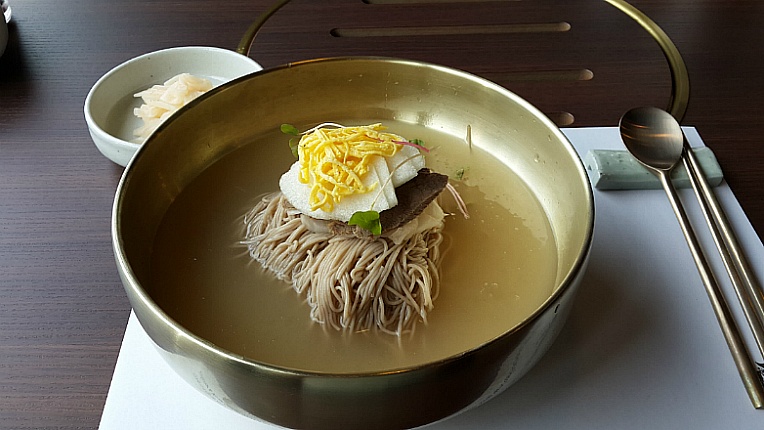 NaengmyeonLong buckwheat noodles in icy broth, born in North Korea and eaten most in summer
Good reading and sources
The facts on this page come from the Wikipedia article "Manchu–Han Imperial Feast", written by its contributors and used under the CC BY-SA 4.0 licence, and from its Wikidata record (CC0). EveryParampara rewrote the text in its own words, with AI assistance, and compares every page with the article to make sure no passage is copied. It may be reused under the same CC BY-SA 4.0 licence with a link back.
It may contain mistakes. Traditions differ from one family, village and community to the next, and the people who keep them know them best. If something is wrong, tell us. Last refreshed 2026-10-04.
More from China
All the traditions of China 🇨🇳 Chaozhou, China and 1 moreGongfu tea工夫茶
A skilled Chinese method of brewing tea in small teaware with precise heat and timingTable custom · Tea, coffee and drinking ceremonies
🇨🇳 Shanghai, China and 1 moreJiaozi餃子
Crescent Chinese dumplings filled with meat or vegetables, eaten for fortune and feastsTable custom · Breakfast
🇰🇵 Pyongyang, North Korea and 3 moreNaengmyeon냉면
Long buckwheat noodles in icy broth, born in North Korea and eaten most in summerTable custom · Dinner
🇨🇳 Chaozhou, China and 1 moreGongfu tea工夫茶
A skilled Chinese method of brewing tea in small teaware with precise heat and timingTable custom · Tea, coffee and drinking ceremonies
🇨🇳 Shanghai, China and 1 moreJiaozi餃子
Crescent Chinese dumplings filled with meat or vegetables, eaten for fortune and feastsTable custom · Breakfast
🇰🇵 Pyongyang, North Korea and 3 moreNaengmyeon냉면
Long buckwheat noodles in icy broth, born in North Korea and eaten most in summerTable custom · Dinner
The same idea elsewhere
Royalty and coronation compared 🇳🇵 Kathmandu, Nepal and 4 moreDashainबडादशैँ
A fifteen-day festival of family gatherings, blessings, and feasts across NepalFestival
🇳🇵 Kathmandu, Nepal and 4 moreDashainबडादशैँ
A fifteen-day festival of family gatherings, blessings, and feasts across NepalFestival
 🇳🇬 Kano, NigeriaDurbar festival
An equestrian gathering marking Muslim holidays across northern Nigerian emiratesFestival
🇳🇬 Kano, NigeriaDurbar festival
An equestrian gathering marking Muslim holidays across northern Nigerian emiratesFestival
 🇮🇳 Kochi, IndiaVallam Kalivaḷḷaṃ kaḷi
A traditional canoe racing festival held across the waters of Kerala during OnamGame
🇮🇳 Kochi, IndiaVallam Kalivaḷḷaṃ kaḷi
A traditional canoe racing festival held across the waters of Kerala during OnamGame
 🇹🇷 Bursa, Turkey and 5 moreKaragöz and Hacivat
A Turkish shadow play of two quarrelling friends, acted on a lit screen behind a curtainPerformance
🇹🇷 Bursa, Turkey and 5 moreKaragöz and Hacivat
A Turkish shadow play of two quarrelling friends, acted on a lit screen behind a curtainPerformance