Customs of food and drinkEast Asia
Gongfu tea
In its own language: 工夫茶
A skilled Chinese method of brewing tea in small teaware with precise heat and timing

Gongfu tea is a skilled Chinese brewing custom originating in Fujian and Chaoshan that uses miniature vessels and high leaf ratios. Practised throughout China and Taiwan, hosts serve successive short infusions from a sharing pitcher to bring out the pure flavour of fine leaves.
When is Gongfu tea kept?
Gongfu tea is kept on year-round during daily gatherings and tea tastings.
Gongfu tea is a meticulous Chinese way of preparing loose tea leaves using small vessels and concentrated water ratios. Originating around the eighteenth century in eastern Guangdong and Fujian, its name refers to the focused effort and skill required to brew. Practitioners balance water heat, steeping duration, and mineral quality to bring out the deepest aroma and flavor from fine leaves during shared gatherings.
Origins and history
Loose leaf tea became common across households by the close of the fourteenth century, eventually gaining imperial favor under the Ming dynasty. Scholars place the emergence of the gongfu style around the eighteenth century. Some trace its roots to the Wuyi Mountains of Fujian alongside export oolong production, while others attribute its development to Chaoshan in Guangdong. By the twentieth century, the custom was widely known as Chaoshan gongfu tea, embedding itself deeply into regional daily life. Today, the city of Chaozhou is widely regarded as a central home of this tea tradition.
Vessels and utensils
The practice relies on compact teaware, such as a Yixing clay pot or a lidded bowl called a gaiwan, holding sixty to two hundred millilitres. A tea pitcher, or fairness cup, receives the liquid first so that every cup shares an identical brew strength. Drinkers use three small porcelain cups that cool quickly and showcase the colour of the liquor. Accessories include slotted wooden trays with drainage reservoirs, strainers, tea presentation vessels, and spatulas. Many practitioners also place clay tea pets on the tray, pouring rinse water over them to form an aged sheen.
Water and temperature
Masters prioritize clean spring water with balanced minerals, avoiding distilled water that leaves tea flat as well as excessively hard water. Water temperature is adjusted according to the type of leaf. Delicate green and white teas require lower heat, between seventy and ninety degrees Celsius, to prevent bitterness. Darker, oxidized, or fermented varieties like red tea and aged pu'er need near-boiling or boiling water. Brewers often read heat by observing bubble size in the kettle, recognizing early sizzling bubbles as crab eyes and larger bubbles as fish eyes.
Etiquette and hosting
Teochew speakers refer to tea drinking as eating tea. After pouring, the host invites guests to drink by saying eat, to which guests reply with the same word. Hosts present each teacup using both hands, and guests receive it with both hands to show courtesy. Pouring the liquid through a fairness cup ensures that nobody receives a weaker brew. The leaves are infused several times, allowing everyone at the table to enjoy the gradual changes in aroma and taste.
How Gongfu tea is kept
A host begins by rinsing a small teapot or gaiwan with boiling water to warm the clay or porcelain. Dry leaves are measured into the vessel, briefly rinsed with hot water, and drained immediately. The host then pours fresh hot water over the leaves, steeping them for ten to fifteen seconds before emptying the brew into a fairness pitcher. From the pitcher, the tea is divided evenly among tasting cups. The host presents a cup to each guest with both hands, inviting them to drink. Multiple quick infusions follow.
When and where
Gongfu tea does not depend on a specific holiday or calendar date. Instead, it is prepared at any time of day when hosting guests, relaxing at home, or conducting focused tea tastings in shops and studios.
The custom originated in the Chaoshan area of eastern Guangdong and the Wuyi Mountains of Fujian. It remains a daily staple in Chaozhou and is widely practised in teahouses across mainland China and Taiwan.
What Gongfu tea means
The term gongfu refers to patience, precision, and refined craftsmanship. Drinking tea is seen as a way to satisfy both taste and spirit. Serving tea equally through a fairness pitcher reflects fairness among all participants at the table, while the hand gestures express mutual courtesy and connection.
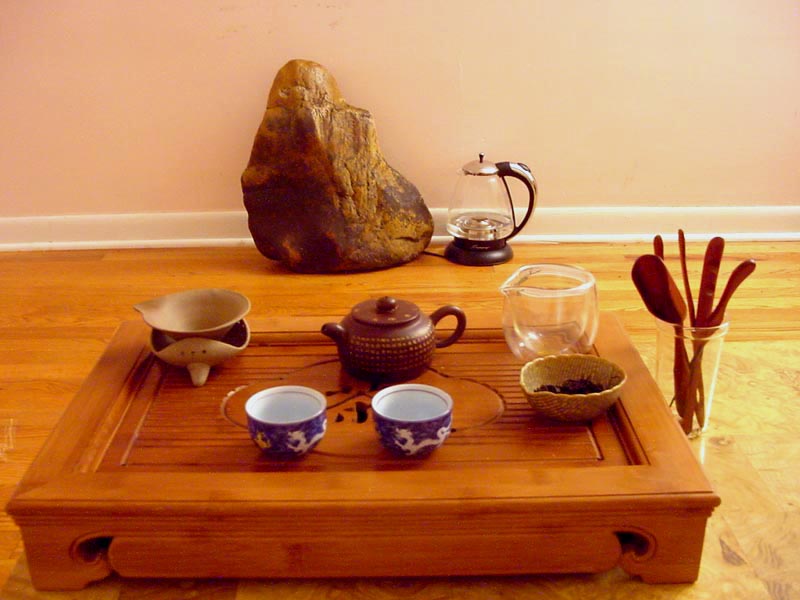


Questions people ask about Gongfu tea
When is Gongfu tea kept?
Gongfu tea is kept on year-round during daily gatherings and tea tastings.
What is Gongfu tea?
Gongfu tea is a traditional Chinese method of brewing tea with high skill. It uses miniature teapots or gaiwans, precise water temperatures, and a high proportion of leaves to water for multiple short infusions.
Where is Gongfu tea practised?
The practice originated in Guangdong and Fujian, especially around Chaozhou in the Chaoshan area. Today, it is enjoyed daily across China and Taiwan in homes, specialized teashops, and tea studios.
Why are the brewing vessels so small?
Small teapots and cups allow precise control over steeping times and leaf ratios. This prevents the tea from turning bitter while ensuring every guest receives tea of the exact same strength.
What is the role of the fairness cup?
The fairness cup, or tea pitcher, holds the steeped liquid before serving. Decanting the brew into this pitcher first prevents over-steeping in the pot and ensures everyone receives a uniform strength of tea.
See also
 Chinese tea cultureA centuries-old practice of cultivating, brewing, and sharing tea as a social and spiritual ritual in China.GuanxiA Chinese tradition of cultivating trusted networks and reciprocal obligations
 Qingming FestivalA spring custom of sweeping family graves and honouring ancestors across East Asia.
 Double Ninth FestivalAn autumn festival of mountain walks, chrysanthemum wine and ancestor remembrance
Good reading and sources
- Gongfu tea on WikipediaEncyclopedia
- More photos on Wikimedia CommonsPhotos and video
- Wikidata recordOpen data
The facts on this page come from the Wikipedia article "Gongfu tea", written by its contributors and used under the CC BY-SA 4.0 licence, and from its Wikidata record (CC0). EveryParampara rewrote the text in its own words, with AI assistance, and compares every page with the article to make sure no passage is copied. It may be reused under the same CC BY-SA 4.0 licence with a link back.
It may contain mistakes. Traditions differ from one family, village and community to the next, and the people who keep them know them best. If something is wrong, tell us. Last refreshed 2026-10-04.
More from China
All the traditions of China
🇨🇳 Xi'an, ChinaChinese tea culture中国茶文化 (Zhōngguó chá wénhuà)
A centuries-old practice of cultivating, brewing, and sharing tea as a social and spiritual ritual in China.Table custom · Tea, coffee and drinking ceremonies
 🇨🇳 China and 5 moreTea culture
How tea is prepared, shared and served, from Chinese tea houses to Tibetan butter teaTable custom · Tea, coffee and drinking ceremonies
🇨🇳 China and 5 moreTea culture
How tea is prepared, shared and served, from Chinese tea houses to Tibetan butter teaTable custom · Tea, coffee and drinking ceremonies
 🇨🇳 China and 5 moreYum cha飲茶
A Cantonese breakfast of dim sum and tea, eaten slowly in large groupsTable custom · Breakfast
🇨🇳 China and 5 moreYum cha飲茶
A Cantonese breakfast of dim sum and tea, eaten slowly in large groupsTable custom · Breakfast
The same idea elsewhere
Tea, coffee and the drinking ceremony compared 🇮🇹 Naples, Italy and 5 moreCaffè sospeso
An anonymous gift of a paid cup of coffee for a stranger in needTable custom · Tea, coffee and drinking ceremonies
🇮🇹 Naples, Italy and 5 moreCaffè sospeso
An anonymous gift of a paid cup of coffee for a stranger in needTable custom · Tea, coffee and drinking ceremonies
 🇮🇹 Naples, ItalyCaffè
Italy's daily coffee habit: espresso taken standing at the bar, and moka coffee at homeTable custom · Tea, coffee and drinking ceremonies
🇮🇹 Naples, ItalyCaffè
Italy's daily coffee habit: espresso taken standing at the bar, and moka coffee at homeTable custom · Tea, coffee and drinking ceremonies
 🇲🇾 Malaysia and 4 moreKopitiam
A neighbourhood coffee shop where Southeast Asians share meals, drinks and newsTable custom · Breakfast
🇲🇾 Malaysia and 4 moreKopitiam
A neighbourhood coffee shop where Southeast Asians share meals, drinks and newsTable custom · Breakfast