Music, dance and storytellingSoutheast Asia
Menora
In its own language: มโนราห์
A traditional Thai dance drama from the south, featuring acrobatics and sacred rituals.

Menora is a theatrical dance performance from southern Thailand that blends music, acrobatics, and storytelling. It draws plots from Jataka tales and has been kept alive for over five hundred years through community training. The art form was recognized by UNESCO in 2021 as an important part of human heritage.
When is Menora kept?
Menora is kept at temple fairs and cultural events throughout the year.
Menora is a living tradition of dance and theatre from southern Thailand. Performers use movement, song, and elaborate costumes to tell ancient stories. The practice connects communities through shared history and spiritual respect for ancestral masters.
Origins and legends
Stories about Menora often point to the Tambralinga period or Srivijaya era. These times saw coastal trade connecting regions from Sumatra to the Malay Peninsula. One legend tells of Princess Nuanthong Samli and her son Ajit Kumar. After being cast adrift on a raft, the princess gave birth to a boy who learned to dance by watching his reflection. He later gained royal favor and taught the art to nobles. This narrative helps explain why the dance holds such deep spiritual significance for its practitioners.
Performance style
The show combines singing, acting, and complex choreography. Musicians play drums, gongs, cymbals, and wooden clappers to set the rhythm. Dancers wear ornate outfits with beaded garments, wing-like accessories, and long fingernail extensions. Both male and female performers take part, though some costume pieces are reserved for lead roles. The movements require agility and precise timing to match the musical beats.
Sacred rituals
Training involves more than just physical practice. Students must participate in the Nora Rong Khru ceremony to honor their teachers and ancestors. This ritual can last three days and two nights. It includes vow fulfillment, topknot-cutting, and headdress initiation. The ceremony begins with specific chants and offerings to spiritual guardians. Performing this rite is essential for maintaining the tradition's spiritual integrity and connection to its past.
Modern status
In 2021, UNESCO added Nora to its Representative List of Intangible Cultural Heritage. This recognition highlights the art's value to global culture. In Thailand, groups perform at local centers and festivals. However, the tradition faces challenges in Malaysia. The government of Kelantan has banned the practice, citing religious grounds regarding polytheism. This ban has led to a significant decline in performances within that region.
How Menora is kept
Masters teach students in homes, community organizations, and schools. Training includes learning dance steps, singing poetry, and understanding the spiritual rituals. Performers practice acrobatics and choreography to match the music. They also learn to wear and maintain the complex costume pieces. Regular performances at temple fairs keep the art visible to the public.
When and where
Performances occur at temple fairs and cultural events throughout the year. There is no single fixed date for the tradition itself, though specific rituals follow lunar calendars.
The tradition is strongest in southern Thailand. It also appears in parts of Malaysia, particularly in Kelantan and Penang, though its presence there is currently limited due to legal restrictions.
What Menora means
Menora represents a link between the human world and spiritual ancestors. The costumes and masks embody characters from ancient tales. The rituals honor the lineage of teachers who passed down the knowledge. Wearing the regalia signifies a commitment to preserving the culture and respecting the divine forces associated with the art.


Questions people ask about Menora
When is Menora kept?
Menora is kept at temple fairs and cultural events throughout the year.
What is Menora?
Menora is a traditional Thai dance drama from the south. It features acrobatics, singing, and elaborate costumes. The stories often come from Jataka tales about Prince Manohara.
Where is it performed?
It is primarily performed in southern Thailand at temple fairs and community events. Some historical connections exist in Malaysia, but current practice there is restricted.
Is it a religious ritual?
Yes, it has strong spiritual elements. Performers undergo rituals like Nora Rong Khru to honor their teachers and ancestors before performing or training.
Why is it famous?
It was recognized by UNESCO in 2021 as an important part of humanity's intangible cultural heritage due to its age and cultural significance.
See also
 GhazalA short rhyming poem of love and parting, recited and sung from Arabia to South Asia
 Glove puppetryA traditional theatre of cloth-bodied puppets with carved wooden heads and live music
 PangalayA traditional fingernail dance of the Tausūg and Bajau peoples in the Sulu Archipelago and Sabah.
 Taiwanese operaA Taiwanese theatrical art of Hokkien balladry, stylized staging, and expressive song.
Good reading and sources
- Nora, dance drama in southern ThailandUNESCO, Heritage listing
- Nora, dance drama in southern ThailandUNESCO, Article
- Menora (dance) on WikipediaEncyclopedia
- More photos on Wikimedia CommonsPhotos and video
- Wikidata recordOpen data
The facts on this page come from the Wikipedia article "Menora (dance)", written by its contributors and used under the CC BY-SA 4.0 licence, and from its Wikidata record (CC0). EveryParampara rewrote the text in its own words, with AI assistance, and compares every page with the article to make sure no passage is copied. It may be reused under the same CC BY-SA 4.0 licence with a link back.
It may contain mistakes. Traditions differ from one family, village and community to the next, and the people who keep them know them best. If something is wrong, tell us. Last refreshed 2026-10-06.
More from Thailand
All the traditions of Thailand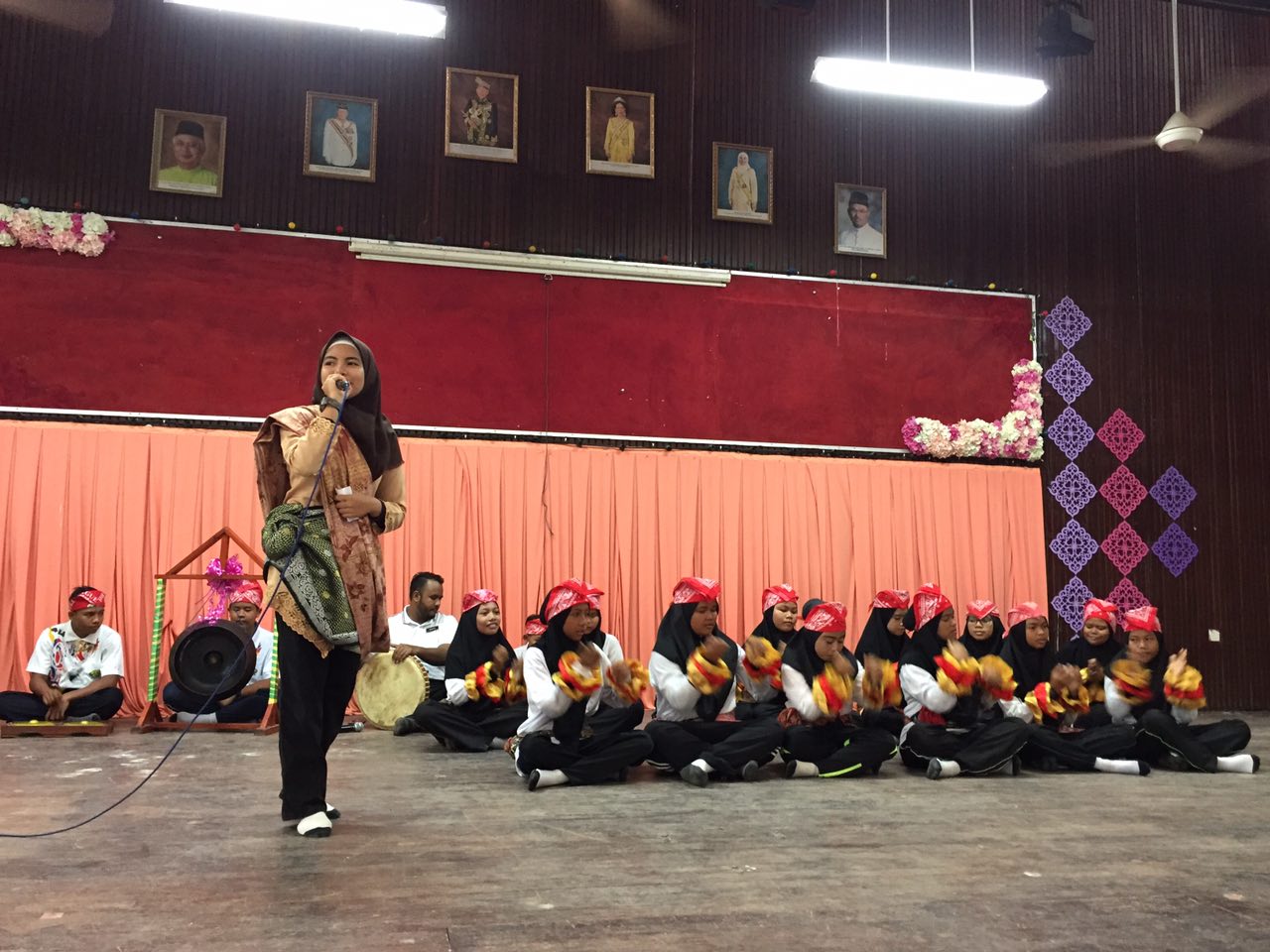 🇲🇾 Malaysia and 4 moreDikir baratDikir Hulu / Dikir Barat
A group singing art from the Malay Peninsula where verses are traded back and forth in a witty lyrical duel.Performance
🇲🇾 Malaysia and 4 moreDikir baratDikir Hulu / Dikir Barat
A group singing art from the Malay Peninsula where verses are traded back and forth in a witty lyrical duel.Performance
 🇨🇳 China and 5 moreShadow play
A storytelling art using flat puppets and light to cast moving silhouettes on a screen.Performance
🇲🇾 Kelantan, Malaysia and 2 moreMak yongTarian Mak Yong (Jawi: مق يوڠ)
A dance-drama of Kelantan and Patani, told in song, music and improvised speechPerformance
🇨🇳 China and 5 moreShadow play
A storytelling art using flat puppets and light to cast moving silhouettes on a screen.Performance
🇲🇾 Kelantan, Malaysia and 2 moreMak yongTarian Mak Yong (Jawi: مق يوڠ)
A dance-drama of Kelantan and Patani, told in song, music and improvised speechPerformance
 🇮🇳 India and 5 morePretaप्रेत
Offerings and rites for spirits enduring deep hunger across Asian traditions.Spiritual
🇮🇳 India and 5 morePretaप्रेत
Offerings and rites for spirits enduring deep hunger across Asian traditions.Spiritual
The same idea elsewhere
All of this kind 🇹🇷 Kayseri, Turkey and 4 moreHalay
A traditional line and circle folk dance kept across Turkey, Azerbaijan, Armenia, Iran, and Syria.Performance
🇧🇷 BrazilBaião
A syncopated folk rhythm and partnered dance from northeastern BrazilPerformance
🇹🇷 Kayseri, Turkey and 4 moreHalay
A traditional line and circle folk dance kept across Turkey, Azerbaijan, Armenia, Iran, and Syria.Performance
🇧🇷 BrazilBaião
A syncopated folk rhythm and partnered dance from northeastern BrazilPerformance
 🇺🇦 Kyiv, UkraineBanduraБандура
A Ukrainian plucked string instrument played to accompany epic songs and folk balladsPerformance
🇺🇦 Kyiv, UkraineBanduraБандура
A Ukrainian plucked string instrument played to accompany epic songs and folk balladsPerformance
 🇳🇿 Auckland, New ZealandPoi
A Māori performing art of swinging tethered weights in rhythmical patterns.Performance
🇳🇿 Auckland, New ZealandPoi
A Māori performing art of swinging tethered weights in rhythmical patterns.Performance