Festivals and celebrationsNorth America
Merrie Monarch Festival
A spring week of hula in Hilo, closing with three nights of competition

Each spring, Hilo on the island of Hawaii hosts a week of Hawaiian culture that ends with three nights of hula competition. The festival honours King David Kalākaua, who supported hula in the nineteenth century, and draws hālau hula, or dance schools, from Hawaii and overseas.
When is Merrie Monarch Festival in 2027?
Merrie Monarch Festival 2027 runs from 4 to 10 April 2027. Other years: 2026, 12 to 18 April 2026; 2028, 23 to 29 April 2028.
Every spring, hula schools from Hawaii and further afield gather in Hilo for a week of dance, chant and craft. The Merrie Monarch Festival remembers King David Kalākaua, the nineteenth-century monarch whose name it borrows, and closes with three nights of competition that many in the hula world treat as the highest honour in the art.
Origins and history
The name comes from King David Kalākaua, who reigned over the Kingdom of Hawaii from 1874 until his death in 1891. He was called the Merrie Monarch for his cheerful, generous manner, and he backed the arts, hula among them, at a time when missionary teaching had long pushed Hawaiian practices aside. In 1963 Helene Hale, an officer of Hawaii County, proposed a festival to bring visitors to the island after the sugar industry collapsed. Working with the kumu hula George Naʻope and Gene Wilhelm, she staged the first one in 1964. Interest faded by 1968, when Dottie Thompson took over and put hula at the centre. A competition began in 1971 and opened to men's hālau in 1976.
The royal court
Each year a court is formed to stand in for Kalākaua, Queen Kapiʻolani and their household. Two coordinators, Uʻilani Peralto and Luana Kawelu, seek out a man and a woman for the roles of king and queen. Peralto has said that those chosen should show maturity, humility and pride in Hawaiian culture. Around twenty-two people make up the court, most of them friends and family of the pair. Its other members include chanters, bearers of the kahili or feathered standards, conch blowers known as pu kane, a kahu or caretaker, and ladies-in-waiting. All of them learn what their part involves and something of Kalākaua's aims. The court processes before and after every competition night and stays seated on stage while the dancing goes on.
Hula competition
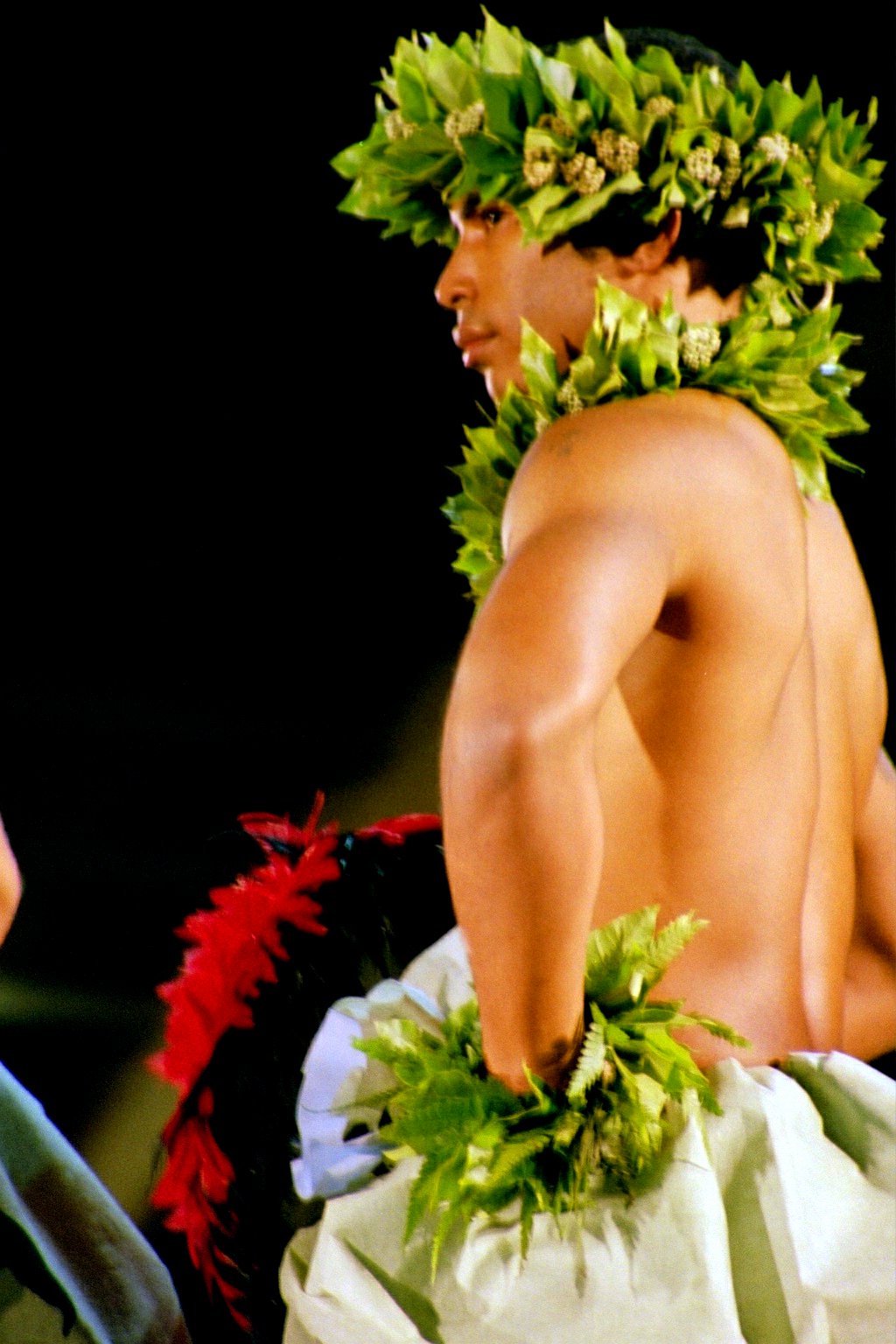
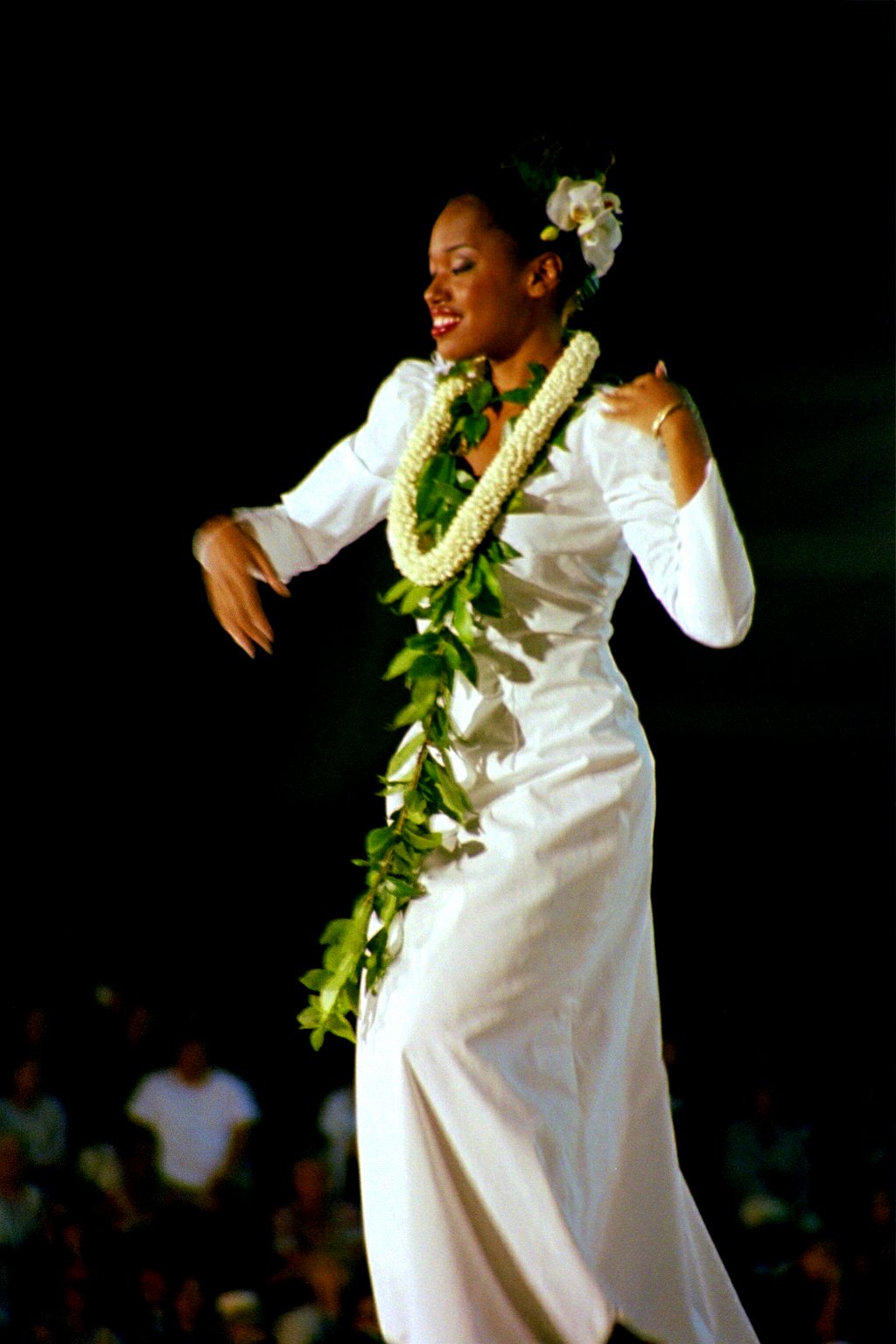
Two group divisions run, one for men (kāne) and one for women (wahine). Each hālau offers a kahiko piece in the older style and an ʻauana piece in the modern style, with seven minutes allowed for a performance. Thursday, the opening night, belongs to the solo title Miss Aloha Hula, contested by one unmarried woman aged eighteen to twenty-five from each school. The title dates from 1971, first won by Aloha Dalire, then dancing as Aloha Wong. A kahiko set takes in an oli, or chant, given without a microphone, and contestants wear little makeup. Judges watch the entrance, the reading of the song, posture, precision, hand and body movement, grooming, the rightness of costume and adornments, and the exit. Group kahiko falls on Friday; group ʻauana and the awards follow on Saturday.
What it means
Four aims are set out by the organisers: to keep Hawaiian tradition alive; to build up knowledge of Hawaiian arts and crafts by way of performances, exhibitions, workshops and demonstrations; to reach people who might not otherwise take part; and to enrich the future lives of Hawaii's children. Many credit the festival with setting off a revival of Hawaiian culture. Through it, the organisers say, thousands of people in the islands and further away come to know Hawaii's history and culture, and the event has won international recognition for its cultural and historical weight.
Today and change
The festival has run every year except 2020, when it was called off over the coronavirus pandemic. The 2021 competition took place from 24 to 26 June with no audience present, and went out on KFVE a week later. Money raised pays for scholarships, workshops, seminars and symposiums as well as the running of the event; the organisation is a non-profit registered in Hawaii. Television arrived in 1981 with KITV, which showed edited highlights before going live and carried the festival for twenty-nine years. KFVE took over from 2010. All three competition nights now stream free on the Hawaii News Now website. Some winners are invited to Tokyo for Nā Hiwahiwa O Hawaiʻi, a sister festival that celebrates prize-winning Hawaiian performers.
How Merrie Monarch Festival is kept
Hālau hula from Hawaii, the mainland United States and other countries travel to Hilo. Easter Sunday opens the week with free events at various venues, an arts and crafts fair, and Hoʻike Night on the Wednesday. A parade fills Saturday morning. The competition then takes over, with solo women on Thursday, group kahiko on Friday, and group ʻauana plus the awards on Saturday. A royal court processes before and after each night's dancing. Judges score every part of every performance.
When and where
Merrie Monarch week begins on Easter Sunday and closes on the Saturday that follows, so the dates move with the Easter calendar each year. The hula competition fills the last three evenings: Thursday, Friday and Saturday. Only one year has been skipped, 2020, and the 2021 event was pushed to late June.
Hilo, on the island of Hawaii, is the festival's home. The competition nights are held in the stadium named after Edith Kanakaʻole, in Hoʻolulu Park, and free events take place at venues around the town. Hālau come from the mainland United States and from overseas, and Japan is among the strongest supporters of hula outside Hawaii.
What Merrie Monarch Festival means
For the hālau and their kumu hula, the week is a place to carry Hawaiian dance, chant and craft into the present. Many say it set off a revival of Hawaiian culture after decades when such practices were discouraged. The royal court is meant to stand for more than a re-telling of history: those chosen are said to embody the spirit that runs through the islands. Kalākaua's own backing for hula gives the gathering its purpose, and a title won there is widely held to be the highest honour in the art.


Merrie Monarch Festival dates: 2026, 2027, 2028
| Year | Merrie Monarch Festival date |
|---|---|
| 2026 | 12 to 18 April 2026 |
| 2027 | 4 to 10 April 2027 |
| 2028 | 23 to 29 April 2028 |
Questions people ask about Merrie Monarch Festival
When is Merrie Monarch Festival in 2027?
Merrie Monarch Festival 2027 runs from 4 to 10 April 2027. Other years: 2026, 12 to 18 April 2026; 2028, 23 to 29 April 2028.
What is the Merrie Monarch Festival?
A week of Hawaiian culture held in Hilo on the island of Hawaii, best known for its hula competition. Dance schools, called hālau hula, travel there from Hawaii, the mainland United States and other countries to perform and to compete.
Where does it take place?
In Hilo, on the island of Hawaii. The competition nights are held at the stadium named for Edith Kanakaʻole, and during the earlier free days hālau perform at various venues around the town.
Who was the Merrie Monarch?
King David Kalākaua, who ruled the Kingdom of Hawaii from 1874 until 1891. He was nicknamed the Merrie Monarch for his cheerful manner and his fondness for his people, and he supported hula and other arts that missionary teaching had discouraged.
Why does it matter to hula dancers?
It is widely regarded as the most prestigious hula contest. Winning Miss Aloha Hula or taking a group title is a mark of standing in the art, and the week lets dance schools meet, watch one another and share their work.
See also
 Saint David's DayThe national feast day of Wales, marked with parades, poetry contests and daffodils
 Damba festivalA Ghanaian celebration of royal authority, ancestral memory, music and dance
 Talking stickA carved staff that shows who may speak at a Northwest Coast gathering
 MaracatuA set of Afro-Brazilian performance traditions from Pernambuco and Ceará featuring drumming, dance, and royal pageantry.
Good reading and sources
- Merrie Monarch Festival on WikipediaEncyclopedia
- More photos on Wikimedia CommonsPhotos and video
- Wikidata recordOpen data
The facts on this page come from the Wikipedia article "Merrie Monarch Festival", written by its contributors and used under the CC BY-SA 4.0 licence, and from its Wikidata record (CC0). EveryParampara rewrote the text in its own words, with AI assistance, and compares every page with the article to make sure no passage is copied. It may be reused under the same CC BY-SA 4.0 licence with a link back.
It may contain mistakes. Traditions differ from one family, village and community to the next, and the people who keep them know them best. If something is wrong, tell us. Last refreshed 2026-10-05.
More from the United States
All the traditions of the United States
🇬🇧 Cardiff, United Kingdom and 1 moreSaint David's DayDydd Gŵyl Dewi Sant
The national feast day of Wales, marked with parades, poetry contests and daffodilsFestival
🇬🇭 Ghana and 3 moreDamba festivalDamba chuɣu
A Ghanaian celebration of royal authority, ancestral memory, music and danceFestival
 🇮🇹 Rome, Italy and 4 moreChristmas
A festival of Jesus's birth, kept on 25 December with gifts, lights and shared mealsFestival
🇮🇹 Rome, Italy and 4 moreChristmas
A festival of Jesus's birth, kept on 25 December with gifts, lights and shared mealsFestival
 🇮🇪 Ireland and 5 moreHalloween
An annual observance on 31 October marking the eve of All Saints' Day, rooted in Christian tradition and Celtic heritageFestival · Sweets given and shared
🇮🇪 Ireland and 5 moreHalloween
An annual observance on 31 October marking the eve of All Saints' Day, rooted in Christian tradition and Celtic heritageFestival · Sweets given and shared
The same idea elsewhere
Royalty and coronation compared 🇮🇱 IsraelRosh Hashanahרֹאשׁ הַשָּׁנָה
The Jewish New Year marked by shofar horn blasts, prayer and sweet foodsSpiritual
🇹🇭 ThailandThai solar calendarปฏิทินสุริยคติไทย
The official solar calendar of Thailand, numbered in the Buddhist EraSeasonal
🇮🇱 IsraelRosh Hashanahרֹאשׁ הַשָּׁנָה
The Jewish New Year marked by shofar horn blasts, prayer and sweet foodsSpiritual
🇹🇭 ThailandThai solar calendarปฏิทินสุริยคติไทย
The official solar calendar of Thailand, numbered in the Buddhist EraSeasonal
 🇵🇪 Cusco, Peru and 4 moreIntiinti (Quechua)
The Inca sun deity, honoured with temples, offerings and the June festival Inti RaymiSpiritual
🇵🇪 Cusco, Peru and 4 moreIntiinti (Quechua)
The Inca sun deity, honoured with temples, offerings and the June festival Inti RaymiSpiritual
 🇸🇪 Mora, SwedenVasaloppet
A 90 km cross-country ski race from Sälen to Mora, run every March since 1922Game
🇸🇪 Mora, SwedenVasaloppet
A 90 km cross-country ski race from Sälen to Mora, run every March since 1922Game