Life-cycle ritesEast AsiaShinto, Taoist and folk Chinese
Miyamairi
In its own language: 宮参り
A first visit to a Shinto shrine, about a month after a baby is born
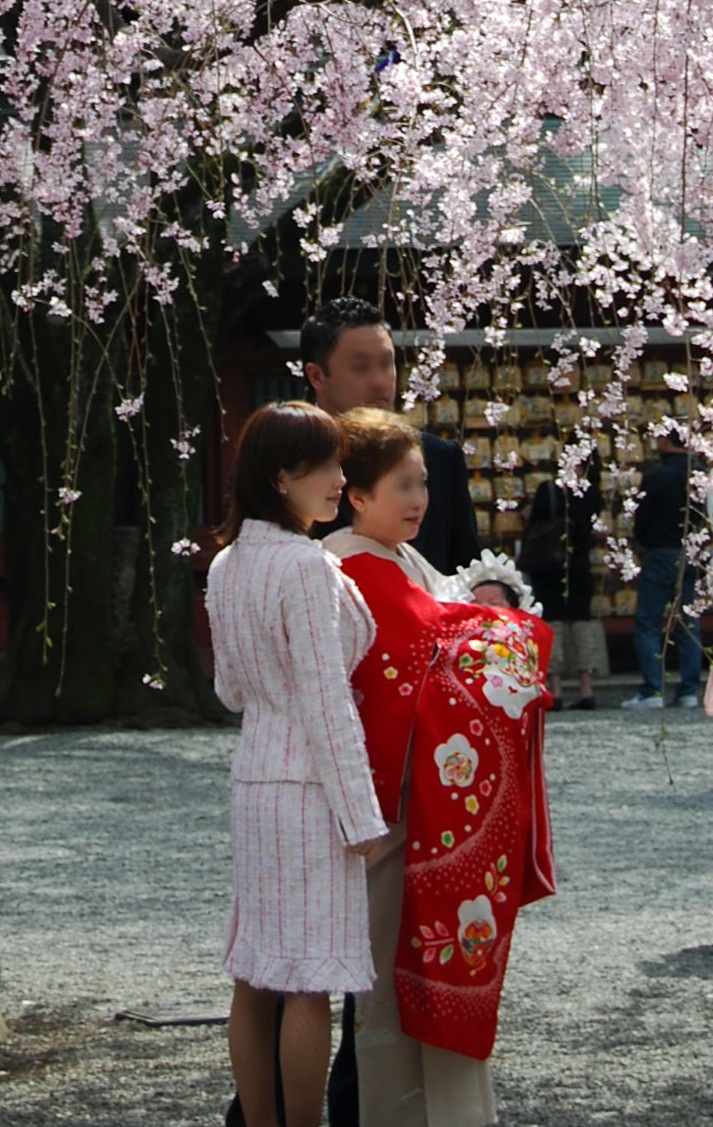
Miyamairi is a Shinto rite of passage in Japan in which a baby is taken to a shrine for the first time, usually about a month after birth. Parents and grandparents give thanks for the birth, and a priest prays for the child's health and happiness.
When is Miyamairi kept?
Miyamairi is kept on about a month after birth, commonly the 31st day for boys and the 33rd for girls.
In Japan, a new baby is taken to a Shinto shrine for the first time when the child is about a month old. Miyamairi means shrine visit. Parents and grandparents carry the infant there to thank the deities for the birth and to ask a priest to pray for the child's health and happiness. It is also the moment when the baby is counted as a member of the shrine's worshipping community.
A first shrine visit
Miyamairi is a Shinto rite of passage for a newborn, and it is one of the first ceremonies a Japanese child takes part in. The word means shrine visit. Parents and grandparents travel to a Shinto shrine with the baby, usually when the child is about a month old. There they give thanks to the deities for the birth, and a priest prays for the baby's health and happiness. Traditionally the grandparents join the parents in bringing the baby.
When it falls
One month is the usual marker. The thirty-first day is common for boys and the thirty-third for girls. Practice is not the same everywhere: some regions hold the visit as early as the seventh day after the birth, and others wait until the hundredth. Today most families keep it somewhere between one month and a hundred days. The rite also carries other names, among them hiake, hibare, ubuake and shimeage. These names point to the same idea, the end of a period after birth that was traditionally treated as set apart.
Inside the shrine
Shrines that draw many families hold the ceremony on the hour, and weekends are the busiest. Babies come in groups of about a dozen, each group with its relatives, and one group follows another into the hall. A Shinto priest, dressed in ceremonial robes and headgear, takes a place between the families and the altar. He recites a prayer and swings a tamagushi to the left, then to the right. While he prays, the child is named, the parents are named, and the family's home and the day of the birth are read aloud.
Offerings and sake
The prayer is followed by offerings. Parents and grandparents come forward one at a time, bow towards the altar, and lay their tamagushi on it. When the ceremony ends, everyone present is given sake poured into a red wooden cup, and the family often receives small gifts. Shrines that serve many families run the same pattern again and again on the same morning, one group after another. Boys and girls follow the same order of events; only the preferred day differs.
What it means
Alongside the thanks and the prayer, miyamairi has a second purpose. It is the ceremony in which the child is counted as an ujiko, a worshipper attached to the tutelary kami of that place. The kami of that place is called the ujigami. Being named in front of the altar is therefore a form of belonging, not only a blessing. The child enters the community of people who look to that shrine, and the family's ties with the local deity are confirmed.
How Miyamairi is kept
Grandparents and parents bring the baby to a Shinto shrine at around one month old. They are received in the hall, usually with several other families and their infants. A priest stands between the group and the altar, says a prayer for the child, and swings a tamagushi left and right. The baby's name, the parents' names, the home address and the date of birth are spoken during the prayer. Relatives then step up one by one, bow, and leave their tamagushi on the altar. Sake in a red wooden cup is shared at the end, and small gifts are given to the family.
When and where
Miyamairi is held about one month after a baby is born. The thirty-first day is usual for boys and the thirty-third for girls. Regional custom stretches this: a few places keep it on the seventh day, others as late as the hundredth. In practice most families go to the shrine between one month and a hundred days.
The rite belongs to Japan and is kept wherever Shinto shrines serve families. It happens at a local shrine rather than at home. Shrines that many families use may hold the ceremony every hour, especially at weekends, with about a dozen babies at a time. The tie is local: the child becomes an ujiko of the shrine's tutelary kami.
What Miyamairi means
Two things are being said at once. The family thanks the deities for a safe birth, and the priest asks for the child's health and happiness. The rite also changes the child's standing: the period treated as set apart after birth is closed, and the baby is received into the community of worshippers attached to the local tutelary kami. Older names for the ceremony point to that ending. So the visit is both gratitude and belonging.
Questions people ask about Miyamairi
When is Miyamairi kept?
Miyamairi is kept on about a month after birth, commonly the 31st day for boys and the 33rd for girls.
What is miyamairi?
It is a Shinto rite of passage in Japan for a newborn baby. Parents and grandparents take the child to a shrine, give thanks for the birth, and ask a priest to pray for the baby's health and happiness. The rite also makes the child an ujiko, a recognised member of the shrine's community of worshippers.
What happens at the shrine?
Families are received in the shrine hall, often in groups of about a dozen babies. A priest in ceremonial robes and headgear prays and swings a tamagushi from side to side. The child and the parents are named, and the home address and date of birth are read out. Relatives then bow and place their tamagushi on the altar.
What happens at the end?
Everyone who attended is given sake in a red wooden cup, and the family often receives small gifts. Shrines that many families use may hold the ceremony every hour, particularly at weekends, so groups pass through the hall one after another.
See also
 Postpartum confinementA period of rest, nourishment, and seclusion for mothers after giving birth.
 Rite of passageA ceremony that marks leaving one group and entering another, with a new status
 Shichi-Go-SanA Japanese festival celebrating the growth of three-year-old girls, five-year-old boys, and seven-year-old girls.
 HinamatsuriA March festival in Japan where families display ornamental dolls to pray for the health and happiness of young girls.
Good reading and sources
- Miyamairi on WikipediaEncyclopedia
- More photos on Wikimedia CommonsPhotos and video
- Wikidata recordOpen data
The facts on this page come from the Wikipedia article "Miyamairi", written by its contributors and used under the CC BY-SA 4.0 licence, and from its Wikidata record (CC0). EveryParampara rewrote the text in its own words, with AI assistance, and compares every page with the article to make sure no passage is copied. It may be reused under the same CC BY-SA 4.0 licence with a link back.
It may contain mistakes. Traditions differ from one family, village and community to the next, and the people who keep them know them best. If something is wrong, tell us. Last refreshed 2026-10-05.
More from Japan
All the traditions of Japan
🇨🇳 China and 5 morePostpartum confinement
A period of rest, nourishment, and seclusion for mothers after giving birth.Rite of passage
🇺🇸 United States and 5 moreRite of passage
A ceremony that marks leaving one group and entering another, with a new statusRite of passage
🇯🇵 Tokyo, JapanShichi-Go-San七五三
A Japanese festival celebrating the growth of three-year-old girls, five-year-old boys, and seven-year-old girls.Rite of passage
 🇮🇪 Ireland and 2 moreWake
A gathering before a funeral, where family and friends keep watch over the deadRite of passage
🇮🇪 Ireland and 2 moreWake
A gathering before a funeral, where family and friends keep watch over the deadRite of passage
The same idea elsewhere
Birth and new babies compared 🇮🇩 Indonesia and 2 moreKenduri
A communal prayer meal and gathering shared across Indonesia, Malaysia and BruneiSpiritual · Feasts and festival meals
🇮🇩 Indonesia and 2 moreKenduri
A communal prayer meal and gathering shared across Indonesia, Malaysia and BruneiSpiritual · Feasts and festival meals
 🇹🇱 Timor-LesteUma Lulik
Sacred ancestral clan houses and ritual shrines in East TimorSpiritual
🇹🇱 Timor-LesteUma Lulik
Sacred ancestral clan houses and ritual shrines in East TimorSpiritual
 🇺🇸 United States and 1 moreDreamcatcherᐊᓴᐱᑫᔒᓐᐦ (asabikeshiinh)
A hand-woven hoop from Anishinaabe tradition, hung above a cradle to protect a childCraft
🇺🇸 United States and 1 moreDreamcatcherᐊᓴᐱᑫᔒᓐᐦ (asabikeshiinh)
A hand-woven hoop from Anishinaabe tradition, hung above a cradle to protect a childCraft