Seasons, harvest and the calendarEuropeChristianPagan and ancient
Imbolc
In its own language: Lá Fhéile Bríde
A Gaelic festival heralding spring and honoring Saint Brigid with woven rush crosses

Imbolc is a Gaelic seasonal festival observed on the first of February to welcome spring and celebrate Saint Brigid. Traditionally kept across Ireland, Scotland and the Isle of Man, households craft woven rush crosses, prepare a bed for the saint, and share festive meals.
When is Imbolc in 2027?
Imbolc 2027 is on Monday, 1 February 2027. Other years: 2026, Sunday, 1 February 2026; 2028, Tuesday, 1 February 2028.
Imbolc is a traditional Gaelic festival celebrated at the beginning of February to mark the arrival of spring. Also known as Saint Brigid's Day, it honours Ireland's patroness while retaining customs from pre-Christian times. Households weave decorative crosses from green rushes, set out gifts for the visiting saint, and light hearths to welcome brighter days across Ireland, Scotland, and the Isle of Man.
Origins and meaning
Early Gaelic literature describes Imbolc as one of four main turning points in the agricultural calendar, alongside Beltane, Lughnasadh, and Samhain. Originally linked to the onset of the lambing season and the return of sheep milk, the date signalled the start of spring field preparations. Historians note that the festival combined agrarian renewal with ritual cleansing. In ancient belief, it honoured the goddess Brigid, whose attributes of protection, healing, and fertility later blended into the veneration of Saint Brigid of Kildare.
Crosses and crafts
A defining custom of the feast is crafting Brigid's crosses from freshly harvested rushes or straw. These woven designs usually feature four arms radiating from a woven square centre, though three-armed versions also exist. Families hang the finished crosses above entryways, windows, and animal barns to ward off fire, sickness, and misfortune over the coming year. In western parts of Ireland, communities also fashioned large rush hoops called Bríd's girdles, which people stepped through to receive health and good fortune.
Welcoming the saint
On the eve of the festival, households prepared to receive Saint Brigid into their dwellings. Strips of cloth or garments were placed outdoors overnight so the passing saint could bless them with curative power. Indoors, families laid out a small bed made of hay or rushes, accompanied by offerings of food and drink. In Scottish and Irish communities, young girls carried an effigy of the saint, called a Brídeóg, from house to house in procession, singing hymns and collecting treats.
Modern observances
While many rural customs faded during the twentieth century, the holiday has enjoyed a strong cultural and spiritual resurgence. In Ireland, the feast was established as an official public holiday in 2023. Christian congregations hold church services and visit holy wells, while modern Pagans and Wiccans celebrate the day as a sacred seasonal milestone. Community groups, schools, and craft workshops across the Gaelic diaspora continue to gather each February to weave rushes and welcome the light.
How Imbolc is kept
Celebrations begin on the eve of 1 February. Families harvest green rushes to weave protective crosses and set out clothing outside for blessings. Someone knocks on the door carrying rushes, symbolically inviting Brigid into the house, where a small bed and food are prepared for her. Girls historically processed through villages carrying a decorated doll called a Brídeóg while singing. On the feast day itself, people attend church services, visit holy wells, share a special celebratory meal, and hang fresh crosses above doors to replace the previous year's charms.
When and where
Imbolc is observed annually on 1 February, corresponding to the start of spring in the Gaelic calendar. In modern Pagan traditions within the Southern Hemisphere, practitioners often observe the festival on 1 August.
The tradition is rooted in Ireland, Scotland, and the Isle of Man. Today, it is widely celebrated throughout Ireland as a national public holiday, across Gaelic-speaking regions, and among Pagan and Irish diaspora communities worldwide.
What Imbolc means
Imbolc represents the emergence from winter darkness into the warmth and growth of spring. Associated with maternal protection, fertility, and pastoral life, the feast celebrates the renewal of the land, the arrival of fresh milk, and the protective presence of Saint Brigid over homes, livestock, and families.


Days Imbolc is marked
Imbolc dates: 2026, 2027, 2028
| Year | Imbolc date |
|---|---|
| 2026 | Sunday, 1 February 2026 |
| 2027 | Monday, 1 February 2027 |
| 2028 | Tuesday, 1 February 2028 |
Questions people ask about Imbolc
When is Imbolc in 2027?
Imbolc 2027 is on Monday, 1 February 2027. Other years: 2026, Sunday, 1 February 2026; 2028, Tuesday, 1 February 2028.
What is Imbolc?
Imbolc is a Gaelic festival marking the start of spring on 1 February. It is also celebrated as Saint Brigid's Day, combining early agricultural customs with the feast day of Ireland's patroness saint.
Where is Imbolc traditionally celebrated?
The festival originated and remains strongest in Ireland, Scotland, and the Isle of Man. It is observed by cultural groups, Christian churches, and modern Pagans worldwide.
What is a Brigid's cross?
A Brigid's cross is a woven emblem made from rushes or straw, usually featuring four arms. Placed over doors and windows, it is believed to guard the home against fire, illness, and harm.
What is a Brídeóg?
A Brídeóg is an effigy or doll representing Brigid, traditionally made from rushes and cloth. Young women and girls carried it from home to home while singing hymns and receiving blessings or gifts.
See also
 May DayA traditional European festival welcoming summer with greenery, dances and bonfires
 Yule logA log kept burning on the hearth through the twelve days of Christmas, for luck
 BeltaneA Gaelic first-of-summer festival of bonfires, May flowers and feasting on 1 May
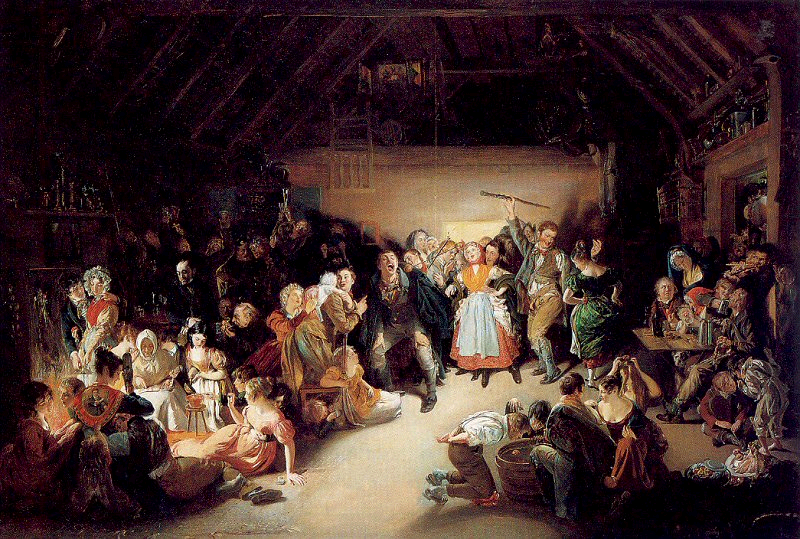 SamhainA Gaelic festival marking the start of winter with bonfires and ancestor feasts
Good reading and sources
- Imbolc on WikipediaEncyclopedia
- More photos on Wikimedia CommonsPhotos and video
- Wikidata recordOpen data
The facts on this page come from the Wikipedia article "Imbolc", written by its contributors and used under the CC BY-SA 4.0 licence, and from its Wikidata record (CC0). EveryParampara rewrote the text in its own words, with AI assistance, and compares every page with the article to make sure no passage is copied. It may be reused under the same CC BY-SA 4.0 licence with a link back.
It may contain mistakes. Traditions differ from one family, village and community to the next, and the people who keep them know them best. If something is wrong, tell us. Last refreshed 2026-10-06.
More from Ireland
All the traditions of Ireland
🇮🇪 Dublin, Ireland and 3 moreMay Day
A traditional European festival welcoming summer with greenery, dances and bonfiresSeasonal · Feasts and festival meals
🇮🇪 Ireland and 1 moreSamhain
A Gaelic festival marking the start of winter with bonfires and ancestor feastsSeasonal · Feasts and festival meals
🇮🇪 Uisneach, Ireland and 1 moreBeltaneBealtaine
A Gaelic first-of-summer festival of bonfires, May flowers and feasting on 1 MaySeasonal
 🇮🇪 Ireland and 2 moreEmber daysQuatuor Tempora
A quarterly Western Christian rhythm of fasting, prayer and seasonal thanksgivingSeasonal · Fasting and breaking the fast
🇮🇪 Ireland and 2 moreEmber daysQuatuor Tempora
A quarterly Western Christian rhythm of fasting, prayer and seasonal thanksgivingSeasonal · Fasting and breaking the fast
The same idea elsewhere
Spring and renewal compared 🇨🇳 China and 5 moreLion dance舞獅
A dynamic ritual dance featuring costumed lions, drums and martial acrobaticsPerformance
🇨🇳 China and 5 moreLion dance舞獅
A dynamic ritual dance featuring costumed lions, drums and martial acrobaticsPerformance
 🇰🇷 Jeju, South KoreaGut굿
Sacred rites of song, dance, and spirit communion performed by Korean shamansSpiritual
🇰🇷 Jeju, South KoreaGut굿
Sacred rites of song, dance, and spirit communion performed by Korean shamansSpiritual
 🇦🇺 AustraliaSmoking ceremonyNumbuk Yabbun
An Aboriginal Australian ritual of burning native plants to cleanse, heal and welcomeSpiritual
🇦🇺 AustraliaSmoking ceremonyNumbuk Yabbun
An Aboriginal Australian ritual of burning native plants to cleanse, heal and welcomeSpiritual
 🇯🇵 JapanChildren's Dayこどもの日
A Japanese holiday on May fifth celebrating the happiness and growth of childrenFestival
🇯🇵 JapanChildren's Dayこどもの日
A Japanese holiday on May fifth celebrating the happiness and growth of childrenFestival