Music, dance and storytellingEast AsiaMuslim
Muqam
In its own language: مۇقام
A Uyghur modal system of melody types, and the twelve long cycles built on it

The muqam is the melodic mode and stock of formulas that Uyghur musicians use when they improvise or compose. Its best known form is the Twelve Muqams, a long cycle of songs and instrumental pieces from the western Tarim region in Xinjiang, China, kept by Uyghur performers.
Muqam is the modal system behind Uyghur music: a set of modes and melodic formulas that guide singers and players as they improvise. Its most celebrated form is the Twelve Muqams, a cycle of sung and instrumental pieces lasting many hours. Performers from Xinjiang, in western China, keep it alive today, and it is recognised as heritage of humanity.
What a muqam is
In Uyghur music, a muqam is not one tune but a framework. It names a mode, meaning a scale-like pattern of notes, together with a store of melodic formulas. Singers and players draw on those formulas when they improvise, and composers use them when they write. The word covers both the mode and the material that goes with it, so a musician may say that a piece stands in a certain muqam, much as a player elsewhere names a key. The system guides how a melody may move and where it may rest.
Inside the twelve cycles
The best known body of this music is the Twelve Muqams, a cycle of songs and instrumental pieces. Each begins with a long introduction in free rhythm, then moves into pieces with set rhythmic patterns that gather speed. Within a muqam come smaller named items: teze, nuskha, jula, senem, peshru and tekit, along with a shorter and a longer form of seliqe. An instrumental piece called a merghul, meaning decoration, may follow one of these. The dastan songs draw on romantic narratives told across Central and South Asia and the Middle East, while the mashrap numbers are livelier dance songs.
Where it comes from
Some Chinese scholars trace Uyghur muqam to the Great Western Region Melody of Han and Tang times, which reached the courts of central China. A second account, described as more likely, points to the Arabic maqam modal system, which shaped many musical genres among the peoples of Eurasia and North Africa. Amannissa Khan, a concubine of the Yarkent Khanate in the sixteenth century, is credited with gathering the Twelve Muqams and preserving them, and with reworking their style towards the traditions of the Tian Shan mountains. Collectors in the twentieth century later took the cycles down from traditional performers and edited them into a more systematic canon.
Recording and recognition
In the 1950s the state asked the musicians Wan Tongshu and Turdi Akhun to preserve the repertoire in sound recordings, so that it would not be lost. Their first album appeared in 1960. Between 2004 and 2008 more than 7,000 performers took part in a state project that ran seminars, research work and further recordings. International recognition came in 2005, when the tradition joined UNESCO's Intangible Heritage of Humanity list. Earlier folk performers probably improvised their songs, much as Turkish taksim players do, but the canon that exists now is played as fixed compositions by ensembles.
Naming the pieces
A named piece has its own rhythmic pattern, yet the melody changes from one muqam to another, so listeners identify what they hear by joining the muqam's name to the piece's name. A performer might speak of the Rak nuskha, or of the Sëgah cula. A single muqam holds roughly twenty to thirty pieces of song and music. Together the twelve make a canon in which the same sequence of types recurs, even though no two muqams contain exactly the same set of pieces.
How Muqam is kept
A performance usually opens with a long introduction in free rhythm, sung or played without a steady beat. Rhythmic pieces follow, in set patterns that gather speed as they go. A muqam passes through three parts: naghma, dastan and mashrap, with songs taken from romantic dastan stories and with livelier dance numbers. An instrumental merghul may close a piece. The order of pieces stays much the same from one muqam to the next, though the pieces themselves differ. One cycle can run about two hours; all twelve together take roughly a day.
When and where
Muqam belongs to the Uyghurs of Xinjiang, in western China, and is strongest in the western Tarim region, the home of the Twelve Muqams. Other Uyghur areas keep repertoires of their own, named for oasis towns such as Dolan, Ili, Kumul and Turpan.
What Muqam means
Many listeners treat the Twelve Muqams as a shared inheritance rather than one musician's work, a canon that ensembles now play as set compositions even though earlier folk performers likely improvised. A piece is always heard as part of a larger whole, since it is named for the muqam it belongs to and for itself. Regional repertoires carry the names of the towns they came from, which ties the music to place.


Questions people ask about Muqam
What is a muqam?
In Uyghur music it is a mode and a set of melodic formulas, not a single song. Performers use it to guide improvisation, and composers use it when writing. A muqam gives a melody its shape and tells a player where it may settle.
What are the Twelve Muqams?
A cycle of songs and instrumental pieces from the western Tarim region of Xinjiang, and the most fully developed of the Uyghur muqam repertoires. There are twelve of them, and each opens with a long free-rhythm section before rhythmic pieces begin.
How long does it take to perform?
One muqam holds about twenty to thirty pieces and can run for roughly two hours. Playing every piece of all twelve takes around twenty-four hours in all.
Where is it kept?
Among Uyghur musicians in Xinjiang, in western China, and most strongly in the western Tarim region. Other Uyghur areas have their own repertoires, named for oasis towns such as Dolan, Ili, Kumul and Turpan.
Is it recognised beyond its home?
Yes. The tradition joined UNESCO's Intangible Heritage of Humanity list in 2005. Between 2004 and 2008 a Chinese state project also supported seminars, research and recordings, with more than 7,000 performers taking part.
See also
 Chinese operaA sung, danced and acrobatic theatre from China, in over a hundred regional styles
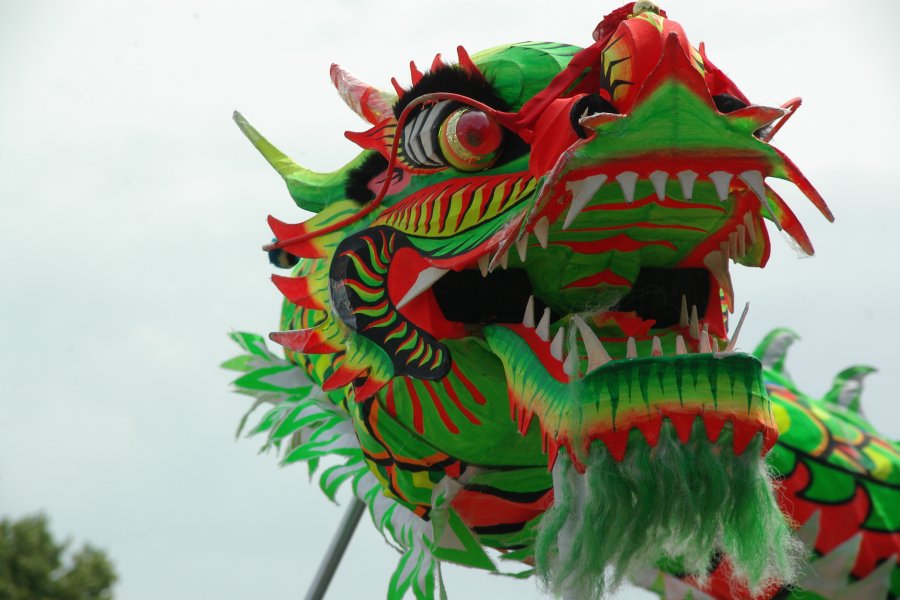 Dragon danceA long dragon puppet on poles, danced by a team at Chinese New Year and other festivals
 KizombaA close, slow couple dance from Angola, named after a Kimbundu word for party
 Glove puppetryA traditional theatre of cloth-bodied puppets with carved wooden heads and live music
Good reading and sources
The facts on this page come from the Wikipedia article "Muqam", written by its contributors and used under the CC BY-SA 4.0 licence, and from its Wikidata record (CC0). EveryParampara rewrote the text in its own words, with AI assistance, and compares every page with the article to make sure no passage is copied. It may be reused under the same CC BY-SA 4.0 licence with a link back.
It may contain mistakes. Traditions differ from one family, village and community to the next, and the people who keep them know them best. If something is wrong, tell us. Last refreshed 2026-10-05.
More from China
All the traditions of China 🇹🇼 Yilan, Taiwan and 4 moreTaiwanese opera歌仔戲
A Taiwanese theatrical art of Hokkien balladry, stylized staging, and expressive song.Performance
🇹🇼 Yilan, Taiwan and 4 moreTaiwanese opera歌仔戲
A Taiwanese theatrical art of Hokkien balladry, stylized staging, and expressive song.Performance
 🇨🇳 China and 5 moreLion dance舞獅
A dynamic ritual dance featuring costumed lions, drums and martial acrobaticsPerformance
🇨🇳 Quanzhou, China and 3 moreGlove puppetry布袋戲
A traditional theatre of cloth-bodied puppets with carved wooden heads and live musicPerformance
🇨🇳 China and 5 moreLion dance舞獅
A dynamic ritual dance featuring costumed lions, drums and martial acrobaticsPerformance
🇨🇳 Quanzhou, China and 3 moreGlove puppetry布袋戲
A traditional theatre of cloth-bodied puppets with carved wooden heads and live musicPerformance
 🇨🇳 China and 5 moreShadow play
A storytelling art using flat puppets and light to cast moving silhouettes on a screen.Performance
🇨🇳 China and 5 moreShadow play
A storytelling art using flat puppets and light to cast moving silhouettes on a screen.Performance
The same idea elsewhere
All of this kind 🇹🇷 Kayseri, Turkey and 4 moreHalay
A traditional line and circle folk dance kept across Turkey, Azerbaijan, Armenia, Iran, and Syria.Performance
🇧🇷 BrazilBaião
A syncopated folk rhythm and partnered dance from northeastern BrazilPerformance
🇹🇷 Kayseri, Turkey and 4 moreHalay
A traditional line and circle folk dance kept across Turkey, Azerbaijan, Armenia, Iran, and Syria.Performance
🇧🇷 BrazilBaião
A syncopated folk rhythm and partnered dance from northeastern BrazilPerformance
 🇺🇦 Kyiv, UkraineBanduraБандура
A Ukrainian plucked string instrument played to accompany epic songs and folk balladsPerformance
🇺🇦 Kyiv, UkraineBanduraБандура
A Ukrainian plucked string instrument played to accompany epic songs and folk balladsPerformance
 🇳🇿 Auckland, New ZealandPoi
A Māori performing art of swinging tethered weights in rhythmical patterns.Performance
🇳🇿 Auckland, New ZealandPoi
A Māori performing art of swinging tethered weights in rhythmical patterns.Performance