Festivals and celebrationsEuropeChristian
Nativity of John the Baptist
A Christian feast day on June 24 that marks the birth of John the Baptist and anticipates Christmas.

Christians observe this annual feast on June 24 to celebrate the birth of John the Baptist. It is kept by Catholic, Orthodox, Anglican, and Lutheran communities through liturgical services and local customs.
When is Nativity of John the Baptist marked?
Nativity of John the Baptist is kept as part of Midsummer, which runs from 25 to 26 June 2027.
This feast day marks the birth of John the Baptist, a central figure in Christianity who prepared the way for Jesus. Christians keep it on June 24 with religious services and seasonal customs. The date sits six months before Christmas and three months after the Annunciation, creating a linked cycle of holy days.
What it is
The Nativity of John the Baptist is a major Christian feast day observed annually on June 24. It celebrates the birth of John, who is known as the precursor to Jesus Christ. The event is recorded only in the Gospel of Luke, which describes how his parents, Zechariah and Elizabeth, received the news from the Archangel Gabriel. This feast is one of the oldest festivals in the Christian church, listed as a principal celebration by the Council of Agde in 506. It is kept by the Catholic Church, Eastern Orthodox Church, Anglican Churches, and Lutheran Churches.
Origins and history
The date was likely chosen using Roman backward counting from the Kalends of July. Since June has thirty days, the eighth day before the next month begins falls on June 24. This places the feast exactly six months before December 25, the traditional date for Christmas. Some scholars suggest the timing also aligns with the summer solstice, reflecting the words of John: 'He must increase, but I must decrease.' The feast was not originally intended to replace pagan midsummer celebrations, though the dates overlap in many regions.
How it is kept
Communities mark the day with religious services. In the Roman Catholic tradition, it is a solemnity. Eastern Orthodox churches hold an All-Night Vigil followed by a day of afterfeast. In Western Europe, people light fires on hilltops on the eve of the feast. In Germany, herbs called Johanneskraut are blessed in church. In Scandinavia and Slavic countries, traditions involve driving away demons with noise and burning straw figures. In the American Southwest, people dip fully clothed in water to follow John's example of cleansing.
Music and art
Artists have depicted this scene for centuries, often showing a contemporary setting rather than a biblical one. A famous fresco cycle by Domenico Ghirlandaio in Florence shows the event in a prosperous Renaissance home. In music, Martin Luther wrote a hymn about baptism that became associated with the day. Johann Sebastian Bach composed several church cantatas for the occasion in Leipzig, including works based on Luther's hymn. These musical pieces remain part of the liturgical heritage in Lutheran communities.
How Nativity of John the Baptist is kept
Christians attend liturgical services on June 24. Catholics celebrate a solemnity, while Orthodox churches hold an All-Night Vigil. In Europe, people light fires on hilltops and bless herbs. In the American Southwest, some dip in water. Children may go door-to-door for treats in Slavic traditions. The day involves both formal worship and folk customs tied to summer.
When and where
It falls on June 24 in the Gregorian calendar. In Orthodox churches using the Julian calendar, it is observed on July 7. The date is fixed and does not change with lunar cycles.
It is kept worldwide by Christian denominations. It is a public holiday in Lithuania, Latvia, and Puerto Rico. Customs are strong in Germany, Russia, Belarus, and the American Southwest. Florence in Italy is noted for its artistic depictions of the event.
What Nativity of John the Baptist means
The feast highlights John's role as the forerunner to Jesus. His birth is seen as miraculous, occurring to elderly parents. He is believed to have been cleansed of original sin in the womb. The date links him closely to Jesus, sitting exactly six months before Christmas. It symbolizes preparation and the turning of the season toward winter.


Days Nativity of John the Baptist is marked
Questions people ask about Nativity of John the Baptist
When is Nativity of John the Baptist marked?
Nativity of John the Baptist is kept as part of Midsummer, which runs from 25 to 26 June 2027.
What is the Nativity of John the Baptist?
It is a Christian feast day celebrating the birth of John the Baptist. He is the cousin of Jesus and prepared the way for his ministry. The event is recorded in the Gospel of Luke and is kept by Catholic, Orthodox, Anglican, and Lutheran churches.
Why is it on June 24?
The date is six months before Christmas, calculated using Roman backward counting from the Kalends of July. It also aligns with the summer solstice, symbolizing John's role as the voice crying in the wilderness before the light of Christ.
What customs are associated with it?
People light fires on hilltops, bless herbs, and dip in water. In some regions, children go door-to-door for treats. These customs blend Christian worship with older seasonal traditions marking the height of summer.
See also
 Christmas EveThe evening before Christmas, marked by church services, family meals, and gift preparations across Christian cultures.
 AdventA four-week Christian season of waiting and preparation for Christmas and the Second Coming.MaifestA traditional German celebration marking the arrival of spring with decorated maypoles
 MummingA medieval European custom of masked house-to-house visits, performances and seasonal revelry.
Good reading and sources
- Nativity of John the Baptist on WikipediaEncyclopedia
- More photos on Wikimedia CommonsPhotos and video
- Wikidata recordOpen data
The facts on this page come from the Wikipedia article "Nativity of John the Baptist", written by its contributors and used under the CC BY-SA 4.0 licence, and from its Wikidata record (CC0). EveryParampara rewrote the text in its own words, with AI assistance, and compares every page with the article to make sure no passage is copied. It may be reused under the same CC BY-SA 4.0 licence with a link back.
It may contain mistakes. Traditions differ from one family, village and community to the next, and the people who keep them know them best. If something is wrong, tell us. Last refreshed 2026-10-06.
More from Lithuania
All the traditions of Lithuania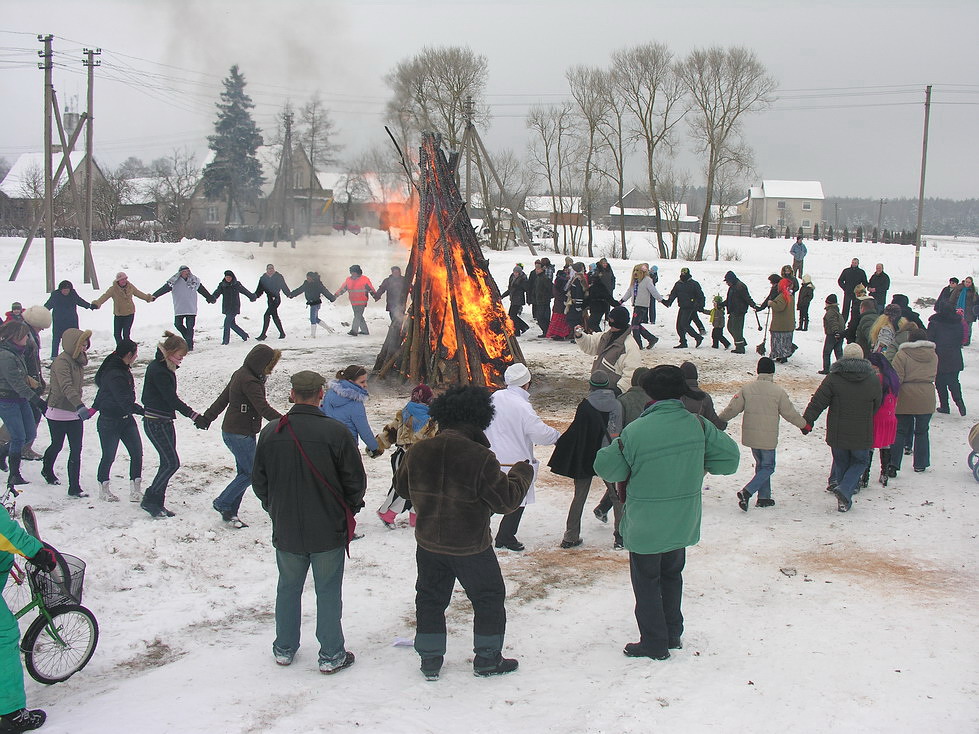 🇱🇹 LithuaniaUžgavėnės
A Lithuanian winter-ending festival of masks, mock battles and pancakesFestival
🇱🇹 LithuaniaUžgavėnės
A Lithuanian winter-ending festival of masks, mock battles and pancakesFestival
 🇱🇻 Riga, Latvia and 4 moreMeteņi
A Latvian pre-Lenten festival marking the turn of time and welcoming spring.Festival · Feasts and festival meals
🇵🇱 Poland and 5 moreChristmas Eve
The evening before Christmas, marked by church services, family meals, and gift preparations across Christian cultures.Festival · Dinner
🇱🇻 Riga, Latvia and 4 moreMeteņi
A Latvian pre-Lenten festival marking the turn of time and welcoming spring.Festival · Feasts and festival meals
🇵🇱 Poland and 5 moreChristmas Eve
The evening before Christmas, marked by church services, family meals, and gift preparations across Christian cultures.Festival · Dinner
 🇺🇦 Kyiv, Ukraine and 7 morePysankaписанка
A wax-resist egg decorating tradition kept by Slavic communities for Easter and spring renewal.Festival
🇺🇦 Kyiv, Ukraine and 7 morePysankaписанка
A wax-resist egg decorating tradition kept by Slavic communities for Easter and spring renewal.Festival
The same idea elsewhere
Birth and new babies compared 🇮🇷 Iran and 7 moreNowruzنوروز
The Iranian new year at the March equinox, kept with fire, greenery and picnicsSeasonal
🇮🇷 Iran and 7 moreNowruzنوروز
The Iranian new year at the March equinox, kept with fire, greenery and picnicsSeasonal
 🇮🇳 Mathura, India and 5 moreHoliहोली (Hindi)
A spring festival of colours and bonfires that marks the end of winter and the triumph of good over evil.Festival
🇮🇳 Mathura, India and 5 moreHoliहोली (Hindi)
A spring festival of colours and bonfires that marks the end of winter and the triumph of good over evil.Festival
 🇱🇦 Laos and 1 moreBaciບາສີ (Lao)
A Lao rite that calls the soul home and ties a thread on the wrist for good luckSpiritual
🇱🇦 Laos and 1 moreBaciບາສີ (Lao)
A Lao rite that calls the soul home and ties a thread on the wrist for good luckSpiritual