Dress and adornmentEast AsiaBuddhistIndigenous and traditional
Norigae
In its own language: 노리개
A Korean pendant of knots and tassels, worn with hanbok and kept for luck

Norigae is a decorative Korean pendant worn by women with hanbok, fastened at the coat strings of the jeogori or at the chima, and made of a main ornament, knotted cord and a silk tassel. It acts as a lucky charm as well as an adornment, and families often hand it down through the generations.
When is Norigae kept?
Norigae is kept on worn with hanbok rather than on one fixed calendar date; shape and size were matched to the occasion and to the season.
A norigae is a Korean ornament worn with hanbok. It hangs from the goreum, the coat strings of a woman's jeogori, or from her chima, the skirt. Three parts make it: a main ornament, knots and a silk tassel. People treat it as decoration and as a charm, hoping for long life, wealth or sons, and it is handed on within families.
What it is
A norigae is a pendant worn with hanbok, the traditional dress of Korea. A woman hooks it to the goreum, the strings tied at the front of her jeogori, or to her chima, the skirt. It serves two purposes at once. It beautifies the outfit, and it is also kept as a lucky charm. Which blessing was hoped for depended on the shape: a long life, wealth, or sons. Within Korean families a norigae was often handed on to the next generation, arriving in a household either from the bride's own people or from her husband's side.
The four parts
Looked at closely, a norigae has four elements. Topmost is the ttidon, a metal hook or clasp that fixes the ornament to the clothing. It can be a separate piece or formed from extra knots, and it comes in several outlines, among them a butterfly, a circle and a square. Below it sits the paemul, the main ornament and the visual centre. Then come the maedeup, the knots, worked in coloured cord. At the bottom hangs the sul, a tassel of coloured silk thread. Sometimes the whole thing is described more simply, as a main ornament, knots and a tassel.
Ornament work and knots
The main ornament, the paemul, is usually made of gold, silver, jewels or precious stone. Its motifs come under five broad headings: animals, plants, everyday objects, written characters and religious signs. A well-known lucky character is the Chinese shou, which stands for long life. Religious motifs are, as a rule, Buddhist. The knots have their own rules. A design with a big ornament calls for small knots, and a small ornament is paired with large ones. The knotting must also suit the weight the finished norigae will bear.
Origins and history
Nobody knows exactly where the norigae began, and the sources do not agree on when it came into wide use. The knotted tassel form known today is traced to the Joseon dynasty. Some accounts link it to an older protective emblem called the jema, used in early shamanism and first worn by children. Others point to the waist pendant of the Silla period as its truer ancestor. Under Joseon, queens and commoners alike wore one, and the ornament also set out a woman's rank. In its earliest sense the word took in small things a woman delighted in, which suggests such charms were liked at every social level.
Sizes, shapes and rank
Norigae came in large, medium and small sizes, chosen to suit the wearer or the place it was worn, and a baby's was far smaller than an adult's. Shapes drew on nature and on ordinary life. A single-ornament type is called danjak; a three-part type is called samjak, which splits further into daesamjak and sosamjak, alike in form but different in their main ornaments. Norigae could sit at the chest or at the waist. The Joseon king Yeonsangun is said to have sorted the rank of his women by how costly and how large their norigae were.
How Norigae is kept
A woman who wears hanbok fixes the norigae by its ttidon, the hook or clasp, to the strings at the front of her jeogori or to her chima skirt. It can sit at the chest or at the waist, and the size is chosen to suit the wearer and the occasion. Below the main ornament hang the knots and the tassel. Inside families, a norigae is kept and handed on, and many came into a household from the bride's own family or from her husband's people.
When and where
Norigae does not belong to one date in the calendar. It is put on with hanbok, on ordinary days and on special ones. The sources note that shape and size were matched to the occasion a woman was dressing for and to the season, so a piece could be right for a particular time of year rather than for a fixed festival.
The norigae belongs to Korea and to the hanbok worn there. It is tied to the Joseon court and to Korean households of every class, since queens and commoners both wore one, and its older roots are placed in the Silla period and in early shamanic practice. It stays strongest as part of hanbok dress.
What Norigae means
A norigae carries a wish as well as decorating the wearer. Shape by shape, the hope changed: long life, wealth, or many sons. It also counted as a good-luck charm, and the older protective emblem called the jema, if that connection holds, points the same way. The motifs repeat the wishes, with the character shou standing for long life and Buddhist signs for blessing. For the families who kept one, it gathered memory too, moving from one generation to the next.

Questions people ask about Norigae
When is Norigae kept?
Norigae is kept on worn with hanbok rather than on one fixed calendar date; shape and size were matched to the occasion and to the season.
What is a norigae?
It is a Korean ornament worn with hanbok. A woman hangs it from the strings of her jeogori or from her chima, and it holds a main ornament, knots and a silk tassel. It works both as decoration and as a good-luck charm.
What shapes does it take?
Shapes come from nature and from daily life. A three-part samjak divides into daesamjak and sosamjak, alike in form but with different main ornaments, while a danjak has a single ornament. Sizes run large, medium and small.
Who wore it in the past?
Under the Joseon dynasty it was worn by women of every class. It also marked rank and status, and King Yeonsangun is said to have sorted the rank of his women by the costliness and the size of their norigae.
How is one made?
The main ornament is of gold, silver, jewels or precious stone. Its motifs fall into animals, plants, everyday objects, characters and religious signs. Coloured cord is knotted to suit the ornament, with small knots for large ornaments, and silk thread forms the tassel.
See also
 TalchumA Korean mask dance drama in which masked actors sing, dance and mock the powerful
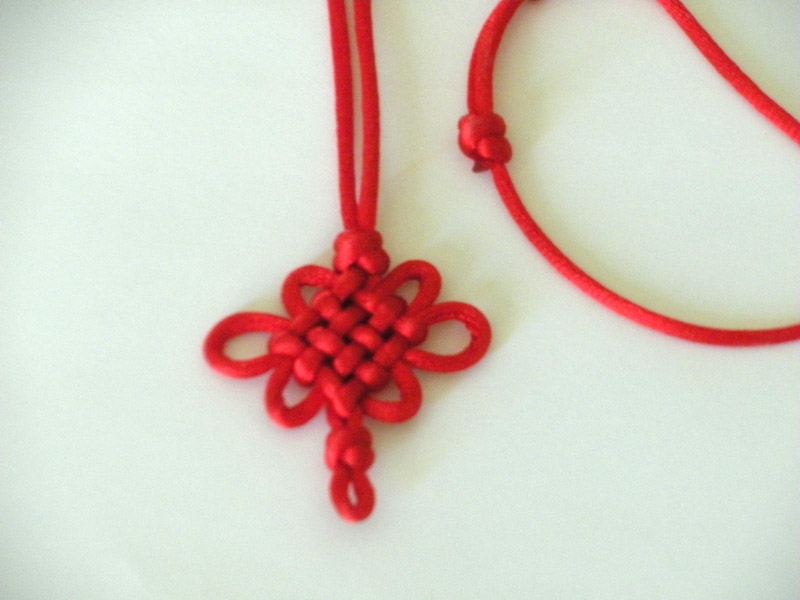 Chinese knottingA folk craft of cord tied into lucky shapes, made in China and given as charms
 Water lanternSmall lamps floated on water to honour the dead and ask for good fortune
 Postpartum confinementA period of rest, nourishment, and seclusion for mothers after giving birth.
Good reading and sources
- Norigae on WikipediaEncyclopedia
- More photos on Wikimedia CommonsPhotos and video
- Wikidata recordOpen data
The facts on this page come from the Wikipedia article "Norigae", written by its contributors and used under the CC BY-SA 4.0 licence, and from its Wikidata record (CC0). EveryParampara rewrote the text in its own words, with AI assistance, and compares every page with the article to make sure no passage is copied. It may be reused under the same CC BY-SA 4.0 licence with a link back.
It may contain mistakes. Traditions differ from one family, village and community to the next, and the people who keep them know them best. If something is wrong, tell us. Last refreshed 2026-10-05.
More from South Korea
All the traditions of South Korea 🇰🇷 South Korea and 2 moreHanbok한복
Korea's customary dress: a short jacket, a skirt or trousers, and a bow-tied ribbonDress
🇰🇷 South Korea and 2 moreHanbok한복
Korea's customary dress: a short jacket, a skirt or trousers, and a bow-tied ribbonDress
 🇨🇳 China and 1 moreDahu褡护 (Dāhù)
A cross-collar jacket worn in the Ming dynasty, blending Chinese and Mongol styles.Dress
🇰🇷 Seoul, South Korea and 1 moreTalchum탈춤
A Korean mask dance drama in which masked actors sing, dance and mock the powerfulPerformance
🇨🇳 China and 5 morePostpartum confinement
A period of rest, nourishment, and seclusion for mothers after giving birth.Rite of passage
🇨🇳 China and 1 moreDahu褡护 (Dāhù)
A cross-collar jacket worn in the Ming dynasty, blending Chinese and Mongol styles.Dress
🇰🇷 Seoul, South Korea and 1 moreTalchum탈춤
A Korean mask dance drama in which masked actors sing, dance and mock the powerfulPerformance
🇨🇳 China and 5 morePostpartum confinement
A period of rest, nourishment, and seclusion for mothers after giving birth.Rite of passage
The same idea elsewhere
Healing, luck and protection compared 🇩🇪 Germany and 5 moreChristmas tree
A decorated evergreen or artificial tree placed indoors to mark the Christmas season.Festival
🇩🇪 Germany and 5 moreChristmas tree
A decorated evergreen or artificial tree placed indoors to mark the Christmas season.Festival
 🇫🇷 France and 5 moreCandlemas
A Christian feast of candle blessings marking the end of the Christmas seasonSpiritual
🇫🇷 France and 5 moreCandlemas
A Christian feast of candle blessings marking the end of the Christmas seasonSpiritual
 🇺🇸 United States and 4 moreFriday the 13th
A Western folk superstition regarding the unluckiness of a Friday falling on the 13th.Folklore
🇺🇸 United States and 4 moreFriday the 13th
A Western folk superstition regarding the unluckiness of a Friday falling on the 13th.Folklore
 🇮🇪 Ireland and 2 moreJack-o'-lantern
A carved pumpkin lantern lit with a candle to brighten and protect Halloween nightsFolklore
🇮🇪 Ireland and 2 moreJack-o'-lantern
A carved pumpkin lantern lit with a candle to brighten and protect Halloween nightsFolklore