Music, dance and storytellingEast AsiaIndigenous and traditional
Talchum
In its own language: 탈춤
A Korean mask dance drama in which masked actors sing, dance and mock the powerful

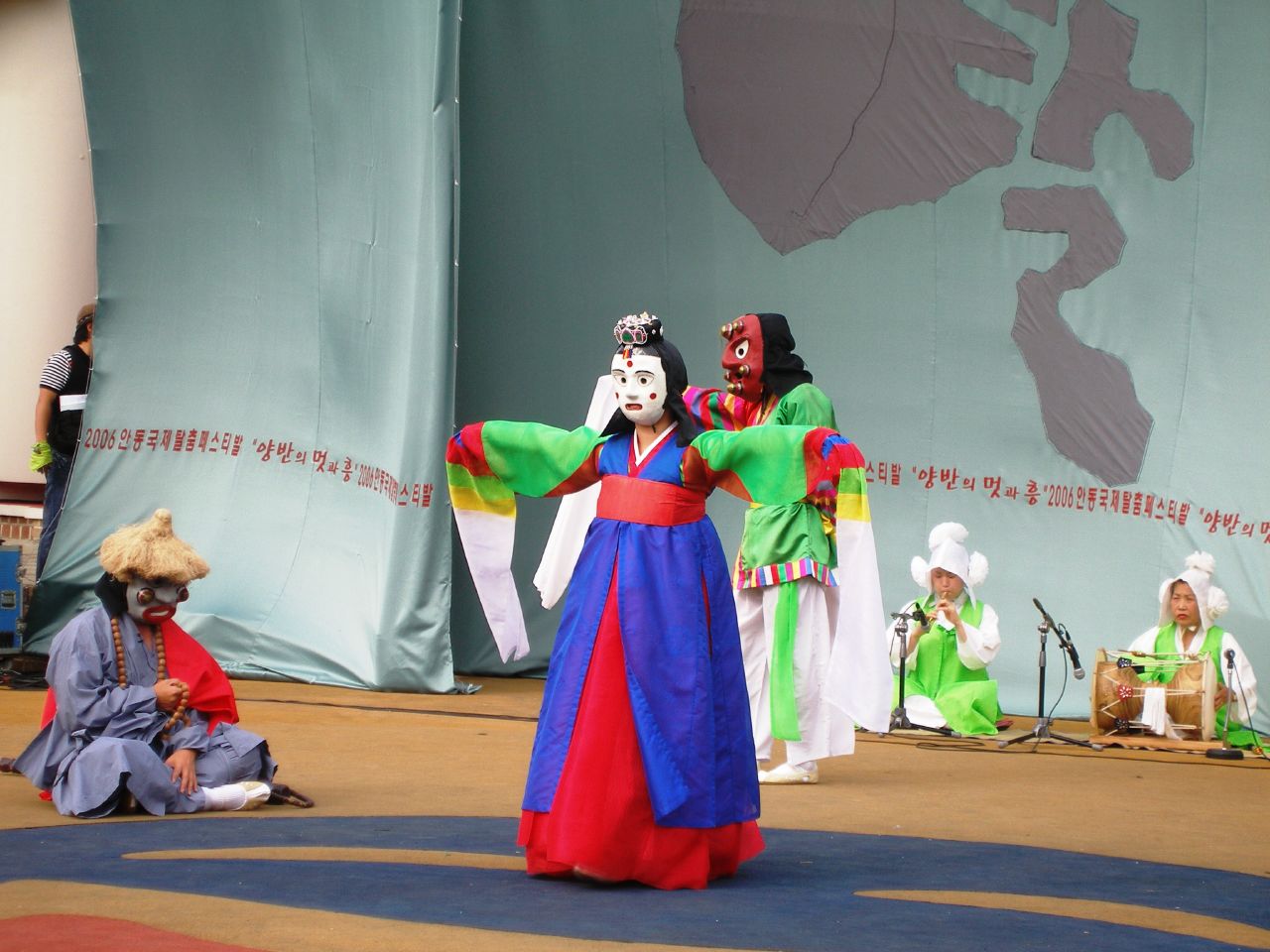
Talchum is a Korean mask dance drama. Masked performers dance, sing and act out stories that mock the powerful and drive away bad luck. It grew from village ritual into popular theatre, is kept across South Korea in about thirteen regional styles, and was recognised by UNESCO in 2022.
When is Talchum marked?
Talchum is kept as part of Buddha's Birthday in Korea, which is on Thursday, 13 May 2027.
Talchum is a Korean mask dance. Performers wear masks, sing and dance, and act out stories. The name is often used for mask dance dramas across Korea, though it once belonged to Hwanghae Province alone. Village rituals, shamanic practice and satire all fed into it. Troupes still perform it at festivals, and UNESCO listed it in 2022.
What it is
Talchum means mask dance. In everyday use the word covers mask dance dramas from anywhere in Korea, but in a narrower sense it belongs to Hwanghae Province, which lies in North Korea today. Mask dramas of the Seoul and Gyeonggi area go by the name sandae noli. Along the southern coast people call theirs yayu, which translates as field play, or Obangsinjang, the dance of five gods. Over time the Hwanghae word travelled and became the general label. Whatever the regional name, the form is the same: masked performers dance, sing and act out a story together.
Where it came from
Talchum began in Korean villages as part of shamanic ritual and later turned into popular entertainment, according to the usual account. Behind that lie two older arguments. One roots masked theatre in farming life, in rites such as Seonang-gut where masks copied the faces of gods and slowly took on human features. The other follows instrumental music that Mimaji of Baekje learned in China's Southern Dynasties and passed to Japan, where a thirteenth-century text describes a mime said to resemble the Bongsan mask dance. Written traces of masking go back to the end of the ninth century. Goryeo's royal court kept an office, Sandae Togam, to oversee mask drama; Joseon closed it.
Stories and satire
Every mask dance drama shares a frame, yet each region and each group of performers gives it its own shape. The plays take up exorcism, ritual dance and mockery. Monks who have left the path, wealthy men who have lost their manners, and shamans all come in for ridicule from the stage; so does the quarrel between an older wife and a younger woman brought into the house. Village audiences were often poor, and the laughter aimed upwards at the yangban, the educated elite, carried their grievances. Spectators are not silent onlookers. They join in, calling out and crowding near the performers.
Masks and creatures
The masks let actors become more than themselves. Alongside ordinary figures, the plays bring out imaginary beings. Yeongno is a monster with a long red face and a scaly yellow robe who swallows corrupt yangban, and who, in some versions, earns a place in heaven after eating a hundred of them. Bibi, a kind of yeongno, blows a willow pipe to make a threatening sound. Jangjamari are fat water spirits covered in seaweed, who play instruments and are tied to fertility; around Gangneung they appear with the summer planting. Juji, bird-like or lion-like, dance in pairs, and their steps are read as a wish for children or as a way of driving off evil.
Today and change
Mask dance dramas have been handed down all over the peninsula. Roughly thirteen kinds are counted, among them the Haeseo plays of Hwanghae, such as Bongsan and Eunyul; the Yangju and Songpa plays of the Seoul region; the yayu and ogwangdae of the southern coast; the Hahoe byeolsingut talnori of the southeast; the Gangneung gwanno play of Gangwon; and the Namsadang troupe's deotboegi dance. Two are best known now: Bongsan Talchum and Hahoe byeolsingut talnori. In 2022 UNESCO recognised the practice as intangible cultural heritage, a step that underlined its meaning both at home and further afield.
How Talchum is kept
A mask dance drama is played out in seven parts. A ritual dance by the chief opens it, driving out demons. Dances of monks follow; one of them, the beopgonori, has lately fallen out of use. Next come the sadang dance of seven masters, then the veteran's dance, where a tavern woman hails a monk as a living Buddha. A lion arrives to punish the pair, hears their regret and dances with them. Then three yangban brothers are mocked in a contest of poems, and the last part closes the story with an old man, his wife and a shaman's rite.
When and where
Mask dance dramas belong to the festival calendar and to rites rather than to one fixed date. They were performed at the First Full Moon, Buddha's Birthday in the fourth lunar month, the Dano Festival and Chuseok, and occasionally at state celebrations or at ceremonies asking for rain.
Talchum is kept in South Korea, with the Hwanghae tradition it is named for belonging to North Korea today. Styles are spread across the peninsula: Hwanghae, the Seoul and Gyeonggi area, the southern coast, the southeast, Gangwon and the touring Namsadang troupes. Bongsan Talchum and Hahoe byeolsingut talnori are the two most widely known.
What Talchum means
For those who keep it, a mask dance drama is more than a show. It carries a village's wish for good farming, and its opening dance and its exorcism scenes are meant to push misfortune away. The comedy does social work too: it lets ordinary people laugh at the yangban above them, at monks who have gone astray and at men with a second wife. The last act, with its shaman's rite for the dead, holds grief and anger together, and points back to the ritual ground the plays came from.

Days Talchum is marked
Questions people ask about Talchum
When is Talchum marked?
Talchum is kept as part of Buddha's Birthday in Korea, which is on Thursday, 13 May 2027.
What is talchum?
A Korean mask dance. Performers put on masks, dance, sing and tell a story on stage. Most Koreans use the word for mask dance dramas of any region, though it began as the name for the Hwanghae Province kind, in what is North Korea today.
Who performed it, and who was it for?
Village communities kept the plays, and professional touring groups such as the Namsadang also performed them. The audience stood or sat close around the stage in a near circle, calling out during the action. Much of the humour was aimed at the yangban, the educated elite, and at monks and shamans.
What are the masks and monsters?
Masks let the actors become people, animals or supernatural beings. Among the invented figures are yeongno, a red-faced monster that eats corrupt yangban; bibi, which pipes a warning; jangjamari, fat water spirits tied to fertility; and juji, bird-like or lion-like dancers who move in pairs.
Why is it recognised outside Korea?
In 2022 UNESCO recognised the practice as intangible cultural heritage, noting its importance both locally and further afield. Today about thirteen regional kinds are counted, of which Bongsan Talchum and Hahoe byeolsingut talnori are the best known.
See also
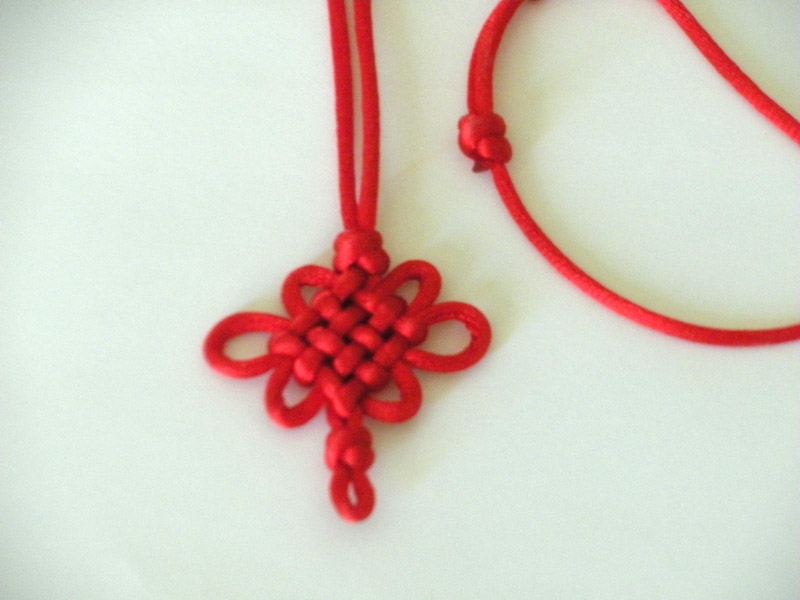 Chinese knottingA folk craft of cord tied into lucky shapes, made in China and given as charms
 Postpartum confinementA period of rest, nourishment, and seclusion for mothers after giving birth.
 Water lanternSmall lamps floated on water to honour the dead and ask for good fortune
 GutSacred rites of song, dance, and spirit communion performed by Korean shamans
Good reading and sources
- Talchum, mask dance drama in the Republic of KoreaUNESCO, Heritage listing
- Talchum, mask dance drama in the Republic of KoreaUNESCO, Article
- Talchum on WikipediaEncyclopedia
- More photos on Wikimedia CommonsPhotos and video
- Wikidata recordOpen data
The facts on this page come from the Wikipedia article "Talchum", written by its contributors and used under the CC BY-SA 4.0 licence, and from its Wikidata record (CC0). EveryParampara rewrote the text in its own words, with AI assistance, and compares every page with the article to make sure no passage is copied. It may be reused under the same CC BY-SA 4.0 licence with a link back.
It may contain mistakes. Traditions differ from one family, village and community to the next, and the people who keep them know them best. If something is wrong, tell us. Last refreshed 2026-10-05.
More from South Korea
All the traditions of South Korea 🇰🇷 South Korea and 1 moreGanggangsullae강강술래
A Korean harvest dance where women hold hands and sing in circles under the full moonPerformance
🇰🇷 South Korea and 1 moreGanggangsullae강강술래
A Korean harvest dance where women hold hands and sing in circles under the full moonPerformance
 🇰🇷 Honam, South Korea and 2 morePansori판소리
A Korean art of sung storytelling, with one singer, one drummer and a listening crowdPerformance
🇰🇷 Honam, South Korea and 2 morePansori판소리
A Korean art of sung storytelling, with one singer, one drummer and a listening crowdPerformance
 🇰🇷 South KoreaSinawi시나위
An improvisational Korean musical style played for shamanic rituals.Performance
🇰🇷 Jindo Island, South KoreaNamdo Field Songs남도 들노래
Farmers' choral work songs from South Jeolla, sung through the rice field yearPerformance
🇰🇷 South KoreaSinawi시나위
An improvisational Korean musical style played for shamanic rituals.Performance
🇰🇷 Jindo Island, South KoreaNamdo Field Songs남도 들노래
Farmers' choral work songs from South Jeolla, sung through the rice field yearPerformance
The same idea elsewhere
Healing, luck and protection compared 🇩🇪 Germany and 5 moreChristmas tree
A decorated evergreen or artificial tree placed indoors to mark the Christmas season.Festival
🇩🇪 Germany and 5 moreChristmas tree
A decorated evergreen or artificial tree placed indoors to mark the Christmas season.Festival
 🇫🇷 France and 5 moreCandlemas
A Christian feast of candle blessings marking the end of the Christmas seasonSpiritual
🇫🇷 France and 5 moreCandlemas
A Christian feast of candle blessings marking the end of the Christmas seasonSpiritual
 🇮🇪 Ireland and 2 moreJack-o'-lantern
A carved pumpkin lantern lit with a candle to brighten and protect Halloween nightsFolklore
🇮🇪 Ireland and 2 moreJack-o'-lantern
A carved pumpkin lantern lit with a candle to brighten and protect Halloween nightsFolklore
 🇺🇸 United States and 4 moreFriday the 13th
A Western folk superstition regarding the unluckiness of a Friday falling on the 13th.Folklore
🇺🇸 United States and 4 moreFriday the 13th
A Western folk superstition regarding the unluckiness of a Friday falling on the 13th.Folklore