Hanbok
In its own language: 한복
Korea's customary dress: a short jacket, a skirt or trousers, and a bow-tied ribbon

Hanbok is the customary dress of Koreans, worn in Korea since ancient times. Women wear a short jacket, the jeogori, over a skirt, and men wear the same jacket with loose trousers. Today it comes out for festivals, weddings and formal events, and for Hanbok Day, which the South Korean government started in 1996.
When is Hanbok kept?
Hanbok is kept on worn for formal and semi-formal occasions, and on Hanbok Day each year.
Hanbok is the dress Koreans have worn for centuries: a short jacket fastened with a long ribbon bow, worn over a full skirt by women or loose trousers by men. People choose it today for weddings and other formal occasions. Both Korean states and Korean communities abroad keep it going, with slightly different styles and more than one name for the same garment.
What it is
The hanbok keeps the same four pieces it has had for a very long time: a jacket called jeogori, trousers called baji, a skirt called chima, and a coat called po. Women's sets are usually known as chima jeogori, since skirt and jacket go together; men wear the jacket with roomy trousers. Many extra garments sit on top of that base, among them vests, jackets and coats. Women's names for these include Jangsam, Dansam and Wonsam, while men's include durumagi, dopo, Danryeong-ui, Joong-chimak, Sochang-ui and Daechang-ui. Though the basic arrangement has not altered, the length, width and outline of each piece has shifted over the centuries.
Origins and history
Hanbok has been worn in Korea for a very long time. The oldest pictures of it come from the Three Kingdoms period, which ran from 57 BCE to 668 CE, and its roots lie with the ancestors of the Koreanic peoples in what is now northern Korea and Manchuria. Goguryeo tomb murals painted between the 4th and 6th centuries CE show the same four-part structure that people wear now. Shapes in use today follow the clothing of the Joseon period, above all what nobles and royalty wore. The old and the new share one frame: a short jacket, trousers, a skirt and a coat.
Jacket, collar and ties
The jeogori is the short upper garment, worn by women and men alike. Its parts carry their own names: gil for the wide front and back panels, git for the strip that edges the collar, dongjeong for the removable white collar laid over the git, and kkeutdong for a contrasting cuff on some women's jackets. The goreum are the strings that fasten the jacket. They started as something practical and often turned decorative. In southern Korea, Silla included, a brightly coloured goreum sat at the front of the neck and left its mark on Yayoi culture. From Joseon times the goreum moved to the front, and by the 20th century it had become the long, wide ribbon called Ot-goreum. Round buttons called danchu can replace it.
Skirts, trousers and layers
Chima is the skirt, also written sang or gun in hanja. It is built from rectangular panels pleated or gathered onto a waistband, the chima-malgi, which carries its own goreum strings. From Goguryeo through Joseon, skirts were striped, pleated, pieced and trimmed with geumbak, gold leaf stamped on with wooden blocks, a technique older than the Three Kingdoms and once reserved for royalty and nobility. Underneath goes the sokchima petticoat. Men's baji is loose, easy to sit on the floor in, and may be cotton, silk or leather, held by a baji-malgi with a long string. Under everything, sokgot undergarments came in layers, and more layers meant more wealth.
The name and today
Hanbok is a recent word, first appearing in the 1800s. An 1881 document from late Joseon, the Chŏngch'iilgi, uses it to tell Korean dress apart from Japanese and Western clothing, and a document of 1895 does the same. After 1900 Korean newspapers wrote the hanja Han into many words for Korean clothing, among them Han'gugŭibok, Han'gugyebok and Taehannyŏbok. Since Korea was divided, the South has said hanbok and the North has said Chosŏn-ot. Styles in the two Koreas drifted apart during their late 20th century isolation, and Korean communities abroad, in China among them, kept versions of their own. Since the 1990s more exchange has brought these styles closer again.
How Hanbok is kept
A hanbok is layered on in order. Undergarments, called sokgot, go on first, and women may wear several layers of them. Then comes the lower half: women fasten the chima at the waist with its goreum strings, while men put on baji held by a baji-malgi. The jeogori goes over that, and its own goreum are tied in a bow, with the dongjeong collar laid on top. Buttons called danchu may take the place of the strings. Finally come the outer layers, which may be a vest, a jacket or a coat such as the durumagi. The finished set is worn for formal and semi-formal occasions.
When and where
There is no single day for the hanbok. People choose it for weddings, family ceremonies and formal gatherings, and it appears at milestones through the year. Hanbok Day, created in 1996 by the South Korean government, comes round once a year to encourage people to wear it.
Hanbok belongs to Korea, both South and North, and that is where it is strongest. Korean communities elsewhere keep it as well: the Korean diaspora generally, ethnic Koreans living in China, and the Koryo-saram, Koreans in the lands of the former Soviet Union, who kept a hanbok tradition of their own.
What Hanbok means
For a very long time many Koreans have chosen white hanbok. White stands for purity and is linked with light and the sun. Some interpretations hold that particular colours or patterns came from folk belief or shamanism. In some periods ordinary people, the seomin, were barred from certain brightly coloured hanbok, so what a person wore once spoke of rank as well as taste. Wearing hanbok marks an occasion as formal. Attempts to end white clothing, under Joseon and during the Japanese occupation, both failed.


Questions people ask about Hanbok
When is Hanbok kept?
Hanbok is kept on worn for formal and semi-formal occasions, and on Hanbok Day each year.
What is a hanbok?
It is the customary dress of Koreans, made of a jacket called jeogori with a skirt called chima for women or loose trousers called baji for men, sometimes with a coat called po over the top. People in Korea have worn it since ancient times.
What is it called in North Korea?
In South Korea the garment is called hanbok. North Koreans call it Chosŏn-ot, and the older word uri-ot has also been used. The two names reflect each side's preferred term for the country itself.
What holds a hanbok closed?
The jeogori is tied with goreum, long fabric strings finished in a bow. Round buttons called danchu can be used instead. Skirts and trousers are also fastened at a waistband, and the skirt's waistband has its own goreum string.
Is hanbok the same everywhere?
No. Styles in South Korea and North Korea grew apart during their long separation in the late 20th century, and Korean communities abroad, including in China, kept versions of their own. Since the 1990s, more contact has brought the styles closer again.
See also
 Lion danceA dynamic ritual dance featuring costumed lions, drums and martial acrobatics
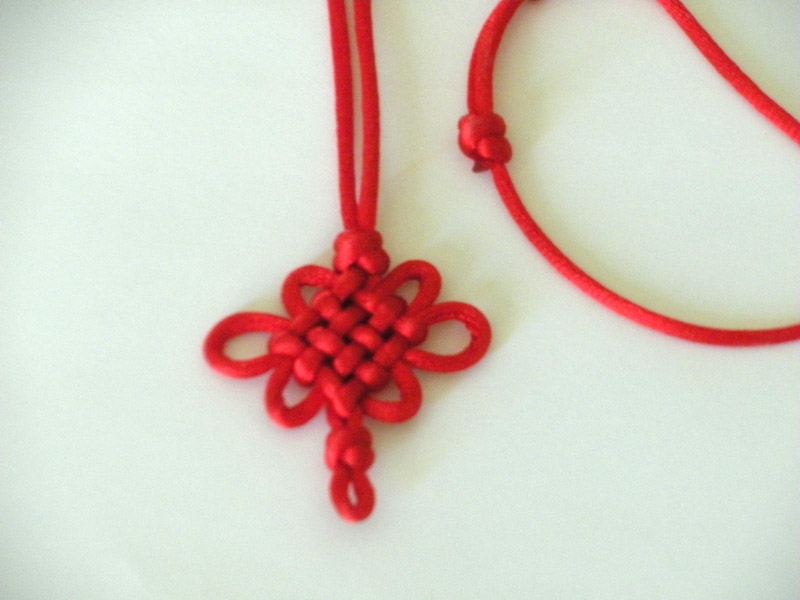 Chinese knottingA folk craft of cord tied into lucky shapes, made in China and given as charms
 KizombaA close, slow couple dance from Angola, named after a Kimbundu word for party
 BarkclothCloth beaten from tree bark across Africa, Asia and the Pacific
Good reading and sources
- Encyclopaedia BritannicaArticle
- Custom of Korean costume: traditional knowledge, skills and social practices in the Democratic PeopleUNESCO, Heritage listing
- Actor Park Bo-gum tapped to promote hanbok abroadThe Korea Times, Article
- Custom of Korean costume: traditional knowledge, skills and social practices in the Democratic PeopleUNESCO, Article
- Actor Park Bo-gum tapped to promote hanbok abroadThe Korea Times, Article
- Hanbok on WikipediaEncyclopedia
- More photos on Wikimedia CommonsPhotos and video
- Wikidata recordOpen data
The facts on this page come from the Wikipedia article "Hanbok", written by its contributors and used under the CC BY-SA 4.0 licence, and from its Wikidata record (CC0). EveryParampara rewrote the text in its own words, with AI assistance, and compares every page with the article to make sure no passage is copied. It may be reused under the same CC BY-SA 4.0 licence with a link back.
It may contain mistakes. Traditions differ from one family, village and community to the next, and the people who keep them know them best. If something is wrong, tell us. Last refreshed 2026-10-05.
More from South Korea
All the traditions of South Korea 🇰🇷 South KoreaNorigae노리개
A Korean pendant of knots and tassels, worn with hanbok and kept for luckDress
🇰🇷 South KoreaNorigae노리개
A Korean pendant of knots and tassels, worn with hanbok and kept for luckDress
 🇨🇳 China and 1 moreDahu褡护 (Dāhù)
A cross-collar jacket worn in the Ming dynasty, blending Chinese and Mongol styles.Dress
🇨🇳 China and 2 moreChinese knotting中國結 (Zhōngguó jié)
A folk craft of cord tied into lucky shapes, made in China and given as charmsCraft
🇨🇳 China and 1 moreDahu褡护 (Dāhù)
A cross-collar jacket worn in the Ming dynasty, blending Chinese and Mongol styles.Dress
🇨🇳 China and 2 moreChinese knotting中國結 (Zhōngguó jié)
A folk craft of cord tied into lucky shapes, made in China and given as charmsCraft
 🇰🇷 South Korea and 1 morePyebaek폐백
A Korean wedding rite where newlyweds bow to elders and share dates, chestnuts and wineRite of passage
🇰🇷 South Korea and 1 morePyebaek폐백
A Korean wedding rite where newlyweds bow to elders and share dates, chestnuts and wineRite of passage
The same idea elsewhere
Weddings compared 🇼🇸 Samoa and 1 moreʻIe tōga
Precious woven mats exchanged in Samoan ceremonies to honor family ties and chiefly status.Dress
🇼🇸 Samoa and 1 moreʻIe tōga
Precious woven mats exchanged in Samoan ceremonies to honor family ties and chiefly status.Dress
 🇹🇱 Timor-LesteUma Lulik
Sacred ancestral clan houses and ritual shrines in East TimorSpiritual
🇹🇱 Timor-LesteUma Lulik
Sacred ancestral clan houses and ritual shrines in East TimorSpiritual
 🇮🇩 Indonesia and 2 moreKenduri
A communal prayer meal and gathering shared across Indonesia, Malaysia and BruneiSpiritual · Feasts and festival meals
🇺🇬 UgandaKwanjula
A formal marriage introduction ritual of the Baganda people in Uganda, where families meet to exchange gifts and seek blRite of passage
🇮🇩 Indonesia and 2 moreKenduri
A communal prayer meal and gathering shared across Indonesia, Malaysia and BruneiSpiritual · Feasts and festival meals
🇺🇬 UgandaKwanjula
A formal marriage introduction ritual of the Baganda people in Uganda, where families meet to exchange gifts and seek blRite of passage