Music, dance and storytellingEurope
Ojkanje
A throat-shaking style of folk singing from Croatia's Dinaric highlands
Ojkanje is polyphonic folk singing from Croatia's Dinaric highlands, especially the Dalmatian hinterland, Lika, Kordun, Velebit and the Karlovac area. Singers shake their voices from deep in the throat, alone or in pairs, and groups in Croatia and Serbia now carry it on through festivals and folklore societies.
When is Ojkanje kept?
Ojkanje is kept at gatherings, folklore festivals and cultural events through the year.
Ojkanje is a way of singing from the Croatian highlands in which voices shake sharply on the syllables "oj" and "hoj". It comes from the Dinaric area and is best known in the Dalmatian hinterland, Lika, Kordun, Velebit and around Karlovac. Farmers once sang it alone on long journeys or in pairs; today folklore groups, festivals and television keep it going.
What it is
Ojkanje is less a fixed repertoire than a technique. The sound is made low in the throat, and the Harvard Dictionary of Music describes it as a kind of melisma, a melody stretched over one syllable, with the voice trembling hard on "oj" or "hoj". Singers may perform solo, though groups are more usual. In group singing, the leader's breath decides when a piece ends. Words in the songs deal with love, politics, and matters of the village or the wider society.
Regional styles
Different districts have their own names and ways. Solo singing, called travel singing or solitary singing, is strongest in Lika and around Karlovac. Its forms include rozganje, still performed by folklore groups near Karlovac, and ustresalica from Konavle, which has died out. Two-part singing belongs more to the coast and the hinterland. Around Šibenik, Vrlika and Kijevo the group style is called ojkalica. In Ravni Kotari and Bukovica it is orzenje, which Serbian Orthodox singers call orcenje, orcanje or groktanje. Men's singing is treskavica, also called starovinsko or old-style, while vojkavica is the women's form. Near Trogir and Kaštela the same men's style is heard, and in Grebaštica, north of Primošten, people name it grgešanje. In northern Poljice the kiridžijsko style continues.
Where it is sung
Ojkanje took shape in the Dinaric mountain belt of the Balkans. Its heartland is the Dalmatian hinterland, and the steep country of Lika and the land behind the coast suited it well. Beyond that, it is known in Velebit, Kordun and around Karlovac, between the Krka and Cetina rivers in Drniška Krajina, in Ravni Kotari and Bukovica, in Cetinska Krajina between Svilaja and Moseč, and inland from Trogir and Kaštela. Movement of people in the 16th and 17th centuries probably carried it to the Adriatic islands, and Bunjevci who left for Vojvodina and Hungary took it with them. Similar polyphonic singing lives on nearby: ganga in Herzegovina and inland Dalmatia, and izvika around Zlatibor in Serbia.
Keeping it going
Ojkanje travelled from one generation to the next, with younger singers learning face to face from older, skilled ones. Rural life changed sharply in the last century, young people moved to towns, and the singing declined. Folklore societies now perform it. KUD Promina of Oklaj was started by five local people and appeared in a UNESCO video. UNESCO also names Sveta Magareta near Karlovac, Gacka of Ličko Lešće, Radovin, and Sveti Nikola Tavelić of Lišane Ostrovičke. Serb groups from Kordun, among them KUD Petrova Gora in Belgrade and KUD Kordun in Inđija, perform across Serbia.
History and recognition
Ojkanje thrived among country people in the Dinaric region. Ivan Lovrić, writing in the 18th century, listed it as part of Morlach culture. In the early 1900s the Croatian Peasant Party's charitable wing ran folklore festivals for rural traditions, and through the 1920s and 1930s dancing, music and regional costume were shown, with ojkanje as a valued addition. Croatia's Ministry of Culture put the singing forward in 2008, and UNESCO inscribed it in 2010 as heritage in need of urgent protection. Serbia added it to its national register of intangible heritage in 2012.
How Ojkanje is kept
Singers learn by ear from those who already sing, and ojkanje is heard where people gather. One person may sing alone, but the shared form is two or more voices together. The leader's breath decides when a piece ends. The shaking sits on the syllables "oj" or "hoj". Songs speak of love, politics and local concerns. Today the singing appears at folklore festivals, cultural events and public performances, and Croatian television has broadcast programmes about the groups and about bringing the practice back among young people.
When and where
Ojkanje is not tied to one day or season. It belongs to gatherings and to the occasions when people sang together or alone, alone being the form known as travel or solitary singing. Today it is heard at folklore festivals and cultural events held through the year in Croatia and Serbia.
Croatia is home to ojkanje, and the Dalmatian hinterland is its strongest ground. Lika, Velebit, Kordun and the Karlovac area keep it too. Emigration carried it outward: groups now sing in western Serbia, Serbia listed the singing nationally in 2012, and some groups are found in Bosnia and Herzegovina.
What Ojkanje means
For the communities that keep it, ojkanje is not just a song but a way of sounding together, and the shaking voice carries feeling that plain speech cannot. The Harvard Dictionary of Music notes the style, and UNESCO's recognition in 2010 placed it among traditions said to need urgent protection. Singers describe the sound as coming from deep in the throat, and the songs carry love, local concerns and politics.
Questions people ask about Ojkanje
When is Ojkanje kept?
Ojkanje is kept at gatherings, folklore festivals and cultural events through the year.
What is ojkanje?
It is a style of polyphonic folk singing from Croatia. Voices shake sharply and for a long time on the syllables "oj" or "hoj". Singers use it alone or, more often, in a group of two or more, and the songs deal with love, local matters and politics.
Where is it sung?
Its main home is the Dalmatian hinterland in Croatia, and it is also known in Lika, Velebit, Kordun and around Karlovac. Groups now sing in western Serbia, and some are found in Bosnia and Herzegovina.
Why is it described as endangered?
Younger people moved to cities during the last century, rural ways changed, and the singing declined. Croatia put the singing forward for UNESCO protection in 2008, and it was inscribed in 2010. Serbia added it to its own national register in 2012.
Who keeps it going today?
Folklore societies across the region, several of them named by UNESCO. KUD Promina from Oklaj, Sveta Magareta near Karlovac and Gacka from Ličko Lešće are among them, and Serb groups formed by people from Kordun perform in Serbia.
See also
 LinđoA circle dance from Dubrovnik played to the lijerica, where a leader sets the rhythm and calls the steps.
 LipizzanerA gray riding horse breed and centuries-old tradition of classical dressage kept by the Spanish Riding School.
 KlapaUnaccompanied harmony singing from Dalmatia, built by groups of friends
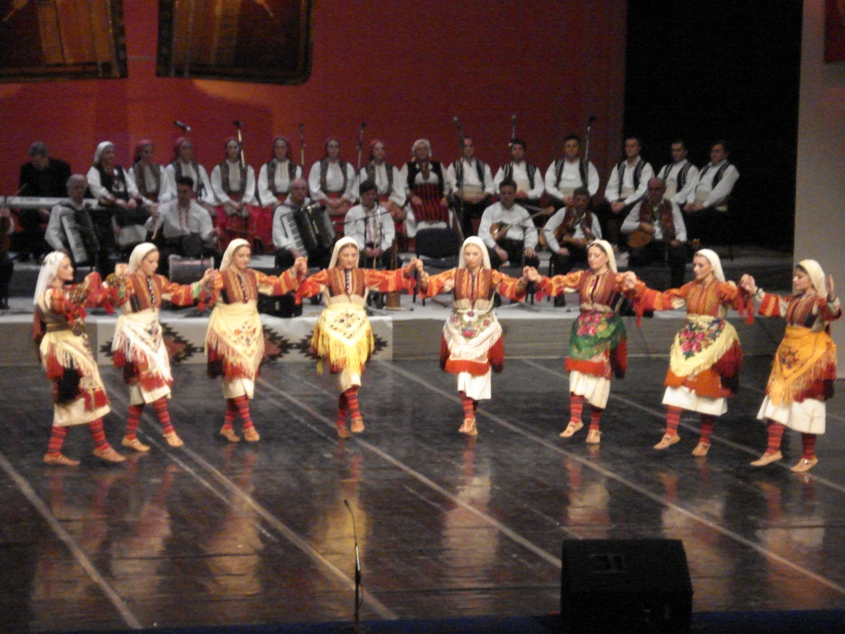 HoraA circle dance from Southeast Europe, danced at weddings and festivals
Good reading and sources
- Browse the Lists of Intangible Cultural Heritage and the Register of good safeguarding practicesUNESCO, Heritage listing
- Browse the Lists of Intangible Cultural Heritage and the Register of good safeguarding practicesUNESCO, Article
The facts on this page come from the Wikipedia article "Ojkanje", written by its contributors and used under the CC BY-SA 4.0 licence, and from its Wikidata record (CC0). EveryParampara rewrote the text in its own words, with AI assistance, and compares every page with the article to make sure no passage is copied. It may be reused under the same CC BY-SA 4.0 licence with a link back.
It may contain mistakes. Traditions differ from one family, village and community to the next, and the people who keep them know them best. If something is wrong, tell us. Last refreshed 2026-10-05.
More from Croatia
All the traditions of Croatia
🇭🇷 Dubrovnik, CroatiaLinđo
A circle dance from Dubrovnik played to the lijerica, where a leader sets the rhythm and calls the steps.Performance
🇦🇹 Vienna, Austria and 4 moreLipizzanerLipicanec
A gray riding horse breed and centuries-old tradition of classical dressage kept by the Spanish Riding School.Performance
🇷🇴 Bucharest, Romania and 7 moreHorahoră (Romanian), хоро (Bulgarian), оро (Macedonian), הורה (Hebrew)
A circle dance from Southeast Europe, danced at weddings and festivalsPerformance
🇭🇷 Omiš, CroatiaKlapa
Unaccompanied harmony singing from Dalmatia, built by groups of friendsPerformance
The same idea elsewhere
All of this kind 🇹🇷 Kayseri, Turkey and 4 moreHalay
A traditional line and circle folk dance kept across Turkey, Azerbaijan, Armenia, Iran, and Syria.Performance
🇹🇷 Kayseri, Turkey and 4 moreHalay
A traditional line and circle folk dance kept across Turkey, Azerbaijan, Armenia, Iran, and Syria.Performance
 🇳🇿 Auckland, New ZealandPoi
A Māori performing art of swinging tethered weights in rhythmical patterns.Performance
🇳🇿 Auckland, New ZealandPoi
A Māori performing art of swinging tethered weights in rhythmical patterns.Performance
 🇵🇭 Philippines and 1 morePangalay
A traditional fingernail dance of the Tausūg and Bajau peoples in the Sulu Archipelago and Sabah.Performance
🇵🇭 Philippines and 1 morePangalay
A traditional fingernail dance of the Tausūg and Bajau peoples in the Sulu Archipelago and Sabah.Performance