Music, dance and storytellingEuropeJewish
Hora
In its own language: horă (Romanian), хоро (Bulgarian), оро (Macedonian), הורה (Hebrew)
A circle dance from Southeast Europe, danced at weddings and festivals
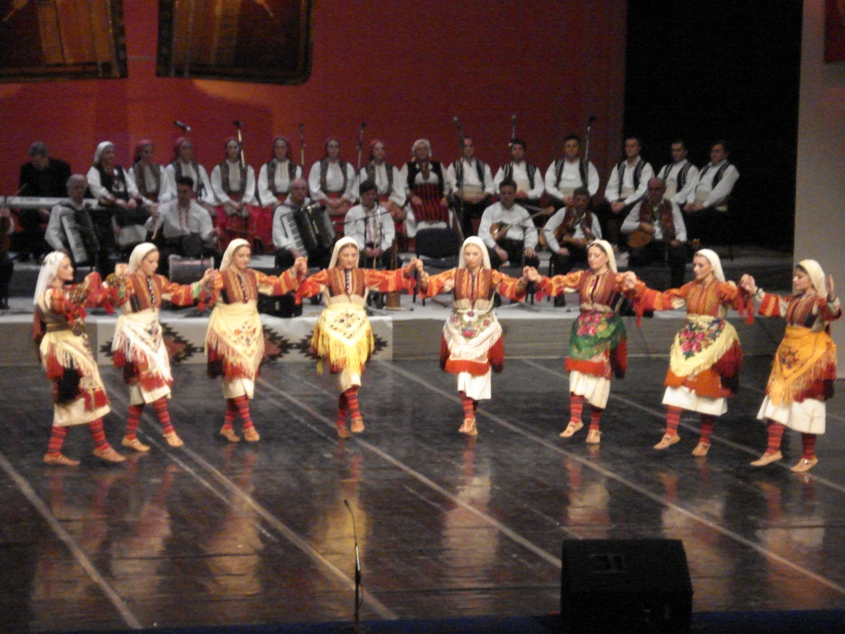
Hora is a family of circle dances from Southeast Europe, known as horă in Romania, horo in Bulgaria, oro in North Macedonia and horah among Jewish communities. Dancers join hands and move in a ring, usually turning left, at weddings, festivals and gatherings across the Balkans, Israel and the Jewish diaspora.
When is Hora kept?
Hora is kept at weddings, festivals and other community celebrations, throughout the year.
Hora is the name for a group of circle dances kept in Southeast Europe and among Jewish communities. Dancers hold hands and move in a ring, most often to the left, following a set pattern of steps forward and back. Romanians say horă, Bulgarians horo, Macedonians oro, Jewish communities horah. The dance belongs to weddings, festivals and local gatherings, and it is also a founding piece of modern Israeli folk dancing.
What it is
Hora is an umbrella name for circle dances of Southeast Europe and for the Jewish dance that grew out of them. The word changes shape from country to country: horă in Romania and Moldova, horo in Bulgaria, oro in North Macedonia, horon in Turkey. Neighbours share the form, and Roma dancers and musicians in the Balkans are known for performing it well. Dancers usually hold hands and move in a ring, though Bulgarian horo groups are just as happy in a long curving line. Inside those rings the steps differ widely, from patterns a beginner learns in minutes to figures that take years.
Where the name comes from
The name is traced to the Greek word khoros, which meant dance and may first have described a circle. The same root runs through Pontic Greek and gives Bulgarian horo, Macedonian oro, Romanian horă, Turkish hora and Hebrew horah. In Slavic languages the related words hora and oro carry the idea of a round dance, and a verb behind them means to speak, sound or sing, with an older sense of celebrating. A Georgian circle dance, Khorumi, may be linked to the horon of nearby Turkish areas, since both come from a region where Laz and Pontic Greek people lived side by side. The sources present this as a possibility, not a settled fact.
Romania and Moldova
In Romania and Moldova the horă is a ring dance in which people hold hands and the circle turns, usually counterclockwise. Each dancer follows a pattern of three steps ahead for every step back. It is a favourite at weddings and village festivals, and it forms a large part of rural social life. The best known is the Hora Unirii, the Hora of the Union, which became a patriotic song after Wallachia and Moldavia joined to form the Principality of Romania in 1859. On New Year's Eve of 2006, when Romania and Bulgaria entered the European Union, crowds danced the Hora Bucuriei along the boulevards of Bucharest. Some of the largest circles were filmed in the Pindus mountains by the Manaki brothers in the early 1900s.
Bulgaria and North Macedonia
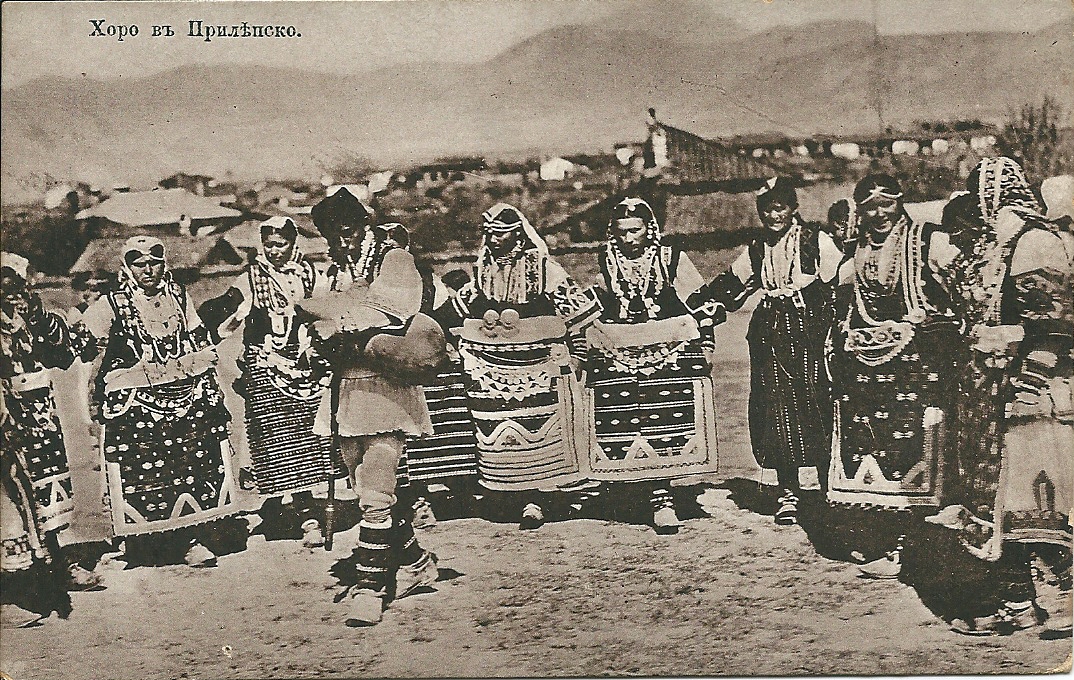
Bulgarian horo comes in many shapes and needs no closed circle. Step counts run from three up to seven or eight forward, with one to six back, and each region has its own rhythm and footwork, so hardly any two are alike. Folklorists count more than a hundred kinds. A few are simple enough to pick up in five or ten minutes; others demand fluency in the easier ones first. In the past the horo was a setting for fun, a contest of skill and a display. North Macedonia spells the dance oro, and its name carries both celebration and the memory of dancing before battle. Teshkoto, the difficult one, is danced by men alone to music that holds the sorrow of war.
The Jewish horah
Jewish communities took the circle dance from Southeast Europe and made it their own. In klezmer music the horah is a slow, limping dance in triple time, also called zhok or krumer tants, which often speeds up into a livelier duple tune. In 1924 the dancer Baruch Agadati choreographed a version of the Romanian horă, known as the Hora Agadati, performed by the Ohel Workers' Theatre on tour in the Jezreel Valley. It became a founding dance of Israeli folk dancing and a symbol of the Zionist movement's work of rebuilding. In the early years it filled kibbutzim for hours. Today it is danced at weddings and b'nai mitzvah, where the bride and groom, or the young honoree, are lifted on chairs.
How Hora is kept
Everyone takes part by joining the ring or the line. Dancers clasp hands, or link arms behind their backs or over their shoulders. In Romanian and Moldovan horă the ring moves counterclockwise while each person steps three times ahead and once back. In Bulgaria the group may curve rather than close, and the number of steps depends on the local type. Jewish dancers begin by stepping to the left on the right foot and bring the left foot after it, then step back on the right and follow with the left, at a quick and cheerful pace. Large crowds can open out into several rings at once, or into one spiral. At Jewish weddings the couple is raised on chairs.
When and where
There is no single date. Hora dancing belongs to weddings, festivals and community gatherings, so it appears whenever people celebrate. Bulgarian horos are tied to local feast days and regional gatherings. The Jewish horah is a set piece of weddings and b'nai mitzvah, and in Israel it features in folk-dance sessions through the year.
The dance is at home across Southeast Europe, in Romania, Moldova, Bulgaria, North Macedonia, Serbia, Montenegro, Greece and Turkey, and among Roma communities there. Jewish horah travelled with immigrants to Israel and to the United States, the United Kingdom and Canada, and it is strongest at Israeli and diaspora weddings and in folk-dance groups.
What Hora means
For Jewish communities the horah stands for rebuilding and belonging. It was taken up by the Zionist movement, became a founding dance of Israeli folk dancing, and remains a fixture of weddings. Romanians remember the Hora of the Union as the music of Wallachia and Moldavia joining in 1859, a patriotic emblem. In Bulgarian villages the horo was a place to have fun, show skill and be seen. In North Macedonia the Teshkoto carries the sorrow and mood of war.

Questions people ask about Hora
When is Hora kept?
Hora is kept at weddings, festivals and other community celebrations, throughout the year.
What is the hora?
It is a circle dance found in Southeast Europe and among Jewish communities. The name covers many local forms: horă in Romania, horo in Bulgaria, oro in North Macedonia and horah in Jewish use. Dancers usually hold hands and travel around the ring.
Where is it kept?
In Romania, Moldova, Bulgaria, North Macedonia, Serbia, Montenegro, Greece and Turkey, and among Roma communities in the region. Jewish immigrants carried the horah to Israel and to North America and Britain, where it is danced at weddings and community events.
What does the name mean?
It goes back to the Greek word khoros, meaning dance, which may once have meant circle. In Slavic languages the related words hora and oro carry the sense of a round dance, and a verb behind them means to speak, sound or sing, with an older sense of celebrating.
Is it the same dance everywhere?
No. Bulgarian horos alone come in many regional types with their own rhythms and steps, and there may be more than a hundred. Romania and Moldova have their horă, North Macedonia its oro, Turkey its horon, and the Jewish horah differs from the Eastern European forms it came from.
See also
 HoronLine dances of Turkey's eastern Black Sea coast, danced with shaking shoulders
 Georgian polyphonic singingSeveral voices at once, sung without instruments at Georgian feasts and weddings
 KlezmerAn Ashkenazi Jewish instrumental tradition of lively dance tunes and ritual melodies
 TallitA four-cornered Jewish prayer shawl with ritual fringes worn during worship
Good reading and sources
- Encyclopaedia BritannicaArticle
- Library of Congress CatalogLibrary of Congress, Article
- Library of Congress CatalogLibrary of Congress, Article
- Hora (dance) on WikipediaEncyclopedia
- More photos on Wikimedia CommonsPhotos and video
- Wikidata recordOpen data
The facts on this page come from the Wikipedia article "Hora (dance)", written by its contributors and used under the CC BY-SA 4.0 licence, and from its Wikidata record (CC0). EveryParampara rewrote the text in its own words, with AI assistance, and compares every page with the article to make sure no passage is copied. It may be reused under the same CC BY-SA 4.0 licence with a link back.
It may contain mistakes. Traditions differ from one family, village and community to the next, and the people who keep them know them best. If something is wrong, tell us. Last refreshed 2026-10-05.
More from Romania
All the traditions of Romania
🇺🇸 New York, United States and 5 moreKlezmerקלעזמער
An Ashkenazi Jewish instrumental tradition of lively dance tunes and ritual melodiesPerformance
 🇭🇺 Budapest, Hungary and 2 moreHungarian folk dance
A collection of traditional dances kept by Hungarians in Hungary and across the diaspora.Performance
🇭🇺 Budapest, Hungary and 2 moreHungarian folk dance
A collection of traditional dances kept by Hungarians in Hungary and across the diaspora.Performance
 🇷🇴 Romania and 3 moreCălușariCălușarii
An acrobatic Romanian spring dance and ritual brotherhood tied to folklore and healingPerformance
🇷🇴 Romania and 3 moreCălușariCălușarii
An acrobatic Romanian spring dance and ritual brotherhood tied to folklore and healingPerformance
 🇨🇭 Appenzell, Switzerland and 5 moreYodeling
A singing style switching between chest voice and falsetto, kept as a folk tradition across the Alps and globally.Performance
🇨🇭 Appenzell, Switzerland and 5 moreYodeling
A singing style switching between chest voice and falsetto, kept as a folk tradition across the Alps and globally.Performance
The same idea elsewhere
Weddings compared 🇺🇬 Uganda and 4 moreBarkcloth
Cloth beaten from tree bark across Africa, Asia and the PacificCraft
🇮🇱 IsraelTallitטלית
A four-cornered Jewish prayer shawl with ritual fringes worn during worshipSpiritual
🇺🇬 Uganda and 4 moreBarkcloth
Cloth beaten from tree bark across Africa, Asia and the PacificCraft
🇮🇱 IsraelTallitטלית
A four-cornered Jewish prayer shawl with ritual fringes worn during worshipSpiritual
 🇺🇸 United States and 5 moreRite of passage
A ceremony that marks leaving one group and entering another, with a new statusRite of passage
🇺🇸 United States and 5 moreRite of passage
A ceremony that marks leaving one group and entering another, with a new statusRite of passage
 🇬🇭 Odumase Krobo, GhanaDipo
An annual Ghanaian coming-of-age ceremony welcoming Krobo girls into womanhoodRite of passage
🇬🇭 Odumase Krobo, GhanaDipo
An annual Ghanaian coming-of-age ceremony welcoming Krobo girls into womanhoodRite of passage