Music, dance and storytellingEurope
Linđo
A circle dance from Dubrovnik played to the lijerica, where a leader sets the rhythm and calls the steps.

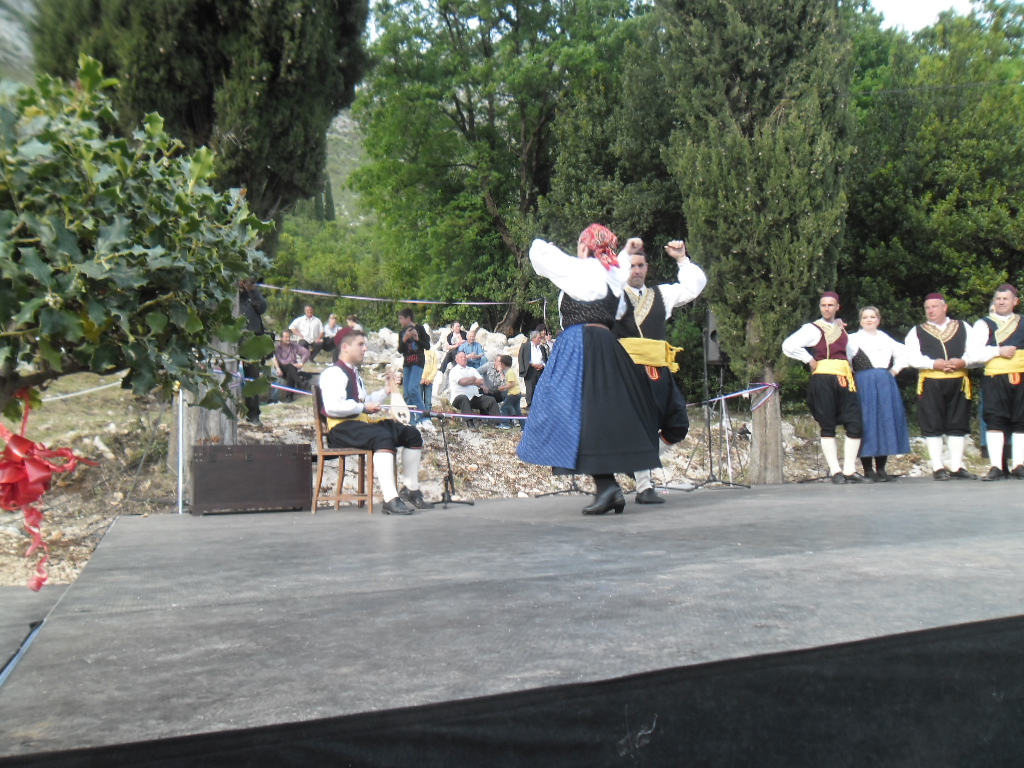
Linđo is a traditional folk dance kept in Dubrovnik and the wider Dalmatian coast of Croatia. Dancers move in a ring around a musician who plays the three-stringed lijerica while stamping his foot to set the beat. The dance master leads the group with rhyming commands and decides which partners join the circle.
When is Linđo kept?
Linđo is kept during cultural performances and festivals in the Dubrovnik region.
Linđo is a lively circle dance rooted in the coastal culture of Dubrovnik, Croatia. It features a unique musical structure where the dancer and musician lead the group through rhythmic patterns and partner changes. The tradition preserves the sound of the lijerica and the playful leadership of a designated dance master.
How the dance works
Dancers form a circle around a central figure known as the dance master. He sits on a chair or stool and plays the lijerica, a three-stringed instrument resting on his left knee. His right foot stamps the ground to establish the steady beat for the group. The dancers follow his lead, moving in time with the music. The master uses spoken verses to give instructions, often including humorous lines or double meanings. He controls the flow by deciding who pairs up and when the figures change. Participants are encouraged to improvise their movements within the circle.
Origins and history
The name Linđo comes from Nikola Lale, a legendary dance leader from the Župa Dubrovačka area. He was known locally by the nickname Linđo. His descendants continue to live in that specific region today. The musical accompaniment relies on the lijerica, an instrument that arrived from the Eastern Mediterranean in the late eighteenth century. It spread along the Adriatic coast during the nineteenth century. Before this instrument became standard, the dance was performed exclusively to the sound of bellows. The current practice keeps the instrumental style alive through local folklore groups.
Where it is kept
The dance is most strongly associated with Dubrovnik and its surrounding coastal areas. It is performed in the Konavle region and along the west coast of Dubrovnik known as Dubrovačko Primorje. You can also find it on the Pelješac Peninsula and the islands of Mljet and Lastovo. Some performances extend into parts of Herzegovina. The Folklore Ensemble Linđo in Dubrovnik plays a key role in maintaining the tradition. They ensure the correct steps and musical styles are passed down to new generations.
How Linđo is kept
A dance master sits at the center of a circle, playing the lijerica on his knee while stamping his foot to set the rhythm. Dancers move around him, following his rhyming commands and partner selections. The master dictates the changing figures and encourages improvisation among the participants.
When and where
It is performed during cultural events and festivals in the Dubrovnik region and surrounding coastal areas.
The tradition is centered in Dubrovnik, Croatia, with strong presence in Konavle, the Pelješac Peninsula, and the islands of Mljet and Lastovo.
What Linđo means
The dance reflects the social dynamics of the community through its interactive structure. The dance master holds authority over the pairing and movement, creating a shared experience based on trust and responsiveness. The use of humorous verse adds a layer of local wit and engagement, making the performance a communal event rather than just a display.
Questions people ask about Linđo
When is Linđo kept?
Linđo is kept during cultural performances and festivals in the Dubrovnik region.
What is Linđo?
Linđo is a traditional circle dance from Dubrovnik, Croatia. Dancers move around a seated musician who plays the lijerica and sets the rhythm by stamping his foot.
Where is this dance performed?
It is kept in Dubrovnik and the wider Dalmatian coast, including Konavle, the Pelješac Peninsula, and the islands of Mljet and Lastovo.
Who leads the dance?
A dance master sits in the center and leads the group. He plays the instrument, sets the beat, and gives verbal commands to direct the dancers.
See also
 LipizzanerA gray riding horse breed and centuries-old tradition of classical dressage kept by the Spanish Riding School.
 Feast of Corpus ChristiA Christian feast celebrating the presence of Christ in the bread and wine of the Eucharist
 PysankaA wax-resist egg decorating tradition kept by Slavic communities for Easter and spring renewal.
 Sinjska AlkaAn annual jousting tournament in Sinj where galloping riders strike a hanging ring
Good reading and sources
- Linđo on WikipediaEncyclopedia
- More photos on Wikimedia CommonsPhotos and video
- Wikidata recordOpen data
The facts on this page come from the Wikipedia article "Linđo", written by its contributors and used under the CC BY-SA 4.0 licence, and from its Wikidata record (CC0). EveryParampara rewrote the text in its own words, with AI assistance, and compares every page with the article to make sure no passage is copied. It may be reused under the same CC BY-SA 4.0 licence with a link back.
It may contain mistakes. Traditions differ from one family, village and community to the next, and the people who keep them know them best. If something is wrong, tell us. Last refreshed 2026-10-05.
More from Croatia
All the traditions of Croatia
🇦🇹 Vienna, Austria and 4 moreLipizzanerLipicanec
A gray riding horse breed and centuries-old tradition of classical dressage kept by the Spanish Riding School.Performance
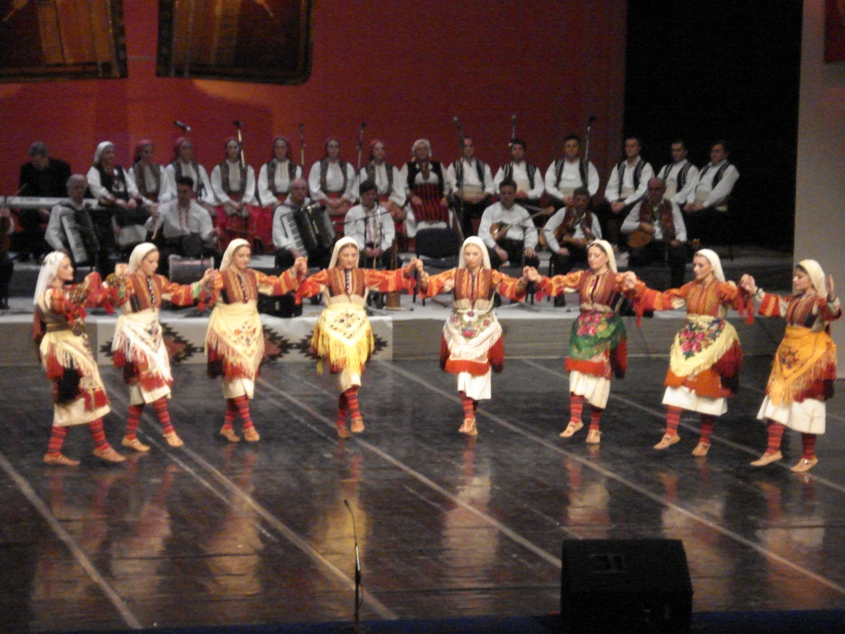 🇷🇴 Bucharest, Romania and 7 moreHorahoră (Romanian), хоро (Bulgarian), оро (Macedonian), הורה (Hebrew)
A circle dance from Southeast Europe, danced at weddings and festivalsPerformance
🇷🇴 Bucharest, Romania and 7 moreHorahoră (Romanian), хоро (Bulgarian), оро (Macedonian), הורה (Hebrew)
A circle dance from Southeast Europe, danced at weddings and festivalsPerformance
 🇭🇷 Omiš, CroatiaKlapa
Unaccompanied harmony singing from Dalmatia, built by groups of friendsPerformance
🇭🇷 Omiš, CroatiaKlapa
Unaccompanied harmony singing from Dalmatia, built by groups of friendsPerformance
 🇷🇸 Serbia and 3 moreKoloКоло
A South Slavic circle dance of linked hands, kept at weddings and gatheringsPerformance
🇷🇸 Serbia and 3 moreKoloКоло
A South Slavic circle dance of linked hands, kept at weddings and gatheringsPerformance
The same idea elsewhere
All of this kind 🇹🇷 Kayseri, Turkey and 4 moreHalay
A traditional line and circle folk dance kept across Turkey, Azerbaijan, Armenia, Iran, and Syria.Performance
🇹🇷 Kayseri, Turkey and 4 moreHalay
A traditional line and circle folk dance kept across Turkey, Azerbaijan, Armenia, Iran, and Syria.Performance
 🇳🇿 Auckland, New ZealandPoi
A Māori performing art of swinging tethered weights in rhythmical patterns.Performance
🇳🇿 Auckland, New ZealandPoi
A Māori performing art of swinging tethered weights in rhythmical patterns.Performance
 🇵🇭 Philippines and 1 morePangalay
A traditional fingernail dance of the Tausūg and Bajau peoples in the Sulu Archipelago and Sabah.Performance
🇵🇭 Philippines and 1 morePangalay
A traditional fingernail dance of the Tausūg and Bajau peoples in the Sulu Archipelago and Sabah.Performance