Music, dance and storytellingEurope
Klapa
Unaccompanied harmony singing from Dalmatia, built by groups of friends

Klapa is unaccompanied harmony singing from Dalmatia, in southern Croatia. Groups of up to a dozen singers, usually men, perform together, and their songs speak of love, the sea, wine and homeland. Croatia named it intangible cultural heritage in 2008; UNESCO followed in 2012. Festivals and casual evening singing keep it alive.
When is Klapa kept?
Klapa is kept on festivals are held each year, and singing is most common on summer evenings..
Klapa is a style of unaccompanied singing that grew up along the Dalmatian coast of Croatia. Singers stand in a small group and build harmony with their voices alone, without instruments. The songs turn again and again to love, the sea, wine and home. Groups call themselves klape, a word that means a circle of friends, and that friendship is the point as much as the sound.
What it is
Klapa is singing with no instruments behind it. A group lines up by voice part, with a first tenor at the top, then a second tenor, a baritone and a bass. Every part can be doubled except the first tenor, and a full group may reach about twelve singers. Harmony and melody carry the music, while rhythm matters much less. Most klape are made up of men, though women's groups have become common in recent years, and the two kinds of group usually stay separate. The name describes the people as much as the sound, since klapa means a group of friends.
Origins and heritage
Klapa grew out of Dalmatia, and its beginnings are traced to singing in churches along the coast. Over time it became a tradition of its own, and its themes stayed close to daily life: love, the sea, wine and grapes, and the homeland. In 2008 Croatia's Ministry of Culture named klapa part of the country's intangible cultural heritage. Four years later UNESCO inscribed 'Klapa multipart singing of Dalmatia, southern Croatia' on its Representative List of the Intangible Cultural Heritage of Humanity.
How it sounds
The heart of klapa is harmony and melody. Rhythm is only occasionally given much weight, so the singing drifts and swells rather than driving forward. A group is built from four parts, and men's and women's ensembles generally stay apart from each other. Klapa is a cappella by definition, though a soft guitar or a mandolin is sometimes allowed, and synthesizer keyboards may be added to stand in for percussion. The mood is warm and unhurried rather than showy, and the singing often happens in the evening, outdoors or around a table.
Festivals and gatherings
Festivals are where klapa is heard at its fullest. Groups from different towns come together to perform and to hear new songs for the first time. The festival in Omiš, for klapa groups from Dalmatia, has run for many years and is the most widely recognised of these events. Away from the stage the singing is casual: young people in Dalmatia still sing klapa when they go out to eat and drink, and on summer evenings an amateur group may start up in the street. Croatia sent Klapa s Mora, a group drawn from five existing klape, to the Eurovision Song Contest in 2013 with 'Mižerja'.
Today and change
Klapa keeps changing while holding to its old shape. New songs are written each year and performed at festivals, and the tradition has travelled well beyond the Dalmatian coast. Croatian communities abroad have their own klapa ensembles, and since 2011 the Croatian Culture Association in Burgenland has organised a klapa festival. Women's groups, once rare, now sing alongside men's, though the two usually perform separately. What holds everything together is the habit of singing with friends, whether the setting is a concert hall, a street corner or a table with wine.
How Klapa is kept
A klapa is a group of singers, most often men and usually no more than about a dozen, who sing with no instruments behind them. Their parts are the bass, the baritone, the second tenor and the first tenor, and the highest of these is the only one that is not doubled. A soft guitar or mandolin is occasionally added, and keyboards may imitate percussion. Groups meet at festivals and also sing informally, in the evenings, on the street or around a table with food and wine. New songs continue to be written.
When and where
Klapa is not tied to one day or season. Festivals are held each year, and the singing happens most often in the warmer months, when people are out in the evening. Beyond that, any gathering with food, wine and good company can turn into a klapa song.
The tradition belongs to Dalmatia, on Croatia's southern coast, and that region remains its strongest home. It is also kept in other parts of Croatia and among Croatian communities abroad, including diaspora groups and a festival run by the Croatian Culture Association in Burgenland since 2011.
What Klapa means
For the people who sing it, klapa carries more than melody. The word names friendship, and singing together makes that bond audible. The songs return to the things that shape life on the coast: the sea and the boats on it, love, wine from the vineyards, and the homeland. Singing in a group is a way of saying you belong to a place and to the people around you, whether on a festival stage or at a table late in the evening.

Questions people ask about Klapa
When is Klapa kept?
Klapa is kept on festivals are held each year, and singing is most common on summer evenings..
What is klapa?
It is a kind of traditional singing from Dalmatia in Croatia, done without instruments. Several singers stand together and make harmony, with a first tenor, second tenor, baritone and bass. The word klapa means a group of friends, and the songs are usually about love, the sea, wine and home.
Is klapa officially recognised?
Yes. Croatia's Ministry of Culture declared it intangible cultural heritage in 2008, and in 2012 UNESCO inscribed 'Klapa multipart singing of Dalmatia, southern Croatia' on its Representative List of the Intangible Cultural Heritage of Humanity.
Do women sing klapa?
They do. Female vocal groups have become popular in recent times, though the singing was long a male practice. In general men's and women's groups do not mix, so a klapa is usually one or the other rather than a combination.
What instruments are used?
Usually none. Klapa is a cappella, which means singing without instruments. Now and then a gentle guitar or a mandolin is added, and synthesizer keyboards are sometimes used to imitate percussion. The core of the sound is the human voice alone.
See also
 LinđoA circle dance from Dubrovnik played to the lijerica, where a leader sets the rhythm and calls the steps.
 LipizzanerA gray riding horse breed and centuries-old tradition of classical dressage kept by the Spanish Riding School.
 Feast of Corpus ChristiA Christian feast celebrating the presence of Christ in the bread and wine of the Eucharist
 Name dayA calendar tradition where people celebrate the feast day of the saint after whom they are named.
Good reading and sources
The facts on this page come from the Wikipedia article "Klapa", written by its contributors and used under the CC BY-SA 4.0 licence, and from its Wikidata record (CC0). EveryParampara rewrote the text in its own words, with AI assistance, and compares every page with the article to make sure no passage is copied. It may be reused under the same CC BY-SA 4.0 licence with a link back.
It may contain mistakes. Traditions differ from one family, village and community to the next, and the people who keep them know them best. If something is wrong, tell us. Last refreshed 2026-10-05.
More from Croatia
All the traditions of Croatia
🇭🇷 Dubrovnik, CroatiaLinđo
A circle dance from Dubrovnik played to the lijerica, where a leader sets the rhythm and calls the steps.Performance
🇦🇹 Vienna, Austria and 4 moreLipizzanerLipicanec
A gray riding horse breed and centuries-old tradition of classical dressage kept by the Spanish Riding School.Performance
 🇷🇸 Serbia and 3 moreKoloКоло
A South Slavic circle dance of linked hands, kept at weddings and gatheringsPerformance
🇷🇸 Serbia and 3 moreKoloКоло
A South Slavic circle dance of linked hands, kept at weddings and gatheringsPerformance
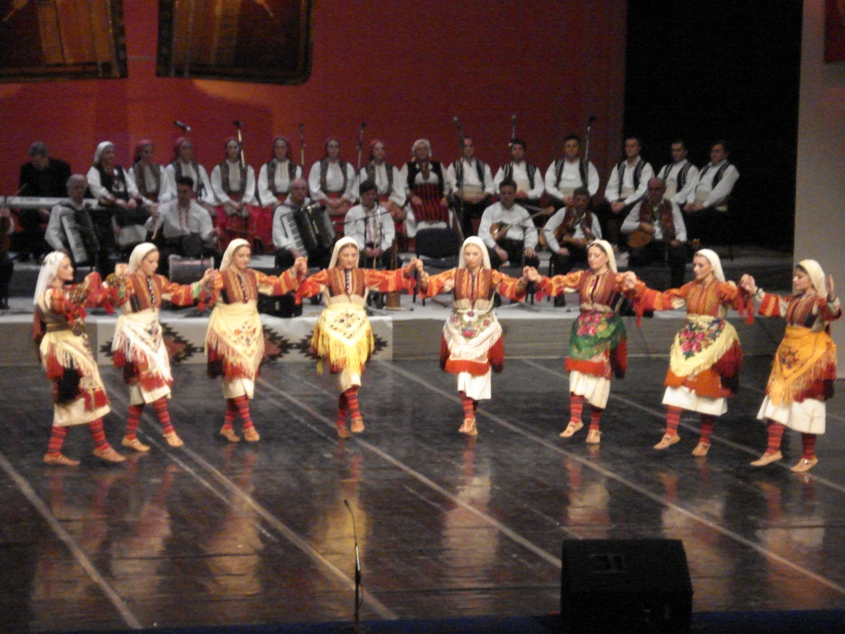 🇷🇴 Bucharest, Romania and 7 moreHorahoră (Romanian), хоро (Bulgarian), оро (Macedonian), הורה (Hebrew)
A circle dance from Southeast Europe, danced at weddings and festivalsPerformance
🇷🇴 Bucharest, Romania and 7 moreHorahoră (Romanian), хоро (Bulgarian), оро (Macedonian), הורה (Hebrew)
A circle dance from Southeast Europe, danced at weddings and festivalsPerformance
The same idea elsewhere
All of this kind 🇹🇷 Kayseri, Turkey and 4 moreHalay
A traditional line and circle folk dance kept across Turkey, Azerbaijan, Armenia, Iran, and Syria.Performance
🇹🇷 Kayseri, Turkey and 4 moreHalay
A traditional line and circle folk dance kept across Turkey, Azerbaijan, Armenia, Iran, and Syria.Performance
 🇳🇿 Auckland, New ZealandPoi
A Māori performing art of swinging tethered weights in rhythmical patterns.Performance
🇳🇿 Auckland, New ZealandPoi
A Māori performing art of swinging tethered weights in rhythmical patterns.Performance
 🇵🇭 Philippines and 1 morePangalay
A traditional fingernail dance of the Tausūg and Bajau peoples in the Sulu Archipelago and Sabah.Performance
🇵🇭 Philippines and 1 morePangalay
A traditional fingernail dance of the Tausūg and Bajau peoples in the Sulu Archipelago and Sabah.Performance