Music, dance and storytellingEast Asia
Pansori
In its own language: 판소리
A Korean art of sung storytelling, with one singer, one drummer and a listening crowd

A Korean form of sung storytelling, pansori pairs one singer with a drummer. It took shape in the 1600s, was first performed for ordinary crowds, and later drew noble patrons. South Korea names it a national cultural treasure and its singers living national treasures. Performances can run for hours.
Pansori is a Korean art of sung storytelling: one performer sings a long tale, a drummer keeps the beat, and the listeners call back. It grew out of the 1600s in Korea, was first heard among common people, and later drew noble patrons. South Korea protects it as a national treasure, and its singers still train for years to master the old stories.
What pansori is
The word pansori joins pan and sori, the second meaning sound. What pan meant when the name was first used is disputed; scholars suggest it may refer to a gathering of many people, or to a song built from shifting tones. The art itself is storytelling carried by song. A single performer, called a clown in older accounts, sings and speaks a long narrative, while a drummer called a gosu plays a buk drum. Movement, gesture and rhythm all belong to the performance. A piece can last from about three hours to eight hours or more.
Origins and history
Pansori is generally traced to the 1600s. Its first performers are thought to have been shamans and travelling entertainers, playing to poorer audiences, and no one agrees which part of the peninsula gave it birth, though the Honam region became the place where it developed. By the 1700s the well-off had begun to take an interest: a noble scholar of the yangban class, Yu Jin-han, wrote down the text of Chunhyangga after seeing it in Honam in 1754. The 1800s are often called its golden age. Shin Jae-hyo reshaped songs for upper-class taste and trained the first famous women singers, among them Jin Chae-seon.
How a performance unfolds
A performance has three parts: the singer, the drummer and the audience. The singer holds a fan in the right hand and moves between sung passages and spoken ones. In the older vocabulary the sung line is aniri, and it flows into speech and back again. The gosu answers from the drum, shaping the mood and driving the rhythm; a saying holds that one good drummer is worth two great singers. Listeners are not silent. They shout chu-imsae, words of encouragement and appreciation, and the exchange between stage and crowd is part of the art.
The stories
By the 1700s twelve long song cycles, called madang, made up the repertoire, and two writers, Song Man-jae and Jeong No-sik, set them down in books. Five are still performed: Chunhyangga, Simcheongga, Heungbuga, Sugungga and Jeokbyeokga. A full madang may run to ten hours, so today's singers often present chosen passages instead. The old epics close on a happy note, while newer performance style dwells on the suffering of the characters and may leave them without relief. Training passes from master to pupil one to one: a student copies the teacher's manner before finding a voice of their own.
Today and change
During the 1900s pansori moved indoors, was staged like Western opera and sold on records, and more women took it up, often with the support of kisaeng groups. Japanese rule sharpened its sad tone and censored songs that touched on the monarchy or on Korean patriotism. Cinema, changgeuk and the Korean War all pulled audiences away. In 1964 South Korea listed pansori as an intangible cultural property and honoured its leading singers as living national treasures, and interest revived from the late 1960s. UNESCO recognised the tradition in 2003. Fusion work now mixes pansori with reggae, classical music and rap, and audiences remain small.
How Pansori is kept
A singer and a drummer carry a performance, with the listeners as the third party. The singer enters with a fan and begins a long narrative, alternating sung lines with spoken ones. The drummer follows on the buk, marking the rhythm and answering the singer's phrases. Rather than staying quiet, the audience shouts chu-imsae at chosen moments. A whole madang can take ten hours; in practice most programmes offer selected passages. Training happens one to one, apprentice beside master, over years spent memorising and internalising the stories.
When and where
There is no fixed date. Pansori is performed at any time of year, indoors and on traditional theatre stages, and it is not tied to one festival or season. Fixed points in its story are recognition rather than observance: the national listing in 1964, UNESCO's in 2003, and a nomination for the pansori of Korean communities in China in 2011.
Pansori is Korean. South Korea is where it is strongest: the state supports it and Seoul stages it. The sources place its early development in the Honam region. In North Korea there is said to be no organised government backing. Korean communities in China also keep the art; in 2011 the Yanbian Korean Autonomous Prefecture and Tieling put their pansori forward for UNESCO recognition.
What Pansori means
To those who keep it, pansori holds both joy and grief. Singers speak of han, a Korean word for sorrow and resentment carried a long time, and in recent decades the art has been called the sound of han, though older performers worry that this mournful reading has crowded out the vigorous style it once had. The stories themselves still end well. Audiences take part through chu-imsae, so a performance is shared rather than simply presented.


Questions people ask about Pansori
What is pansori?
It is a Korean art of musical storytelling. One singer carries a long tale in sung and spoken passages, a drummer called a gosu accompanies on the buk drum, and the audience calls out encouragement. A performance can run from three to eight hours or more.
Where and when did it begin?
According to the usual account it appeared in the 1600s in Korea, among shamans and street entertainers performing for ordinary people, and the Honam region became its centre. Nobody knows exactly which part of the peninsula it came from.
When is it performed?
There is no set day or season. Pansori is given throughout the year, indoors and on traditional theatre stages, usually as selected passages rather than a whole madang, since a complete cycle can last ten hours.
What is chu-imsae?
It is the audience's spoken response. Instead of listening in silence, listeners shout short words of encouragement and appreciation during a performance, and singers treat this participation as part of the art itself.
Is pansori still practised?
Yes. South Korea lists it as an intangible cultural property and recognises leading singers as living national treasures, and the number of performers has grown in this century. Audiences, though, are smaller and mostly older people or students of traditional music.
See also
 KizombaA close, slow couple dance from Angola, named after a Kimbundu word for party
 Chinese operaA sung, danced and acrobatic theatre from China, in over a hundred regional styles
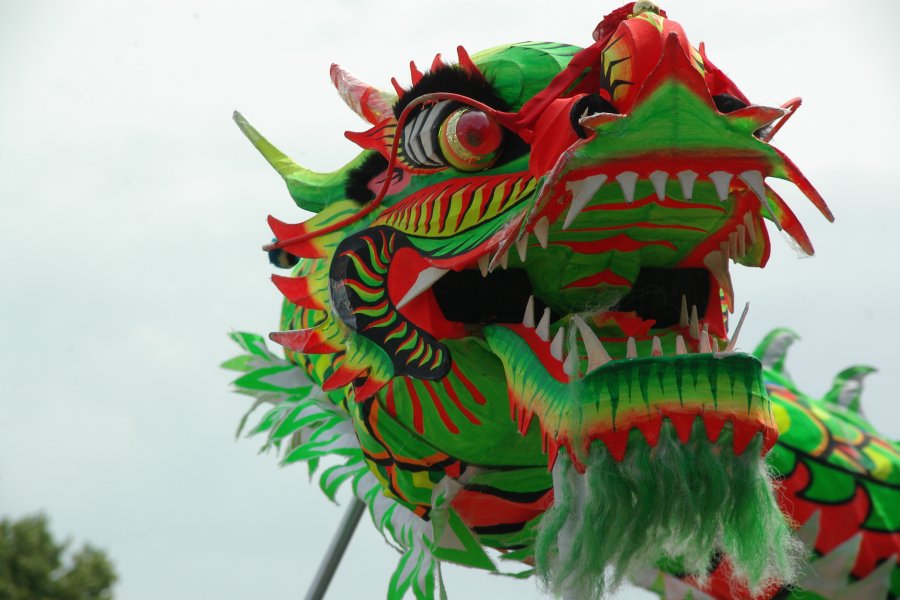 Dragon danceA long dragon puppet on poles, danced by a team at Chinese New Year and other festivals
 TalchumA Korean mask dance drama in which masked actors sing, dance and mock the powerful
Good reading and sources
- Encyclopaedia BritannicaArticle
- Kim Yul-hee blends pansori, reggaeThe Korea Times, Article
- Kim Yul-hee blends pansori, reggaeThe Korea Times, Article
- Pansori on WikipediaEncyclopedia
- More photos on Wikimedia CommonsPhotos and video
- Wikidata recordOpen data
The facts on this page come from the Wikipedia article "Pansori", written by its contributors and used under the CC BY-SA 4.0 licence, and from its Wikidata record (CC0). EveryParampara rewrote the text in its own words, with AI assistance, and compares every page with the article to make sure no passage is copied. It may be reused under the same CC BY-SA 4.0 licence with a link back.
It may contain mistakes. Traditions differ from one family, village and community to the next, and the people who keep them know them best. If something is wrong, tell us. Last refreshed 2026-10-05.
More from South Korea
All the traditions of South Korea
🇰🇷 Seoul, South Korea and 1 moreTalchum탈춤
A Korean mask dance drama in which masked actors sing, dance and mock the powerfulPerformance
 🇰🇷 South Korea and 1 moreGanggangsullae강강술래
A Korean harvest dance where women hold hands and sing in circles under the full moonPerformance
🇰🇷 South Korea and 1 moreGanggangsullae강강술래
A Korean harvest dance where women hold hands and sing in circles under the full moonPerformance
 🇰🇷 South KoreaSinawi시나위
An improvisational Korean musical style played for shamanic rituals.Performance
🇰🇷 Jindo Island, South KoreaNamdo Field Songs남도 들노래
Farmers' choral work songs from South Jeolla, sung through the rice field yearPerformance
🇰🇷 South KoreaSinawi시나위
An improvisational Korean musical style played for shamanic rituals.Performance
🇰🇷 Jindo Island, South KoreaNamdo Field Songs남도 들노래
Farmers' choral work songs from South Jeolla, sung through the rice field yearPerformance
The same idea elsewhere
All of this kind 🇹🇷 Kayseri, Turkey and 4 moreHalay
A traditional line and circle folk dance kept across Turkey, Azerbaijan, Armenia, Iran, and Syria.Performance
🇧🇷 BrazilBaião
A syncopated folk rhythm and partnered dance from northeastern BrazilPerformance
🇹🇷 Kayseri, Turkey and 4 moreHalay
A traditional line and circle folk dance kept across Turkey, Azerbaijan, Armenia, Iran, and Syria.Performance
🇧🇷 BrazilBaião
A syncopated folk rhythm and partnered dance from northeastern BrazilPerformance
 🇺🇦 Kyiv, UkraineBanduraБандура
A Ukrainian plucked string instrument played to accompany epic songs and folk balladsPerformance
🇺🇦 Kyiv, UkraineBanduraБандура
A Ukrainian plucked string instrument played to accompany epic songs and folk balladsPerformance
 🇳🇿 Auckland, New ZealandPoi
A Māori performing art of swinging tethered weights in rhythmical patterns.Performance
🇳🇿 Auckland, New ZealandPoi
A Māori performing art of swinging tethered weights in rhythmical patterns.Performance