Music, dance and storytellingEast Asia
Namdo Field Songs
In its own language: 남도 들노래
Farmers' choral work songs from South Jeolla, sung through the rice field year
A group of choral work songs that farmers of Jeolla Province in South Korea once sang in the rice fields, matching rhythm to each task from steaming seed to harvest. Catalogued in 1970, they are now a protected national intangible cultural property, performed at festivals by people of Jindo Island.
When is Namdo Field Songs kept?
Namdo Field Songs is kept on once sung through the rice farming year in the paddies; today chiefly at festivals.
In the rice paddies of South Jeolla, work once moved to song. Farmers bent over the seedlings sang in chorus, a drummer keeping time at the field's edge, so that tired hands would not notice their tiredness. Known as Namdo Field Songs, these voices belong to Jeolla Province, carry its island accents, and are now guarded as a national cultural property of South Korea.
What they are
Namdo Field Songs belong to minyo, the folk song stock of Korea, and more narrowly to the labour songs of the south-west. The name Namdo means southern road, a label for Jeolla Province, where the songs first grew up in the western part of South Jeolla, along the Yeonsang River. Everyone sings: these are choral pieces, once shaped by farmers themselves. The sound is unlike anything else in inland South Korea, a difference locals tie to the region's strong accents and its mountain ring, which kept it apart. Words and tunes shift from place to place, and the singing is strongest among residents of Jindo Island and the village of Inji-ri.
Songs for each task
The songs follow the rice calendar, one set for each job. Steaming the seed has its own verses, called Mojjineun norae or Sangsa sori. Planting and transplanting seedlings gets the bright, lively Mosimgi songs, which could speed up when a crew needed pushing. Weeding, including pulling wild weeds from the water, is slower and flatter in Jeollo sori. When the last paddy has dried, the triumphant Jangwonjil sori closes the year: the rice is loaded on a cow dressed in vines and walked in procession to the house of the hardest worker, who owes the team food and drink. Three sets belong to the wet paddies, the last to the dry fields.
From field to stage
In 1970 the folklorist Ji Chunsang came across the songs while visiting Jindo Island and catalogued them, giving the wider country its first picture of them. Recognition followed quickly. The singers took first prize at the 12th National Folk Contest in October 1971, and on 5 November 1973 the government listed the songs as National Intangible Cultural Property number 51, placing them under a strict conservation policy. Seol Jaechon and Jo Gongrye, who standardised the repertoire and pressed for its recognition, served as the official holders until both died in 1997. Kim Youngja and Park Dongmae took over the role.
Change and debate
Protection has changed the songs. Improvisation, once so high that a song's length and even its frame shifted with the soil and the pace of work, is now kept to a minimum, and stanzas follow a regular, repeatable pattern. A performance leader takes most of the verses, with a chorus answering, instead of a true field chorus. A single drummer now stands in front of brightly dressed singers rather than a band at the field edge. Critics note that in a real paddy such a drummer would trample the young plants. Some also admit the songs carry a stigma, bound to poverty, so much so that older informants once denied knowing them.
How Namdo Field Songs is kept
The songs were made for teams of farmers, bent over the paddies in white or brown clothes, singing verses together through the whole cycle of the rice crop. A band of drummers once kept the beat from the borders of the field. Because much of the wording was improvised, no two days sounded alike, and the singers adjusted the melody to the job at hand. Today the songs appear mostly on stage and at festivals, led by a solo singer with a chorus answering, a single drummer marking time, and sometimes a choreography newly devised for the audience.
When and where
The songs followed the farming year in the rice paddies, from steaming seed to planting, weeding and the return to the storehouse once the last paddy had dried. The final songs sound when the harvest is carried home. Today they are heard chiefly at festivals.
They come from Jeolla Province in the south-west of South Korea, above all the western part of South Jeolla by the Yeonsang River. Singing is strongest among residents of Jindo Island and the village of Inji-ri, though the songs are now known across the country.
What Namdo Field Songs means
To the farmers who made them, the songs were working tools as much as music: their rhythms fitted each stage of rice cultivation, and the verses, half invented on the spot, kept tired workers attentive and gave them strength in one another's company. The closing songs carry triumph, honouring the hardest worker, whose house receives the procession and who then feeds the crew. For people of Jeolla, the songs also display a local creativity and a sound found nowhere else in inland South Korea.
Questions people ask about Namdo Field Songs
When is Namdo Field Songs kept?
Namdo Field Songs is kept on once sung through the rice farming year in the paddies; today chiefly at festivals.
What are Namdo Field Songs?
They are choral folk songs, part of Korea's minyo and labour song traditions, that farmers of Jeolla Province sang while working in the rice fields. Their rhythms matched each task, from steaming seed to weeding, and the words were partly improvised to keep workers attentive.
Where do they come from and who sings them today?
They grew up in Jeolla Province in south-west South Korea, especially the western part of South Jeolla by the Yeonsang River. Today they are known across the country but sung mainly by residents of Jindo Island and Inji-ri, who perform them at festivals.
Why were the songs standardised?
After the 1971 recognition, improvisation was cut back so each stanza became regular and easier for performers to sing outside the local area. The change made the songs more repetitive and moved them from a shared field chorus to the stage, with a leader and a chorus.
What is the happiest moment in the song cycle?
The Jangwonjil sori, sung when the work ends and the last paddy has dried. The rice is placed on a cow decorated with vines and carried in procession to the home of the hardest worker, who then offers the team food and alcoholic drinks.
Are the songs protected?
Yes. The government designated them National Intangible Cultural Property number 51 on 5 November 1973 and keeps them under a strict conservation policy, with named holders who have included Seol Jaechon and Jo Gongrye, and later Kim Youngja and Park Dongmae.
See also
 GanggangsullaeA Korean harvest dance where women hold hands and sing in circles under the full moon
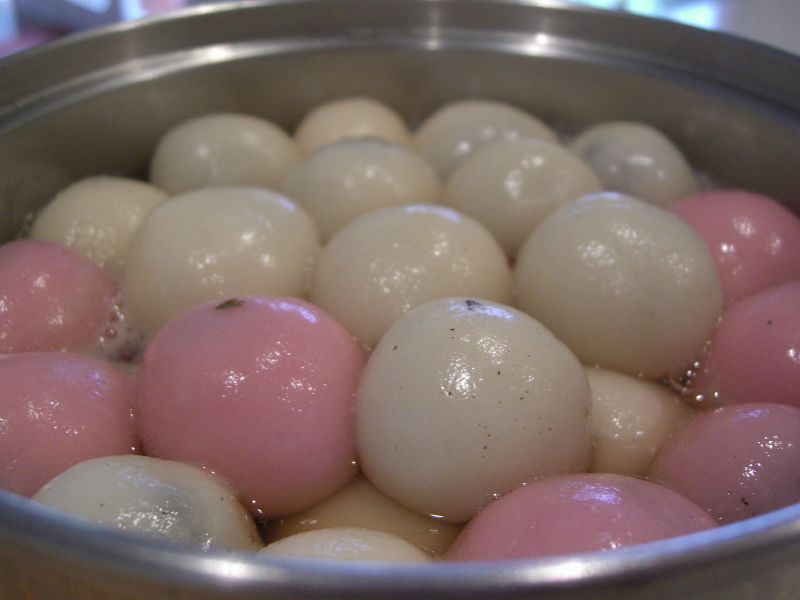 Dongzhi FestivalA winter solstice festival of family reunions, ancestor rites and sweet rice balls
 DaeboreumA Korean festival of the first lunar full moon, marked by fires, wishes and feasts
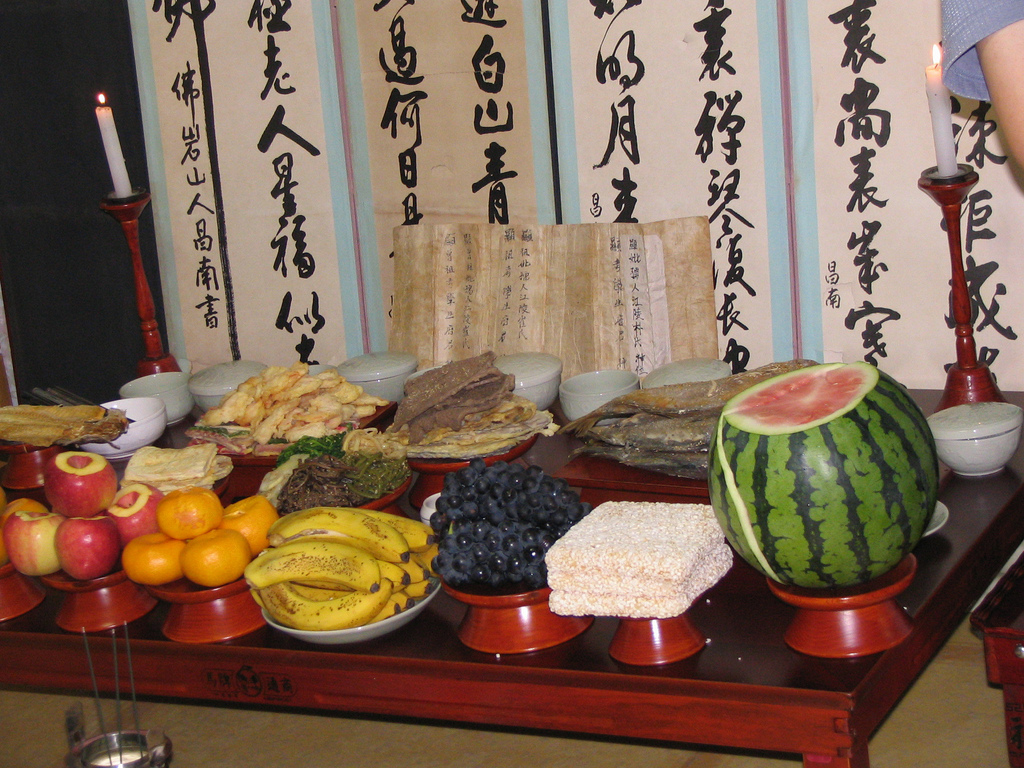 ChuseokA Korean harvest festival of ancestral rites, seasonal rice cakes, and folk games
Good reading and sources
The facts on this page come from the Wikipedia article "Namdo Field Songs", written by its contributors and used under the CC BY-SA 4.0 licence, and from its Wikidata record (CC0). EveryParampara rewrote the text in its own words, with AI assistance, and compares every page with the article to make sure no passage is copied. It may be reused under the same CC BY-SA 4.0 licence with a link back.
It may contain mistakes. Traditions differ from one family, village and community to the next, and the people who keep them know them best. If something is wrong, tell us. Last refreshed 2026-10-08.
More from South Korea
All the traditions of South Korea
🇰🇷 South Korea and 1 moreGanggangsullae강강술래
A Korean harvest dance where women hold hands and sing in circles under the full moonPerformance
 🇰🇷 Seoul, South Korea and 1 moreTalchum탈춤
A Korean mask dance drama in which masked actors sing, dance and mock the powerfulPerformance
🇰🇷 Seoul, South Korea and 1 moreTalchum탈춤
A Korean mask dance drama in which masked actors sing, dance and mock the powerfulPerformance
 🇰🇷 Honam, South Korea and 2 morePansori판소리
A Korean art of sung storytelling, with one singer, one drummer and a listening crowdPerformance
🇰🇷 Honam, South Korea and 2 morePansori판소리
A Korean art of sung storytelling, with one singer, one drummer and a listening crowdPerformance
 🇰🇷 South KoreaSinawi시나위
An improvisational Korean musical style played for shamanic rituals.Performance
🇰🇷 South KoreaSinawi시나위
An improvisational Korean musical style played for shamanic rituals.Performance
The same idea elsewhere
Harvest and thanksgiving compared 🇮🇳 Ayodhya, India and 7 moreDiwaliदीपावली (Dīpāvalī)
A five-day festival of lights celebrated across India and its diaspora to mark the victory of light over darkness.Festival · Feasts and festival meals
🇮🇳 Ayodhya, India and 7 moreDiwaliदीपावली (Dīpāvalī)
A five-day festival of lights celebrated across India and its diaspora to mark the victory of light over darkness.Festival · Feasts and festival meals
 🇮🇱 Jerusalem, IsraelPassoverפסח
A Jewish spring festival celebrating freedom from slavery with ritual mealsSpiritual · Dinner
🇮🇱 Jerusalem, IsraelPassoverפסח
A Jewish spring festival celebrating freedom from slavery with ritual mealsSpiritual · Dinner
 🇮🇱 Jerusalem, IsraelSukkotסוכות
A seven-day autumn Jewish festival of temporary booths, harvest prayers and hospitalitySpiritual
🇮🇱 Jerusalem, IsraelSukkotסוכות
A seven-day autumn Jewish festival of temporary booths, harvest prayers and hospitalitySpiritual
 🇮🇪 Ireland and 2 moreJack-o'-lantern
A carved pumpkin lantern lit with a candle to brighten and protect Halloween nightsFolklore
🇮🇪 Ireland and 2 moreJack-o'-lantern
A carved pumpkin lantern lit with a candle to brighten and protect Halloween nightsFolklore