🇰🇵 Traditions of North Korea
22 traditions from North Korea, best known first, across 2 cities and towns.
North Korean traditions combine ancient Korean customs with the state ideology of Juche, creating a shared life centred on collective unity and revolutionary history. Folk dances, farmers' music bands and traditional operas are revitalised to inspire workers, while the daily table balances staples like rice and winter kimchi with distinct regional noodle dishes.
Daily life in North Korea brings together older regional customs and modern collective practices guided by the state idea of Juche. Across towns and rural valleys, artistic expression serves a clear public purpose, from countryside music brigades to large theatrical productions. Shared traditions endure at the family table, where people prepare enduring dishes like winter-cured kimchi and regional cold buckwheat noodles, keeping ancestral flavours alive through changing social conditions.
The daily table
Korean culinary habits in the north rely heavily on rice, comforting porridges called chuk, and essential vegetable side dishes known as panch'an. Kimchi accompanies nearly every meal and is especially vital during cold winter months when fresh garden greens become scarce. Meats such as pork, rabbit, and goat are prepared when available, alongside nourishing seaweed soup known as miyŏk-kuk. Flavours in the north often highlight an interplay of sweet, sour, and spicy tones, giving dishes a distinct tanginess that is generally milder in heat than southern Korean cooking. Distilled soju remains the best-known traditional spirit across the country.
Regional noodle dishes
Cold noodles, known locally as raengmyŏn, represent one of the most celebrated culinary traditions. The capital is famous for P'yŏngyang-raengmyŏn, which features delicate buckwheat noodles submerged in a chilled broth made from beef, pheasant, or radish water kimchi, garnished with pickled radish, egg, and mustard condiment. In contrast, the eastern city of Hamhung is renowned for hoe raengmyŏn. This variety uses chewier noodles made from sweet potato or potato starch, tossed in spicy red pepper paste and crowned with marinated raw fish, usually skate. Regional differences also appear in filled dumplings called mandu, including the square-shaped p'yŏnsu typical of Kaesong.
Community and street fare
Practical innovations shape everyday eating habits in market stalls and busy neighbourhoods. Street vendors sell popular quick meals like kogi bap and injo kogi bap, which use soybean-based mock meat wrapped around cooked grains to provide filling sustenance. Rural households often grind corn, blending the kernels with cobs and husks to extend their food supplies. Fermented specialties like kajami shik'ae preserve salted flounder with chili flakes, ginger, and grains. Meanwhile, formal dining rooms in Pyongyang serve specialty dishes like beef rib soup to state officials and affluent residents known as tonju, reflecting social divides across the country.
Revived folk arts
The country actively fosters traditional artistic forms that carry a communal and optimistic spirit. Cultural researchers deliberately restore historic dances and folk music that highlight collective work while setting aside individualistic elements. Students at schools and universities gather to perform choral singing and traditional group folk dances. Village farmers' musical bands have also been revived to play during communal gatherings and agricultural cycles. These traditional arts are presented to celebrate national heritage, build social unity, and maintain a sense of optimism among the population.
Music, theatre, and opera
North Korean stage arts adapt classical Korean forms to share didactic messages and revolutionary narratives. Revolutionary operas developed out of ch'angguk, the traditional sung theatre of the peninsula, frequently adapting old folk melodies into modern orchestral arrangements. Classic folktales and premodern stories are also edited to align with contemporary civic morals and the Juche philosophy. Famous stage works, including five designated model plays and the grand opera The Sea of Blood, recount historical hardships and revolutionary heroism. In the spring, international performers gather in the capital for the annual Spring Friendship Art Festival.
Art in daily work
Artistic expression is tightly woven into daily labour through travelling performance squads. Known as art propaganda squads, these groups travel to rural cooperatives, factories, and construction sites across the provinces. During autumn harvests and intensive work campaigns termed speed battles, they stage energetic poetry readings, one-act plays, and musical pieces directly in the fields. Their performances are designed to congratulate workers on their achievements, raise spirits, and encourage higher productivity. Through these constant workplace encounters, performance functions as a regular part of everyday working life.
The facts in this overview come from the Wikipedia article "Culture of North Korea", written by its contributors and used under the CC BY-SA 4.0 licence. EveryParampara rewrote the text in its own words, with AI assistance, and compares every page with the article to make sure no passage is copied. It may be reused under the same CC BY-SA 4.0 licence with a link back.
The table in North Korea
Foods and drinks by the moment they belong to.
| Breakfast | Daeboreum |
|---|---|
| Dinner | Naengmyeon, Daeboreum |
| Tea, coffee and drinking ceremonies | Chuseok |
| Sweets given and shared | Chuseok |
| Feasts and festival meals | Daeboreum, Chuseok |
Cities, towns and villages of North Korea
 🇰🇷 Seoul, South Korea and 1 moreTalchum탈춤
A Korean mask dance drama in which masked actors sing, dance and mock the powerfulPerformance
🇰🇷 Seoul, South Korea and 1 moreTalchum탈춤
A Korean mask dance drama in which masked actors sing, dance and mock the powerfulPerformance
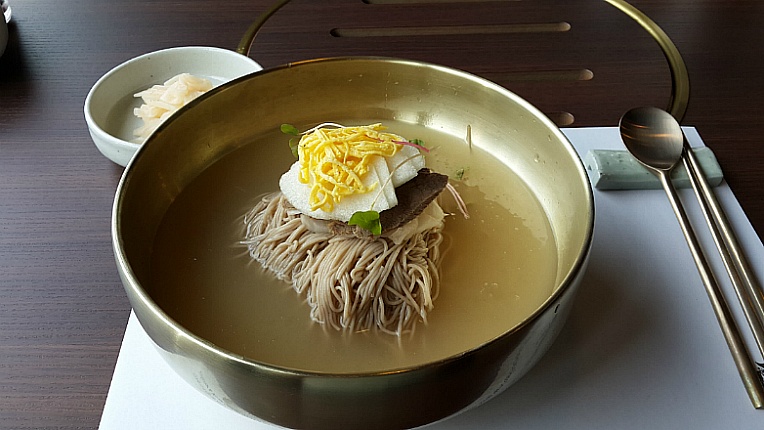 🇰🇵 Pyongyang, North Korea and 3 moreNaengmyeon냉면
Long buckwheat noodles in icy broth, born in North Korea and eaten most in summerTable custom · Dinner
🇰🇵 Pyongyang, North Korea and 3 moreNaengmyeon냉면
Long buckwheat noodles in icy broth, born in North Korea and eaten most in summerTable custom · Dinner
 🇰🇷 South Korea and 1 moreGanggangsullae강강술래
A Korean harvest dance where women hold hands and sing in circles under the full moonPerformance
🇰🇷 South Korea and 1 moreGanggangsullae강강술래
A Korean harvest dance where women hold hands and sing in circles under the full moonPerformance
 🇰🇵 Pyongyang, North KoreaDay of the Sun태양절
North Korea's principal holiday, marking the birth anniversary of Kim Il SungCeremony
🇰🇵 Pyongyang, North KoreaDay of the Sun태양절
North Korea's principal holiday, marking the birth anniversary of Kim Il SungCeremony
 🇰🇵 Pyongyang, North KoreaArirang Mass Games아리랑 축제
A massive civic spectacle of gymnastics, dance, and card stunts in PyongyangCeremony
🇰🇵 Pyongyang, North KoreaArirang Mass Games아리랑 축제
A massive civic spectacle of gymnastics, dance, and card stunts in PyongyangCeremony
 🇰🇷 South Korea and 1 moreDaeboreum대보름
A Korean festival of the first lunar full moon, marked by fires, wishes and feastsSeasonal · Feasts and festival meals
🇰🇷 South Korea and 1 moreDaeboreum대보름
A Korean festival of the first lunar full moon, marked by fires, wishes and feastsSeasonal · Feasts and festival meals
 🇰🇵 Pyongyang, North KoreaDay of the Shining Star광명성절
A two-day national holiday in North Korea honouring the birth of Kim Jong Il.Ceremony
🇰🇵 Pyongyang, North KoreaDay of the Shining Star광명성절
A two-day national holiday in North Korea honouring the birth of Kim Jong Il.Ceremony
 🇰🇷 South Korea and 1 moreDoljanchi돌 (dol); 돌잔치 (doljanchi)
A Korean first-birthday rite where a baby picks an object that hints at the years aheadRite of passage
🇰🇷 South Korea and 1 moreDoljanchi돌 (dol); 돌잔치 (doljanchi)
A Korean first-birthday rite where a baby picks an object that hints at the years aheadRite of passage
 🇰🇷 South Korea and 2 moreHanbok한복
Korea's customary dress: a short jacket, a skirt or trousers, and a bow-tied ribbonDress
🇰🇷 South Korea and 2 moreHanbok한복
Korea's customary dress: a short jacket, a skirt or trousers, and a bow-tied ribbonDress
 🇰🇷 Honam, South Korea and 2 morePansori판소리
A Korean art of sung storytelling, with one singer, one drummer and a listening crowdPerformance
🇰🇷 Honam, South Korea and 2 morePansori판소리
A Korean art of sung storytelling, with one singer, one drummer and a listening crowdPerformance
 🇰🇵 Pyongyang, North Korea and 4 moreMass games
Disciplined, large-scale gymnastic spectacles celebrating unity and national prideCeremony
🇰🇵 Pyongyang, North Korea and 4 moreMass games
Disciplined, large-scale gymnastic spectacles celebrating unity and national prideCeremony
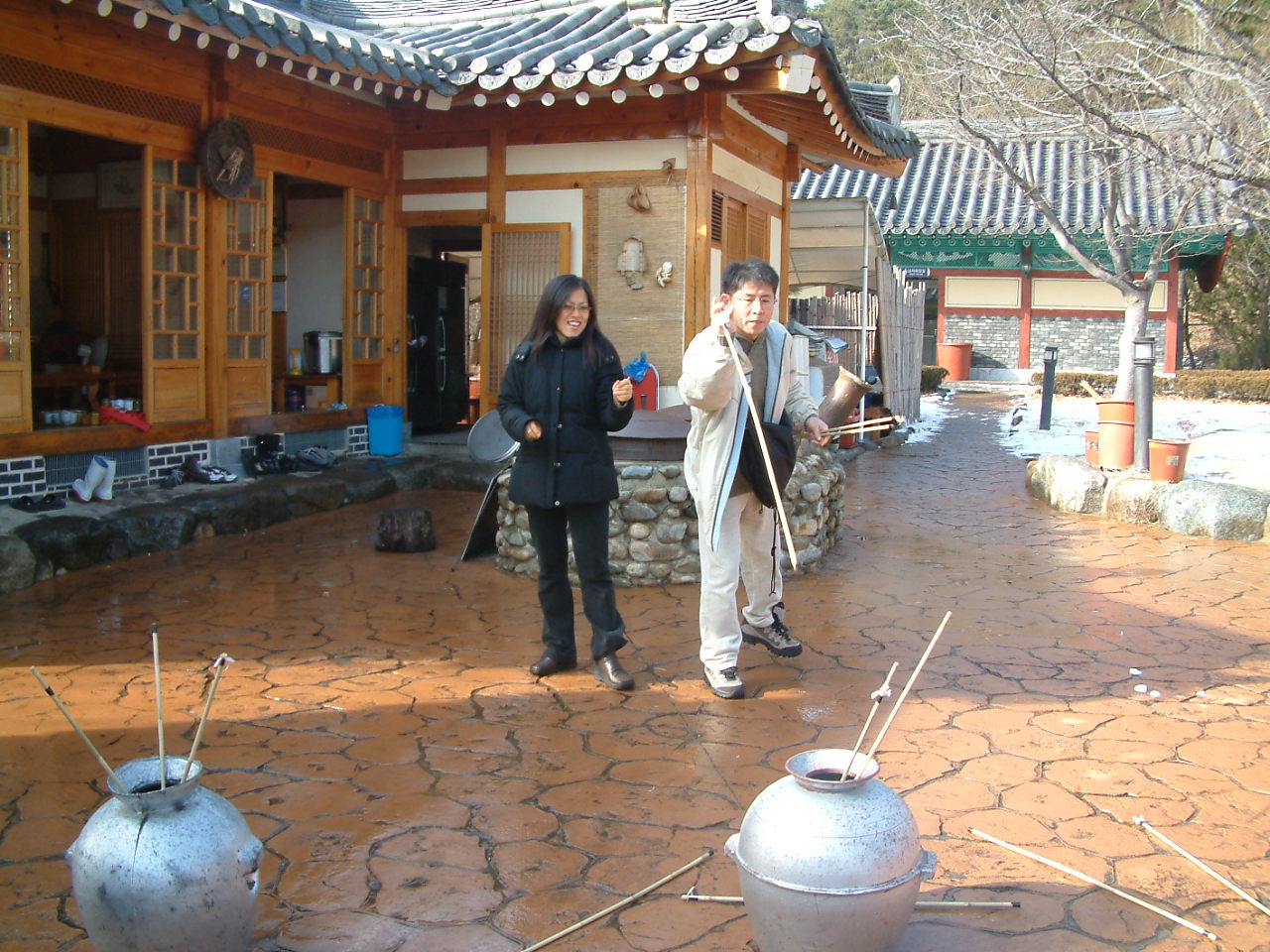 🇰🇷 South Korea and 1 moreKorean New Year설날
A three-day Korean festival celebrating the lunisolar new year with family and feastsSeasonal
🇰🇷 South Korea and 1 moreKorean New Year설날
A three-day Korean festival celebrating the lunisolar new year with family and feastsSeasonal
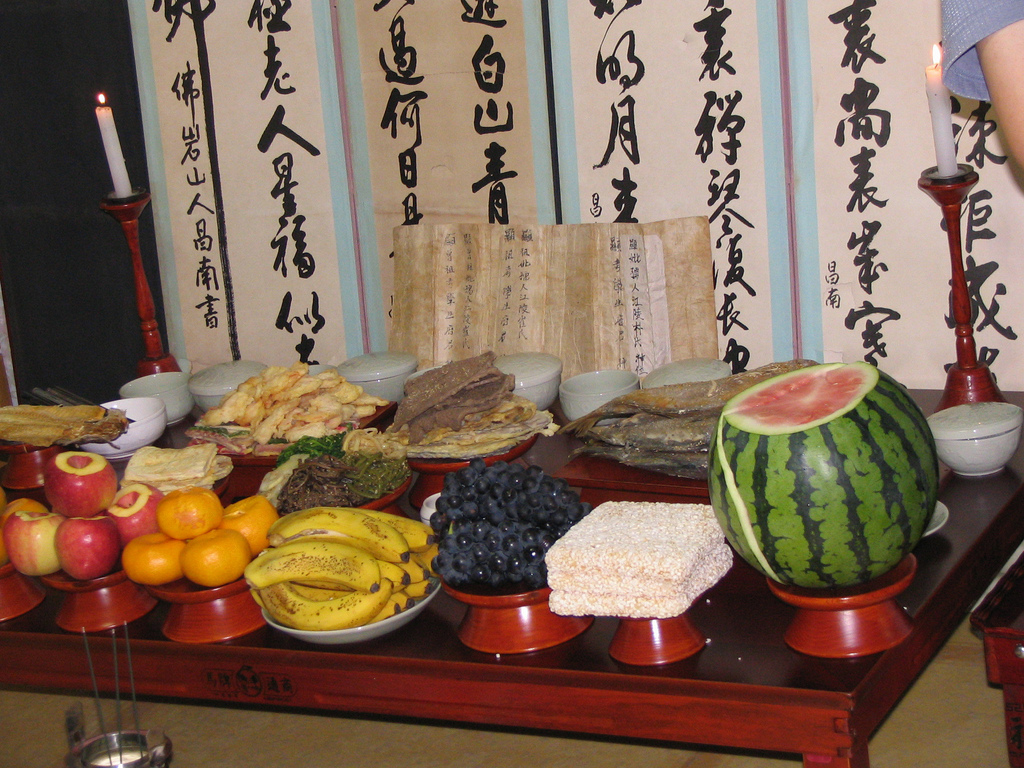 🇰🇷 South Korea and 1 moreChuseok추석
A Korean harvest festival of ancestral rites, seasonal rice cakes, and folk gamesFestival · Feasts and festival meals
🇰🇷 South Korea and 1 moreChuseok추석
A Korean harvest festival of ancestral rites, seasonal rice cakes, and folk gamesFestival · Feasts and festival meals
 🇰🇷 South Korea and 1 moreJegichagi제기차기
A paper shuttlecock kicked and kept in the air, a winter game for Korean childrenGame
🇰🇷 South Korea and 1 moreJegichagi제기차기
A paper shuttlecock kicked and kept in the air, a winter game for Korean childrenGame
 🇰🇷 Seoul, South Korea and 1 moreMarriage in Korea
Weddings in Korea, from Goryeo matchmaking to Confucian rites and modern chapel vowsRite of passage
🇰🇷 Seoul, South Korea and 1 moreMarriage in Korea
Weddings in Korea, from Goryeo matchmaking to Confucian rites and modern chapel vowsRite of passage
 🇰🇷 Seoul, South Korea and 2 moreHangul Day한글날
South Korea's public day for Hangul, the Korean alphabet, kept on 9 OctoberFestival
🇰🇷 Seoul, South Korea and 2 moreHangul Day한글날
South Korea's public day for Hangul, the Korean alphabet, kept on 9 OctoberFestival
 🇰🇷 Seoul, South Korea and 1 moreNational Liberation Day of Korea광복절 (Gwangbokjeol)
A public holiday on 15 August marking Korea's liberation from Japanese rule in 1945Ceremony
🇰🇷 Seoul, South Korea and 1 moreNational Liberation Day of Korea광복절 (Gwangbokjeol)
A public holiday on 15 August marking Korea's liberation from Japanese rule in 1945Ceremony
 🇰🇵 Pyongyang, North KoreaFatherland Liberation War Day조국해방전쟁 승리 기념일
North Korea's July 27 holiday marking the 1953 armistice that stopped the Korean WarCeremony
🇰🇵 Pyongyang, North KoreaFatherland Liberation War Day조국해방전쟁 승리 기념일
North Korea's July 27 holiday marking the 1953 armistice that stopped the Korean WarCeremony
 🇰🇵 Pyongyang, North KoreaDay of the Foundation of the Republic9.9절 (Inmin Jeonggwon Changgeonil)
A national holiday in North Korea marking the founding of the state on September 9.Ceremony
🇰🇵 Pyongyang, North KoreaDay of the Foundation of the Republic9.9절 (Inmin Jeonggwon Changgeonil)
A national holiday in North Korea marking the founding of the state on September 9.Ceremony
 🇰🇵 Pyongyang, North KoreaParty Foundation Day조선로동당 창건일
A national holiday in North Korea that marks the founding of its ruling party in 1945.Ceremony
🇰🇵 Pyongyang, North KoreaParty Foundation Day조선로동당 창건일
A national holiday in North Korea that marks the founding of its ruling party in 1945.Ceremony
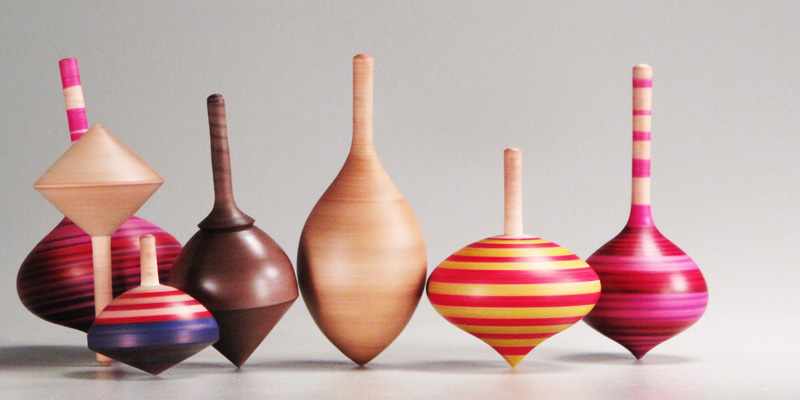 🇰🇷 South Korea and 1 moreTraditional games of Korea전통놀이 (jeontongnori)
Korean games kept through the seasons, from New Year board games to winter kitesGame
🇰🇷 South Korea and 1 moreTraditional games of Korea전통놀이 (jeontongnori)
Korean games kept through the seasons, from New Year board games to winter kitesGame
 🇷🇺 Russia and 4 moreGymnastyorkaгимнастёрка
A loose pullover smock that began as a peasant shirt and became a soldier's uniformDress
🇷🇺 Russia and 4 moreGymnastyorkaгимнастёрка
A loose pullover smock that began as a peasant shirt and became a soldier's uniformDress
Photo credits on this page
The small pictures above come from Wikimedia Commons under free licences. Some are cropped to fit.
- Naengmyeon: wjlee4284, CC BY 2.5, source
- Ganggangsullae: originally by photoren, CC BY 2.0, source
- Day of the Sun: Uri Tours, CC BY-SA 2.0, source
- Arirang Mass Games: Michael Day, CC BY 2.0, source
- Day of the Shining Star: Nicor, CC BY-SA 3.0, source
- Daeboreum: hojusaram, CC BY-SA 2.0, source
- Mass games: photo: unknown file: James Steakley, Public domain, source
- Hanbok: DongyiKoguryo, CC BY-SA 4.0, source
- Korean New Year: Kang Byeong Kee, CC BY 3.0, source
- Chuseok: by Joseph Steinberg (Baltimoron in Korea) at Flickr, CC BY-SA 2.0, source
- Talchum: originally by photoren, CC BY 2.0, source
- Pansori: Steve46814, CC BY-SA 3.0, source
- Doljanchi: en:User:Jamsong, CC BY-SA 3.0, source
- Jegichagi: Official U.S. Navy Page, Public domain, source
- Traditional games of Korea: Davidturnswood, CC BY-SA 3.0, source
- Gymnastyorka: Unknown author, Public domain, source
- Marriage in Korea: Jérôme Banal ( Eden2004 ), CC BY-SA 3.0, source
- Hangul Day: Korea.net / Korean Culture and Information Service (Jeon Han), CC BY-SA 2.0, source
- National Liberation Day of Korea: Korea.net / Korean Culture and Information Service, CC BY-SA 2.0, source
- Fatherland Liberation War Day: Stefan Krasowski, Public domain, source
- Day of the Foundation of the Republic: Uri Tours, CC BY-SA 2.0, source
- Party Foundation Day: David Stanley, CC BY 2.0, source