Zardozi
In its own language: زردوزی (zarduzi)
Heavy gold and silver embroidery on silk or velvet, worked in Iran, India and beyond

Zardozi is an embroidery of gold and silver thread on silk, satin or velvet, made in Iran, the Indian subcontinent and Central Asia. Once used for royal tents, scabbards and court dress, it is still worked today, above all in Lucknow and in Iran's Hormozgan region, and worn at weddings and on formal occasions.
When is Zardozi kept?
Zardozi is kept on no fixed date; worn at weddings and formal occasions.
Zardozi is a heavy embroidery worked in metal thread on silk, satin or velvet. The name comes from Persian words for gold and sewing. It took shape in Iran and Central Asia and spread through the Indian subcontinent, where Mughal courts prized it. Today workshops in Lucknow, Isfahan and elsewhere still stitch it, mostly for weddings, formal clothes and fine furnishings.
What it is
The embroidery sits on cloth. Silk, satin and velvet are the usual grounds, and the stitching is metal rather than silk alone. Craftspeople work with flat wire, coils, twisted wire, heavier wire and small spangles, laying them down with gold and silver thread. Beads, pearls or stones can join the pattern. Because everything rests on the surface, the finished cloth feels weighty and looks raised. The work covers a wide range of goods: clothing, cloth for the home, and the harness and trappings of animals. Older pieces also decorated tent walls, sword scabbards, hangings and the gear of horses and elephants kept for royalty.
Origins and history
The name is Persian. Zar means gold and dozi means sewing, so the word says gold sewing. In the Indian subcontinent zardozi appears from the fourteenth century and flourished in the seventeenth, when the Mughal empire gave it steady work. Rank was read into the cloth: Mughal elites favoured it, along with chikan, and wore both as signs of wealth, authority and status. When court demand ended and factory production spread, the craft fell away. It picked up again after India became independent in 1947. Further north, in Tajikistan and Uzbekistan, work of this kind is described as very old.
In Iran
Iran has its own zardozi line, known regionally as kam-douzi, gol-douzi or kaman-douzi. Three ways of working are described. One covers the ground cloth completely with bakhie stitching to make new patterns and colours, as in Baloch souzan-douzi, Rasht qollab-douzi and Kerman pate-douzi. A second is sparser: threads cross the weft and link into a coloured lattice, as with sekke-douzi and qollab-douzi in Isfahan. The third sets patterns on the original cloth in gold and silver, as in Dah-Yek-douzi, Naqade-douzi, Tafte-douzi, Kous-douzi, Zari-douzi and Golabatoun-douzi. Hormozgan is where the craft is most visible now, notably Bandar-e Lenge, Bandar-e Abbas and Minab.
Across South Asia
India makes zardozi on the largest scale. Big city workshops in Kolkata, Delhi and Mumbai, smaller centres such as Agra, Bareilly and Farrukhabad, and the older grounds of Lucknow, Hyderabad and Bhopal all keep it. Lucknow's version was given a geographical indication in 2013. Under that registration, named makers, sellers and traders in the city and in Barabanki, Unnao, Sitapur, Rae Bareli, Hardoi and Amethi may use the Lucknow zardozi name. Pakistan also works the craft, and its tailors and couture houses produce garments for weddings and formal wear.
Today and change
The materials have shifted. The earliest work used silver wire and real gold leaf. Most pieces now combine copper wire finished with a gold or silver polish and silk thread, which still gives the shine. The look has stayed the same: dense, raised, catching the light. Zardozi is now among the most common embroideries on the Indian subcontinent, and families in the diaspora choose it for weddings. Iran keeps its regional styles, and Central Asian workshops continue an older form. It turns up on bridal dress, cushions and framed cloth.
How Zardozi is kept
Zardozi is made in workshops by artisans, and it reaches buyers through distributors and retailers, such as the authorised users of the Lucknow mark. A design is drawn on a stretched base of silk, satin or velvet. The artisan then sews the metal elements into place: spangles, heavy wire, twisted wire, flat wire and coils, held with gold and silver thread. Pearls, beads or precious stones may be added to the pattern. Finished pieces go to tailors and couture houses for clothing, or into furnishing work.
When and where
It belongs to Iran, the Indian subcontinent and Central Asia. Iranian work is strongest in Hormozgan, around Bandar-e Lenge, Bandar-e Abbas and Minab, with older forms tied to Isfahan and Kerman. In South Asia, Lucknow is the best known centre, with Kolkata, Delhi, Mumbai, Agra, Bareilly, Farrukhabad, Hyderabad and Bhopal also working it. Pakistan uses it for wedding and formal wear, and Uzbekistan and Tajikistan have long traditions.
What Zardozi means
For the Mughal court, zardozi signalled standing. Cloth worked in gold and silver was not everyday dress; it marked wealth, authority and rank, and it covered the objects that surrounded power, royal tents, scabbards and the harness of royal horses and elephants. That meaning survives in a gentler form. Families choose zardozi bridal and formal clothing because the metal catches light and reads as an occasion. The density of the stitching is itself a statement: more work, more metal, more weight.


Questions people ask about Zardozi
When is Zardozi kept?
Zardozi is kept on no fixed date; worn at weddings and formal occasions.
What is zardozi exactly?
It is a heavy embroidery worked in metal thread, not silk alone, on a base of silk, satin or velvet. The Persian name means gold sewing. Gold and silver wire, spangles and thread build the pattern, and pearls, beads or stones may be added.
Where is it made?
Iran, the Indian subcontinent and Central Asia. Lucknow is the best known centre and holds a geographical indication for its version. Iranian work is concentrated in Hormozgan, near Bandar-e Lenge, Bandar-e Abbas and Minab. Pakistan, Uzbekistan and Tajikistan also have the craft.
Why did the craft decline and then recover?
In the Indian subcontinent it flourished under Mughal patronage in the seventeenth century. Once that royal support stopped and factory production spread, demand dropped. It revived after India's independence in 1947 and is now one of the most used embroideries on the subcontinent.
Has the material changed over time?
Yes. The oldest pieces used silver wire and true gold leaf. Most today use copper wire with a gold or silver polish, stitched with silk thread, while gold and silver thread still shapes the design. Beads, pearls and stones are still added.
See also
 Kolhapuri chappalHandcrafted braided leather slip-on sandals from western India
 PhulkariGeometric and floral threadwork embroidered by Punjabi women on handwoven cotton.
 IkatA resist-dyeing craft from Southeast Asia, where yarns are tied and dyed before weaving
 Persian gardenAn ancient tradition of creating walled, geometric sanctuaries of shade and flowing water
Good reading and sources
- Zardozi on WikipediaEncyclopedia
- More photos on Wikimedia CommonsPhotos and video
- Wikidata recordOpen data
The facts on this page come from the Wikipedia article "Zardozi", written by its contributors and used under the CC BY-SA 4.0 licence, and from its Wikidata record (CC0). EveryParampara rewrote the text in its own words, with AI assistance, and compares every page with the article to make sure no passage is copied. It may be reused under the same CC BY-SA 4.0 licence with a link back.
It may contain mistakes. Traditions differ from one family, village and community to the next, and the people who keep them know them best. If something is wrong, tell us. Last refreshed 2026-10-05.
More from Iran
All the traditions of Iran
🇮🇷 Isfahan, Iran and 3 morePersian gardenباغ ایرانی
An ancient tradition of creating walled, geometric sanctuaries of shade and flowing waterCraft
 🇮🇷 Tabriz, Iran and 3 morePersian miniatureنگارگری ایرانی
A tradition of small, brightly coloured paintings created for books and albums.Craft
🇮🇷 Tabriz, Iran and 3 morePersian miniatureنگارگری ایرانی
A tradition of small, brightly coloured paintings created for books and albums.Craft
 🇹🇲 Ashgabat, Turkmenistan and 2 moreTurkmen rugTürkmen haly
Handmade textiles woven by Turkmen tribes, featuring geometric patterns and natural dyes.Craft
🇮🇷 IranGabbehگبه
A thick, boldly simple wool rug, hand-woven by women in Iran's Zagros MountainsCraft
🇹🇲 Ashgabat, Turkmenistan and 2 moreTurkmen rugTürkmen haly
Handmade textiles woven by Turkmen tribes, featuring geometric patterns and natural dyes.Craft
🇮🇷 IranGabbehگبه
A thick, boldly simple wool rug, hand-woven by women in Iran's Zagros MountainsCraft
The same idea elsewhere
Royalty and coronation compared
🇮🇩 Bali, Indonesia and 5 moreIkat
A resist-dyeing craft from Southeast Asia, where yarns are tied and dyed before weavingCraft
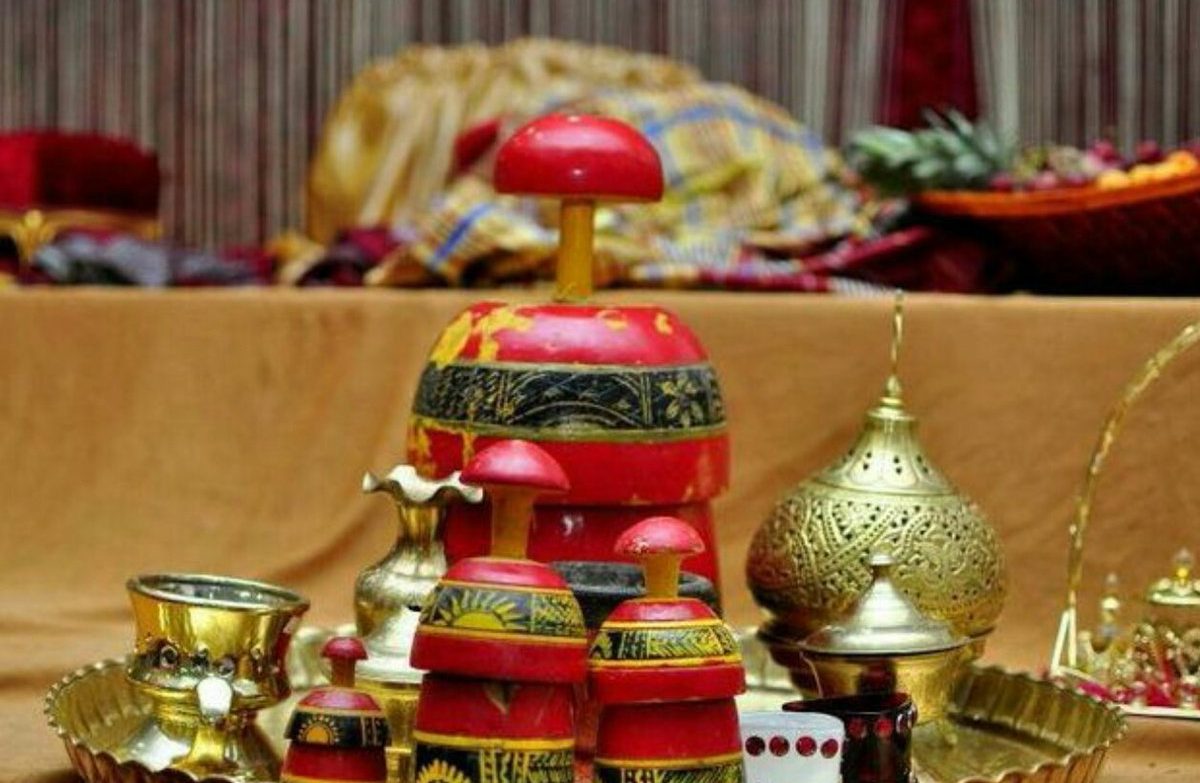 🇸🇩 SudanJirtigالجَرْتِقْ
A Sudanese wedding ritual of regal adornment, protection, and blessings of fertilityRite of passage
🇸🇩 SudanJirtigالجَرْتِقْ
A Sudanese wedding ritual of regal adornment, protection, and blessings of fertilityRite of passage
 🇹🇴 Tonga and 1 moreTaʻovala
A waist mat worn in Tonga for weddings, funerals and formal daysDress
🇹🇴 Tonga and 1 moreTaʻovala
A waist mat worn in Tonga for weddings, funerals and formal daysDress
 🇮🇳 Lucknow, India and 3 moreSherwani
A long buttoned coat for men, worn at weddings and state occasions in South AsiaDress
🇮🇳 Lucknow, India and 3 moreSherwani
A long buttoned coat for men, worn at weddings and state occasions in South AsiaDress