Spiritual and religiousMiddle EastChristian
Presentation of Jesus at the Temple
In its own language: In praesentatione Domini
A February feast of candles and welcome, kept forty days after Christmas
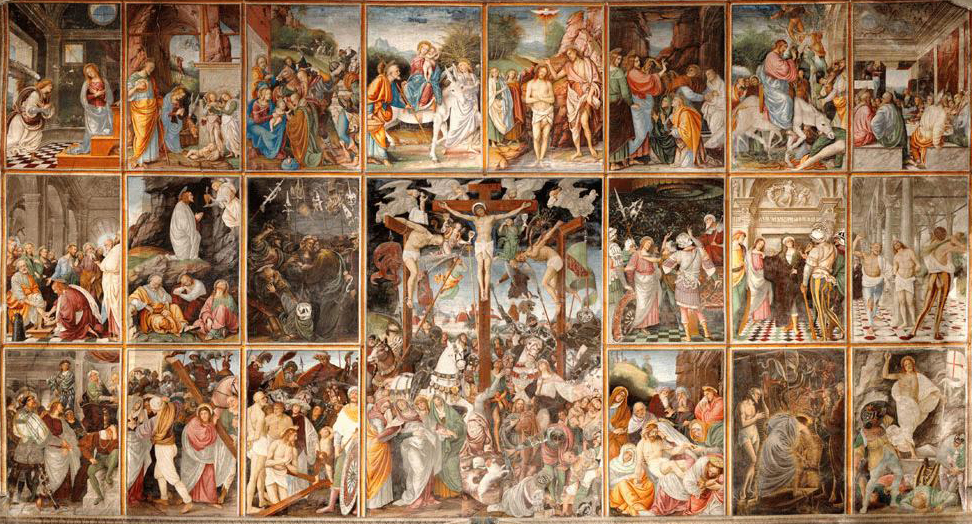
A Christian feast kept on 2 February, forty days after Christmas. It remembers Mary and Joseph bringing the child Jesus to the Temple at Jerusalem, the welcome they received from Simeon and the prophetess Anna, and the blessing of candles that gave the day its English name, Candlemas.
When is Presentation of Jesus at the Temple marked?
Presentation of Jesus at the Temple is kept as part of Candlemas, which is on Tuesday, 2 February 2027.
Forty days after Christmas, many Christian churches keep the Presentation of the Lord. The name recalls the day Mary and Joseph carried the baby Jesus to the Temple, where an old man named Simeon and a prophetess named Anna recognised him. The feast is also called Candlemas, because candles are blessed and carried in procession. It is one of the oldest observances in the Christian year.
The story in Luke
Luke's Gospel, in its second chapter, tells of the family's visit to the Temple. Forty days after the birth, Mary completed the rite of purification that the Law asked of a mother, and the firstborn son was redeemed, as the Torah required. Luke notes that the couple brought the offering allowed to poor families: turtledoves or pigeons, rather than a lamb. In the Temple they met Simeon, who had been promised he would not die before seeing the Lord's anointed. He took the child and prayed the words now known as the Nunc Dimittis. The prophetess Anna, an elderly woman, also gave praise and told those present what the child meant for Jerusalem.
Candles and blessing
The name Candlemas comes from the candles carried at the Mass on this day. The custom rests on Simeon's prayer, which greets the child as a light for the nations, a phrase that echoes Isaiah. In Western churches a priest blessed beeswax candles on 2 February, and some were handed to worshippers for use at home during the year. In Poland the feast is named for thunder candles, gromnice, lit when storms came and put in windows to turn the weather away. Eastern churches call the day Hypapante and keep a night-long vigil, blessing candles around the morning Liturgy.
Dates and churches
The date follows Christmas. Counting forty days from 25 December gives 2 February, and that is the day in both Eastern and Western calendars. Orthodox churches on the Julian calendar keep it on 15 February. The Armenian Apostolic Church keeps it on 14 February, since Armenians celebrate the Nativity on 6 January. The Church of England allows 2 February or the Sunday falling between 28 January and 3 February. Swedish and Finnish Lutherans have marked it on a Sunday since 1774, between 2 and 8 February, unless that Sunday is the last before Lent, when it moves back a week.
What the day means
The feast is a showing, like Epiphany: the child is made known in the Temple. Simeon's song and Anna's words are the first public recognition of who he is, and the day is counted as his earliest appearance in his Father's house. Catholics count it as the fourth of the Joyful Mysteries of the Rosary, and the Roman Rite ties the day to the World Day of Consecrated Life; Pope John Paul II linked the date to the renewal of religious vows. In some places the crib stays out until this day, and in the Liturgy of the Hours the antiphon Alma Redemptoris Mater is sung up to 2 February, when Ave Regina Caelorum takes over.
History and change
Celebration of the feast in Jerusalem reaches back to the fourth century, which makes it one of the oldest in the Christian year. Sermons on the day survive from a line of bishops, among them Cyril of Jerusalem, Gregory of Nyssa and John Chrysostom. In the fifth century Pope Gelasius I helped the feast spread further. Later the same story gave rise to a rite called churching, held about forty days after a baby was born, in East and West alike. It has mostly lapsed in the West but is still kept in the Orthodox Church, where babies of either sex are brought to church on their fortieth day.
How Presentation of Jesus at the Temple is kept
Ordinary Sundays aside, the day is kept in church. Western parishes hold a Mass at which candles are blessed and carried in procession. In Eastern parishes the eve brings a vigil through the night; the next morning the priest says five prayers, heads are bowed, the candles are censed and sprinkled with holy water, and handed out before the Liturgy begins. Catholic parishes may mark the World Day of Consecrated Life on the same date. Some families leave the Christmas decorations standing until this day, and in Armenia people carry a flame from the evening service out into the dark, taking it home or lighting a bonfire in the churchyard.
When and where
2 February in most churches, forty days after Christmas. Orthodox congregations using the Julian calendar keep it on 15 February, and Armenians on 14 February. The Church of England allows 2 February or the Sunday falling between 28 January and 3 February, and Swedish and Finnish Lutherans keep it on a Sunday between 2 and 8 February.
Kept wherever Catholic, Orthodox, Anglican, Lutheran and Armenian congregations meet. The feast began in Jerusalem and is strongest in the Eastern churches, where it ranks among the Great Feasts, and in Poland, where the blessed candles have their own name. Armenian communities keep their own date and their own name for the day.
What Presentation of Jesus at the Temple means
The day is about light and welcome. An old man and an old woman recognise a baby that others see as ordinary, and Simeon's prayer speaks of a light for the nations. Candles blessed on this date carry the thought into the rest of the year, into homes and into storms. For the churches that keep it, the feast shows God made known in a human child, brought to the Temple by poor parents who could afford only the smallest offering.


Days Presentation of Jesus at the Temple is marked
Questions people ask about Presentation of Jesus at the Temple
When is Presentation of Jesus at the Temple marked?
Presentation of Jesus at the Temple is kept as part of Candlemas, which is on Tuesday, 2 February 2027.
What is the Presentation of Jesus at the Temple?
A Christian feast kept on 2 February, forty days after Christmas. It remembers the day Mary and Joseph brought the child Jesus to the Temple at Jerusalem, where Simeon and the prophetess Anna recognised him. Many churches also call the day Candlemas, after the candles blessed and carried then.
Why is the day called Candlemas?
Because of the candles. A priest blessed beeswax candles on this date in the Western churches, and some were given to the congregation to use at home through the year. The custom comes from Simeon's prayer, which greets the child as a light for the nations.
Do all Christians keep it in the same way?
No. Eastern churches hold a vigil through the night before and bless candles around the morning Liturgy, and the day is one of their Great Feasts. Western churches hold a Mass with a candle procession. The names differ too: Catholic books call it the Presentation of the Lord, and many English speakers say Candlemas.
How does it differ from Epiphany?
Both are feasts of showing. At Epiphany the child is made known to the Magi; at the Presentation he is made known in the Temple through Simeon's song and Anna's words. Candlemas is fixed from Christmas, while the moveable feasts are counted from Easter.
See also
 St John's EveBonfires, feasting and worship on the short night before John the Baptist's feast
 Christmas treeA decorated evergreen or artificial tree placed indoors to mark the Christmas season.
 Friday the 13thA Western folk superstition regarding the unluckiness of a Friday falling on the 13th.
 Brigid's crossA cross of woven rushes or straw, made for Saint Brigid's Day on the first of February
Good reading and sources
- Presentation of Jesus on WikipediaEncyclopedia
- More photos on Wikimedia CommonsPhotos and video
- Wikidata recordOpen data
The facts on this page come from the Wikipedia article "Presentation of Jesus", written by its contributors and used under the CC BY-SA 4.0 licence, and from its Wikidata record (CC0). EveryParampara rewrote the text in its own words, with AI assistance, and compares every page with the article to make sure no passage is copied. It may be reused under the same CC BY-SA 4.0 licence with a link back.
It may contain mistakes. Traditions differ from one family, village and community to the next, and the people who keep them know them best. If something is wrong, tell us. Last refreshed 2026-10-05.
More from Israel
All the traditions of Israel 🇮🇱 Israel and 4 moreTorah readingקריאת התורה
The public reading of the Torah scroll in synagogue, chanted to a special tuneSpiritual
🇮🇱 Israel and 4 moreTorah readingקריאת התורה
The public reading of the Torah scroll in synagogue, chanted to a special tuneSpiritual
 🇮🇱 Jerusalem, Israel and 5 moreKiddush Levanahקידוש לבנה
A Jewish ritual service held after the new moon to bless God for the lunar cycle and seek protection.Spiritual
🇮🇱 Jerusalem, Israel and 5 moreKiddush Levanahקידוש לבנה
A Jewish ritual service held after the new moon to bless God for the lunar cycle and seek protection.Spiritual
 🇮🇱 Jerusalem, IsraelPassoverפסח
A Jewish spring festival celebrating freedom from slavery with ritual mealsSpiritual · Dinner
🇮🇱 Jerusalem, IsraelPassoverפסח
A Jewish spring festival celebrating freedom from slavery with ritual mealsSpiritual · Dinner
 🇮🇱 Jerusalem, IsraelYom Kippurיוֹם כִּפּוּר
The holiest day in Judaism, dedicated to fasting, prayer and atonementSpiritual · Fasting and breaking the fast
🇮🇱 Jerusalem, IsraelYom Kippurיוֹם כִּפּוּר
The holiest day in Judaism, dedicated to fasting, prayer and atonementSpiritual · Fasting and breaking the fast
The same idea elsewhere
Healing, luck and protection compared
🇩🇪 Germany and 5 moreChristmas tree
A decorated evergreen or artificial tree placed indoors to mark the Christmas season.Festival
 🇫🇷 France and 5 moreCandlemas
A Christian feast of candle blessings marking the end of the Christmas seasonSpiritual
🇫🇷 France and 5 moreCandlemas
A Christian feast of candle blessings marking the end of the Christmas seasonSpiritual
 🇮🇪 Ireland and 2 moreJack-o'-lantern
A carved pumpkin lantern lit with a candle to brighten and protect Halloween nightsFolklore
🇺🇸 United States and 4 moreFriday the 13th
A Western folk superstition regarding the unluckiness of a Friday falling on the 13th.Folklore
🇮🇪 Ireland and 2 moreJack-o'-lantern
A carved pumpkin lantern lit with a candle to brighten and protect Halloween nightsFolklore
🇺🇸 United States and 4 moreFriday the 13th
A Western folk superstition regarding the unluckiness of a Friday falling on the 13th.Folklore