Royal, civic and national ceremonyEast Asia
Retrocession Day
In its own language: 臺灣光復節 / 台湾光复节 (Táiwān guāngfùjié)
A public holiday on 25 October marking the end of Japanese rule in Taiwan in 1945

Taiwan keeps Retrocession Day on 25 October, the date in 1945 when Japanese rule on the island ended and the Republic of China took over its administration. In 2025 the People's Republic of China set up its own observance of the same date, the Commemoration Day of Taiwan's Restoration, and the two readings of the day are disputed.
When is Retrocession Day kept?
Retrocession Day is kept every year on 25 October.
Retrocession Day is kept in Taiwan every 25 October. It recalls the day in 1945 when Japanese rule on the island ended and the Republic of China took charge of its administration. In 2025 Beijing set up its own observance of the same date, called the Commemoration Day of Taiwan's Restoration. Who should mark the day, and what it means, is disputed.
What the day marks
On 25 October 1945 the Japanese governor-general of Taiwan, Rikichi Andō, gave Chen Yi a signed receipt for Order No. 1 at the Taipei City Public Auditorium, the building now known as Zhongshan Hall. Chen Yi, chief executive of Taiwan Province, had come to accept the surrender on China's behalf. He then named the date Retrocession Day and set the island up as a province of the Republic of China. The ceremony followed wartime Allied statements: the Cairo Declaration of 1943 and Article 8 of the Potsdam Declaration in July 1945, which said Japan should give back the territories it had taken.
From colony to handover
Taiwan was a colony of the Empire of Japan from 1895, when the Qing court ceded the island under the Treaty of Shimonoseki, until the end of the Second World War. Westerners then often called it Formosa. At the Cairo Conference in November 1943, Chiang Kai-shek met Franklin D. Roosevelt and Winston Churchill, who argued that Japan must return everything it had annexed, Taiwan and the Penghu Islands included. The surrender itself was taken under Order No. 1 from the American general Douglas MacArthur. George H. Kerr travelled to the island with Chen Yi, who acted as the Chinese delegate.
Keeping the day
The island's provincial government gave the date the name Recovery Day in October 1946 and made it a day off, and it joined the list of legal holidays. Debate about its meaning grew once martial law ended. In December 2000 the government issued revised rules on memorial days and holidays and dropped this one along with several others. A law passed by the Legislative Yuan in May 2025, when the Kuomintang held the majority, restored the holiday and joined the date to the Kinmen Guningtou victory of 1949, so that two events are remembered together. Some Democratic Progressive Party figures, among them Hsu Kuo-yung, objected. The government said the day would be a public holiday in 2026.
A second observance
In October 2025 the National People's Congress Standing Committee in Beijing created a memorial day of its own, the Commemoration Day of Taiwan's Restoration, and said the country would hold commemorative activities. Song Tao, who heads the Taiwan Affairs Office, said Xi Jinping had made the decision himself. Wang Huning, who chairs the Chinese People's Political Consultative Conference, spoke at a gathering on the following day. He said the two sides should work together for national reunification and leave no space for separatist activity. Mainland sources and friendly research groups have called the day a chance for legal and narrative campaigning in support of unification.
Disagreement and reaction
Taiwan's Mainland Affairs Council rejected Beijing's decision, describing it as an effort to belittle Taiwan and to assert a claim of ownership that the council calls invented. Taiwan also told its officials and students not to join celebrations on the mainland. The Democratic Progressive Party, independence campaigners and some commentators read the mainland's version as an attempt to rewrite the past and to leave Taiwan's political status unclear so that pro-unification views gain ground. Some large cities in the United States have seen their own gatherings, organised by overseas Chinese hometown associations and groups that work for cross-strait reunification. In 1945, for their part, the United States and the United Kingdom did not accept Chen Yi's unilateral declaration: both held that a peace treaty was still needed.
How Retrocession Day is kept
In Taiwan, the government said in 2025 that the day would again be a public holiday, with 2026 the first year people get it off, after it had been dropped from the holiday list in 2000. Commemorations look back to the 1945 handover and to the 1949 fighting at Guningtou. On the mainland, where a memorial day was created in 2025, the state organises commemorative activities and senior figures appear at them. Taiwan has told its officials and students not to attend mainland events. Overseas Chinese groups in some large American cities hold gatherings of their own.
When and where
The day falls on 25 October each year, the date of the 1945 handover. Taiwan first marked it in 1946. It was left off the holiday list from 2000 and restored by a law passed in May 2025, with a public holiday announced for 2026. Beijing's memorial day dates from October 2025.
The observance belongs to Taiwan, where the 1945 turnover happened in Taipei at what is now Zhongshan Hall, and to mainland China, which added its own memorial day in 2025. The 1949 battle remembered alongside it was fought at Guningtou in Kinmen. Some large cities in the United States have also seen celebrations run by overseas Chinese groups.
What Retrocession Day means
For people in Taiwan, the date marks the close of Japanese colonial rule and the island's return to Chinese administration. For Beijing, it asserts that Taiwan is part of China and provides a setting for arguing for reunification. Critics in Taiwan read the mainland's version as a political claim rather than a settled fact, and the 1945 transfer was disputed at the time: the United States and the United Kingdom held that a peace treaty was still outstanding.
Questions people ask about Retrocession Day
When is Retrocession Day kept?
Retrocession Day is kept every year on 25 October.
What is Retrocession Day?
It is a day kept on 25 October to remember the end of Japanese rule in Taiwan and the handover of the island's administration to the Republic of China in 1945. Taiwan observes it as a public holiday. Beijing created its own memorial day on the same date in 2025.
Where is it observed?
In Taiwan, where the events of 1945 took place, and in mainland China, which added the date to its commemorations in 2025. Groups of overseas Chinese in some large American cities have also held celebrations. Taiwan's government has told its officials and students not to attend mainland events.
What happened on 25 October 1945?
At what is now Zhongshan Hall in Taipei, the Japanese governor-general Rikichi Andō handed a signed receipt for Order No. 1 to Chen Yi, the chief executive of Taiwan Province, who had come as China's delegate. Chen Yi then declared the date Retrocession Day and made the island a province of the Republic of China.
Why is the day argued about?
The two governments tell the story differently. Taiwan's Mainland Affairs Council says Beijing uses the date to belittle Taiwan and to press a claim of ownership it calls invented. The transfer in 1945 also drew objections at the time from the United States and the United Kingdom, which said a peace treaty was still needed.
See also
 Arbor DayAn annual secular observance dedicated to planting and caring for trees around the worldProgrammer's DayA professional day for programmers, fixed to the 256th day of the year
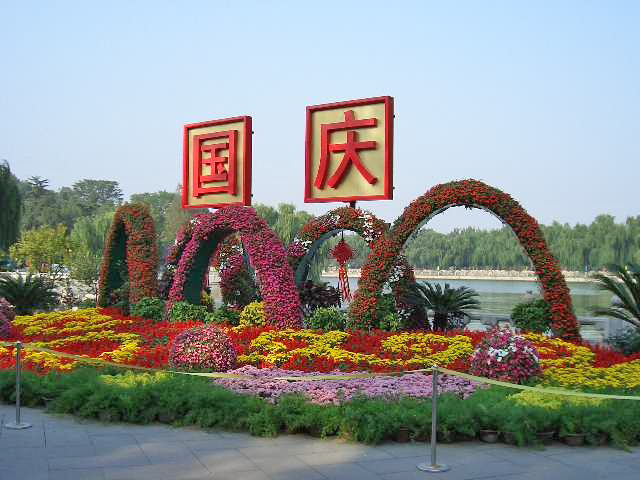 National DayChina's national day on 1 October, marking the republic's founding in 1949
 Double Ten DayThe national holiday of Taiwan marking the start of the 1911 revolution.
Good reading and sources
The facts on this page come from the Wikipedia article "Retrocession Day", written by its contributors and used under the CC BY-SA 4.0 licence, and from its Wikidata record (CC0). EveryParampara rewrote the text in its own words, with AI assistance, and compares every page with the article to make sure no passage is copied. It may be reused under the same CC BY-SA 4.0 licence with a link back.
It may contain mistakes. Traditions differ from one family, village and community to the next, and the people who keep them know them best. If something is wrong, tell us. Last refreshed 2026-10-05.
More from Taiwan
All the traditions of Taiwan
🇹🇼 Taipei, TaiwanDouble Ten Day國慶日
The national holiday of Taiwan marking the start of the 1911 revolution.Ceremony
 🇮🇳 India and 4 moreYouth Day
A commemorative holiday honoring young people and youth movements worldwideCeremony
🇮🇳 India and 4 moreYouth Day
A commemorative holiday honoring young people and youth movements worldwideCeremony
 🇨🇳 Quanzhou, China and 3 moreGlove puppetry布袋戲
A traditional theatre of cloth-bodied puppets with carved wooden heads and live musicPerformance
🇨🇳 Quanzhou, China and 3 moreGlove puppetry布袋戲
A traditional theatre of cloth-bodied puppets with carved wooden heads and live musicPerformance
 🇹🇼 Yilan, Taiwan and 4 moreTaiwanese opera歌仔戲
A Taiwanese theatrical art of Hokkien balladry, stylized staging, and expressive song.Performance
🇹🇼 Yilan, Taiwan and 4 moreTaiwanese opera歌仔戲
A Taiwanese theatrical art of Hokkien balladry, stylized staging, and expressive song.Performance
The same idea elsewhere
All of this kind 🇺🇸 Philadelphia, United States and 1 moreIndependence Day
The United States' national day of parades, barbecues and fireworks, kept each July 4Ceremony
🇺🇸 Philadelphia, United States and 1 moreIndependence Day
The United States' national day of parades, barbecues and fireworks, kept each July 4Ceremony
 🇺🇸 United StatesTalking stick
A carved staff that shows who may speak at a Northwest Coast gatheringCeremony
🇺🇸 United StatesTalking stick
A carved staff that shows who may speak at a Northwest Coast gatheringCeremony
 🇺🇸 Washington, United StatesState of the Union address
The US president's yearly report to Congress and the nation, given in the House chamberCeremony
🇺🇸 Washington, United StatesState of the Union address
The US president's yearly report to Congress and the nation, given in the House chamberCeremony
 🇮🇳 Kolkata, IndiaJana Gana Mana
India's national anthem, from a Bengali hymn of 1911, sung at civic occasionsCeremony
🇮🇳 Kolkata, IndiaJana Gana Mana
India's national anthem, from a Bengali hymn of 1911, sung at civic occasionsCeremony