Sack Man
A widespread folklore figure who carries a sack to take away disobedient children

The Sack Man is a cautionary folklore character found across many cultures, depicted as a traveller or vagrant carrying a large bag to collect disobedient children. Parents invoke this figure at bedtime, supper time, or during winter festivals to encourage good behaviour and discourage straying from home.
When is Sack Man kept?
Sack Man is kept on throughout the year, especially around bedtime, supper time, or during winter holidays.
The Sack Man is a legendary figure known in many parts of the world, serving as a warning to children who misbehave. Adults tell young people that a strange wanderer with a large sack over his shoulder will take them away if they do not listen, finish their supper, or go to sleep. In many regions, this character acts as a dark counterpart to gift-giving holiday figures.
Iberian and Latin American tales
In Spain, people speak of el hombre del saco, described as a gaunt, unpleasant elder who consumes the unruly children he captures. This Spanish tale gained strength after the historic crime of Gádor, where kidnappers employed a gunny bag. In Brazil, o homem do saco appears as a tall wanderer who gathers disobedient youths to sell them. Further south, in Argentina and Chile, he is known as el Viejo del Saco. Families warn that he roams streets around supper time, taking children who are not indoors before sundown. In Mexico and Honduras, parents rely on a very similar figure known as el Roba Chicos to discourage bad behaviour.
European and Asian variants
Eastern Europe has several versions of the legend. Poland fears the bebok, while Hungary warns children about the zsákos ember. In Russia, Ukraine, and Belarus, elders invoke babay, an old man figure derived from the Tatar word for grandfather, to keep children in bed. Asian traditions feature matching warnings. North Indian households speak of Bori Baba, while Lebanese families mention Abu Kees. In Turkey, Harkıt carries a sack to seize misbehaving youths. Korean lore features mangtae yeonggam, an elderly man carrying a mesh bag, or his female equivalent, mangtae halmeom. In Vietnam, ông ba bị visits after dark, while in Sri Lanka, Sinhalese elders speak of Goni Billa.
Winter festivals and holiday counterparts
In several European and Caribbean traditions, the bag-bearing wanderer is paired against generous winter figures. Dutch and Flemish folklore features Zwarte Piet, who assists Sinterklaas on 5 December by handing out presents and taking unruly children away to Spain in empty sacks. Alpine communities tell tales of Krampus carrying a sack or tub, while Swiss traditions include Schmutzli. In Bulgaria, Torbalan serves as the frightening opposite of Dyado Koleda, the Bulgarian Santa Claus. Haiti possesses Tonton Macoute, an imposing giant with a knapsack who stands as the dark counterpart to Father Christmas, a name later adopted by state secret police during the Duvalier era.
Other regional manifestations
Folktales in South Africa include Antjie Somers, a character from Western Cape lore who collects naughty youths in a shoulder bag. Although carrying a woman's name, Antjie Somers is traditionally understood as a male figure, often described as an escaped enslaved person who wore women's clothing to evade capture. In Sri Lanka, the feared Goni Billa took on contemporary meaning during the late 1980s uprising, when the name was applied to masked informants. Across these regions, the basic premise remains consistent: an outsider with a bag arrives to penalise disobedience, adapting over generations to local history and social anxieties.
How Sack Man is kept
Parents and elders use the figure of the Sack Man as a verbal warning when children misbehave, refuse to sleep, or fail to return home before dark. Adults describe the character as an ominous outsider roaming neighbourhoods with an empty bag, ready to collect unruly youths. In some winter celebrations, costumed performers represent these companion figures alongside gift-givers during seasonal processions and family visits.
When and where
The Sack Man is invoked throughout the year whenever discipline is needed, often at dusk, supper time, or bedtime. Specific variants appear during winter holidays, such as the eve of 5 December in the Low Countries or throughout December across parts of Europe and the Caribbean.
Beliefs surrounding the Sack Man exist worldwide. They are particularly prominent across Spain, Portugal, Latin America, and Eastern Europe, as well as in parts of South Asia, East Asia, the Caribbean, and Southern Africa.
What Sack Man means
The Sack Man embodies the fear of the unknown outsider and the danger of wandering away from the safety of the household. By pairing punishment with an unsettling figure, communities reinforce social rules, punctuality at meal times, and obedience to parents. In holiday traditions, the character provides a strict moral balance to benevolent gift-bringers.


Questions people ask about Sack Man
When is Sack Man kept?
Sack Man is kept on throughout the year, especially around bedtime, supper time, or during winter holidays.
What is the Sack Man?
The Sack Man is an international bogeyman character depicted as a wanderer with a large sack used to carry off young people who do not behave.
Where is the Sack Man tradition found?
Variants exist across the globe, including Spain, Latin America, Eastern Europe, South Africa, Haiti, and several countries in Asia such as India, Korea, and Vietnam.
How is the Sack Man linked to Christmas?
In several European and Caribbean traditions, such as in Bulgaria, Haiti, and the Low Countries, the sack carrier serves as a dark counterpart to Father Christmas or Saint Nicholas.
Why do parents tell stories about the Sack Man?
Elders invoke the character to encourage children to go to sleep, finish meals, stay indoors after dark, and follow parental directions under threat of being taken away.
See also
 Need-fireA ritual fire kindled by friction to ward off cattle plague, disease and harm
 Salting the earthAn ancient ritual of scattering salt over ruined ground to curse its future use
 PolaznikThe first visitor to cross the threshold at Christmas, read as a sign of the year to come
 Rooster of BarcelosA Portuguese tale of a roast rooster that crowed to clear an innocent man
Good reading and sources
- Sack Man on WikipediaEncyclopedia
- More photos on Wikimedia CommonsPhotos and video
- Wikidata recordOpen data
The facts on this page come from the Wikipedia article "Sack Man", written by its contributors and used under the CC BY-SA 4.0 licence, and from its Wikidata record (CC0). EveryParampara rewrote the text in its own words, with AI assistance, and compares every page with the article to make sure no passage is copied. It may be reused under the same CC BY-SA 4.0 licence with a link back.
It may contain mistakes. Traditions differ from one family, village and community to the next, and the people who keep them know them best. If something is wrong, tell us. Last refreshed 2026-10-06.
More from Spain
All the traditions of Spain
🇵🇹 Barcelos, Portugal and 1 moreRooster of BarcelosGalo de Barcelos
A Portuguese tale of a roast rooster that crowed to clear an innocent manFolklore
🇵🇹 Portugal and 3 moreSalting the earth
An ancient ritual of scattering salt over ruined ground to curse its future useFolklore
🇪🇸 Spain and 5 moreCabañuelasLas cabañuelas
A traditional weather forecasting method using the first thirty-one days of January to predict the rest of the year.Folklore
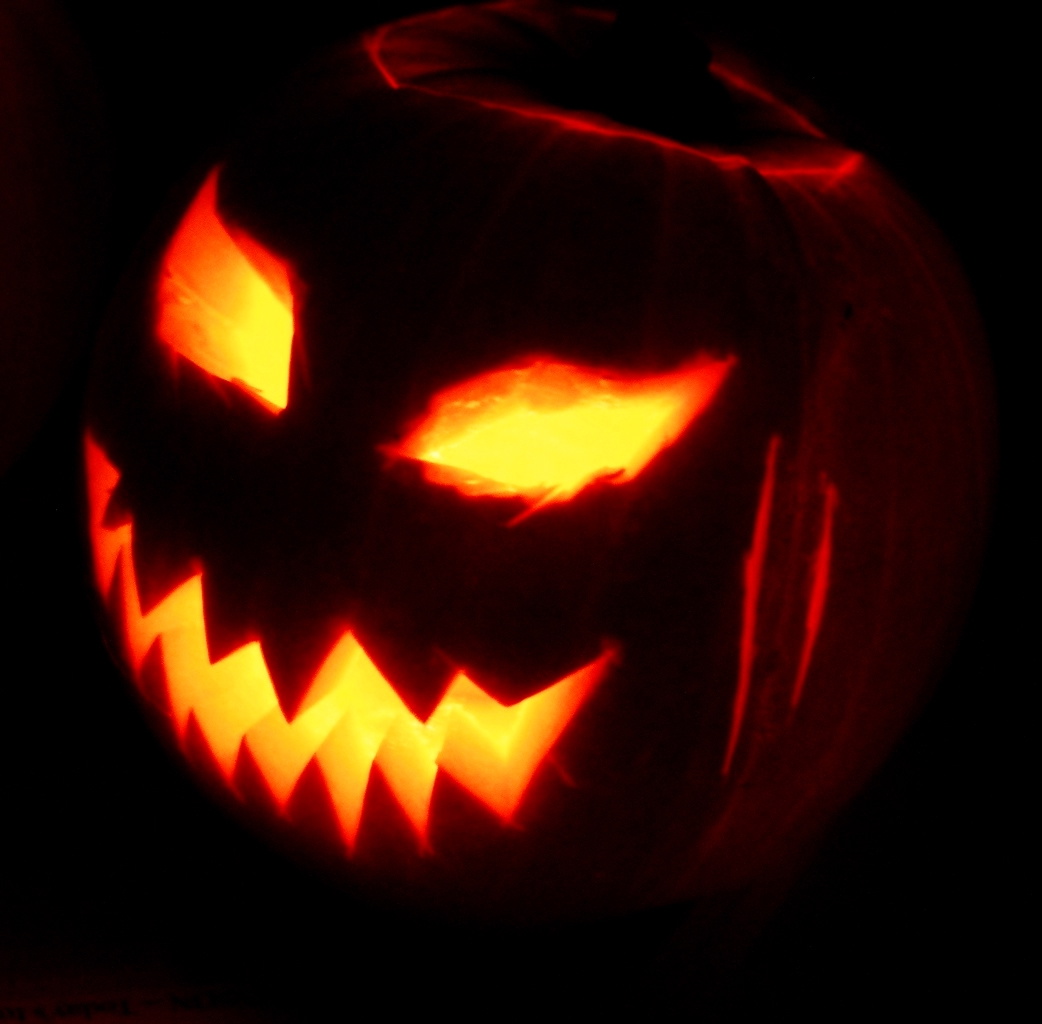 🇮🇪 Ireland and 5 moreHalloween
An annual observance on 31 October marking the eve of All Saints' Day, rooted in Christian tradition and Celtic heritageFestival · Sweets given and shared
🇮🇪 Ireland and 5 moreHalloween
An annual observance on 31 October marking the eve of All Saints' Day, rooted in Christian tradition and Celtic heritageFestival · Sweets given and shared
The same idea elsewhere
All of this kind 🇺🇸 United States and 4 moreFriday the 13th
A Western folk superstition regarding the unluckiness of a Friday falling on the 13th.Folklore
🇺🇸 United States and 4 moreFriday the 13th
A Western folk superstition regarding the unluckiness of a Friday falling on the 13th.Folklore
 🇺🇸 New York, United States and 1 moreFortune-telling
Reading cards, palms or tea leaves to tell a client what may lie aheadFolklore
🇺🇸 New York, United States and 1 moreFortune-telling
Reading cards, palms or tea leaves to tell a client what may lie aheadFolklore
 🇸🇳 Senegal and 1 moreKumpo
A palm-leaf figure of the Diola, danced at village festivals to urge good conductFolklore
🇦🇺 Sydney, AustraliaSongline
A navigational and spiritual path across Australia that links ancestral stories to the physical landscape.Folklore
🇸🇳 Senegal and 1 moreKumpo
A palm-leaf figure of the Diola, danced at village festivals to urge good conductFolklore
🇦🇺 Sydney, AustraliaSongline
A navigational and spiritual path across Australia that links ancestral stories to the physical landscape.Folklore