Seasons, harvest and the calendarEuropeChristian
Saint Knut's Day
In its own language: Tjugondag Knut
A Nordic holiday marking the twentieth and final day of Christmas each January
Observed each year on 13 January, Saint Knut's Day brings the Nordic Christmas season to a festive close across Sweden, Finland and Estonia. Families dismantle their decorated trees, share the sweets hanging from the branches, and take part in lively home visits.
When is Saint Knut's Day kept?
Saint Knut's Day is kept every year on 13 January.
Saint Knut's Day brings the Nordic Christmas season to an official close every year on 13 January. Known as the twentieth day of Christmas in Sweden, Finland and Estonia, it gives families a joyful reason to take down their evergreens, strip the sweets from the branches, and sing together before winter routines resume.
History and naming
The occasion honors the Danish nobleman Canute Lavard, who was murdered in 1131 during a dynastic feud. Following his canonisation, his remembrance initially fell on 7 January, right beside Epiphany. In the seventeenth century, church authorities shifted the commemoration to 13 January, cementing the custom of a twenty-day yuletide period across Swedish and Finnish lands. The day also shares ties with Saint Canute IV, the patron saint of Denmark, though modern Denmark does not observe the date in this manner.
Swedish tree plundering
In Sweden, the observance revolves around the family tree. Households host a gathering called julgransplundring, which means stripping or plundering the Christmas pine. Children sing and dance in circles around the greenery before carrying it outdoors. Every edible ornament, such as wrapped candies, gingerbread and cookies hanging from the boughs, is gathered up and eaten. While once an event for adults, the day is now mostly an exciting afternoon for youngsters.
The Finnish goat tradition
In parts of Finland, including Satakunta, Ostrobothnia and the Åland Islands, the day is called nuutinpäivä. Long ago, grown men roved between farmsteads dressed as the nuuttipukki, wearing inside-out fur coats, birch bark masks, horns and sauna whisk tails. These frightening figures demanded food and leftover alcohol, threatening mischief if turned away. In modern times, local children carry on the dress-up tradition in a cheerful, gentle way.
How Saint Knut's Day is kept
Households gather on 13 January to pack away their holiday decorations and dismantle the Christmas tree. Families and young children dance in rings around the evergreen, sing seasonal melodies, and devour the candies and cookies that hung from the branches. Once cleared, the tree is carried outside. In several Finnish regions, costumed visitors known as nuuttipukki travel between local houses to mark the conclusion of the winter festival.
When and where
The observance takes place annually on 13 January. It marks exactly twenty days following Christmas Day, serving as the formal boundary for the end of the holiday period.
Saint Knut's Day is celebrated throughout Sweden and Finland, and is also recognized in Estonia. In Finland, local goat masquerade traditions remain active across Satakunta, Ostrobothnia, Southwest Finland and the Åland Islands.
What Saint Knut's Day means
The festival marks the definitive goodbye to midwinter festivities. Stripping the tree and clearing holiday greenery symbolizes a return to everyday work and ordinary life, while sharing the remaining holiday treats ensures the winter season ends on a sweet note.
Questions people ask about Saint Knut's Day
When is Saint Knut's Day kept?
Saint Knut's Day is kept every year on 13 January.
What is Saint Knut's Day?
It is a Nordic holiday marking the twentieth day of Christmas, acting as the official close of the winter festive season in Sweden, Finland and Estonia.
How do Swedish households celebrate?
Swedish households hold a gathering known as a tree plundering party. Children dance around the evergreen, eat the cookies and candies hung upon the boughs, and carry the tree out of the house.
Who is the Nuuttipukki in Finnish tradition?
Nuuttipukki is a masked goat figure from Finnish folklore. Historically played by adults demanding drinks and food, the role is now adopted by children making friendly visits in costume.
See also
 JulA midwinter holiday of feast tables, doorstep gift givers, and candlelit mornings
 Christmas in FinlandA quiet midwinter festival of saunas, grave candles and table casseroles across Finland
 Christmas treeA decorated evergreen or artificial tree placed indoors to mark the Christmas season.
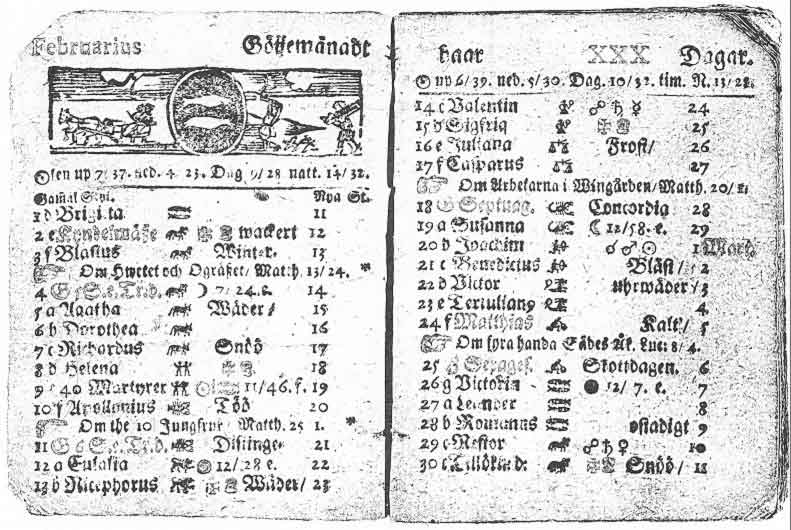 Name dayA calendar tradition where people celebrate the feast day of the saint after whom they are named.
Good reading and sources
- Saint Knut's Day on WikipediaEncyclopedia
- More photos on Wikimedia CommonsPhotos and video
- Wikidata recordOpen data
The facts on this page come from the Wikipedia article "Saint Knut's Day", written by its contributors and used under the CC BY-SA 4.0 licence, and from its Wikidata record (CC0). EveryParampara rewrote the text in its own words, with AI assistance, and compares every page with the article to make sure no passage is copied. It may be reused under the same CC BY-SA 4.0 licence with a link back.
It may contain mistakes. Traditions differ from one family, village and community to the next, and the people who keep them know them best. If something is wrong, tell us. Last refreshed 2026-10-07.
More from Sweden
All the traditions of Sweden
🇸🇪 SwedenJul
A midwinter holiday of feast tables, doorstep gift givers, and candlelit morningsSeasonal · Feasts and festival meals
 🇮🇪 Dublin, Ireland and 3 moreMay Day
A traditional European festival welcoming summer with greenery, dances and bonfiresSeasonal · Feasts and festival meals
🇮🇪 Dublin, Ireland and 3 moreMay Day
A traditional European festival welcoming summer with greenery, dances and bonfiresSeasonal · Feasts and festival meals
 🇬🇧 United Kingdom and 3 moreShielingÀirigh
Seasonal summer pasture living and traditional dairying in the Scottish hillsSeasonal
🇬🇧 United Kingdom and 3 moreShielingÀirigh
Seasonal summer pasture living and traditional dairying in the Scottish hillsSeasonal
 🇪🇸 Spain and 5 moreSt John's Eve
Bonfires, feasting and worship on the short night before John the Baptist's feastSpiritual
🇪🇸 Spain and 5 moreSt John's Eve
Bonfires, feasting and worship on the short night before John the Baptist's feastSpiritual
The same idea elsewhere
Midwinter and the longest night compared 🇲🇽 Mexico and 7 moreLas Posadas
A nine-night Christmas pageant remembering Mary and Joseph seeking shelterSpiritual · Feasts and festival meals
🇲🇽 Mexico and 7 moreLas Posadas
A nine-night Christmas pageant remembering Mary and Joseph seeking shelterSpiritual · Feasts and festival meals
 🇱🇧 Beirut, Lebanon and 7 moreEid il-Burbaraعيد البربارة
A winter feast of costumes, sweet boiled wheat, and sprouting seeds across the LevantFestival · Feasts and festival meals
🇱🇧 Beirut, Lebanon and 7 moreEid il-Burbaraعيد البربارة
A winter feast of costumes, sweet boiled wheat, and sprouting seeds across the LevantFestival · Feasts and festival meals
 🇨🇦 Canada and 2 moreMummering
A festive midwinter custom of disguised visits, music and playful guessing gamesFestival · Tea-time and snacking customs
🇨🇦 Canada and 2 moreMummering
A festive midwinter custom of disguised visits, music and playful guessing gamesFestival · Tea-time and snacking customs
 🇹🇷 Turkey and 5 moreEid al-Fitrعيد الفطر
The feast that ends Ramadan, opened with morning prayers, sweets and visits homeFestival · Feasts and festival meals
🇹🇷 Turkey and 5 moreEid al-Fitrعيد الفطر
The feast that ends Ramadan, opened with morning prayers, sweets and visits homeFestival · Feasts and festival meals