Music, dance and storytellingEuropeSecular and civicChristian
Scottish folk music
Traditional ballads, fiddle tunes and bagpipe melodies from Scotland and its diaspora

Scottish folk music is a tradition of songs, fiddle tunes, ballads and piping rooted in Scotland's history. Sustained through ceilidhs, folk clubs and community gatherings, the repertoire blends ancient oral storytelling, dance melodies and military pipe calls across Scotland and diaspora communities worldwide.
When is Scottish folk music kept?
Scottish folk music is kept on throughout the year at ceilidhs, festivals and social gatherings.
Scottish folk music is a living tradition of song, dance tunes, ballads and piping shaped over centuries in Scotland. Rooted in medieval poetry, clan piping and local fiddle playing, it survived church bans and modern social changes. Today, musicians keep the repertoire alive in community halls, ceilidhs and folk festivals, passing down historical ballads alongside energetic dance tunes across Scotland and diaspora communities in North America and beyond.
Instruments and early tunes
Highland bagpipes and the fiddle stand at the centre of Scotland's musical history. Bagpipes were noted on the battlefield at Pinkie Cleugh in 1547, gradually taking over duties once held by war trumpets. Hereditary piping families, such as the MacCrimmons and MacArthurs, developed the formal classical repertoire known as ceòl mór, composing marches, gatherings and laments. Meanwhile, fiddle playing spread widely throughout both the Highlands and the Lowlands. Figures like Pattie Birnie and later Niel Gow and his son Nathaniel shaped the dance repertoire, composing hundreds of strathspeys and reels. In later decades, accordions joined the dance bands, filling community halls alongside fiddlers and pipers.
Songs and printed collections
Early Scottish songs survived through oral memory and scattered publications after the Reformation, despite efforts by the Kirk to suppress secular revelry and penny weddings. Legendary ballads like Sir Patrick Spens and Tam Lin carried tales of historical clashes, sea voyages and supernatural encounters with fairies. By the eighteenth century, scholars and poets began transcribing these oral treasures into print. Works such as Allan Ramsay's The Tea Table Miscellany and the monumental Scots Musical Museum, compiled by James Johnson with Robert Burns, helped preserve hundreds of lyrics. Burns and Sir Walter Scott gathered, adapted and published older border airs, ensuring ancient verses remained part of everyday singing.
Revivals and new sounds
Interest in traditional tunes surged during the late nineteenth and twentieth centuries. Academic collectors such as Gavin Greig gathered thousands of regional songs, while virtuoso fiddler James Scott Skinner took Scottish strathspeys from rural gatherings to royal stages. Following the Second World War, folklorists including Hamish Henderson recorded living voices across Scotland, bringing singers like Jeannie Robertson and Flora MacNeil to national attention. The 1960s brought a boom in folk clubs, where traditional storytellers shared stages with acoustic innovators. New styles emerged rapidly, from the intricate fingerpicking of folk baroque to energetic Celtic rock bands that electrified traditional instruments for modern audiences.
Gatherings and the diaspora
Scottish musical traditions continue to thrive through social dances, seasonal gatherings and community ceilidhs. While village ceilidh houses gradually faded in the mid-twentieth century, organised ceilidhs and lively festivals stepped in to sustain traditional playing and group dancing. Emigration spread these sounds across the globe, establishing deep roots in countries such as Canada and the United States. Overseas communities formed pipe bands, acoustic ensembles and rock outfits like Great Big Sea and Enter the Haggis. By blending ancient melodies with modern instruments, diaspora musicians keep their Celtic cultural ties active, sharing Scottish reels, laments and ballads with listeners far from their ancestral homeland.
How Scottish folk music is kept
Musicians share Scottish folk music through informal pub sessions, structured ceilidh dances, folk clubs and seasonal music festivals. Pipers perform solo laments or lead marching tunes, while fiddlers, accordionists and guitarists join together to play fast-paced reels and jigs for dancers. Singers pass down narrative ballads and Scots verses, often inviting listeners to join in chorus songs. Ceilidhs remain central to the custom, drawing people of all ages together to dance traditional sets guided by a caller and accompanied by a live dance band.
When and where
Scottish folk music is played throughout the year at social gatherings, community ceilidhs, family weddings and regional folk festivals, rather than being tied to one specific calendar date.
The tradition is practiced throughout Scotland, in both the Highlands and Lowlands, as well as the Western Isles. It also has a strong presence across the Scottish diaspora, especially in North American communities in Canada and the United States.
What Scottish folk music means
For Scots and diaspora communities, traditional music serves as a vital bridge to shared history and identity. Ballads preserve oral memory of historical struggles and folklore, while bagpipe laments and gatherings evoke clan bonds and military heritage. Playing and dancing together reinforces community ties and cultural belonging across generations.

Questions people ask about Scottish folk music
When is Scottish folk music kept?
Scottish folk music is kept on throughout the year at ceilidhs, festivals and social gatherings.
What is Scottish folk music?
It is a traditional music genre originating in Scotland, featuring acoustic ballads, fiddle tunes, accordion dance music and bagpipe compositions. The tradition encompasses centuries of oral poetry, military laments, clan gatherings and social dance melodies.
Where is Scottish folk music performed?
It is performed across Scotland in community halls, pubs, folk clubs and outdoor festivals. Due to historic emigration, active traditional music scenes also flourish in diaspora communities, notably within Canada and the United States.
What instruments are most common in the tradition?
Highland bagpipes and the fiddle are the most historic instruments in the tradition. In modern times, musicians also play accordions, acoustic guitars, whistles and drums to accompany social dances and ballad singers.
How was traditional Scottish music preserved?
Songs and tunes were originally passed down orally through families and traveling singers. From the seventeenth century onward, poets, musicians and collectors transcribed ballads and airs into printed anthologies, which later sparked national revival movements.
See also
 TiniklingA Philippine folk dance where dancers step between clapping bamboo poles
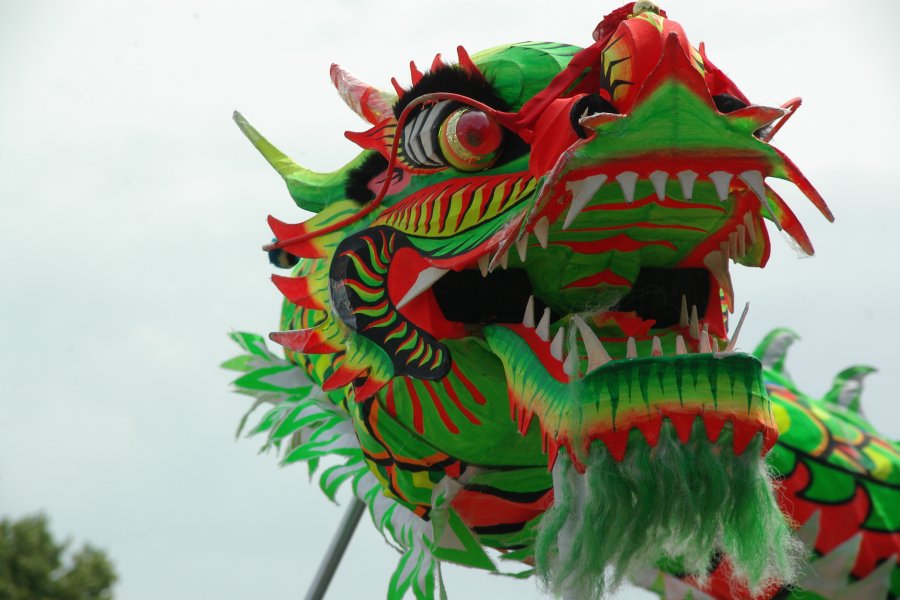 Dragon danceA long dragon puppet on poles, danced by a team at Chinese New Year and other festivals
 RaraA Haitian street music of bamboo trumpets and drums, played in the Easter season
Good reading and sources
The facts on this page come from the Wikipedia article "Scottish folk music", written by its contributors and used under the CC BY-SA 4.0 licence, and from its Wikidata record (CC0). EveryParampara rewrote the text in its own words, with AI assistance, and compares every page with the article to make sure no passage is copied. It may be reused under the same CC BY-SA 4.0 licence with a link back.
It may contain mistakes. Traditions differ from one family, village and community to the next, and the people who keep them know them best. If something is wrong, tell us. Last refreshed 2026-10-06.
More from the United Kingdom
All the traditions of the United Kingdom 🇹🇹 Trinidad and Tobago and 3 moreSteelpan
A tuned percussion tradition forged from industrial steel containers in TrinidadPerformance
🇹🇹 Trinidad and Tobago and 3 moreSteelpan
A tuned percussion tradition forged from industrial steel containers in TrinidadPerformance
 🇬🇧 United Kingdom and 5 moreChristmas carol
Festive songs and hymns sung during the Christmas season and door to doorPerformance
🇬🇧 United Kingdom and 5 moreChristmas carol
Festive songs and hymns sung during the Christmas season and door to doorPerformance
 🇬🇧 United Kingdom and 5 moreMorris dance
A rhythmic English folk dance performed in costume with bells, sticks and handkerchiefsPerformance
🇬🇧 Newcastle upon Tyne, United Kingdom and 5 moreRapper sword
A fast-paced five-person sword dance from the coalfields of North East England, kept alive by teams worldwide.Performance
🇬🇧 United Kingdom and 5 moreMorris dance
A rhythmic English folk dance performed in costume with bells, sticks and handkerchiefsPerformance
🇬🇧 Newcastle upon Tyne, United Kingdom and 5 moreRapper sword
A fast-paced five-person sword dance from the coalfields of North East England, kept alive by teams worldwide.Performance
The same idea elsewhere
All of this kind 🇹🇷 Kayseri, Turkey and 4 moreHalay
A traditional line and circle folk dance kept across Turkey, Azerbaijan, Armenia, Iran, and Syria.Performance
🇹🇷 Kayseri, Turkey and 4 moreHalay
A traditional line and circle folk dance kept across Turkey, Azerbaijan, Armenia, Iran, and Syria.Performance
 🇳🇿 Auckland, New ZealandPoi
A Māori performing art of swinging tethered weights in rhythmical patterns.Performance
🇳🇿 Auckland, New ZealandPoi
A Māori performing art of swinging tethered weights in rhythmical patterns.Performance
 🇵🇭 Philippines and 1 morePangalay
A traditional fingernail dance of the Tausūg and Bajau peoples in the Sulu Archipelago and Sabah.Performance
🇵🇭 Philippines and 1 morePangalay
A traditional fingernail dance of the Tausūg and Bajau peoples in the Sulu Archipelago and Sabah.Performance