Music, dance and storytellingEast Asia
Shan'ge
In its own language: 山歌
A family of Chinese folk ballads from the countryside, in many regional forms
Shan'ge is a Chinese folk song genre, close to a ballad, sung in rural provinces and named for the hills. It has many local forms, from the northwest to the south coast, with Tibetan, Mongolian and Miao singers keeping versions of their own.
Shan'ge is a genre of Chinese folk song, sung in the countryside and named for the hills. Its songs are close to ballads. Some tell of love; others belong to work. Different provinces keep different forms, each with its own local name, and Tibetan, Mongolian and Miao singers have versions too. Singers across China keep these songs today.
What it is
Shan'ge is not a single tune but a broad name for folk songs from China's rural provinces. Singers perform them in the open air, and the word itself says where they belong: the hills. In shape they stand close to the ballad, a song that tells a story. Among the pieces scholars have gathered are love songs, and the genre is also counted as work song and as Chinese traditional music. What ties these songs together is the countryside setting and the way they are sung, not one melody or one set of words.
Regional forms
The genre is made up of named local types. Hua'er belongs to the northwest, in Gansu, Ningxia and Qinghai, and in 2009 UNESCO added it to its intangible heritage list. Singers in Shaanxi and Shanxi know xintianyou and shanqu. Anhui has zhengjinghong and Jiangxi has xingguo. Hunan keeps the Hengyang form, and Guangdong the Hakka hill song, known as kejia shan'ge. Further forms are named for peoples rather than provinces: lalu among Tibetan singers, changdiao, also called aradun-urtu-yin-daguu, among Mongolian singers, and feige among Miao singers.
Songs and study
The songs are used for more than one purpose. Some follow the working day on the land. Others are love songs, and these drew the attention of two scholars, Yasushi Oki and Paolo Santangelo, whose 2011 collection gathers examples from Ming times. The book, published in Leiden by BRILL, shows that this kind of song was already alive in China centuries ago. Today singers keep whichever form belongs to their own region or people, whether hua'er in the northwest or a Tibetan, Mongolian or Miao type.
How Shan'ge is kept
Shan'ge is kept by singing, in country places, and each region does it in its own way. In Gansu, Ningxia and Qinghai the singing takes the hua'er form; in Shaanxi and Shanxi, xintianyou and shanqu; in Anhui, zhengjinghong; in Jiangxi, xingguo; around Hengyang in Hunan, its own local type; in Guangdong, the Hakka hill song. Tibetan, Mongolian and Miao singers keep further forms. The genre is classed among Chinese traditional music and work songs, and some of its songs are love songs.
When and where
The tradition lives in China, mostly in rural provinces. Hua'er belongs to Gansu, Ningxia and Qinghai in the northwest. Xintianyou and shanqu are heard in Shaanxi and Shanxi. Other named types come from Anhui, Jiangxi, Hunan and Guangdong. Apart from province-based forms, Tibetan, Mongolian and Miao singers have their own.
What Shan'ge means
The name keeps the landscape in view: these are songs of hills and open country, sung where people live and work in the countryside. Some carry love, which gives them their warmth; others belong to work. Local names matter as well. Hua'er, xintianyou, feige and the rest tell a singer where a song comes from and who keeps it. To the communities involved, the songs are part of ordinary country life and of a musical inheritance shared across many provinces.
Questions people ask about Shan'ge
What is shan'ge?
It is a kind of Chinese folk song, close to a ballad. The name means mountain song, and it covers songs sung in rural provinces, with many local types and styles.
Where is it sung?
Across China's countryside: hua'er in Gansu, Ningxia and Qinghai, other types in Shaanxi, Shanxi, Anhui, Jiangxi, Hunan and Guangdong, and separate forms among Tibetan, Mongolian and Miao singers.
When are the songs sung?
The sources do not tie them to a season or a festival. They belong to ordinary country life, sung in the provinces where each form is kept, rather than to one fixed date in the calendar.
How old is the tradition?
No founding date is given. A study published in 2011 by Yasushi Oki and Paolo Santangelo gathers love songs from Ming China, so songs of this kind were known in the country by that period.
Is any part of it officially recognised?
One part is. Hua'er, the northwestern form, was added to UNESCO's intangible cultural heritage list in 2009, which brought wider notice to this style of singing.
See also
 KizombaA close, slow couple dance from Angola, named after a Kimbundu word for party
 Chinese operaA sung, danced and acrobatic theatre from China, in over a hundred regional styles
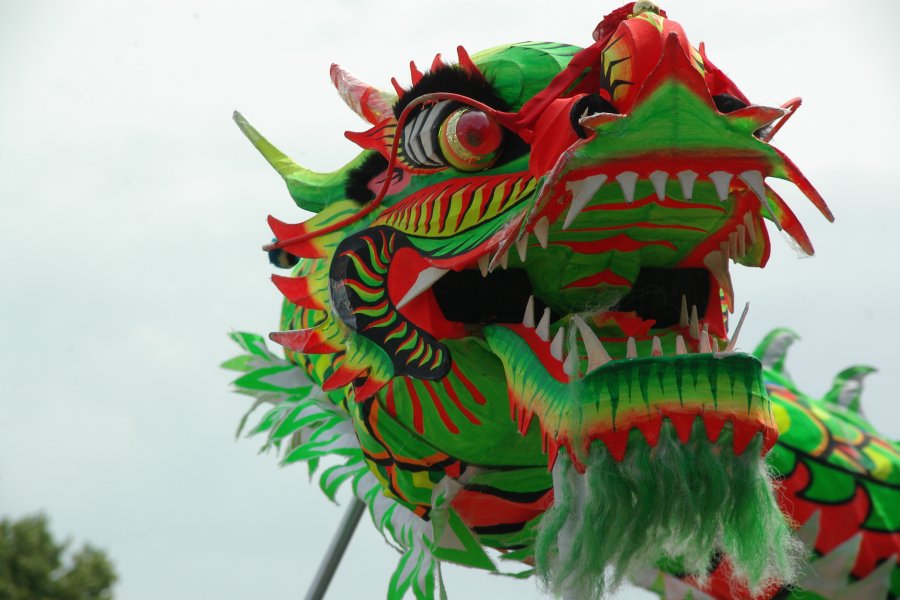 Dragon danceA long dragon puppet on poles, danced by a team at Chinese New Year and other festivals
 Taiwanese operaA Taiwanese theatrical art of Hokkien balladry, stylized staging, and expressive song.
Good reading and sources
- Shan'ge on WikipediaEncyclopedia
- More photos on Wikimedia CommonsPhotos and video
- Wikidata recordOpen data
The facts on this page come from the Wikipedia article "Shan'ge", written by its contributors and used under the CC BY-SA 4.0 licence, and from its Wikidata record (CC0). EveryParampara rewrote the text in its own words, with AI assistance, and compares every page with the article to make sure no passage is copied. It may be reused under the same CC BY-SA 4.0 licence with a link back.
It may contain mistakes. Traditions differ from one family, village and community to the next, and the people who keep them know them best. If something is wrong, tell us. Last refreshed 2026-10-11.
More from China
All the traditions of China
🇹🇼 Yilan, Taiwan and 4 moreTaiwanese opera歌仔戲
A Taiwanese theatrical art of Hokkien balladry, stylized staging, and expressive song.Performance
 🇨🇳 China and 5 moreLion dance舞獅
A dynamic ritual dance featuring costumed lions, drums and martial acrobaticsPerformance
🇨🇳 China and 5 moreLion dance舞獅
A dynamic ritual dance featuring costumed lions, drums and martial acrobaticsPerformance
 🇨🇳 Quanzhou, China and 3 moreGlove puppetry布袋戲
A traditional theatre of cloth-bodied puppets with carved wooden heads and live musicPerformance
🇨🇳 Quanzhou, China and 3 moreGlove puppetry布袋戲
A traditional theatre of cloth-bodied puppets with carved wooden heads and live musicPerformance
 🇨🇳 China and 5 moreShadow play
A storytelling art using flat puppets and light to cast moving silhouettes on a screen.Performance
🇨🇳 China and 5 moreShadow play
A storytelling art using flat puppets and light to cast moving silhouettes on a screen.Performance
The same idea elsewhere
All of this kind 🇳🇿 Auckland, New ZealandPoi
A Māori performing art of swinging tethered weights in rhythmical patterns.Performance
🇳🇿 Auckland, New ZealandPoi
A Māori performing art of swinging tethered weights in rhythmical patterns.Performance
 🇵🇭 Philippines and 1 morePangalay
A traditional fingernail dance of the Tausūg and Bajau peoples in the Sulu Archipelago and Sabah.Performance
🇵🇭 Philippines and 1 morePangalay
A traditional fingernail dance of the Tausūg and Bajau peoples in the Sulu Archipelago and Sabah.Performance
 🇺🇦 Kyiv, UkraineBanduraБандура
A Ukrainian plucked string instrument played to accompany epic songs and folk balladsPerformance
🇺🇦 Kyiv, UkraineBanduraБандура
A Ukrainian plucked string instrument played to accompany epic songs and folk balladsPerformance
 🇵🇱 Kraków, PolandSt. Mary's Trumpet CallHejnał mariacki
A five-note bugle call played hourly from the tower of St. Mary's Church in Kraków, Poland.Performance
🇵🇱 Kraków, PolandSt. Mary's Trumpet CallHejnał mariacki
A five-note bugle call played hourly from the tower of St. Mary's Church in Kraków, Poland.Performance