Music, dance and storytellingSouth Asia
Shehnai
A traditional reed instrument played at weddings and temple festivals across India

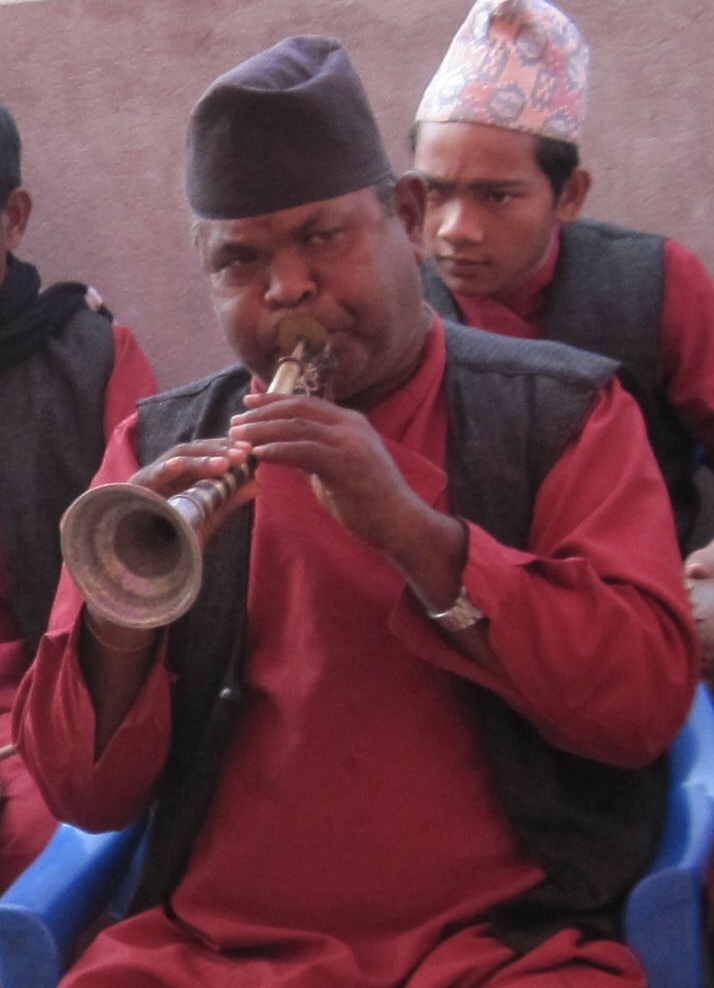
The shehnai is a South Asian reed wind instrument crafted from wood or bamboo with a widening tube and a flared metal bell. Musicians across India play its expressive melodies to bring sacred sound to temple festivities and joyous wedding celebrations.
When is Shehnai kept?
Shehnai is kept during weddings and temple celebrations.
The shehnai is a traditional woodwind instrument closely associated with celebrations, weddings and temple rituals in South Asia. Built with a wooden or bamboo body and a flared bell, it uses a set of reeds to produce a warm, resonant sound spanning two octaves. Musicians rely on subtle finger work and controlled breath to guide its expressive notes, which have long marked auspicious occasions and classical performances.
Craft and sound
A shehnai is a slender, tubular pipe that gradually widens towards its base. Crafted mostly from wood or bamboo, the body features six to nine finger holes and terminates in a flared metal or wooden bell. The sound is produced through a set of quadruple reeds at the mouthpiece. Mastering the instrument demands intricate fingering patterns and precise embouchure control. With an acoustic range covering two octaves, from low A to high A, the instrument produces clear, carrying tones that suit open-air gatherings as well as classical concert stages.
Origins and court history
Historians trace the instrument to ancient India as an evolution of the pungi, while its classical stature flourished under the Mughal Empire. One well-known story recounts that Emperor Aurangzeb outlawed the harsh-sounding pungi. In response, a royal barber from a musical household widened the pipe, added seven holes, and created a much gentler melody. Played in the monarch's chambers, it earned the name shehnai, joining the Persian words for king and flute. Another linguistic account connects the name to sur-nal, an ancient term meaning melody pipe.
Weddings and coastal temples
Across India, the music of the shehnai remains central to religious festivals and traditional wedding ceremonies. In coastal Karnataka and the Konkani territory of Goa, local lineages of musicians known as Vajantri have maintained indigenous styles of playing for generations. Historically, temple authorities granted these hereditary performers plots of land in exchange for providing sacred music during daily rites and festive days. Master performers such as Bismillah Khan and Anant Lal later helped carry this ceremonial wind music to wider global audiences.
How Shehnai is kept
Performers play the shehnai during wedding rites, temple gatherings and festive processions. The musician wets the reed assembly, places it between the lips, and blows steadily while adjusting mouth pressure and fingering over the pipe's six to nine holes. Melodic phrases are woven to accompany key ceremonial milestones, such as welcoming guests or solemnising marital rites. In coastal temples, Vajantri musicians carry out dedicated musical duties during regular worship and annual festivals.
When and where
The shehnai is played throughout the year whenever weddings, auspicious life events, and religious celebrations take place. Its performance is tied directly to festive dates on community calendars and the timing of ceremonial rites rather than a single fixed month.
The instrument is played across India, with deep roots in northern classical music and along the western shoreline. Distinct indigenous lineages thrive in Goa and coastal Karnataka, while related traditions exist in Indonesia and Malaysia.
What Shehnai means
Associated with royal courts and sacred spaces, the clear call of the shehnai signals auspiciousness, celebration and blessing. Its distinct timbre marks the transition between ordinary time and ceremonial celebration, creating an atmosphere of dignity and joy during weddings and temple rites.
Questions people ask about Shehnai
When is Shehnai kept?
Shehnai is kept during weddings and temple celebrations.
What is a shehnai?
The shehnai is a South Asian woodwind instrument with a double reed, a tubular wooden or bamboo body, and a flared bell. It is famous for its carrying melodic sound.
How did the shehnai get its name?
Popular lore combines the Persian words shah, meaning king, and nai, meaning flute, referencing an improved pipe played for the emperor. Another linguistic theory traces the name to sur-nal, meaning melody pipe.
How is the shehnai constructed?
The instrument is made of wood or bamboo with six to nine finger holes, a quadruple reed mouthpiece, and a flared bell made of metal or wood at the end.
See also
 GarbaA Gujarati circle dance performed around a sacred flame during the festival of Navratri
 Baul traditionA Bengali devotional minstrel path uniting mystic poetry, music and dance
 PhulkariGeometric and floral threadwork embroidered by Punjabi women on handwoven cotton.
 Persian gardenAn ancient tradition of creating walled, geometric sanctuaries of shade and flowing water
Good reading and sources
- Shehnai on WikipediaEncyclopedia
- More photos on Wikimedia CommonsPhotos and video
- Wikidata recordOpen data
The facts on this page come from the Wikipedia article "Shehnai", written by its contributors and used under the CC BY-SA 4.0 licence, and from its Wikidata record (CC0). EveryParampara rewrote the text in its own words, with AI assistance, and compares every page with the article to make sure no passage is copied. It may be reused under the same CC BY-SA 4.0 licence with a link back.
It may contain mistakes. Traditions differ from one family, village and community to the next, and the people who keep them know them best. If something is wrong, tell us. Last refreshed 2026-10-04.
More from India
All the traditions of India
🇮🇳 Ahmedabad, India and 1 moreGarbaगर्भ
A Gujarati circle dance performed around a sacred flame during the festival of NavratriPerformance
🇧🇩 Dhaka, Bangladesh and 1 moreBaul traditionবাউল
A Bengali devotional minstrel path uniting mystic poetry, music and dancePerformance
 🇮🇳 Jammu, IndiaBhangra
A Punjabi harvest dance, first kept by farmers and now performed worldwidePerformance
🇮🇳 Jammu, IndiaBhangra
A Punjabi harvest dance, first kept by farmers and now performed worldwidePerformance
 🇮🇳 India and 5 moreGhazalغَزَل
A short rhyming poem of love and parting, recited and sung from Arabia to South AsiaPerformance
🇮🇳 India and 5 moreGhazalغَزَل
A short rhyming poem of love and parting, recited and sung from Arabia to South AsiaPerformance
The same idea elsewhere
Weddings compared 🇮🇩 Indonesia and 2 moreKenduri
A communal prayer meal and gathering shared across Indonesia, Malaysia and BruneiSpiritual · Feasts and festival meals
🇮🇩 Indonesia and 2 moreKenduri
A communal prayer meal and gathering shared across Indonesia, Malaysia and BruneiSpiritual · Feasts and festival meals
 🇹🇱 Timor-LesteUma Lulik
Sacred ancestral clan houses and ritual shrines in East TimorSpiritual
🇹🇱 Timor-LesteUma Lulik
Sacred ancestral clan houses and ritual shrines in East TimorSpiritual
 🇼🇸 Samoa and 1 moreʻIe tōga
Precious woven mats exchanged in Samoan ceremonies to honor family ties and chiefly status.Dress
🇺🇬 UgandaKwanjula
A formal marriage introduction ritual of the Baganda people in Uganda, where families meet to exchange gifts and seek blRite of passage
🇼🇸 Samoa and 1 moreʻIe tōga
Precious woven mats exchanged in Samoan ceremonies to honor family ties and chiefly status.Dress
🇺🇬 UgandaKwanjula
A formal marriage introduction ritual of the Baganda people in Uganda, where families meet to exchange gifts and seek blRite of passage