Royal, civic and national ceremonyMiddle EastPagan and ancient
Susa weddings
A mass royal wedding held in 324 BCE to unite Macedonian and Persian nobility

In 324 BCE, Alexander the Great organized a mass wedding in Susa, joining eighty Macedonian officers with noble Persian brides. Celebrated according to Persian customs, the grand ceremony sought to unite two imperial realms into a single shared dynasty.
The Susa weddings were a grand collective marriage ceremony held in 324 BCE by Alexander the Great in the ancient city of Susa. Following his conquest of the Achaemenid Empire, the Macedonian ruler arranged eighty unions between his top military companions and noble Persian women. Through this shared ritual, Alexander sought to merge Greek and Persian traditions, solidify his legitimacy as royal successor, and bond two powerful civilizations together.
Origins and imperial purpose
After conquering the Achaemenid realm, Alexander sought ways to integrate the existing Persian elite into his governance. By arranging a vast collective wedding, he intended to merge the leadership of both cultures. Taking the daughters of previous Persian monarchs as his own brides allowed him to claim legitimate royal succession. The king also aimed to ensure that future heirs would carry both Greek and Persian heritage. Additionally, Alexander arranged the marriage of his close companion Hephaestion to his new wife's sister, turning their personal bond into formal royal kinship.
The wedding ceremony
The marriages took place in Susa and adhered strictly to Persian customs. Seats were arranged for the eighty grooms in strict order of military and social rank. Following celebratory toasts, the brides entered the chamber and sat beside their appointed partners. Each groom greeted his bride by holding her hand and offering a kiss. Alexander wed first before his officers completed the same ceremonial rites. After the rituals ended, each groom accompanied his wife to their new residence, and Alexander granted a dowry to every couple.
Notable unions and soldiers
Alexander wed Stateira, the eldest daughter of Darius III, alongside Parysatis, the youngest daughter of Artaxerxes III. His general Hephaestion wed Drypetis, another daughter of Darius, while Seleucus took Apama, daughter of the Sogdian leader Spitamenes. Ptolemy wed Artakama, daughter of Artabazus. Beyond the eighty prominent officers, more than ten thousand ordinary Macedonian soldiers had already wed Asian women throughout the campaign. Alexander had a registry compiled of these existing couples and distributed celebratory gifts to all of them.
Historical legacy and aftermath
Earlier modern historians often asserted that Macedonian leaders resented the arranged marriages and quickly abandoned their Persian wives. Later scholarship disputes this narrative, noting that ancient records show no evidence of widespread resistance. Several prominent commanders, including Seleucus, maintained their marriages and used their newly forged family alliances to bolster their political standing in Asia. While some couples separated peacefully due to shifting political alignments, other partnerships endured, leaving a lasting mark on the governance of the successor kingdoms.
How Susa weddings is kept
The ritual began with bridegrooms taking designated seats arranged by rank. After ceremonial toasts were offered, the Persian brides entered the hall and sat next to their respective grooms. Each groom took his bride by the hand and kissed her, with Alexander performing the ceremony first to set an example for his officers. The grooms then escorted their wives to their homes, with Alexander providing dowries for every couple and sending gifts to thousands of soldiers.
When and where
The event occurred in 324 BCE, shortly after Alexander the Great completed his conquest of the Achaemenid Persian Empire and returned from his eastern campaigns.
The ceremony took place in the ancient city of Susa, a major royal capital of the Persian Empire located in what is now south-western Iran.
What Susa weddings means
The mass ceremony symbolised the deliberate fusion of Greek and Persian customs under Macedonian rule. Alexander used the ritual to present himself as the rightful heir to Persian kingship while creating a blended ruling class. Future children born of these unions were intended to inherit both civilizations, creating a bridge between conquerors and conquered subjects.
Questions people ask about Susa weddings
What were the Susa weddings?
They were a historic mass wedding organized by Alexander the Great in 324 BCE. Eighty Macedonian military commanders married noble Persian women in an official Persian ceremony to combine the ruling elites of both cultures.
Where and when did the event take place?
The celebration took place in 324 BCE in Susa, an ancient administrative capital of the Persian Empire located in modern Iran, following Alexander's successful conquest of the region.
How was the wedding ritual conducted?
The ceremony followed Persian traditions. Grooms sat according to rank, offered toasts, and welcomed the brides into the room. Each groom held his bride's hand and kissed her before leading her home with a royal dowry.
Who were some of the couples involved?
Alexander married Stateira and Parysatis, daughters of former Persian kings. His general Hephaestion married Drypetis, Seleucus married the Sogdian noblewoman Apama, and Ptolemy married Artakama.
See also
 Islamic marriageThe sacred contract, agreement and wedding celebration forming an Islamic marriage
 Persian gardenAn ancient tradition of creating walled, geometric sanctuaries of shade and flowing water
 MatchmakingThe custom of using a trusted intermediary to introduce partners for marriage
 MehreganAn Iranian autumn festival honoring Mithra, friendship, and the harvest
Good reading and sources
- Branko van OppenWorld History Encyclopedia, Article
- Branko van OppenWorld History Encyclopedia, Article
The facts on this page come from the Wikipedia article "Susa weddings", written by its contributors and used under the CC BY-SA 4.0 licence, and from its Wikidata record (CC0). EveryParampara rewrote the text in its own words, with AI assistance, and compares every page with the article to make sure no passage is copied. It may be reused under the same CC BY-SA 4.0 licence with a link back.
It may contain mistakes. Traditions differ from one family, village and community to the next, and the people who keep them know them best. If something is wrong, tell us. Last refreshed 2026-10-06.
More from Iran
All the traditions of Iran
🇺🇸 United States and 1 moreIslamic marriageنِكَاح
The sacred contract, agreement and wedding celebration forming an Islamic marriageRite of passage · Feasts and festival meals
🇮🇷 Isfahan, Iran and 3 morePersian gardenباغ ایرانی
An ancient tradition of creating walled, geometric sanctuaries of shade and flowing waterCraft
🇮🇷 Isfahan, Iran and 4 moreMehreganمهرگان
An Iranian autumn festival honoring Mithra, friendship, and the harvestSeasonal
 🇮🇷 Iran and 3 moreChovganچوگان
An equestrian team sport played with mallets and horses across Iran and AzerbaijanGame
🇮🇷 Iran and 3 moreChovganچوگان
An equestrian team sport played with mallets and horses across Iran and AzerbaijanGame
The same idea elsewhere
Weddings compared 🇮🇩 Bali, Indonesia and 5 moreIkat
A resist-dyeing craft from Southeast Asia, where yarns are tied and dyed before weavingCraft
🇮🇩 Bali, Indonesia and 5 moreIkat
A resist-dyeing craft from Southeast Asia, where yarns are tied and dyed before weavingCraft
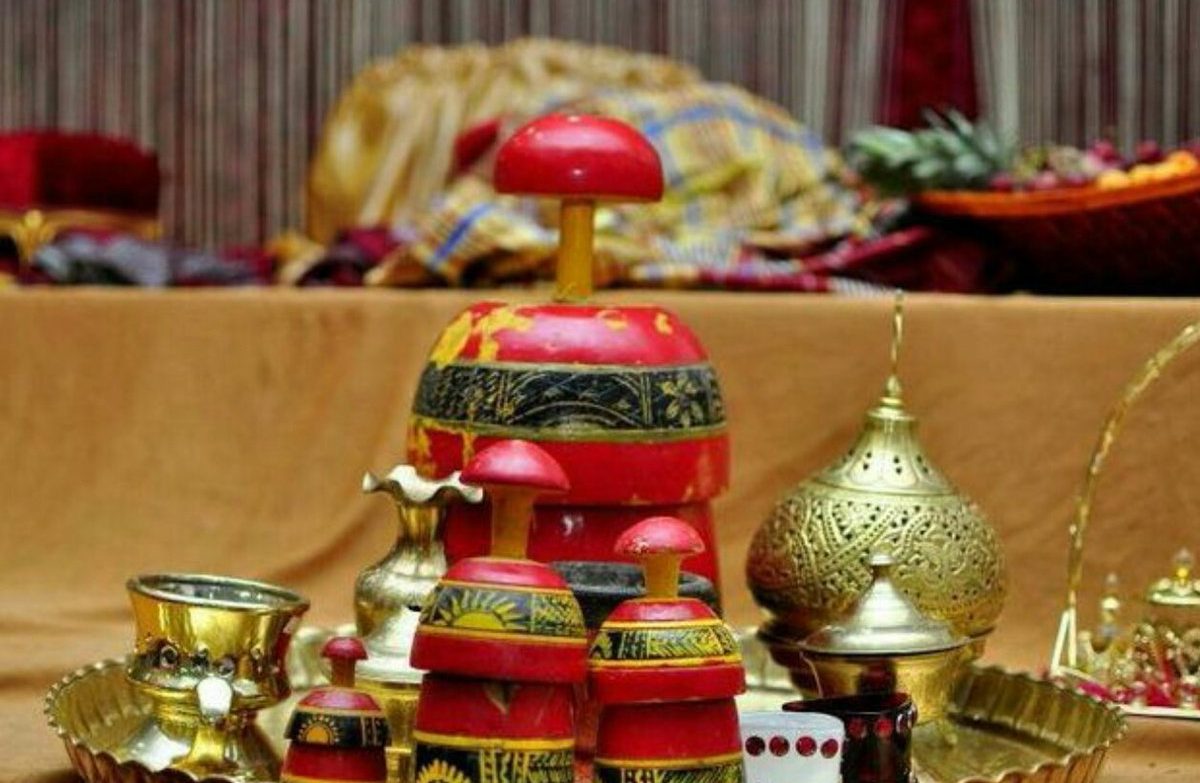 🇸🇩 SudanJirtigالجَرْتِقْ
A Sudanese wedding ritual of regal adornment, protection, and blessings of fertilityRite of passage
🇸🇩 SudanJirtigالجَرْتِقْ
A Sudanese wedding ritual of regal adornment, protection, and blessings of fertilityRite of passage
 🇹🇴 Tonga and 1 moreTaʻovala
A waist mat worn in Tonga for weddings, funerals and formal daysDress
🇹🇴 Tonga and 1 moreTaʻovala
A waist mat worn in Tonga for weddings, funerals and formal daysDress
 🇮🇳 Lucknow, India and 3 moreSherwani
A long buttoned coat for men, worn at weddings and state occasions in South AsiaDress
🇮🇳 Lucknow, India and 3 moreSherwani
A long buttoned coat for men, worn at weddings and state occasions in South AsiaDress