Life-cycle ritesSouth AsiaHindu
Svayamvara
In its own language: स्वयंवर
An ancient Indian noble assembly where a bride chose her husband among suitors

Svayamvara is an ancient Indian matrimonial custom in which a noble bride selects a husband from an assembly of suitors, either by personal preference or through a martial contest. Known from Sanskrit epics like the Mahabharata and Ramayana, the ceremony culminated in the bride garlanding the winner.
When is Svayamvara kept?
Svayamvara is kept on upon a noble maiden reaching marriageable age.
Svayamvara is a matrimonial tradition from ancient India where a royal maiden selected her husband from an assembly of gathered suitors. Found prominently in epic literature such as the Mahabharata and Ramayana, the custom allowed a bride to pick her partner directly or award her hand to the victor of a demanding martial contest. It served both as a personal choice and a diplomatic event among warrior dynasties.
Origins and history
Scholars trace the custom back to early Vedic times, noting possible parallels with other Indo-European traditions. In classical Indian thought, the practice shares links with the Gandharva style of marriage, which rested on mutual attraction rather than parental arrangement. While the legal texts of the Dharmashastras do not formalize it as a standard marriage type, legal codes such as the Manusmriti allowed a woman to select a partner if her family failed to arrange a match in time. Over centuries, the custom developed into a prominent theme across classical Sanskrit poems and medieval chronicles.
Forms of selection
Literary traditions describe distinct forms of the gathering. In an open choice known as Iccha Svayamvara or Saundaryashulka, the bride surveyed the assembled suitors and made her selection freely with family consent. Another prominent form, termed Viryashulka or Shauryashulka, turned the assembly into a contest of strength, courage, or martial prowess, such as archery feats. In these competitive gatherings, the bride's hand was awarded to the hero who accomplished the stated challenge, relieving royal fathers of delicate diplomatic rivalries while testing the suitor's qualifications before the court.
The ceremony and rites
A typical assembly followed a formal order after the princess reached maidenhood. Her father invited noble suitors from neighbouring kingdoms and hosted them in a grand court setting. Heralds announced each suitor, proclaiming their lineage and royal accomplishments. The bride was formally presented to the gathering, adorned in fine attire. If a martial trial was set, suitors competed in public tests of valour. Finally, the maiden placed a ceremonial garland over the neck of her chosen suitor to confirm her decision, which was later sealed through formal wedding rites.
How Svayamvara is kept
The assembly begins when a king convenes eligible noble suitors at his court. Royal heralds announce each candidate's lineage and achievements before the adorned bride is presented. If the event includes a martial trial, suitors compete in archery or combat challenges. Once the contest finishes or the candidates are reviewed, the bride walks through the hall and places a flower garland over the chosen suitor's shoulders to signal her decision. Traditional wedding ceremonies then follow to complete the marriage.
When and where
The ceremony was arranged after a princess reached maidenhood and was considered ready for marriage. It was held on an auspicious date chosen by her father's royal court.
The tradition belonged to ancient and classical India, taking place within royal palaces, open arenas, and assembly halls across Kshatriya kingdoms where allied and rival noble houses gathered.
What Svayamvara means
The ritual symbolised both personal agency for the noblewoman and the martial honour of the warrior caste. By letting a princess choose or by establishing a skill contest, royal families resolved intense political rivalries over matrimonial alliances without insulting unselected rulers. The garlanding act publicly affirmed consent, valour, and the establishment of diplomatic bonds between kingdoms.


Questions people ask about Svayamvara
When is Svayamvara kept?
Svayamvara is kept on upon a noble maiden reaching marriageable age.
What does the word Svayamvara mean?
The name comes from the Sanskrit words svayam, meaning self, and vara, meaning choice or desire. Together, it translates to self-choice, describing the bride's role in choosing her groom.
What is the difference between an open choice and a contest?
In an open svayamvara, the bride selected any assembled suitor she preferred. In a contest-based assembly, suitors had to perform a specific feat of martial skill or bravery, such as archery, to win her hand.
Who was eligible to take part in a Svayamvara?
The tradition was generally reserved for the Kshatriya warrior and royal classes, where princesses chose from an assembly of invited princes and noble suitors.
How did the bride confirm her final choice?
The bride walked through the assembly and placed a ceremonial garland around the neck of her chosen suitor, publicising her consent before subsequent marriage rites took place.
See also
 SaptapadiThe seven-step ritual that finalizes a Hindu marriage, observed across India.
 MatchmakingThe custom of using a trusted intermediary to introduce partners for marriage
 Hindu weddingA traditional Hindu marriage ceremony involving sacred rituals and vows witnessed by fire.
 Gaye holudA Bengali pre-wedding ceremony where turmeric paste is applied to the bride and groom
Good reading and sources
- Svayamvara on WikipediaEncyclopedia
- More photos on Wikimedia CommonsPhotos and video
- Wikidata recordOpen data
The facts on this page come from the Wikipedia article "Svayamvara", written by its contributors and used under the CC BY-SA 4.0 licence, and from its Wikidata record (CC0). EveryParampara rewrote the text in its own words, with AI assistance, and compares every page with the article to make sure no passage is copied. It may be reused under the same CC BY-SA 4.0 licence with a link back.
It may contain mistakes. Traditions differ from one family, village and community to the next, and the people who keep them know them best. If something is wrong, tell us. Last refreshed 2026-10-06.
More from India
All the traditions of India
🇮🇳 IndiaSaptapadiसप्तपदी (Sanskrit), सात फेरे (Marathi)
The seven-step ritual that finalizes a Hindu marriage, observed across India.Rite of passage
🇮🇳 India and 2 moreHindu weddingVivaha (विवाह)
A traditional Hindu marriage ceremony involving sacred rituals and vows witnessed by fire.Rite of passage
🇮🇳 IndiaGaye holudগায়ে হলুদ
A Bengali pre-wedding ceremony where turmeric paste is applied to the bride and groomRite of passage
🇮🇳 IndiaZoroastrian wedding
A multi-day Zoroastrian ceremony uniting two people through prayers, rituals and a shared meal.Rite of passage · Dinner
The same idea elsewhere
Weddings compared 🇮🇩 Bali, Indonesia and 5 moreIkat
A resist-dyeing craft from Southeast Asia, where yarns are tied and dyed before weavingCraft
🇮🇩 Bali, Indonesia and 5 moreIkat
A resist-dyeing craft from Southeast Asia, where yarns are tied and dyed before weavingCraft
 🇮🇷 Isfahan, Iran and 3 morePersian gardenباغ ایرانی
An ancient tradition of creating walled, geometric sanctuaries of shade and flowing waterCraft
🇮🇷 Isfahan, Iran and 3 morePersian gardenباغ ایرانی
An ancient tradition of creating walled, geometric sanctuaries of shade and flowing waterCraft
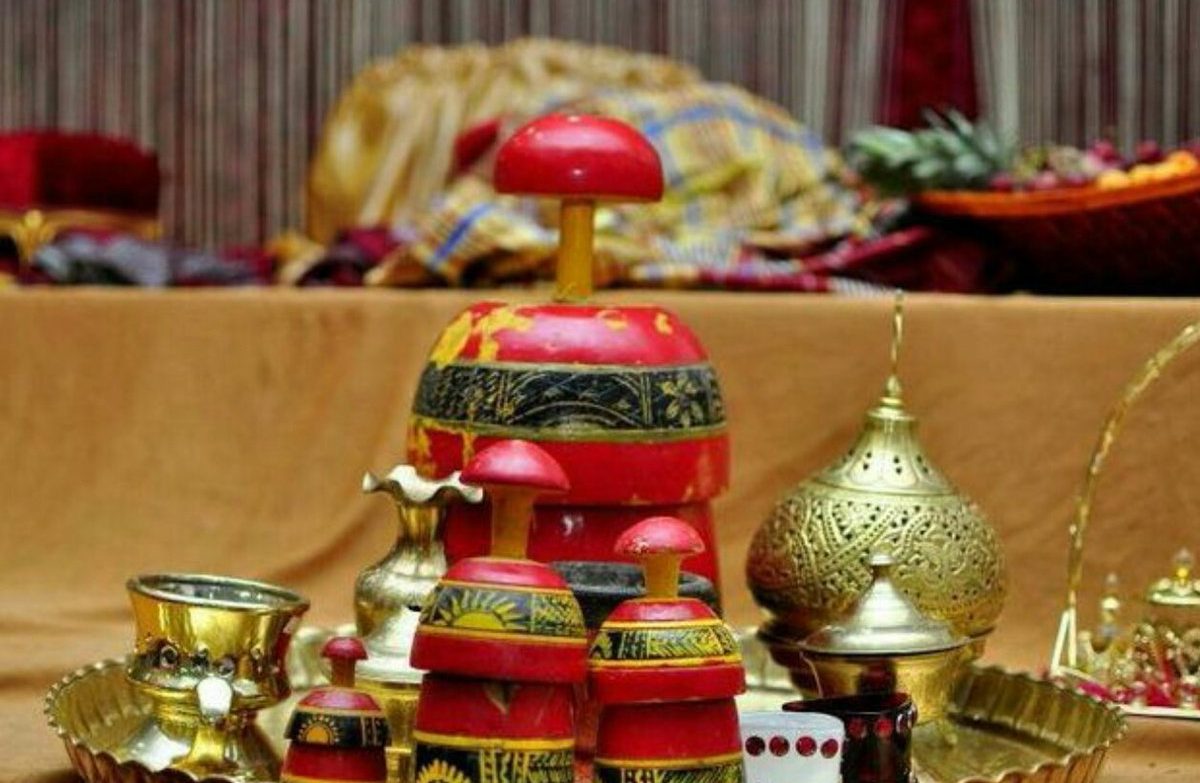 🇸🇩 SudanJirtigالجَرْتِقْ
A Sudanese wedding ritual of regal adornment, protection, and blessings of fertilityRite of passage
🇸🇩 SudanJirtigالجَرْتِقْ
A Sudanese wedding ritual of regal adornment, protection, and blessings of fertilityRite of passage
 🇮🇷 Iran and 4 moreZardoziزردوزی (zarduzi)
Heavy gold and silver embroidery on silk or velvet, worked in Iran, India and beyondCraft
🇮🇷 Iran and 4 moreZardoziزردوزی (zarduzi)
Heavy gold and silver embroidery on silk or velvet, worked in Iran, India and beyondCraft