The Broad
A Cotswold Christmas figure: a bull's head on a pole, carried by a hidden performer
The Broad was a Christmas folk custom of the Cotswolds in south-central England, kept from the 1830s until the First World War. A performer carried a bull's head fixed to a pole, usually hidden under sackcloth, as part of a wassailing team that visited homes in villages across Gloucestershire and Wiltshire.
When is The Broad marked?
The Broad is kept as part of Christmas, which is on Friday, 25 December 2026.
The Broad was a midwinter folk custom of the English Cotswolds. A person carried a bull's head fixed to a pole, usually hidden beneath sackcloth, as one of a wassailing team that went between houses. It was a local form of a wider British habit of hooded animal disguise. Records run from the 1830s to the First World War, and the custom has not continued.
A hooded animal
Folklorists count the Broad as one local version of what they call the hooded animal tradition. Figures of that kind turn up in different forms in many parts of the British Isles, each with its own animal and its own way of being carried. In the Cotswolds the animal was a bull, and the carrier vanished under cloth so that only the head showed. The custom belonged with midwinter visiting rather than with any church ceremony, and the people who took part did so in their everyday clothes.
Origins and history
The oldest mention of the Broad comes from Kingscote, around 1835, and from west Gloucestershire at some point between 1830 and 1840. The historian Ronald Hutton has suggested that the figure might have grown out of older wassailing customs, though the surviving records do not settle the question. Reports thin out after the First World War began in 1914. Hutton observed that the custom neither continued nor was brought back later.
Collecting the records
Much of what is known about the Broad was gathered by R. P. Chidlaw. He passed his material to the folklorist E. C. Cawte, who wrote about the figure in a 1978 book on animal disguises used in British ritual. Christina Hole, another folklorist, also wrote of it and called it the Christmas Bull. Because the custom had already ended, later writers have depended on these collected accounts and on the scattered village reports they preserve.
Dress and objects
The people who went around with the Broad were not dressed up. Accounts put them in ordinary clothing, with the figure itself doing the work of disguise. Some carried a wooden wassail bowl trimmed with ribbons and with sprigs cut from evergreen plants. The bull's head could have horns and glass eyes, and now and then ribbons and rosettes. In two Gloucestershire places a scooped-out turnip or swede held a candle inside instead.
Related customs
Two further customs are listed as similar rites. Mari Lwyd belongs to South Wales and Hoodening to Kent. Neither is described in the sources for the Broad, but both are placed beside it as relatives within the wider group of hooded animal traditions found around the British Isles. The comparison is useful because it shows the Cotswold bull was not a one-off oddity but one local answer to a habit found in many places.
How The Broad is kept
A team of wassailers went from house to house at Christmas. One of them carried the Broad: a bull's head on a pole, with the carrier hidden beneath sackcloth or a sheet. The others wore their ordinary clothes. Sometimes a wooden wassail bowl went with them, trimmed with ribbons and sprigs of evergreen. In a few places the team also performed a hero-combat play. Sometimes the Broad appeared on its own, without the rest of the group.
When and where
The Broad belonged to Christmas, and Christina Hole called it the Christmas Bull. Its earliest records come from about 1835 at Kingscote, and from west Gloucestershire between 1830 and 1840. After the First World War began in 1914, reports of it grew rare and then stopped.
It was kept in a triangle of country bounded by Stroud, Cricklade and Chipping Sodbury. That area took in the southern Cotswolds at their eastern edge, and a stretch of land just beyond them. Thirteen villages appear in the records. Ten of these were in Gloucestershire, and the other three in Wiltshire.
What The Broad means
Folklorists place the Broad inside a family of hooded animal figures found in different forms around the British Isles, so it belonged to a shared midwinter practice rather than standing alone. Ronald Hutton proposed that it may have grown out of older wassailing ways. Beyond that, the records say little about what the people who carried it understood it to mean.
Days The Broad is marked
Questions people ask about The Broad
When is The Broad marked?
The Broad is kept as part of Christmas, which is on Friday, 25 December 2026.
What exactly was the Broad?
It was a bull's head carried on a pole. In some places it was made from the stuffed skin, in others from cardboard, and it could have horns, glass eyes, ribbons or rosettes. Whoever held the pole stayed hidden under sackcloth or a sheet.
Where did people keep it?
In villages inside a triangle of land bounded by Stroud, Cricklade and Chipping Sodbury, on the eastern side of the southern Cotswolds and just past them. The records name thirteen villages, ten of them in Gloucestershire and three in Wiltshire.
Does it still happen?
No. Ronald Hutton noted that the custom neither survived its decline nor was revived later. It is known now from collected accounts, including material gathered by R. P. Chidlaw and handed to the folklorist E. C. Cawte.
How did it fit with wassailing?
The Broad usually formed part of a wassailing team, and sometimes it appeared alone or inside a hero-combat play. Ronald Hutton suggested the custom may have developed out of older wassailing traditions, though the surviving records cannot prove that.
See also
 Old TupA midwinter folk drama with a ram disguise from the English East Midlands
 ChristmasA festival of Jesus's birth, kept on 25 December with gifts, lights and shared meals
 Christmas carolFestive songs and hymns sung during the Christmas season and door to door
 Advent wreathAn evergreen ring of candles lit week by week in the lead-up to Christmas
Good reading and sources
The facts on this page come from the Wikipedia article "The Broad (folk custom)", written by its contributors and used under the CC BY-SA 4.0 licence, and from its Wikidata record (CC0). EveryParampara rewrote the text in its own words, with AI assistance, and compares every page with the article to make sure no passage is copied. It may be reused under the same CC BY-SA 4.0 licence with a link back.
It may contain mistakes. Traditions differ from one family, village and community to the next, and the people who keep them know them best. If something is wrong, tell us. Last refreshed 2026-10-10.
More from the United Kingdom
All the traditions of the United Kingdom
🇬🇧 Sheffield, United KingdomOld Tup
A midwinter folk drama with a ram disguise from the English East MidlandsFolklore
 🇬🇧 South Queensferry, United KingdomThe Burryman
A man clad in burdock burrs walks a Scottish town for a day, bringing luck as he goesFolklore
🇬🇧 South Queensferry, United KingdomThe Burryman
A man clad in burdock burrs walks a Scottish town for a day, bringing luck as he goesFolklore
 🇬🇧 United Kingdom and 2 moreShoe throwing
The act of hurling footwear for sport, wedding luck, protest or overhead display.Folklore
🇬🇧 United Kingdom and 2 moreShoe throwing
The act of hurling footwear for sport, wedding luck, protest or overhead display.Folklore
 🇩🇪 Germany and 5 moreNeed-fire
A ritual fire kindled by friction to ward off cattle plague, disease and harmFolklore
🇩🇪 Germany and 5 moreNeed-fire
A ritual fire kindled by friction to ward off cattle plague, disease and harmFolklore
The same idea elsewhere
Midwinter and the longest night compared 🇵🇪 Cusco, Peru and 4 moreIntiinti (Quechua)
The Inca sun deity, honoured with temples, offerings and the June festival Inti RaymiSpiritual
🇵🇪 Cusco, Peru and 4 moreIntiinti (Quechua)
The Inca sun deity, honoured with temples, offerings and the June festival Inti RaymiSpiritual
 🇮🇷 Iran and 5 moreYaldā Nightشب یلدا
A solstice night of poetry, fruit and family, kept from Iran through Central AsiaFestival · Dinner
🇮🇷 Iran and 5 moreYaldā Nightشب یلدا
A solstice night of poetry, fruit and family, kept from Iran through Central AsiaFestival · Dinner
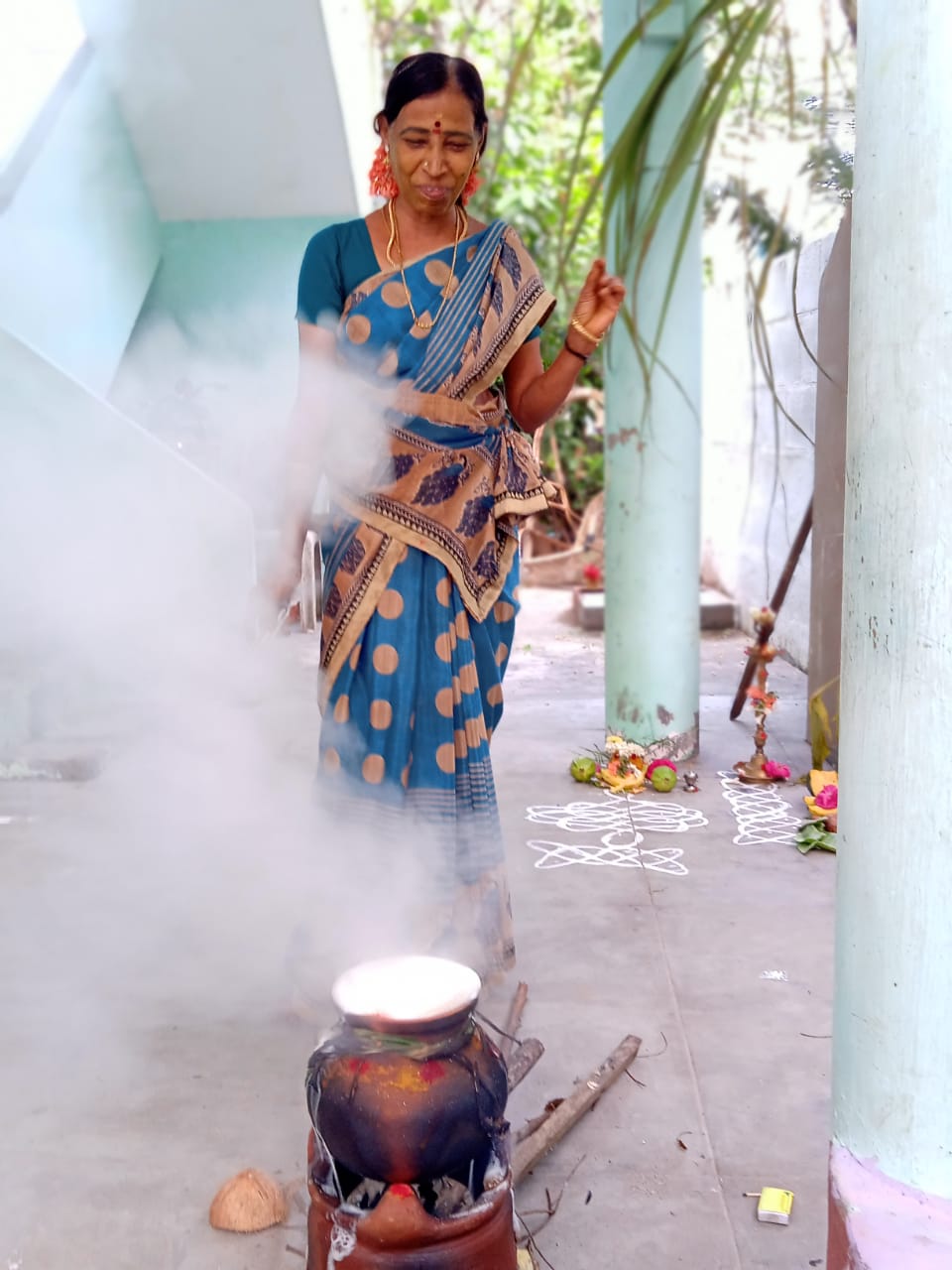 🇮🇳 India and 5 morePongal
Three or four days of boiling rice, garlanded cattle and thanks to the sunSeasonal · Sweets given and shared
🇮🇳 India and 5 morePongal
Three or four days of boiling rice, garlanded cattle and thanks to the sunSeasonal · Sweets given and shared
 🇨🇳 Shanghai, China and 1 moreJiaozi餃子
Crescent Chinese dumplings filled with meat or vegetables, eaten for fortune and feastsTable custom · Breakfast
🇨🇳 Shanghai, China and 1 moreJiaozi餃子
Crescent Chinese dumplings filled with meat or vegetables, eaten for fortune and feastsTable custom · Breakfast