Spiritual and religiousMiddle EastChristianMuslim
Thursday of the Dead
In its own language: خميس الأموات
A spring day of cemetery visits, prayer, and shared yellow breads across the Levant
Thursday of the Dead is an annual springtime observance kept by Christians and Muslims in the Levant. Families, especially women, visit graves to pray for departed relatives and hand out tinted eggs, dried fruit, and stamped yellow breads to children and neighbours.
When is Thursday of the Dead marked?
Thursday of the Dead is kept as part of Easter, which runs from 28 to 29 March 2027.
Thursday of the Dead is a springtime day of remembrance observed by Muslim and Christian communities in the Levant. Women lead the observances by walking to local cemeteries at dawn or in the afternoon to pray beside ancestral graves. To honor those who have passed, families distribute bright yellow bread rolls, dried fruits, and dyed eggs to neighbours, young children, and people in need.
Gatherings at the cemetery
Graveside visits form the core of the observance. In Palestinian and regional tradition, townspeople, farming villagers, and Bedouins would take part, with women serving as the primary participants. They set out early in the morning before sunrise or during the afternoon to reach family burial plots. At the graves, visitors offer prayers for the souls of their ancestors. While the gathering serves as a serious act of remembrance, it also provides an opportunity for women to spend social time outdoors together. In earlier centuries, this Thursday marked the culmination of a seven-week period of mourning Thursdays observed after a death.
Offerings for the departed
A central part of the visit is the charitable giving of food at the tomb. Families bake circular stamped breads known as ka'ak al-asfar, or yellow rolls, which they carry in baskets alongside dried fruits and confections. Children who attend the cemetery receive hard-boiled eggs coloured yellow. Handing food to poorer neighbours, travellers, and children is regarded as an act of mercy, or rahmy. According to historical accounts, this custom began immediately following the burial of a relative and continued regularly until the arrival of the annual commemoration.
Historical and interfaith ties
The custom represents a bridge between Christian and Muslim practices across the Middle East. Some historical sources trace this shared observance to the twelfth century, when Saladin encouraged local Muslims to adopt certain Christian customs to foster community harmony. Anthropologists have noted that the ritual reflects a longstanding Near Eastern outlook that views the living and the deceased as members of a single continuous community. In parts of rural Lebanon, the day belonged to a sequence of spring festivals, while in Palestine it aligned closely with seaside celebrations and local pilgrimage seasons.
Contemporary customs
While large-scale cemetery visits have become less frequent across the Levant, several elements of the day endure. Stamped yellow breads continue to be baked and shared in the weeks following a relative's passing and throughout the spring Easter period. In the Syrian city of Homs, the day remains actively observed under the title Thursday of Sweetness. Local women purchase confections to hand out to children and low-income families, treating the gift of sweets as a double gesture of kindness in memory of the dead.
How Thursday of the Dead is kept
Early in the day, women travel to family burial sites carrying baskets of baked goods. They gather around the graves to pray for deceased relatives and spend time conversing with other visitors. At the tombs, they give out stamped yellow rolls called ka'ak al-asfar, along with dried fruits, confectionery, and yellow-dyed eggs to visiting children and needy community members. Families also share meals at home to mark the occasion.
When and where
The day falls annually on a Thursday during the spring Easter season. Its exact placement varies across local traditions, falling in some calendars on Holy Thursday, between Western and Eastern church dates, or two weeks ahead of Eastern Good Friday.
The tradition belongs to the Levant, with documented roots in Palestine, Syria, and Lebanon. It has been observed in cities such as Jerusalem and Homs, as well as in rural agricultural villages and Bedouin encampments.
What Thursday of the Dead means
The observance reflects the belief that deceased ancestors and the living remain part of one community. Giving food at burial sites is regarded as rahmy, an expression of mercy that blesses both the departed soul and the giver. The use of yellow-tinted breads and eggs connects ancestral memory with springtime rebirth.
Days Thursday of the Dead is marked
Questions people ask about Thursday of the Dead
When is Thursday of the Dead marked?
Thursday of the Dead is kept as part of Easter, which runs from 28 to 29 March 2027.
What is Thursday of the Dead?
It is an annual springtime observance in the Levant where Christian and Muslim families visit cemeteries, pray for departed ancestors, and share gifts of food with children and the poor.
Who takes part in the observance?
The day is observed by both Muslims and Arab Christians. Women historically take the main role, walking to family tombs to conduct prayers and distribute baked goods.
What foods are traditionally prepared?
Families prepare yellow stamped bread cakes called ka'ak al-asfar, dried fruit, sweets, and eggs tinted yellow to hand out to neighbours, the poor, and children.
Where is the tradition still kept?
While less common across the wider region today, stamped yellow breads are still made around Easter and after funerals, and the full commemoration continues in Syrian cities such as Homs.
See also
 Holy SaturdayThe closing day of Holy Week, a Saturday of waiting, fasting and vigil before Easter
 Tisha B'AvA solemn fast day in July or August to mourn the destruction of the Jerusalem Temples and other Jewish tragedies.
 Nabi MusaAn annual Palestinian Muslim pilgrimage and festival honoring the prophet Moses
 All Souls' DayA Christian observance on 2 November for prayer and remembrance of those who have died.
Good reading and sources
The facts on this page come from the Wikipedia article "Thursday of the Dead", written by its contributors and used under the CC BY-SA 4.0 licence, and from its Wikidata record (CC0). EveryParampara rewrote the text in its own words, with AI assistance, and compares every page with the article to make sure no passage is copied. It may be reused under the same CC BY-SA 4.0 licence with a link back.
It may contain mistakes. Traditions differ from one family, village and community to the next, and the people who keep them know them best. If something is wrong, tell us. Last refreshed 2026-10-06.
More from Palestine
All the traditions of Palestine
🇵🇸 Jericho, PalestineNabi Musaٱلنَّبِي مُوْسَى
An annual Palestinian Muslim pilgrimage and festival honoring the prophet MosesSpiritual · Feasts and festival meals
🇮🇱 Israel and 5 moreHoly SaturdaySabbatum Sanctum
The closing day of Holy Week, a Saturday of waiting, fasting and vigil before EasterSpiritual
 🇵🇸 al-Khader, PalestineFeast of Saint George
An annual gathering of Palestinian Christians and Muslims honouring Saint GeorgeSpiritual · Feasts and festival meals
🇵🇸 al-Khader, PalestineFeast of Saint George
An annual gathering of Palestinian Christians and Muslims honouring Saint GeorgeSpiritual · Feasts and festival meals
 🇵🇸 Jerusalem, Palestine and 2 moreStations of the CrossVia Crucis
A Christian prayer journey following fourteen moments of the Passion of JesusSpiritual
🇵🇸 Jerusalem, Palestine and 2 moreStations of the CrossVia Crucis
A Christian prayer journey following fourteen moments of the Passion of JesusSpiritual
The same idea elsewhere
Remembering the ancestors compared 🇮🇳 Mathura, India and 5 moreHoliहोली (Hindi)
A spring festival of colours and bonfires that marks the end of winter and the triumph of good over evil.Festival
🇮🇳 Mathura, India and 5 moreHoliहोली (Hindi)
A spring festival of colours and bonfires that marks the end of winter and the triumph of good over evil.Festival
 🇰🇷 Jeju, South KoreaGut굿
Sacred rites of song, dance, and spirit communion performed by Korean shamansSpiritual
🇰🇷 Jeju, South KoreaGut굿
Sacred rites of song, dance, and spirit communion performed by Korean shamansSpiritual
 🇮🇳 Guwahati, IndiaBihu dance
A folk dance from Assam that celebrates spring, fertility and the new year with energetic movement and music.Performance
🇮🇳 Guwahati, IndiaBihu dance
A folk dance from Assam that celebrates spring, fertility and the new year with energetic movement and music.Performance
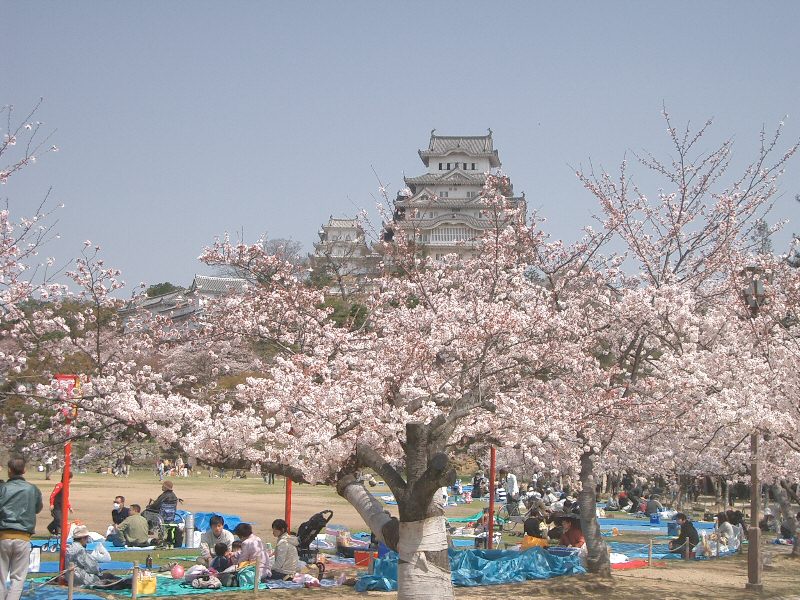 🇯🇵 Kyoto, Japan and 4 moreHanami花見
A Japanese spring custom of gathering under blooming cherry trees to eat, drink, and celebrate the fleeting beauty of thFestival · Lunch
🇯🇵 Kyoto, Japan and 4 moreHanami花見
A Japanese spring custom of gathering under blooming cherry trees to eat, drink, and celebrate the fleeting beauty of thFestival · Lunch