Festivals and celebrationsEuropeChristian
Trifon Zarezan
In its own language: Трифон Зарезан
A Bulgarian wine growers' feast that opens the pruning year
Trifon Zarezan is a Bulgarian national custom honouring Saint Tryphon, kept in February. It marks the start of grape pruning, the first task of the vine-growing year, and is treated as a professional holiday by wine growers and others who work with vines, barrels and gardens.
When is Trifon Zarezan kept?
Trifon Zarezan is kept every year in February: 1 February by the Gregorian reckoning, 14 February for churches that keep the Julian calendar.
Trifon Zarezan is a Bulgarian feast kept at the point where winter turns towards spring. It belongs to the vineyards: the day opens the year's work among the vines and marks the first pruning. Wine growers, gardeners, barrel-makers and innkeepers treat it as their own holiday, and people named Trifon celebrate it as a name day.
A feast for the vineyards
In Bulgarian folk tradition the day belongs first of all to the vine. It opens the yearly round of vine care, when the canes are cut back in spring, and so it becomes the wine grower's own feast. Wine growers keep it as a professional holiday, and so do falconers, gardeners, barrel-makers and innkeepers. Saint Tryphon is held to be their patron. Old church pictures show him with a scythe, a curved cutting blade, in his hand, the tool of the trade he watches over.
The saint and the name day
Saint Tryphon gives the feast its name. He is remembered as one who died for his faith in the third century. Christians in Bulgaria and elsewhere in the Balkans know him, and his day sits in the Orthodox calendar, at the change from winter towards spring. Because the day is his, it doubles as a name day. Households of people called Trifon, Trifko, Trifa, Trifka, Trajan, Fune or Racho, among the many forms of the name, mark it together.
The Trifontsi days
Trifon Zarezan opens a run of feasts known together as Trifontsi. The group takes in Trifonovden, Midsummer and Saint Simeon, kept on the days that follow. Folk belief links these days to wolves, which are mating then. So scissors are left alone, the doors of the house stay shut at night to keep the wolves' jaws closed through the year, and no work is done. Anyone who works on these days, the saying goes, draws wolf attacks upon himself.
Bread for the animals
In some places, among them Belogradchik and Montana, households bake a special bread on these days to guard their livestock. The loaf is overcooked, then broken up and mixed into the animals' feed. The purpose is protection: the same wish that keeps the wolves' jaws shut is meant to bring the herd and the flock safely through the year. The bread is not food for people in this custom. It belongs to the animals it is meant to shield.
How Trifon Zarezan is kept
Men and women take part together. The day is the signal to begin cutting back the vines, the first task of the year in the vineyard. Households and villages mark it as a festival and as a name day, so people called Trifon and the many forms of that name are greeted and visited. Wine growers and the other trades that claim Saint Tryphon as patron keep it as their own holiday. In some districts bread is baked and given to the livestock to protect them.
When and where
In Bulgaria the feast is kept on 1 February by the Gregorian reckoning. Churches that still follow the Julian calendar for worship keep it on 14 February. Since 1968 most Christian churches, the Bulgarian Orthodox Church among them, have used the New Julian calendar. As a leftover of the older practice, the wine growers' secular feast often stays on 14 February.
It is a national custom in Bulgaria and a fixed point in the traditional Bulgarian holiday calendar. Knowledge of Saint Tryphon stretches into other Balkan countries too, where the Orthodox calendar shapes the day. Within Bulgaria, some places are named for their own observances: Belogradchik and Montana are known for bread baked to protect livestock.
What Trifon Zarezan means
Those who keep the feast read it as a turn of the year, the moment winter gives way to spring. Cutting the vines is the first act of a long cycle, so the day carries the hope of a good season ahead. Saint Tryphon stands as patron of the trade, shown in old iconography with a scythe. The wolf customs carry another meaning: protection, the wish that animals and households come through the year unharmed.
Questions people ask about Trifon Zarezan
When is Trifon Zarezan kept?
Trifon Zarezan is kept every year in February: 1 February by the Gregorian reckoning, 14 February for churches that keep the Julian calendar.
What is Trifon Zarezan?
It is a Bulgarian national custom kept in honour of Saint Tryphon. It stands at the start of the vine-growing year, when the vines are pruned in spring, and it is also a name day for people called Trifon and names like it. Wine growers and other trades treat it as their professional holiday.
Where is it celebrated?
In Bulgaria, where it is one of the popular days of the traditional holiday calendar. Devotion to Saint Tryphon is also known in other Balkan countries that follow the Orthodox calendar. Belogradchik and Montana are named for bread baked there to protect livestock.
Why are scissors put away and doors shut?
Folk belief holds that wolves mate around these days. To keep their jaws from opening during the year, scissors are not used, house doors stay shut at night, and nobody works. Working on the days, the saying warns, invites wolf attacks.
Who keeps the feast as their own holiday?
Wine growers lead the list. Falconers, gardeners, barrel-makers and innkeepers also keep it as a professional holiday, with Saint Tryphon as their patron. Men and women take part together, and households mark the name day of anyone called Trifon.
See also
 Kupala NightA summer solstice folk festival marked by bonfires, water rituals and herbal gatherings across Eastern Europe.
 HıdırellezA spring festival marking the meeting of two prophets, celebrated across Turkey and the Balkans.MărțișorA spring custom of wearing intertwined red and white strings to welcome the new season.
 KoliadaA traditional winter caroling and solstice festival kept across Slavic Europe
Good reading and sources
- Trifon Zarezan on WikipediaEncyclopedia
- More photos on Wikimedia CommonsPhotos and video
- Wikidata recordOpen data
The facts on this page come from the Wikipedia article "Trifon Zarezan", written by its contributors and used under the CC BY-SA 4.0 licence, and from its Wikidata record (CC0). EveryParampara rewrote the text in its own words, with AI assistance, and compares every page with the article to make sure no passage is copied. It may be reused under the same CC BY-SA 4.0 licence with a link back.
It may contain mistakes. Traditions differ from one family, village and community to the next, and the people who keep them know them best. If something is wrong, tell us. Last refreshed 2026-10-12.
More from Bulgaria
All the traditions of Bulgaria
🇺🇦 Ukraine and 5 moreKupala Night
A summer solstice folk festival marked by bonfires, water rituals and herbal gatherings across Eastern Europe.Festival
🇹🇷 Turkey and 6 moreHıdırellez
A spring festival marking the meeting of two prophets, celebrated across Turkey and the Balkans.Festival · Feasts and festival meals
🇷🇴 Romania and 3 moreMărțișor
A spring custom of wearing intertwined red and white strings to welcome the new season.Festival
🇺🇦 Ukraine and 12 moreKoliadaКоляда
A traditional winter caroling and solstice festival kept across Slavic EuropeFestival
The same idea elsewhere
Spring and renewal compared 🇰🇷 Jeju, South KoreaGut굿
Sacred rites of song, dance, and spirit communion performed by Korean shamansSpiritual
🇰🇷 Jeju, South KoreaGut굿
Sacred rites of song, dance, and spirit communion performed by Korean shamansSpiritual
 🇯🇵 JapanChildren's Dayこどもの日
A Japanese holiday on May fifth celebrating the happiness and growth of childrenFestival
🇯🇵 JapanChildren's Dayこどもの日
A Japanese holiday on May fifth celebrating the happiness and growth of childrenFestival
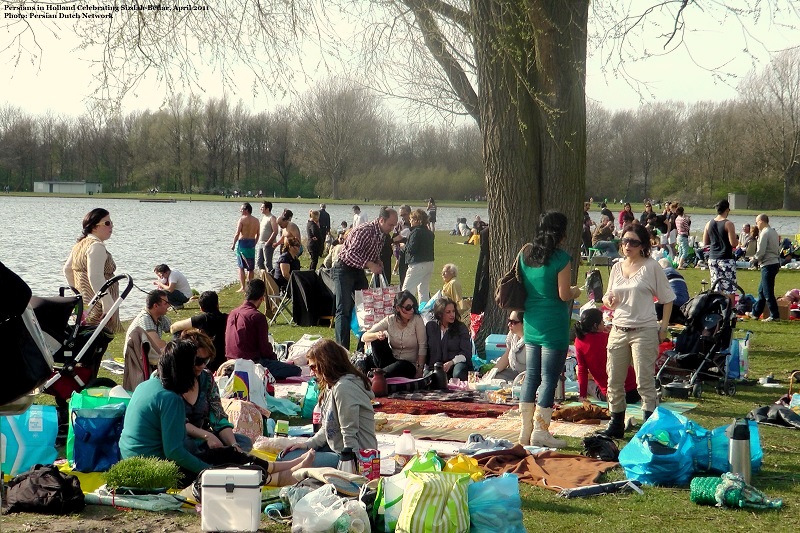 🇮🇷 Iran and 4 moreSizdah Bedarسیزدهبدر
An open-air picnic holiday concluding the Iranian New Year celebrationsFestival
🇮🇷 Iran and 4 moreSizdah Bedarسیزدهبدر
An open-air picnic holiday concluding the Iranian New Year celebrationsFestival
 🇯🇵 Tokyo, JapanKoinobori鯉のぼり
Carp-shaped windsocks flown across Japan for Children's Day in springFestival
🇯🇵 Tokyo, JapanKoinobori鯉のぼり
Carp-shaped windsocks flown across Japan for Children's Day in springFestival