Seasons, harvest and the calendarSouth AsiaHindu
Uttarayana
In its own language: उत्तरायण (Uttarāyaṇa)
The Sun's six-month journey north, kept as an auspicious Hindu season and festival
Uttarayana is the six-month period of the Sun's northward movement, from the winter solstice to the summer solstice, described in Sanskrit texts and in the Indian solar calendar. Hindu devotees keep it as an auspicious season with rituals and pilgrimages, while Makara Sankranti, Pongal and Lohri fall near its start.
When is Uttarayana marked?
Uttarayana is kept as part of Pongal, which runs from 14 to 17 January 2027.
Uttarayana is the half of the year when the Sun appears to move north, running from the winter solstice to the summer solstice. In Hindu tradition it is a holy season, called the day of the gods, and a time when devotees take on rituals and travel to bathe at Prayag. Nearby festivals include Makara Sankranti, Pongal and Lohri.
What it is
Sanskrit gives the name: uttara means north, and ayana means movement, path or journey. So the word names the Sun's journey north. Astronomically, the period runs from just after the winter solstice to the summer solstice, roughly 21 December to 21 June. The Earth leans about 23.4 degrees on its axis, so the Sun's position in the sky drifts north and then back south through the year. After the summer solstice the Sun turns south, a half called Dakshinayana. The Indian solar calendar also describes Uttarayana as the Sun's passage through the zodiac, and the Surya Siddhanta ties the solstice and equinox points to four of the twelve rashis, or signs.
In the texts
The Surya Siddhanta, whose author is named as Mayasura, places Uttarayana between Makara Sankranti and Karka Sankranti, which fall around 14 January and 16 July now. Latadeva described the pair as half revolutions of the Sun. Bal Gangadhar Tilak, a scholar and mathematician, proposed an older Vedic reading: the time from the spring equinox to the autumn equinox, when the Sun stays north of the equator. He pointed to a tradition that Uttarayana is the daytime of the gods at the North Pole. Hindu cosmology counts these six months as the day of the devas and the other half as their night. Ayurvedic writing calls the period Adana Kala, a time of taking away, when heat is said to dry the body and reduce strength.
Marking the season
Devotees treat the northward half of the year as an auspicious time and take on rituals within it. Pilgrimage to Prayag, where three rivers meet, is a common practice, with bathing at the confluence. The Mahabharata tells how Bhishma, mortally wounded in war, held off death until Uttarayana, since he could choose his hour. The Bhagavad Gita says that those who die while the Sun moves north reach a higher spiritual state. Builders worked with the cycle too. Many Indian temples face east; the western gate at Angkor Wat catches the winter solstice sunrise, and at the Modhera Sun Temple the summer solstice sun stands overhead.
Festivals nearby
Several observances fall close to the opening of Uttarayana. Makara Sankranti marks the Sun's entry into Capricorn. Pongal is kept in Tamil Nadu and Lohri in northern India. Gujarat holds an international kite festival, known there as Uttarayan. These are separate festivals: they cluster around the same seasonal turn, but they are not another name for the astronomical period. The Gujarati, Tamil and northern Indian celebrations each have their own customs, and the sources treat them as distinct from Uttarayana itself.
A date that drifts
People often assume that Makara Sankranti begins Uttarayana. In astronomical terms the Sun's northward turn starts right after the winter solstice, which in 2022 fell on 22 December, so the period opened on 23 December. The two events coincided about 1,700 years ago, and precession has pulled them apart since. Makara Sankranti was on 21 December in 272 CE and on 31 December in 1000 CE; it now falls on 14 January and in 9000 years will land in June. Uttarayana remains tied to the day after the solstice. Makers of Drika Panchangas use the tropical Sun to fix it.
How Uttarayana is kept
Devotees treat the northward half of the year as an auspicious stretch and take on rituals within it. A common practice is pilgrimage to Prayag, at the meeting of three rivers, to bathe there. Around the same turn of the season, communities keep Makara Sankranti, Pongal in Tamil Nadu and Lohri in the north, and Gujarat flies kites at a festival people call Uttarayan. Classical Ayurvedic writing pairs the six months with Adana Kala, a time when heat is said to draw moisture and strength from the body and the land.
When and where
Uttarayana begins the day following the winter solstice, near 21 December, and runs to the summer solstice, near 21 June. In the sidereal reckoning it spans Makara Sankranti to Karka Sankranti, roughly 14 January to 16 July. The festival day is kept on 14 or 15 January.
It is kept in India, where Hindu solar calendars are followed and where Makara Sankranti, Pongal, Lohri and the Gujarat kite festival are observed. Pilgrims go to Prayag to bathe. Temple alignments tied to the solstice are seen at the Modhera Sun Temple in India and at Angkor Wat, whose western gate marks the winter solstice sunrise.
What Uttarayana means
Those who keep it read the Sun's turn north as a holy season. The Mahabharata tells how Bhishma, mortally wounded, held back his death until Uttarayana, since he could choose his hour. The Bhagavad Gita says that those who die while the Sun moves north reach a higher spiritual state. Hindu cosmology calls these six months the day of the devas, and the six months of Dakshinayana their night; together they make one full day in the reckoning of the gods.
Days Uttarayana is marked
Questions people ask about Uttarayana
When is Uttarayana marked?
Uttarayana is kept as part of Pongal, which runs from 14 to 17 January 2027.
What is Uttarayana?
It is the six-month stretch when the Sun appears to move north, from just after the winter solstice to the summer solstice. The name comes from Sanskrit: uttara means north and ayana means movement or path. Hindu texts treat it as an auspicious season.
Is Uttarayana the same as Makara Sankranti?
No. Many people assume Makara Sankranti begins Uttarayana, but the Sun's northward turn starts right after the winter solstice. The two coincided about 1,700 years ago. Precession has since pushed Makara Sankranti later, to 14 January, while Uttarayana stays with the solstice.
Where is it observed?
It belongs to India's Hindu solar calendars. Devotees make pilgrimages to Prayag to bathe where three rivers come together. Makara Sankranti, Pongal and Lohri are kept near its opening, and Gujarat holds a kite festival that is also called Uttarayan.
What does it mean to those who keep it?
Hindu tradition calls the six months of Uttarayana the day of the devas and the other half their night. The Bhagavad Gita says those who die during it attain a higher spiritual state, and the Mahabharata tells of Bhishma waiting for Uttarayana before he died.
See also
 Fire templeA consecrated sanctuary where Zoroastrians tend sacred fires and gather for worship
 Kailash Mansarovar YatraA high-altitude pilgrimage to Mount Kailash and Lake Manasarovar in Tibet
 Prayer wheelA cylindrical wheel spun in Tibetan Buddhist practice to accumulate merit and wisdom
Good reading and sources
- Uttarayana on WikipediaEncyclopedia
- More photos on Wikimedia CommonsPhotos and video
- Wikidata recordOpen data
The facts on this page come from the Wikipedia article "Uttarayana", written by its contributors and used under the CC BY-SA 4.0 licence, and from its Wikidata record (CC0). EveryParampara rewrote the text in its own words, with AI assistance, and compares every page with the article to make sure no passage is copied. It may be reused under the same CC BY-SA 4.0 licence with a link back.
It may contain mistakes. Traditions differ from one family, village and community to the next, and the people who keep them know them best. If something is wrong, tell us. Last refreshed 2026-10-05.
More from India
All the traditions of India 🇮🇷 Iran and 7 moreNowruzنوروز
The Iranian new year at the March equinox, kept with fire, greenery and picnicsSeasonal
🇮🇷 Iran and 7 moreNowruzنوروز
The Iranian new year at the March equinox, kept with fire, greenery and picnicsSeasonal
 🇮🇳 IndiaIndian national calendar
India's official civil solar calendar, designed to bring unity to timekeepingSeasonal
🇮🇳 IndiaIndian national calendar
India's official civil solar calendar, designed to bring unity to timekeepingSeasonal
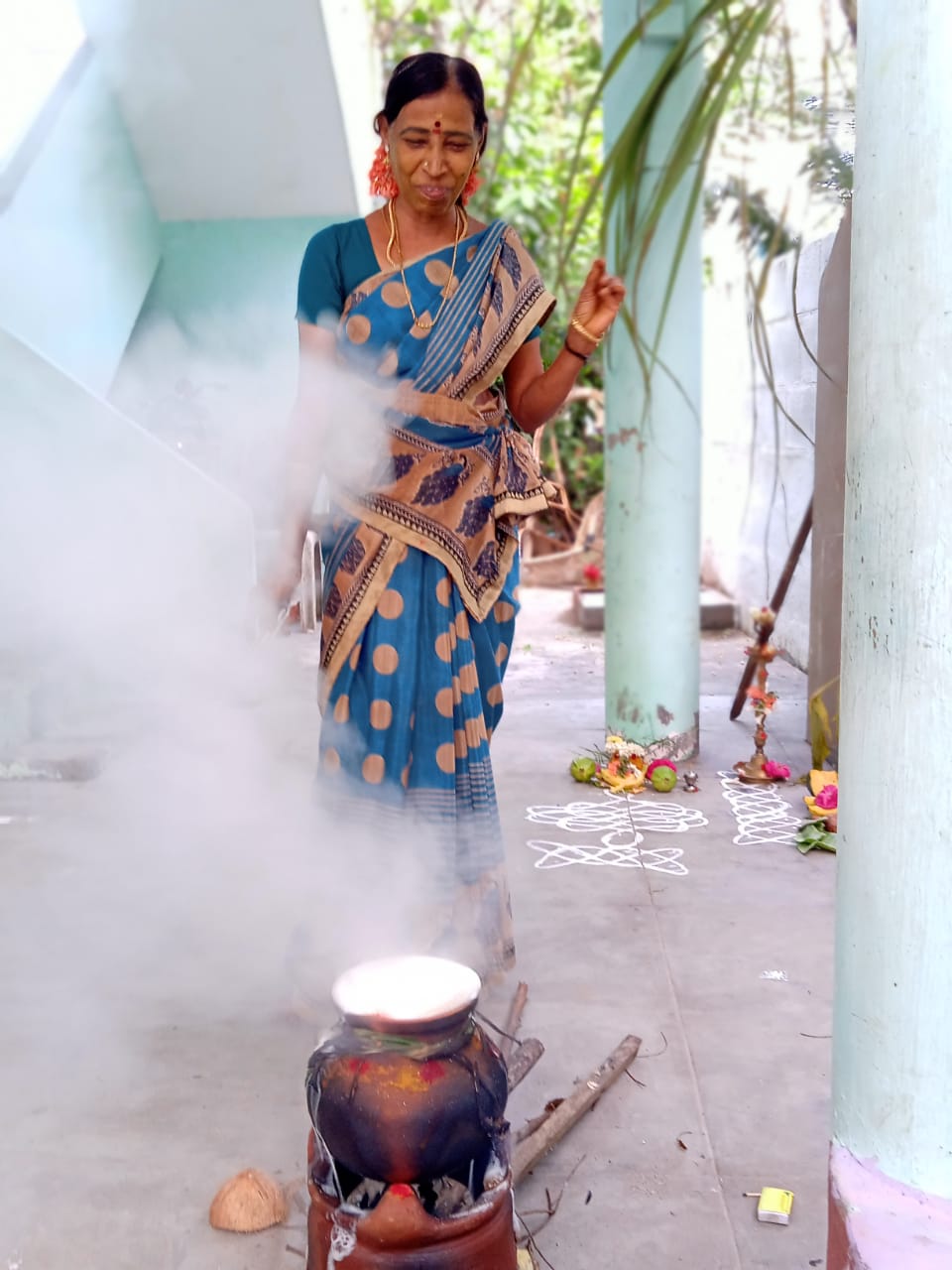 🇮🇳 India and 5 morePongal
Three or four days of boiling rice, garlanded cattle and thanks to the sunSeasonal · Sweets given and shared
🇮🇳 India and 5 morePongal
Three or four days of boiling rice, garlanded cattle and thanks to the sunSeasonal · Sweets given and shared
 🇧🇹 Bhutan and 4 moreLosarལོ་གསར་
The Tibetan Buddhist New Year festival of renewal, offerings, and family feastsSeasonal · Feasts and festival meals
🇧🇹 Bhutan and 4 moreLosarལོ་གསར་
The Tibetan Buddhist New Year festival of renewal, offerings, and family feastsSeasonal · Feasts and festival meals
The same idea elsewhere
Pilgrimage compared 🇺🇸 United States and 5 moreMother's Day
A worldwide annual celebration dedicated to mothers, maternal bonds and family careHome
🇺🇸 United States and 5 moreMother's Day
A worldwide annual celebration dedicated to mothers, maternal bonds and family careHome
 🇮🇱 Jerusalem, IsraelPassoverפסח
A Jewish spring festival celebrating freedom from slavery with ritual mealsSpiritual · Dinner
🇮🇱 Jerusalem, IsraelPassoverפסח
A Jewish spring festival celebrating freedom from slavery with ritual mealsSpiritual · Dinner
 🇵🇱 Poland and 5 moreChristmas Eve
The evening before Christmas, marked by church services, family meals, and gift preparations across Christian cultures.Festival · Dinner
🇵🇱 Poland and 5 moreChristmas Eve
The evening before Christmas, marked by church services, family meals, and gift preparations across Christian cultures.Festival · Dinner
 🇮🇱 Jerusalem, IsraelSukkotסוכות
A seven-day autumn Jewish festival of temporary booths, harvest prayers and hospitalitySpiritual
🇮🇱 Jerusalem, IsraelSukkotסוכות
A seven-day autumn Jewish festival of temporary booths, harvest prayers and hospitalitySpiritual