Dress and adornmentSub-Saharan Africa
Veldskoen
In its own language: veldskoene
South African walking shoes of leather and rubber, worn on farms and beyond
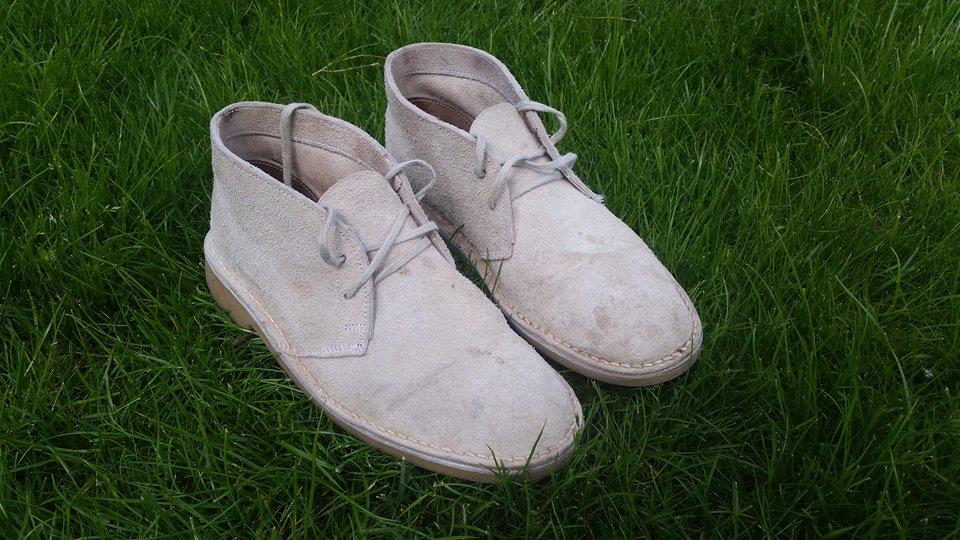
Veldskoen, also called vellies, are South African walking shoes with vegetable-tanned leather or soft rawhide uppers, a leather footbed and a rubber sole, joined by stitchdown construction without tacks or nails. Their design is believed to come from traditional Khoisan footwear, and they became everyday shoes in South African farming life.
Veldskoen are South African walking shoes, known in everyday speech as vellies. They have leather or rawhide uppers and a rubber sole, stitched together without nails. The design is believed to come from traditional Khoisan footwear, and the shoes became common among South African farmers. They are light, hard-wearing and easy to make. Their shape later inspired the desert boot.
What they are
A veldskoen is a walking shoe from South Africa. The upper is made from vegetable-tanned leather or soft rawhide. It is joined to a leather footbed and a rubber sole by stitchdown construction, a method that uses no tacks or nails. People often call the shoes vellies. They are sometimes treated as a light boot, and they sit near chukka boots and desert boots, though vellies usually have a lower top edge. Soles may be cut from old car tyres instead of crepe rubber. The leather changes with what is available locally, and in Namibia kudu and seal leather are common.
Name and beginnings
The word comes from Afrikaans. Vel means skin, and skoene means shoes. Later the first part was linked with veldt, meaning field. The design is believed to be based on footwear worn traditionally by the Khoisan. Veldskoene were taken up by South African farming communities and became their shoe of choice. They were easy to make, light and very tough. In time they became part of South African, Zimbabwean, formerly Rhodesian, Namibian and wider African culture.
From Cairo to Clarks
Nathan Clark, of the shoe company C&J Clark, saw veldskoene for sale in bazaars in Cairo. The shoes had been imported to Egypt from South Africa. Their round toe and shape guided the desert boot his company made famous. At first desert boots were worn by young people. In England mods wore them. In Paris art students did. In America beatniks wore them. In Jamaica the boots became common within the Rude Boy subculture. Later high fashion used Clarks in magazine shoots and runway shows.
Wupperthal shoes
A shoe factory opened at Wupperthal in 1836. Johann Leipoldt founded it, and it gave work to many skilled craftsmen. The Wupperthal handsewn veldskoen was a soft suede shoe. For almost a century it was known across South Africa for comfort and good craftsmanship. The shoes were sewn by hand, and they stood for careful making. The factory is one clear place where veldskoene belonged to a working craft tradition as well as to farms.
How Veldskoen is kept
Shoemakers begin with an upper of vegetable-tanned leather or soft rawhide. They join it to a leather footbed and a rubber sole using stitchdown construction, with no tacks or nails. Some makers cut soles from old car tyres instead of crepe rubber. The leather used depends on what is available nearby. In Namibia, kudu and seal leather are common. Farmers wear veldskoene for walking and work. At Wupperthal, craftsmen hand-sewed a soft suede version that became known across South Africa for comfort and careful work.
When and where
Veldskoene belong to South Africa, where they are strongest and were once the everyday footwear of farming communities. The article also ties them to Zimbabwe, formerly Rhodesia, to Namibia and to wider African culture. In Namibia, kudu and seal leather are commonly used. Wupperthal made handsewn veldskoene known across South Africa for about a century. Pairs were sold in Cairo bazaars, where Nathan Clark saw them.
What Veldskoen means
For South African farming communities, veldskoene were the working shoe of choice: easy to make, light and very tough. The name links skin with field, and the design is believed to come from traditional Khoisan footwear. In Zimbabwe, Namibia and other parts of Africa the shoes became part of local dress. The Wupperthal handsewn veldskoen stood for comfort and good craftsmanship for nearly a century. Later the shape travelled into desert boots and fashion, but its first meaning stays with farm work and local making.
Questions people ask about Veldskoen
What is a veldskoen?
A veldskoen is a South African walking shoe. It has an upper of vegetable-tanned leather or soft rawhide, joined to a leather footbed and a rubber sole by stitchdown construction. The method uses no tacks or nails. People also call the shoes vellies. They are light, tough and sometimes treated as a kind of light boot.
Where are veldskoene worn?
They belong to South Africa and were the everyday footwear of farming communities there. The article also ties them to Zimbabwe, formerly Rhodesia, to Namibia and to wider African culture. In Namibia, kudu and seal leather are commonly used. A factory at Wupperthal made handsewn veldskoene known across South Africa for about a century.
How did veldskoene lead to desert boots?
Nathan Clark, of the shoe company C&J Clark, saw veldskoene for sale in Cairo bazaars. They had been imported to Egypt from South Africa. Their round toe and shape guided the desert boot his company made famous. Young people first wore desert boots, then mods, art students, beatniks and Jamaica's Rude Boy subculture took them up.
What is a vellie?
Vellies is the everyday name for veldskoene. The word comes from Afrikaans: vel means skin, and skoene means shoes. The first part was later linked with veldt, meaning field. A vellie is the same South African walking shoe, made with leather or rawhide and a rubber sole, often with a lower top edge than a desert boot.
See also
 IsidwabaA knee-length leather skirt of cowhide or goatskin, worn by married Zulu womenMadiba shirtA loose batik-print shirt that Mandela wore to formal occasions
 KgotlaA village meeting and customary court in Botswana, led by the chief
 IndlamuA Zulu war dance of two warriors in pelts, matched move for move and stamped on the beat
Good reading and sources
The facts on this page come from the Wikipedia article "Veldskoen", written by its contributors and used under the CC BY-SA 4.0 licence, and from its Wikidata record (CC0). EveryParampara rewrote the text in its own words, with AI assistance, and compares every page with the article to make sure no passage is copied. It may be reused under the same CC BY-SA 4.0 licence with a link back.
It may contain mistakes. Traditions differ from one family, village and community to the next, and the people who keep them know them best. If something is wrong, tell us. Last refreshed 2026-10-14.
More from South Africa
All the traditions of South Africa
🇿🇦 South AfricaIsidwaba
A knee-length leather skirt of cowhide or goatskin, worn by married Zulu womenDress
🇧🇼 Botswana and 2 moreKgotla
A village meeting and customary court in Botswana, led by the chiefCeremony
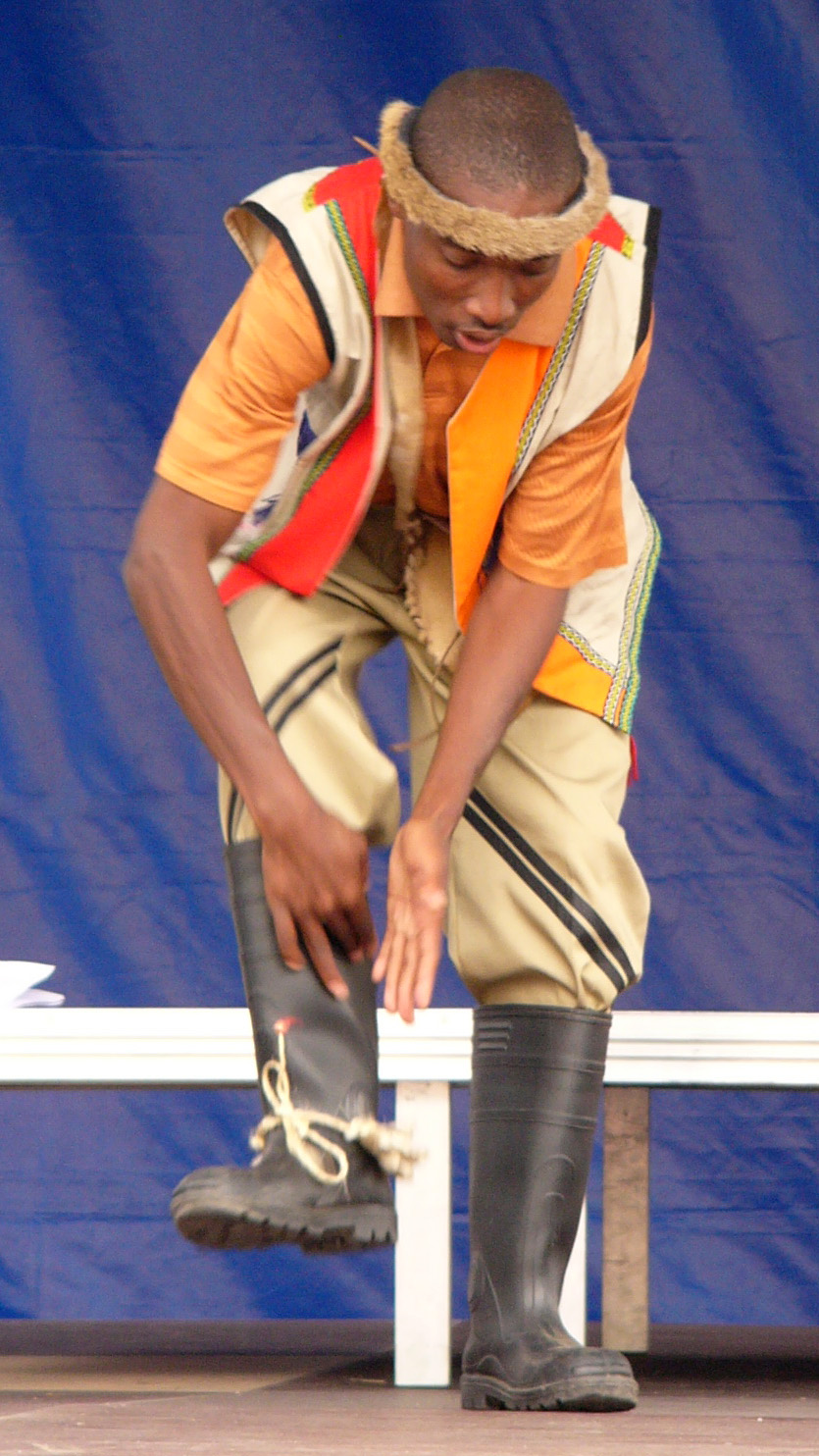 🇿🇦 Cape Town, South AfricaGumboot danceIsicathulo
A percussive South African dance born in the mines, performed in Wellington boots to communicate and celebrate.Performance
🇿🇦 Cape Town, South AfricaGumboot danceIsicathulo
A percussive South African dance born in the mines, performed in Wellington boots to communicate and celebrate.Performance
The same idea elsewhere
All of this kind 🇮🇱 Israel and 1 moreTzitzitצִיצִית
Knotted ritual fringes worn on a four-cornered garment, a reminder of the commandmentsDress
🇮🇱 Israel and 1 moreTzitzitצִיצִית
Knotted ritual fringes worn on a four-cornered garment, a reminder of the commandmentsDress
 🇪🇬 Egypt and 5 moreTraditional tattooing
The ancient custom of marking the skin for protection, healing, status and sacred ritesDress
🇪🇬 Egypt and 5 moreTraditional tattooing
The ancient custom of marking the skin for protection, healing, status and sacred ritesDress
 🇼🇸 Samoa and 1 moreʻIe tōga
Precious woven mats exchanged in Samoan ceremonies to honor family ties and chiefly status.Dress
🇼🇸 Samoa and 1 moreʻIe tōga
Precious woven mats exchanged in Samoan ceremonies to honor family ties and chiefly status.Dress
 🇺🇦 Chernivtsi, Ukraine and 5 moreVyshyvanka DayДень вишиванки
An annual day for wearing traditional Ukrainian embroidered shirts across the worldDress
🇺🇦 Chernivtsi, Ukraine and 5 moreVyshyvanka DayДень вишиванки
An annual day for wearing traditional Ukrainian embroidered shirts across the worldDress