Life-cycle ritesSouth AsiaIndigenous and traditional
Vision quest
A coming-of-age fast and vigil, kept by some Native American peoples
Vision quest is an English label for coming-of-age rites kept by a number of Native American cultures, each of which has its own name for its own ceremony. Elders lead a young person through several days without food at a chosen place in nature, where they pray for a vision to guide their adult life.
When is Vision quest kept?
Vision quest is kept on when a young person is ready to be recognised as an adult, over four days without food.
A vision quest is a coming-of-age rite kept by a number of Native American peoples. A young person spends several days without food, on their own, at a place in nature that elders pick out. There they pray for a dream or vision that will show them what their life is for and how they should serve their community.
What it is
'Vision quest' is an English phrase used as a broad label. It covers rites that many Indigenous cultures of North America each know by their own name. Those names, and the ceremonies behind them, differ from people to people, so the English term does not always fit and is not what the communities themselves say. What the label points to is a search for guidance from the spirit world, made at the point where a young person is ready to take up an adult role. Elders lead it, and the wider community supports the person taking part.
How it is kept
Elders choose a place in nature, and in some cases a few of those places have served the same communities across generations. The person goes there and goes without food for four days. They keep awake and pray, calling on the spirits for a vision. Support comes from the community, and elders direct each step, because this is a set of ceremonies rather than one event. When it ends, the young person is recognised as an adult, and may then learn from an older person who has already mastered this role.
Visions and meaning
People hope for a dream or a vision that answers a large question: what am I here to do, what part do I play among my people, and how can I be of use to them. What comes may arrive as an image rather than in words. Animals and the forces of nature often appear in it. These pictures are not read alone, since their meaning is not obvious, and elders interpret them. Through the rite a person's place in the community is confirmed, and the experience is meant to guide the rest of their life.
Records and retelling
Outsiders have written about these ceremonies, and their accounts are not the same as the ceremonies themselves. In one such record, Lucullus Virgil McWhorter set down what he heard from Yellow Wolf of the Nez Perce. He came to think the faster stays awake and fixes their mind on the search until their mind grows dull and heavy. Only then, he believed, did the weyekin, the Nez Perce word for the helping spirit, make itself known. The name and the understanding behind it belong to that people.
Outside use and criticism
Groups outside these cultures, among them New Age circles and schools that teach wilderness skills, run their own events and also give them this English name. Fasting and time spent alone may be the only things they share with the ceremonies. Indigenous voices have described such borrowing as cultural appropriation, and some have called the people who lead these events plastic shamans. New Age versions of the sweat lodge have been run by leaders without training, and harm and deaths have followed, including a manslaughter case in the United States over a 36-hour event. In 1993 Lakota people issued a declaration against exploiters of their spirituality, and the 2007 United Nations Declaration on the Rights of Indigenous Peoples supports Indigenous peoples in protecting their ceremonies and seeking restitution when they are taken without consent.
How Vision quest is kept
Elders pick a place in nature for the ceremony, and the community supports the young person through it. The person goes without food for four days, stays awake and prays, asking the spirits for a vision. Each step is directed by elders, since the rite is a set of ceremonies rather than one event. After it, the person is accepted as an adult. Guided by what happened, they may then study under an older person who has mastered the same role.
When and where
There is no fixed date. The rite happens when a young person reaches the age at which they are ready to be recognised as an adult, and elders and the community set the timing. The ceremony itself is counted in days rather than hours: four days without food, with the person staying at the chosen place throughout.
It belongs to a number of Native American cultures, each of which has its own name for it. The ceremonies are held in nature, at places that elders select, and some of those places have served the same communities for many generations. Wider use of the English term, and events run by outsiders, is found well beyond those communities.
What Vision quest means
The search is for direction, not for spectacle. A vision is understood as a sign of how a person should live and what they owe to their people. The animals and natural forces that appear in dreams are treated as meaningful, but they need an elder to read them. The rite also marks belonging: the community that supports the faster welcomes them back as an adult, with a role to fill and a place among the people.
Questions people ask about Vision quest
When is Vision quest kept?
Vision quest is kept on when a young person is ready to be recognised as an adult, over four days without food.
What is a vision quest?
It is a coming-of-age rite kept by a number of Native American peoples. A young person spends several days without food at a place in nature chosen by elders, praying for a dream or vision that will show them their purpose and their role in the community.
Do all Native American communities use this term?
No. The English phrase is an umbrella label that outsiders apply to a range of ceremonies. Each Indigenous culture has its own name for its own rite, and those rites differ. The term may not be accurate and is not always used by the communities themselves.
Where is it kept?
Among a number of Native American cultures, at places in nature that elders choose. Some places have been used by the same communities across many generations. Similar-sounding events run by non-Native groups exist elsewhere, but Indigenous critics say these share little with the ceremonies.
Why do some Indigenous people object to outsiders holding these events?
Leaders have described the practice as cultural appropriation, and some call the organisers plastic shamans. A declaration against exploiters of Lakota spirituality was issued in 1993. The 2007 United Nations Declaration on the Rights of Indigenous Peoples backs the right of Indigenous peoples to protect their ceremonies and to seek restitution when they are taken without consent.
See also
 Tribal youth dormitoryA communal house where a tribe's unmarried young people sleep, learn and serve
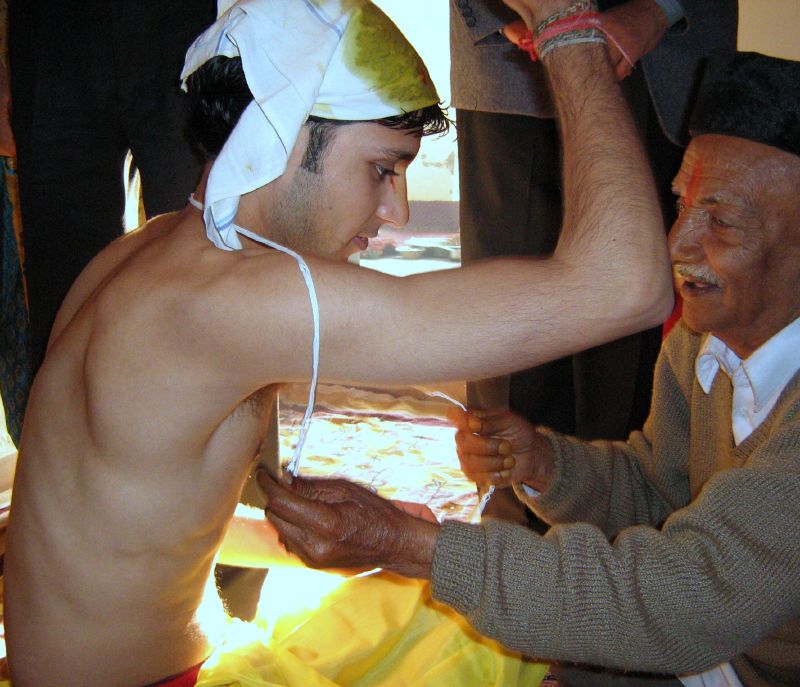 UpanayanaA Hindu rite of passage that begins a child's study and marks a second birth
 GarbaA Gujarati circle dance performed around a sacred flame during the festival of Navratri
 PashminaUltra-fine wool of Himalayan goats, hand-woven in Kashmir into shawls of rank
Good reading and sources
- Encyclopaedia BritannicaArticle
- Native Americans know that cultural misappropriation is a land of darknessThe Guardian, Article
- Native Americans know that cultural misappropriation is a land of darknessThe Guardian, Article
The facts on this page come from the Wikipedia article "Vision quest", written by its contributors and used under the CC BY-SA 4.0 licence, and from its Wikidata record (CC0). EveryParampara rewrote the text in its own words, with AI assistance, and compares every page with the article to make sure no passage is copied. It may be reused under the same CC BY-SA 4.0 licence with a link back.
It may contain mistakes. Traditions differ from one family, village and community to the next, and the people who keep them know them best. If something is wrong, tell us. Last refreshed 2026-10-05.
More from India
All the traditions of India
🇮🇳 India and 5 moreTribal youth dormitoryMorung
A communal house where a tribe's unmarried young people sleep, learn and serveRite of passage
🇮🇳 India and 1 moreUpanayanaउपनयन (Sanskrit)
A Hindu rite of passage that begins a child's study and marks a second birthRite of passage
🇮🇳 IndiaRitu Kala SamskaramRitushuddhi
A South Indian Hindu coming-of-age ceremony for girls after their first period.Rite of passage
 🇯🇵 Kyoto, Japan and 5 moreTeeth blackening
A custom of dyeing teeth black to mark adulthood and beauty in parts of Asia and Oceania.Rite of passage
🇯🇵 Kyoto, Japan and 5 moreTeeth blackening
A custom of dyeing teeth black to mark adulthood and beauty in parts of Asia and Oceania.Rite of passage
The same idea elsewhere
Coming of age compared 🇪🇬 Egypt and 5 moreTraditional tattooing
The ancient custom of marking the skin for protection, healing, status and sacred ritesDress
🇪🇬 Egypt and 5 moreTraditional tattooing
The ancient custom of marking the skin for protection, healing, status and sacred ritesDress
 🇼🇸 Samoa and 1 morePeʻa
The traditional Samoan rite of full-body tattooing for men, tapped by master artistsRite of passage
🇼🇸 Samoa and 1 morePeʻa
The traditional Samoan rite of full-body tattooing for men, tapped by master artistsRite of passage
 🇵🇬 Maprik, Papua New GuineaHaus Tambaran
A sacred house of the Sepik peoples, used for ancestor worship and male initiationSpiritual
🇵🇬 Maprik, Papua New GuineaHaus Tambaran
A sacred house of the Sepik peoples, used for ancestor worship and male initiationSpiritual
 🇮🇱 IsraelTallitטלית
A four-cornered Jewish prayer shawl with ritual fringes worn during worshipSpiritual
🇮🇱 IsraelTallitטלית
A four-cornered Jewish prayer shawl with ritual fringes worn during worshipSpiritual