Teeth blackening
A custom of dyeing teeth black to mark adulthood and beauty in parts of Asia and Oceania.

Teeth blackening is a body modification practice found across Southeast Asia, Japan, and India. It marks the transition from childhood to adulthood. The custom signals maturity and beauty while distinguishing humans from animals.
When is Teeth blackening kept?
Teeth blackening is kept during puberty or upon marriage.
This tradition involves dyeing the teeth black to signal a shift into adulthood. People kept this custom for centuries across East and Southeast Asia. It represented beauty, maturity, and civilization. The practice has mostly faded due to changing beauty standards.
What it is
The custom involves staining the teeth black using various natural solutions. It appeared among Austronesian, Austroasiatic, and Kra-Dai speaking groups. It also existed in Japan before the Meiji era and in parts of India. The black color distinguished people from animals. White teeth were associated with beasts and spirits. The practice often accompanied tooth filing and other body modifications like tattoos.
Origins and history
Traces of the practice appear in Japanese bones from the Kofun period. In Vietnam, archaeological finds date the custom to four hundred BCE. European explorers noted the habit in the sixteenth century. Colonial powers often disapproved of the practice. Western beauty standards eventually led to its decline. By the twentieth century, most communities had abandoned the tradition, though some isolated groups maintained it.
How it is kept
The process usually began with cleaning the teeth using betel, charcoal, and salt. A sour mixture prepared the surface for the dye. Burnt coconut shells or iron solutions provided the black color. In Japan, aristocrats used iron filings soaked in vinegar. The procedure was painful and caused gum swelling. Today, the custom survives mainly among older women or in cultural performances and festivals.
Meanings and beliefs
Blackened teeth marked the passage into adulthood. Families dyed the teeth of young girls before political marriages. The look signified chastity and maturity. In Thailand, dark teeth were compared to valuable woods in love poetry. The practice carried sexual overtones in South Asian cultures. It was linked to rites of passage and social status within those communities.
How Teeth blackening is kept
Communities dyed teeth during puberty or marriage. They cleaned the teeth with charcoal and betel. Then they applied iron or coconut solutions. The process caused pain and swelling. It marked a shift to adult status. Today, only older women or performers keep the custom alive.
When and where
It occurred during puberty or at marriage. The timing signaled the end of childhood. Some families did it for young girls before arranged unions.
The practice spanned Japan, Vietnam, the Philippines, Thailand, and India. It was strongest in rural areas and among specific ethnic tribes. Urban centers adopted Western styles faster.
What Teeth blackening means
The black teeth represented civilization and beauty. They separated humans from animals. The look showed maturity and readiness for marriage. In literature, dark teeth symbolized elegance and worth.


Questions people ask about Teeth blackening
When is Teeth blackening kept?
Teeth blackening is kept during puberty or upon marriage.
What is teeth blackening?
It is a custom of dyeing teeth black to mark adulthood. The practice appeared across Asia and Oceania. It signaled beauty and maturity while distinguishing people from animals.
Where is this tradition found?
It originated in Japan, Vietnam, the Philippines, Thailand, and India. Various ethnic groups in these regions practiced it for centuries. It remains rare today but appears in historical records and festivals.
Why did people blacken their teeth?
The black color marked the transition to adulthood. It showed that a person was mature and civilized. White teeth were seen as belonging to beasts. The look also signaled readiness for marriage.
See also
 Tribal youth dormitoryA communal house where a tribe's unmarried young people sleep, learn and serve
 Rite of passageA ceremony that marks leaving one group and entering another, with a new status
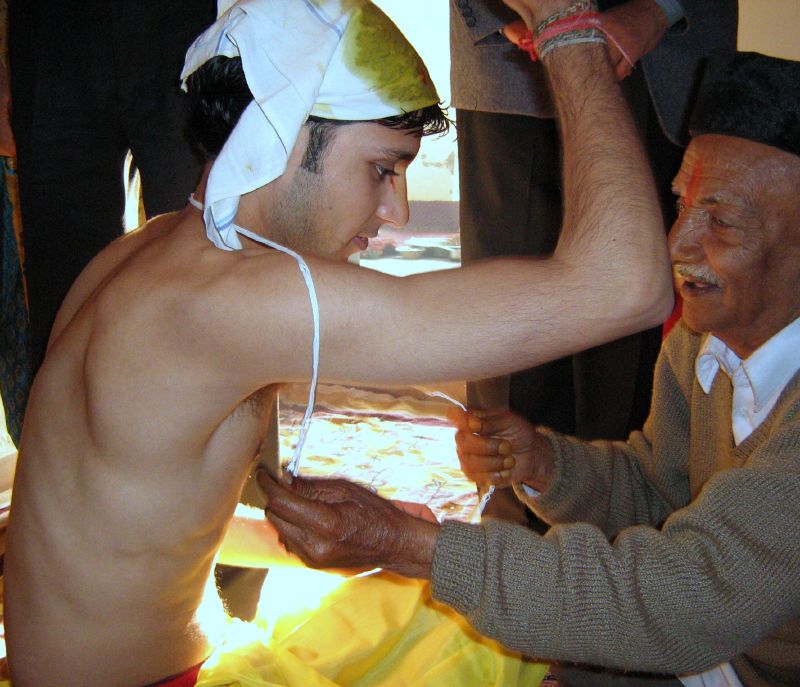 UpanayanaA Hindu rite of passage that begins a child's study and marks a second birth
 First CommunionA Christian rite of passage marking a person's initial reception of the Eucharist.
Good reading and sources
- Teeth blackening on WikipediaEncyclopedia
- More photos on Wikimedia CommonsPhotos and video
- Wikidata recordOpen data
The facts on this page come from the Wikipedia article "Teeth blackening", written by its contributors and used under the CC BY-SA 4.0 licence, and from its Wikidata record (CC0). EveryParampara rewrote the text in its own words, with AI assistance, and compares every page with the article to make sure no passage is copied. It may be reused under the same CC BY-SA 4.0 licence with a link back.
It may contain mistakes. Traditions differ from one family, village and community to the next, and the people who keep them know them best. If something is wrong, tell us. Last refreshed 2026-10-06.
More from Japan
All the traditions of Japan
🇺🇸 United States and 5 moreRite of passage
A ceremony that marks leaving one group and entering another, with a new statusRite of passage
 🇯🇵 JapanComing of Age Day成人の日
A Japanese public holiday welcoming new adults with municipal rites and celebrationsRite of passage
🇯🇵 JapanComing of Age Day成人の日
A Japanese public holiday welcoming new adults with municipal rites and celebrationsRite of passage
 🇨🇳 China and 5 morePostpartum confinement
A period of rest, nourishment, and seclusion for mothers after giving birth.Rite of passage
🇨🇳 China and 5 morePostpartum confinement
A period of rest, nourishment, and seclusion for mothers after giving birth.Rite of passage
 🇮🇪 Ireland and 2 moreWake
A gathering before a funeral, where family and friends keep watch over the deadRite of passage
🇮🇪 Ireland and 2 moreWake
A gathering before a funeral, where family and friends keep watch over the deadRite of passage
The same idea elsewhere
Coming of age compared 🇪🇬 Egypt and 5 moreTraditional tattooing
The ancient custom of marking the skin for protection, healing, status and sacred ritesDress
🇪🇬 Egypt and 5 moreTraditional tattooing
The ancient custom of marking the skin for protection, healing, status and sacred ritesDress
 🇼🇸 Samoa and 1 morePeʻa
The traditional Samoan rite of full-body tattooing for men, tapped by master artistsRite of passage
🇼🇸 Samoa and 1 morePeʻa
The traditional Samoan rite of full-body tattooing for men, tapped by master artistsRite of passage
 🇵🇬 Maprik, Papua New GuineaHaus Tambaran
A sacred house of the Sepik peoples, used for ancestor worship and male initiationSpiritual
🇵🇬 Maprik, Papua New GuineaHaus Tambaran
A sacred house of the Sepik peoples, used for ancestor worship and male initiationSpiritual
 🇮🇱 IsraelTallitטלית
A four-cornered Jewish prayer shawl with ritual fringes worn during worshipSpiritual
🇮🇱 IsraelTallitטלית
A four-cornered Jewish prayer shawl with ritual fringes worn during worshipSpiritual