Royal, civic and national ceremonySub-Saharan AfricaIndigenous and traditional
Zangbeto
A traditional security institution and night-guardian cult among the Ogu people of West Africa.

The Zangbeto are the traditional guardians of the night for the Ogu (or Egun) communities in Benin, Togo, and Nigeria. This secret society functions as an unofficial police force, patrolling streets to maintain law and order and protect residents from thieves and witches. Members wear intricate raffia costumes that hide their human identity, allowing spirits to inhabit them during trance states to deliver justice and
When is Zangbeto kept?
Zangbeto is kept on regularly at night and during community festivals.
The Zangbeto serve as the traditional night-watchmen and security guardians for the Ogu people across West Africa. This revered secret society maintains law and order by patrolling communities, tracking criminals, and protecting residents from spiritual and physical threats. Through elaborate costumes and trance-induced possession, they act as a sacred police force rooted in indigenous Vodún beliefs.
Origins and meaning
The term Zangbeto comes from the Gun language, translating directly to "men of the night" or "night-watchmen." Linguistic roots break this down into "zan" for night and "gbeto" for person, reinforcing their role as nocturnal protectors. Oral traditions suggest these figures emerged from the ocean as sea spirits clad in raffia to serve the community. Originally created to deter enemies, they now focus on internal safety, acting as a bridge between the human world and ancient spiritual powers that predate humanity.
Costumes and rituals
Members wear massive, intricate costumes made from tiny strands of hay, raffia, or dyed threads. These outfits may feature masks or horns and are the only visible symbol of the society. Touching the raffia robes or suggesting a human wears them is a serious offense, historically punishable by death. The costume allows the wearer to enter a trance, believed to be inhabited by spirits with special knowledge. Legends state there are no humans under the attire, only the spirits of the night possessing the body.
Community policing
Functioning as an unofficial police force, the Zangbeto patrol streets at night to ensure safety and track down criminals. They present offenders to the community for punishment and are believed to have magical abilities, such as swallowing glass splinters without harm. They also scare away witches and purify towns from social evils. Only initiated members, known as Zangbeto and vodúnsɛntó, can join this strict secret society, which provides wisdom and continuity for the Ogu people.
Festivals and presence
Elaborate festivals celebrating the Zangbeto are held regularly in Ogu communities throughout West Africa. Major events take place in Porto-Novo, Benin, and Ajido, Lagos, Nigeria. These gatherings feature colorful displays, energetic performances, and demonstrations of the spirit's power by the masked figures. The cult remains active in maintaining social cohesion and security, serving as a vital cultural institution that blends vigilance with spiritual reverence across Benin, Togo, Nigeria, and Niger.
How Zangbeto is kept
Initiated members don heavy raffia costumes and patrol communities at night. They enter trances believed to be spirit possessions to detect thieves and witches. They track criminals and present them to the community for judgment. Festivals in places like Porto-Novo and Lagos feature public performances showcasing their protective powers and spiritual authority.
When and where
They operate primarily at night and during regular community festivals held throughout the year in various Ogu settlements across West Africa.
Strongest among the Ogu people in Benin, Togo, Nigeria, and Niger, with major festival hubs in Porto-Novo and Lagos.
What Zangbeto means
The Zangbeto represents the intersection of spiritual power and civic duty. The raffia costume symbolizes the presence of ancient sea spirits rather than human identity. Their ability to withstand harm and purify towns signifies their role as divine protectors against both physical crime and social evil, ensuring continuity and wisdom for the community.
Questions people ask about Zangbeto
When is Zangbeto kept?
Zangbeto is kept on regularly at night and during community festivals.
What is the Zangbeto?
The Zangbeto are traditional night-watchmen and security guardians for the Ogu people in West Africa. They form a secret society that acts as an unofficial police force, maintaining law and order through spiritual means and community patrols.
Where is this tradition kept?
This tradition is practiced by the Ogu communities in Benin, Togo, Nigeria, and Niger. Significant festivals occur in cities like Porto-Novo in Benin and Lagos in Nigeria.
What do the costumes look like?
Members wear large, intricate costumes made of dyed raffia, hay, or thread. These may include masks or horns. Touching the costume or claiming a human wears it is considered a severe offense due to its sacred nature.
How do they enforce order?
They patrol at night, entering trances believed to be spirit possessions. They track criminals and witches, using perceived magical abilities to protect towns and present offenders to the community for punishment.
See also
 Calabar CarnivalAn annual December street festival and cultural gathering held in Calabar, Nigeria
 EgungunYoruba ancestral masquerades bringing blessings, counsel and moral renewalYoruba naming ceremonyA rite of passage where a newborn receives a destiny name through divination and family celebration.
 Shell moneyTraditional currency made from cowries, ground clam beads, and carved sea shells
Good reading and sources
- Benin celebrates west African voodooThe Guardian, Article
- Benin celebrates west African voodooThe Guardian, Article
- Zangbeto on WikipediaEncyclopedia
- More photos on Wikimedia CommonsPhotos and video
- Wikidata recordOpen data
The facts on this page come from the Wikipedia article "Zangbeto", written by its contributors and used under the CC BY-SA 4.0 licence, and from its Wikidata record (CC0). EveryParampara rewrote the text in its own words, with AI assistance, and compares every page with the article to make sure no passage is copied. It may be reused under the same CC BY-SA 4.0 licence with a link back.
It may contain mistakes. Traditions differ from one family, village and community to the next, and the people who keep them know them best. If something is wrong, tell us. Last refreshed 2026-10-04.
More from Benin
All the traditions of Benin 🇬🇭 Ghana and 2 moreEwe drumming
The drum ensembles of the Ewe people, with iron bells, rattles and talking drumsPerformance
🇵🇬 Papua New Guinea and 5 moreShell money
Traditional currency made from cowries, ground clam beads, and carved sea shellsCraft
🇬🇭 Ghana and 2 moreEwe drumming
The drum ensembles of the Ewe people, with iron bells, rattles and talking drumsPerformance
🇵🇬 Papua New Guinea and 5 moreShell money
Traditional currency made from cowries, ground clam beads, and carved sea shellsCraft
 🇧🇯 Ouidah, BeninVodun DaysFête du Vodoun
A Benin public holiday on January 10 honoring the Vodoun religion with rituals and community gatherings.Festival
🇧🇯 Ouidah, BeninVodun DaysFête du Vodoun
A Benin public holiday on January 10 honoring the Vodoun religion with rituals and community gatherings.Festival
 🇬🇭 Ghana and 2 moreAgbadza
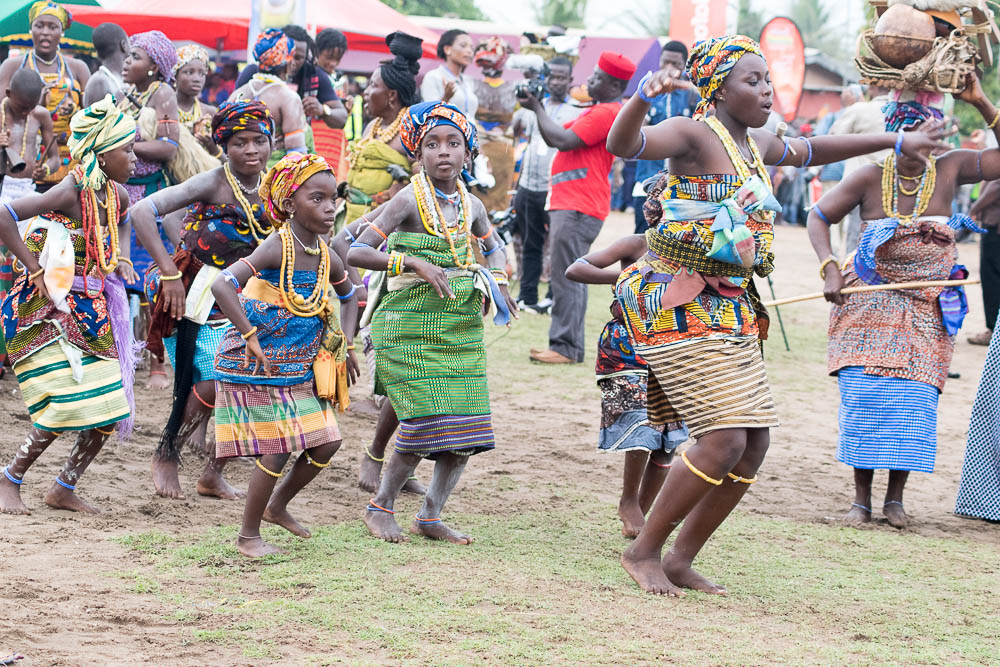
An Ewe music and dance, born of war songs and kept for funerals, weddings and festivalsPerformance
🇬🇭 Ghana and 2 moreAgbadza
An Ewe music and dance, born of war songs and kept for funerals, weddings and festivalsPerformance
The same idea elsewhere
All of this kind 🇺🇸 Philadelphia, United States and 1 moreIndependence Day
The United States' national day of parades, barbecues and fireworks, kept each July 4Ceremony
🇺🇸 Philadelphia, United States and 1 moreIndependence Day
The United States' national day of parades, barbecues and fireworks, kept each July 4Ceremony
 🇮🇳 Kolkata, IndiaJana Gana Mana
India's national anthem, from a Bengali hymn of 1911, sung at civic occasionsCeremony
🇮🇳 Kolkata, IndiaJana Gana Mana
India's national anthem, from a Bengali hymn of 1911, sung at civic occasionsCeremony
 🇺🇸 Washington, United StatesState of the Union address
The US president's yearly report to Congress and the nation, given in the House chamberCeremony
🇺🇸 Washington, United StatesState of the Union address
The US president's yearly report to Congress and the nation, given in the House chamberCeremony
 🇺🇸 United StatesTalking stick
A carved staff that shows who may speak at a Northwest Coast gatheringCeremony
🇺🇸 United StatesTalking stick
A carved staff that shows who may speak at a Northwest Coast gatheringCeremony