Music, dance and storytellingSub-Saharan Africa
Ewe drumming
The drum ensembles of the Ewe people, with iron bells, rattles and talking drums

Ewe drumming is the ensemble music of the Ewe people, a West African community living in Ghana, Togo and Benin. It combines several drums with an iron bell and a gourd rattle, and pieces once played by warriors now mark celebrations or serve as recreation.
When is Ewe drumming kept?
Ewe drumming is kept at celebrations and for recreation, with no fixed date.
Ewe drumming is the music of a group of drums, an iron bell and a rattle, played by the Ewe people of West Africa. One drummer leads. The others answer, and the bell holds the cycle steady. These pieces began as warrior songs and are now heard at celebrations and gatherings. Players in different places add their own touches, so no two groups sound exactly alike.
The ensemble
A typical group has several drums, a double iron bell and a gourd rattle. The bell carries a repeated pattern that does not change during a piece. The rattle plays the same pattern with extra notes between the beats. The lead or master drum tells the others when to begin, when to stop and when to shift tempo or pattern. Other drums answer and fill in around the lead. A performance can happen with players seated or standing, depending on the instrument. Pieces vary from place to place. The same piece can sound different in Togo and in Ghana. The Fon people of Benin, who build settlements on water, use large floating gourds as drums rather than the upright drums common among the Ewe.
Bells and rattle
The gankogui is a forged iron double bell, its two bells bound together permanently. A wooden stick strikes it, and players treat this bell as the backbone of the music. Its part must stay steady and free of error, and the person who plays it is trusted to keep time. A second iron bell, the atoke, has a curved shape a little like a boat. It rests in the palm of the weaker hand and is struck with an iron rod held in the stronger hand; it can stand in for the gankogui. The axatse is a hollow gourd with a mesh of beads or seeds around it. Held by its handle, it is shaken up and down, striking the hand and the thigh to make two sounds. It adds energy.
Master drums
A master drummer leads the group, telling it when to play and to stop, and signaling changes of tempo or pattern. The lead may state the main theme and improvise, and it holds a drum dialogue with the kidi, filling the spaces in the kidi's part. Several drums can serve as the master: the atsimevu, sogo, kroboto, totodzi and agboba. The sogo is the basic one and can always substitute. The atsimevu is the tallest, about four and a half feet, and leans on a stand called a vudetsi. The agboba was invented by the Ewe in the 1950s for a new piece called agahu. The kloboto and totodzi are the smallest, around eighteen inches, and are played with two sticks while seated.
Other drums
The kidi is a middle-sized drum played with two wooden sticks. Its head is made from the skin of a deer or antelope, and its wooden body may carry carvings. It often plays an eighth-note pattern with small changes, and the Ewe describe it as talking or conversing with the lead drum. This exchange is called drum dialogue. The kaganu is the smallest and highest-sounding drum, about twenty inches tall, with a head of antelope or deer skin and a carved wooden body. Two long, thin sticks are used, usually while the player sits. Its pattern stays the same through a piece. The atumpan is a pair of talking drums used across Ghana. Its player stands and strikes it with two L-shaped sticks.
What it means
For Anlo-Ewe people, the drum makes the voice larger and sends it outward. The instrument joins natural materials: animal hide and a hollowed tree trunk. These become a medium for drawing attention and reaction. An Anlo-Ewe explanation says that the skin of an animal can give a stronger call than the animal's living voice, which is why a surrogate voice was made from hide to carry a message more loudly and clearly. Since Ewe languages use tones, a drummer can imitate speech. Cross-rhythm shapes the whole music. The scholar and drummer C.K. Ladzekpo explained it in lectures, and David Locke wrote about it. A.M. Jones first identified cross-rhythm as central to sub-Saharan rhythm.
How Ewe drumming is kept
An ensemble gathers with a bell player, a rattle player and several drummers. One drummer takes the lead. The bell starts a repeating cycle that holds the time. The rattle adds notes between the bell strokes. The lead signals the others, who answer on their drums. The kidi converses with the lead, and the lead may improvise. Some pieces keep a fixed pattern for the kaganu and bell, while other parts change. Players may sit or stand. A piece can be played at a celebration or simply for enjoyment. The same piece may differ from one Ewe community to another.
When and where
Ewe drumming has no fixed date. It is performed when a community gathers, whether to celebrate an event or for recreation. Agbadza, one piece, began as a warrior dance and now marks celebrations. The music can be played at any time of year, and the choice depends on the occasion rather than a calendar.
It belongs to Ewe communities in Ghana, Togo and Benin. The Anlo-Ewe are named in accounts of its meaning and its cross-rhythms. The tradition is strongest where Ewe people live, and Ewe players may render a piece differently in each country. Among the Fon people of Benin, who build on water, large gourds float and serve as drums instead of the upright drums used by the Ewe.
What Ewe drumming means
To Anlo-Ewe people, the drum makes the voice larger and sends it outward. The instrument joins natural materials: animal hide and a hollowed tree trunk. These become a medium for drawing attention and reaction. An Anlo-Ewe explanation says that the skin of an animal can give a stronger call than the animal's living voice, which is why a surrogate voice was made from hide to carry a message more loudly and clearly. Since Ewe languages use tones, a drummer can imitate speech. Cross-rhythm shapes the whole music.

Questions people ask about Ewe drumming
When is Ewe drumming kept?
Ewe drumming is kept at celebrations and for recreation, with no fixed date.
What is Ewe drumming?
It is the ensemble drumming of the Ewe people, who live in Ghana, Togo and Benin. A group usually has several drums, a double iron bell and a gourd rattle, with one lead drummer directing the changes.
Where is it kept?
It belongs to Ewe communities in Ghana, Togo and Benin. The Anlo-Ewe are often named in accounts of its meaning and cross-rhythms. Ewe players in different countries may render the same piece with local differences.
Who leads an ensemble?
A lead or master drummer tells the group when to begin and stop, signals changes in tempo or pattern, and may improvise. The master drum can be a sogo, atsimevu, kloboto, totodzi or agboba. The lead also holds a drum dialogue with the kidi.
What does the bell do?
The gankogui is an iron double bell that sets the time cycle. Its player must keep a steady pattern without variation. The atoke, a smaller iron bell, can sometimes take its place. The axatse, a gourd rattle, adds notes between the bell strokes.
See also
 Chale Wote Street Art FestivalAn annual street art festival in Accra featuring murals, theater, and music.
 Shell moneyTraditional currency made from cowries, ground clam beads, and carved sea shells
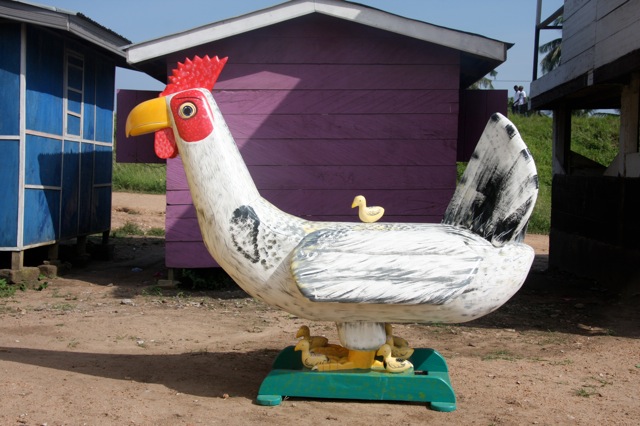 Fantasy coffinsCustom hand-carved burial caskets shaped as animals, tools and symbols in southern Ghana
 ZangbetoA traditional security institution and night-guardian cult among the Ogu people of West Africa.
Good reading and sources
The facts on this page come from the Wikipedia article "Ewe drumming", written by its contributors and used under the CC BY-SA 4.0 licence, and from its Wikidata record (CC0). EveryParampara rewrote the text in its own words, with AI assistance, and compares every page with the article to make sure no passage is copied. It may be reused under the same CC BY-SA 4.0 licence with a link back.
It may contain mistakes. Traditions differ from one family, village and community to the next, and the people who keep them know them best. If something is wrong, tell us. Last refreshed 2026-10-05.
More from Ghana
All the traditions of Ghana 🇦🇴 Luanda, Angola and 4 moreKizomba
A close, slow couple dance from Angola, named after a Kimbundu word for partyPerformance
🇦🇴 Luanda, Angola and 4 moreKizomba
A close, slow couple dance from Angola, named after a Kimbundu word for partyPerformance
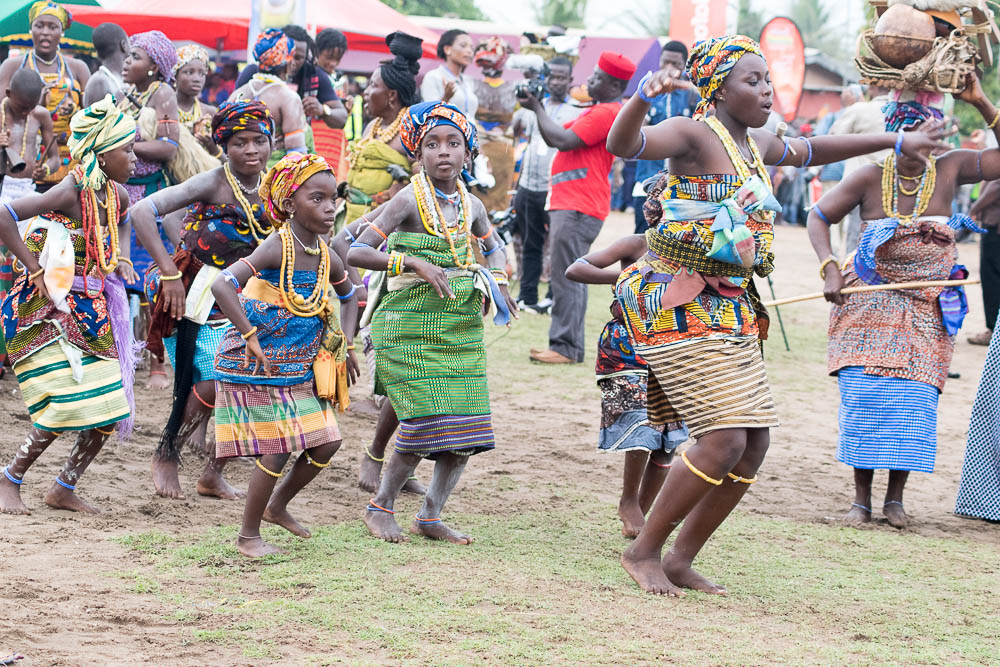 🇬🇭 Ghana and 2 moreAgbadza
An Ewe music and dance, born of war songs and kept for funerals, weddings and festivalsPerformance
🇬🇭 Ghana and 2 moreAgbadza
An Ewe music and dance, born of war songs and kept for funerals, weddings and festivalsPerformance
 🇬🇭 GhanaAdowa
A Ghanaian Akan dance where hands and feet carry the mood of the occasionPerformance
🇬🇭 Accra, GhanaChale Wote Street Art Festival
An annual street art festival in Accra featuring murals, theater, and music.Performance
🇬🇭 GhanaAdowa
A Ghanaian Akan dance where hands and feet carry the mood of the occasionPerformance
🇬🇭 Accra, GhanaChale Wote Street Art Festival
An annual street art festival in Accra featuring murals, theater, and music.Performance
The same idea elsewhere
All of this kind 🇹🇷 Kayseri, Turkey and 4 moreHalay
A traditional line and circle folk dance kept across Turkey, Azerbaijan, Armenia, Iran, and Syria.Performance
🇧🇷 BrazilBaião
A syncopated folk rhythm and partnered dance from northeastern BrazilPerformance
🇹🇷 Kayseri, Turkey and 4 moreHalay
A traditional line and circle folk dance kept across Turkey, Azerbaijan, Armenia, Iran, and Syria.Performance
🇧🇷 BrazilBaião
A syncopated folk rhythm and partnered dance from northeastern BrazilPerformance
 🇺🇦 Kyiv, UkraineBanduraБандура
A Ukrainian plucked string instrument played to accompany epic songs and folk balladsPerformance
🇺🇦 Kyiv, UkraineBanduraБандура
A Ukrainian plucked string instrument played to accompany epic songs and folk balladsPerformance
 🇳🇿 Auckland, New ZealandPoi
A Māori performing art of swinging tethered weights in rhythmical patterns.Performance
🇳🇿 Auckland, New ZealandPoi
A Māori performing art of swinging tethered weights in rhythmical patterns.Performance