Music, dance and storytellingMiddle East
Ardah
In its own language: العرضة
A traditional Arabian group dance of facing lines, drums, poetry, and swords

Ardah is a traditional communal dance from the Arabian Peninsula, performed by two facing lines of men guided by drum rhythms and recited poetry. Once held by tribal warriors before battle to show strength, it is now celebrated at weddings, cultural festivals, and national events across Saudi Arabia and the Gulf.
When is Ardah kept?
Ardah is kept during weddings, cultural festivals, and national celebrations.
Ardah is a traditional group dance practiced across the Arabian Peninsula, especially in Saudi Arabia and neighbouring Gulf states. Two facing lines of men dance to drum rhythms and recited verses, often holding swords or walking canes. Once performed by tribal fighters before going into battle, it now forms a proud centerpiece at weddings, civic festivals, and state ceremonies.
The dance and its performance
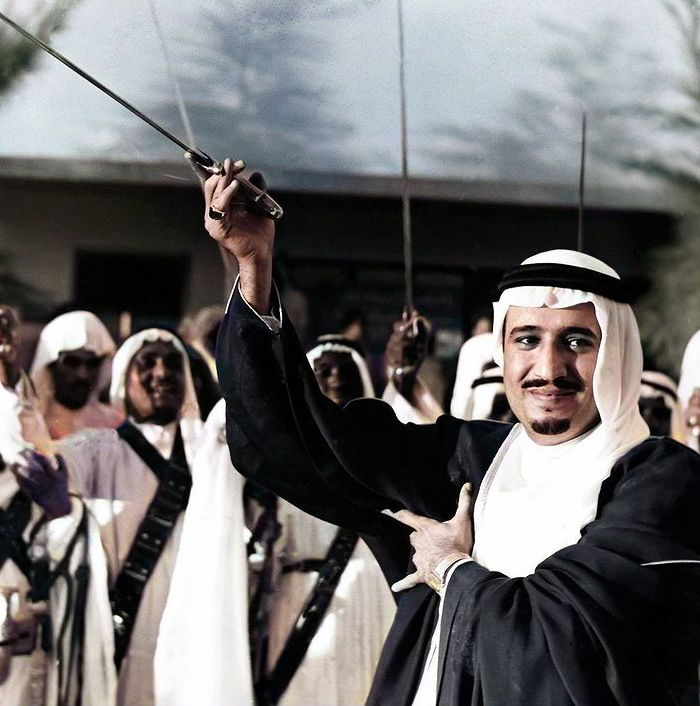
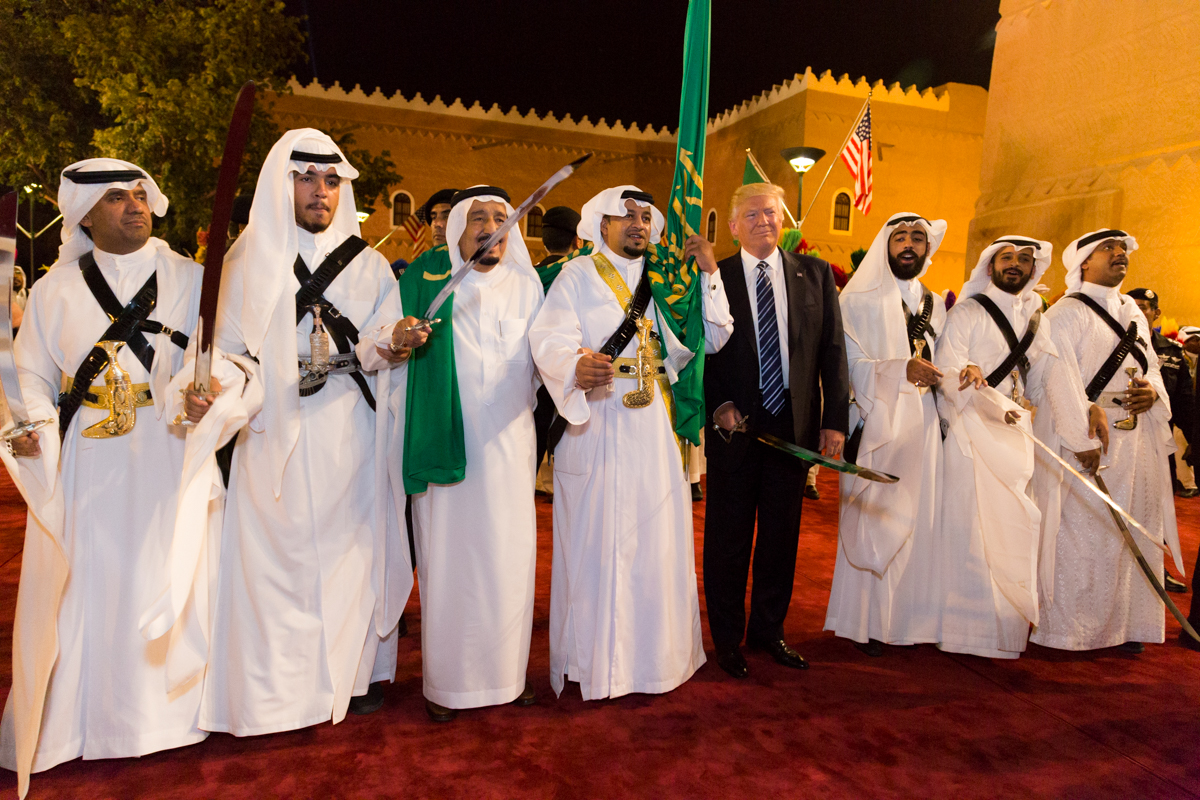
In an ardah performance, men arrange themselves into two parallel lines facing one another. Participants move together to the rhythm of beating drums while reciting spoken lines of poetry. Many dancers carry a sword or a cane in hand, lifting and swaying their weapons in coordinated movements. The rhythmic poetry and drumming create a steady, resonant cadence that guides the entire group throughout the gathering.
Origins as a war dance
The word ardah comes from an Arabic root meaning to show or parade. In earlier eras, male members of desert tribes gathered to dance before heading into armed conflict. The performance served to demonstrate a tribe's military readiness, display combat strength, and rally morale before battle. Although combat is no longer the reason for the gathering, the dance preserves the martial spirit of those early tribal assemblies.
Regional styles and modern occasions
Today, men across different communities perform the dance at weddings, cultural gatherings, and official national events. While the purpose of the dance remains uniform across the peninsula, different regions have developed distinct styles. The Najdi style is the most prominent form in Saudi Arabia, frequently broadcast on television and officially named Saudi ardah. Other well-known local forms thrive in southern regions such as Najran, Asir, and Jizan.
How Ardah is kept
Men gather and form two lines facing each other. As drummers strike up a rhythm, the participants chant spoken verses of poetry. While chanting, the men move rhythmically in place or step together, often raising and gesturing with ceremonial swords or canes. The performance continues with call-and-response verses and coordinated sword movements, bringing together participants and onlookers in celebration.
When and where
Ardah takes place during major life events and public occasions rather than on a single fixed date. Communities hold performances for weddings, regional cultural festivals, national celebrations, and official state receptions throughout the year.
The tradition is practiced across the Arabian Peninsula, especially within Gulf Cooperation Council nations. It is widespread throughout Saudi Arabia, with notable regional variations found in Najd, Najran, Asir, and Jizan.
What Ardah means
Rooted in an Arabic term for showing or parading, ardah historically symbolised tribal unity, martial resolve, and collective strength before war. Today, the raised swords, shared poetry, and synchronized movements symbolize communal pride, shared heritage, and festive celebration among participants.

Questions people ask about Ardah
When is Ardah kept?
Ardah is kept during weddings, cultural festivals, and national celebrations.
What is ardah?
Ardah is a traditional group dance from the Arabian Peninsula. Two rows of men stand opposite one another, moving to drum rhythms and recited verses while carrying swords or canes.
Why was ardah originally danced?
Historically, tribal men performed ardah before going into battle. The gathering allowed fighters to showcase their martial strength, demonstrate unity, and raise group morale before an armed engagement.
What is Najdi ardah?
Najdi ardah is the most widely performed and televised variety of the dance in Saudi Arabia. The Saudi government officially designated it as Saudi ardah in the twenty-first century.
See also
 Music of TuvaluRhythmic storytelling dances and choral singing from the Polynesian atolls of Tuvalu
 KlezmerAn Ashkenazi Jewish instrumental tradition of lively dance tunes and ritual melodiesBerikaobaAn improvised Georgian folk theatre and masquerade of fertility, satire and drama
 Baul traditionA Bengali devotional minstrel path uniting mystic poetry, music and dance
Good reading and sources
- Alardah Alnajdiyah, dance, drumming and poetry in Saudi ArabiaUNESCO, Heritage listing
- Alardah Alnajdiyah, dance, drumming and poetry in Saudi ArabiaUNESCO, Article
- Ardah on WikipediaEncyclopedia
- More photos on Wikimedia CommonsPhotos and video
- Wikidata recordOpen data
The facts on this page come from the Wikipedia article "Ardah", written by its contributors and used under the CC BY-SA 4.0 licence, and from its Wikidata record (CC0). EveryParampara rewrote the text in its own words, with AI assistance, and compares every page with the article to make sure no passage is copied. It may be reused under the same CC BY-SA 4.0 licence with a link back.
It may contain mistakes. Traditions differ from one family, village and community to the next, and the people who keep them know them best. If something is wrong, tell us. Last refreshed 2026-10-04.
More from Saudi Arabia
All the traditions of Saudi Arabia 🇸🇦 Saudi Arabia and 1 moreHenna ceremonyليلة الحناء
A night of henna patterns on a bride's hands and feet, kept before the weddingRite of passage
🇸🇦 Mecca, Saudi Arabia and 2 moreBay'ahبَيْعَة
An Islamic oath of allegiance pledged to a ruler or spiritual guideCeremony
🇸🇦 Saudi Arabia and 1 moreHenna ceremonyليلة الحناء
A night of henna patterns on a bride's hands and feet, kept before the weddingRite of passage
🇸🇦 Mecca, Saudi Arabia and 2 moreBay'ahبَيْعَة
An Islamic oath of allegiance pledged to a ruler or spiritual guideCeremony
 🇸🇦 Mecca, Saudi ArabiaIhramإِحْرَام
A sacred state and simple dress that Muslims enter for Hajj and UmrahSpiritual
🇸🇦 Mecca, Saudi ArabiaIhramإِحْرَام
A sacred state and simple dress that Muslims enter for Hajj and UmrahSpiritual
 🇸🇦 Riyadh, Saudi Arabia and 4 moreMajlis
A traditional sitting room and community assembly for hospitality and civic counselEtiquette
🇸🇦 Riyadh, Saudi Arabia and 4 moreMajlis
A traditional sitting room and community assembly for hospitality and civic counselEtiquette
The same idea elsewhere
Weddings compared 🇮🇩 Indonesia and 2 moreKenduri
A communal prayer meal and gathering shared across Indonesia, Malaysia and BruneiSpiritual · Feasts and festival meals
🇮🇩 Indonesia and 2 moreKenduri
A communal prayer meal and gathering shared across Indonesia, Malaysia and BruneiSpiritual · Feasts and festival meals
 🇹🇱 Timor-LesteUma Lulik
Sacred ancestral clan houses and ritual shrines in East TimorSpiritual
🇹🇱 Timor-LesteUma Lulik
Sacred ancestral clan houses and ritual shrines in East TimorSpiritual
 🇼🇸 Samoa and 1 moreʻIe tōga
Precious woven mats exchanged in Samoan ceremonies to honor family ties and chiefly status.Dress
🇺🇬 UgandaKwanjula
A formal marriage introduction ritual of the Baganda people in Uganda, where families meet to exchange gifts and seek blRite of passage
🇼🇸 Samoa and 1 moreʻIe tōga
Precious woven mats exchanged in Samoan ceremonies to honor family ties and chiefly status.Dress
🇺🇬 UgandaKwanjula
A formal marriage introduction ritual of the Baganda people in Uganda, where families meet to exchange gifts and seek blRite of passage